

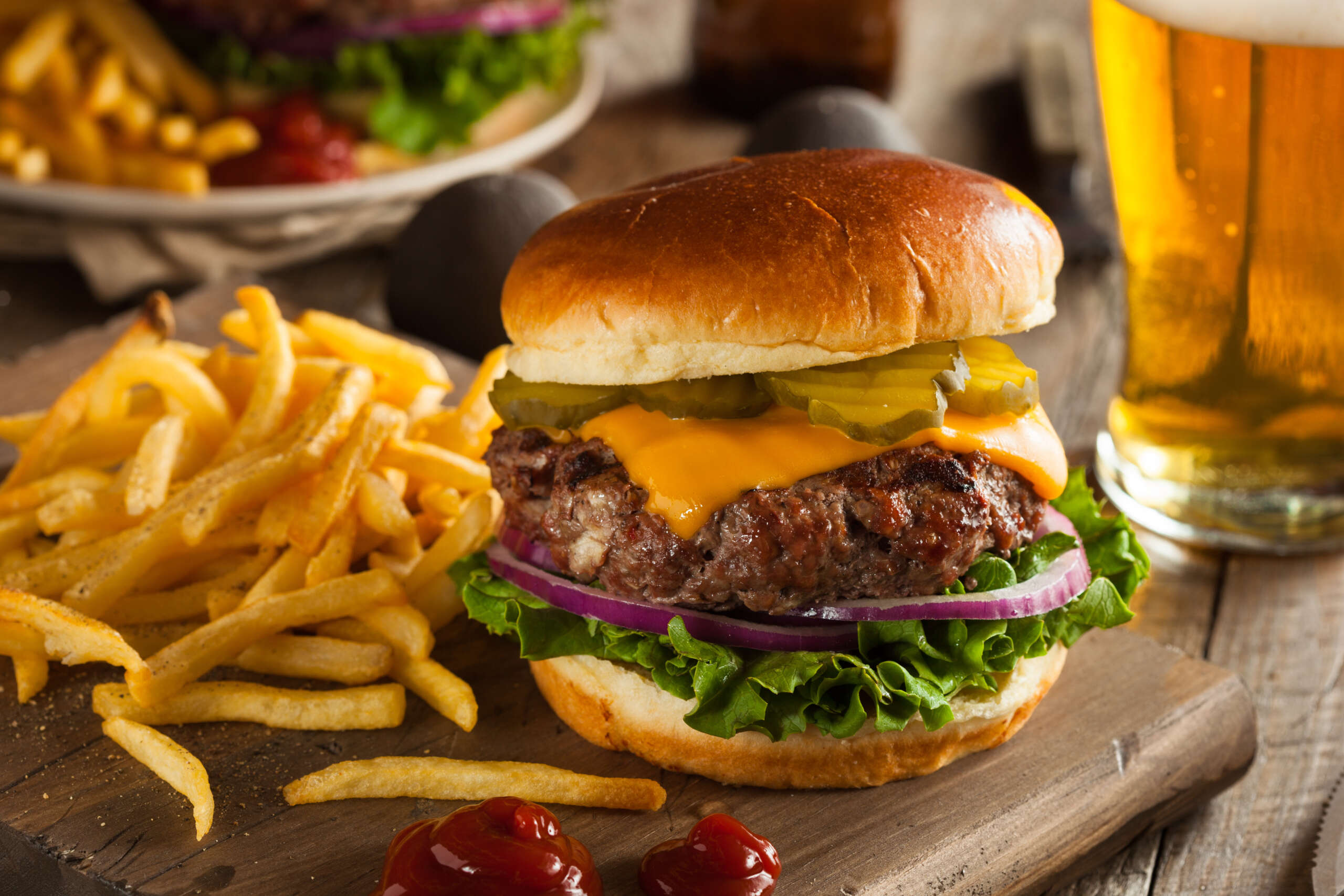
From the drive-through window to the white tablecloths of Cayman’s best restaurants, customers are feeling the sting of rising beef prices, a symptom of a much wider cost-of-living squeeze.
At Burger King, a Whopper that cost $4 in 2020 now costs $6.35. At the other end of the market, at one of Cayman’s most exclusive steak restaurants, an 8-ounce centre-cut tenderloin that sold for $44 in 2019 now appears on the menu at $79.
In both cases, restaurateurs insist they are not increasing their profit margins.
Jonathan Rivard, executive chef at Mykonos Steak Club and a Certified Angus Beef ambassador, said the price from his supplier for some cuts had more than doubled since 2019, when he opened his first steak house in Cayman.
“It’s not like we’re trying to make more profit on it. It’s just the cost of the raw good has gotten higher,” he said.
Mark Anthony, owner of several fast-food franchises, including Burger King, said the escalation in prices for beef had far outstripped what he was willing or able to pass on to customers at the drive-through window.
Beef prices rose sharply amid pandemic-era labour shortages and global supply chain disruption. Things have not improved since then.
Driven by labour shortages in the US and a sustained trend of declining cattle herds, the price of American beef has increased dramatically. Since 2019, US average retail steak prices have gone up 50-70%, and retail ground beef prices are up by 30-50%, according to US Bureau of Labor statistics.
There’s also a premium for trucking, shipping and labour, all costs that have surged post-COVID-19, to get it from the ranch to a Cayman restaurant.
There is little Cayman can do to control US commodity prices. But business owners, farmers, butchers and chefs believe there are other ways to reduce the cost of beef.
Putting an affordable burger on the plate is not, of itself, a headline-making policy goal. But a case study of one everyday food product points to wider concerns about cost of living, culture and food security, and there are some things that Cayman’s government could do to help with beef prices.
Some of the solutions proposed – from broadening restrictive import guidelines and diversifying trade routes to facilitating greater local production and reviewing import duties – are transferable across the economy.
The steak mistake
Cost is not the only concern. Top chefs warn that high food prices and restrictive imports, which also keep premium products like Japanese Kobe beef or grass-fed Argentinian steaks off the menu, restrain Cayman’s ambition to be a high-end culinary destination.
In 2022, Dylan Benoit, then part-owner of the Carnivore premium butcher shop in Camana Bay, placed an order for a shipment of Japanese steaks through a US supplier.
The shipment never made it to the store.
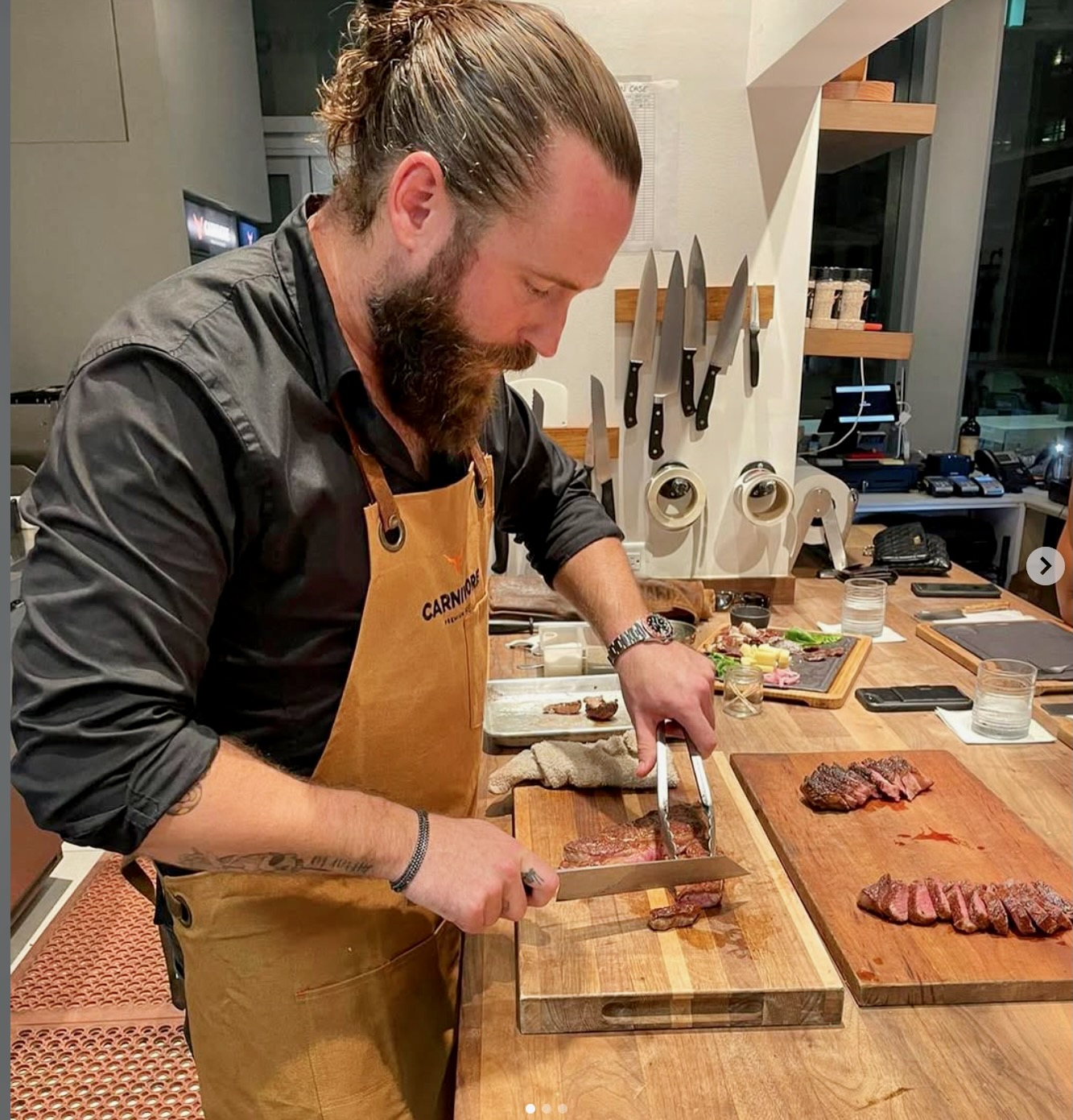
“They told me they had incinerated $10,000 worth of wagyu steaks. I couldn’t believe it,” said Benoit, who also hosts Canadian reality television show ‘Fire Masters’.
“This meat had already been imported into the US and passed (US Department of Agriculture) inspection … why is this happening?”
The Animals Law states that only beef from a select few countries, including the US, UK, Australia, New Zealand and Honduras, can be imported legally to Cayman. Department of Agriculture officials say the aim is to prevent the importation of disease that could impact local animals or public health.
Steve Toms, meat buyer for Hurley’s supermarket, believes some of the restrictions could be reconsidered.
“The Cayman Islands has banned beef from Japan since mad cow [disease] in 2008. They’ve never revisited the law.”
For the supermarket, and for Cayman as a destination, the ban restricts the offering available to a small but significant niche of customers who want the best of the best. Rivard said he had previously been able to import Japanese beef, but that is no longer possible.
“Japanese wagyu is out of the picture,” he said. “Every piece of beef coming in from Japan is banned and it’s confiscated.”
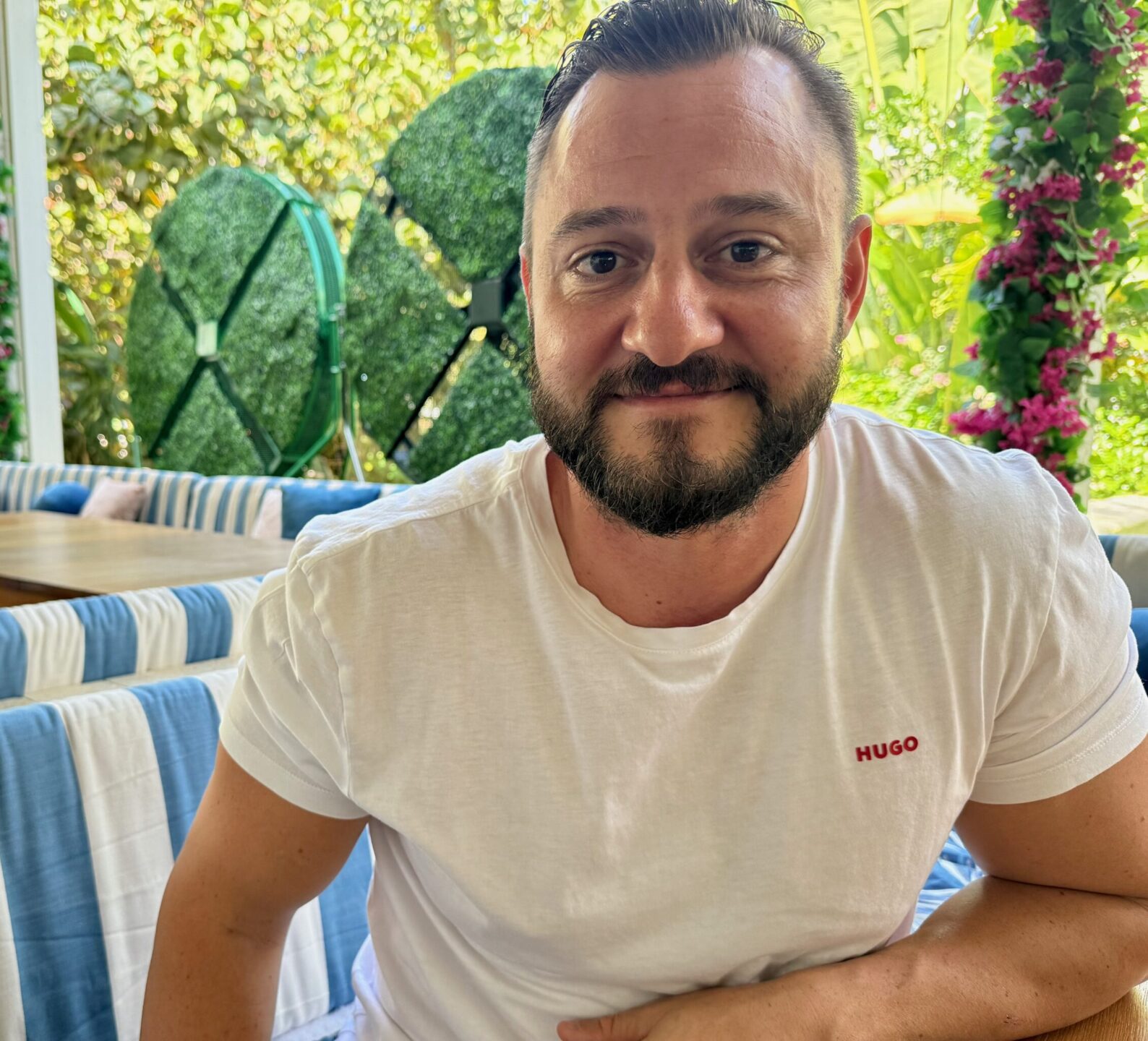
US and Australian varieties are available through the US, but the authentic Japanese product is not.
The bulk of Rivard’s menu, however, relies on Certified Angus Beef from the American Midwest. For US tourists in particular, he says, that’s a guarantee of quality. With the surge in American beef prices, designing a steak house menu that keeps customers coming through the door is increasingly challenging.
“Even in a restaurant like this, you have to be aware of price. There is a ceiling to what you can charge.”
Benoit, of Prime Group, has moved on. He has reinvented Carnivore’s location with Yallah, a Mediterranean-style restaurant, with a more diverse offering that is less impacted by fluctuations in prices for single commodities.
“We don’t do a steak-forward restaurant now. Now,, we have two beef things on the menu as opposed to 92,” he said.
‘This could be fixed at the stroke of a pen’
For Anthony, the issue is less about luxury cuts and more about affordability.
Much of the world’s beef supply comes through JBS, a Brazilian multinational meat processor. Burger King’s patties originate from that supply chain, but via the United States subsidiary.
Anthony discovered he could buy identical patties from JBS Brazil and ship them to Kingston, Jamaica, before transhipping to Cayman. He said the landed cost was 20% lower. He applied for an import permit to test a sample shipment, but was refused.
“This is something that could be resolved with the stroke of a pen,” he said.

The debate is not about whether Cayman could physically ship beef from Brazil or Argentina. Businesses say they already tranship products through Jamaica and Miami daily. The issue is regulatory approval.
If import sources were broadened, or if Cayman recognised USDA certification as sufficient, businesses say prices could fall.
Department of Agriculture officials say changing import regulations is much more complex and needs to fully consider the possible risks.
The US beef problem
The price shock on Cayman menus and supermarket shelves can be traced back to the slow decline of ranching in the United States. US Department of Agriculture data shows the national herd has fallen to just 82 million head of cattle, the lowest level since 1951.
Prolonged drought across the West and Great Plains, high feed and financing costs, and an ageing ranching population are preventing a comeback.
“There is no sign of serious rebuilding,” Rich Nelson, of Allendale agricultural research analysts, told Reuters last month.
The knock-on effect is record cattle prices, processors running below capacity, and supermarkets competing for less product. For small import-dependent markets like Cayman that don’t have the same bulk buying power, the impact is magnified.
The homegrown solution
The idea that an island the size of Cayman could produce enough meat to feed a population nearing 100,000 and supply restaurants catering to more than two million tourists a year is unrealistic. But local agriculture could meet a greater share of demand and provide a stronger base layer of food security.
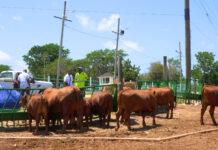
At Hurley’s, Toms estimates around 20% of total beef sales now come from local suppliers.
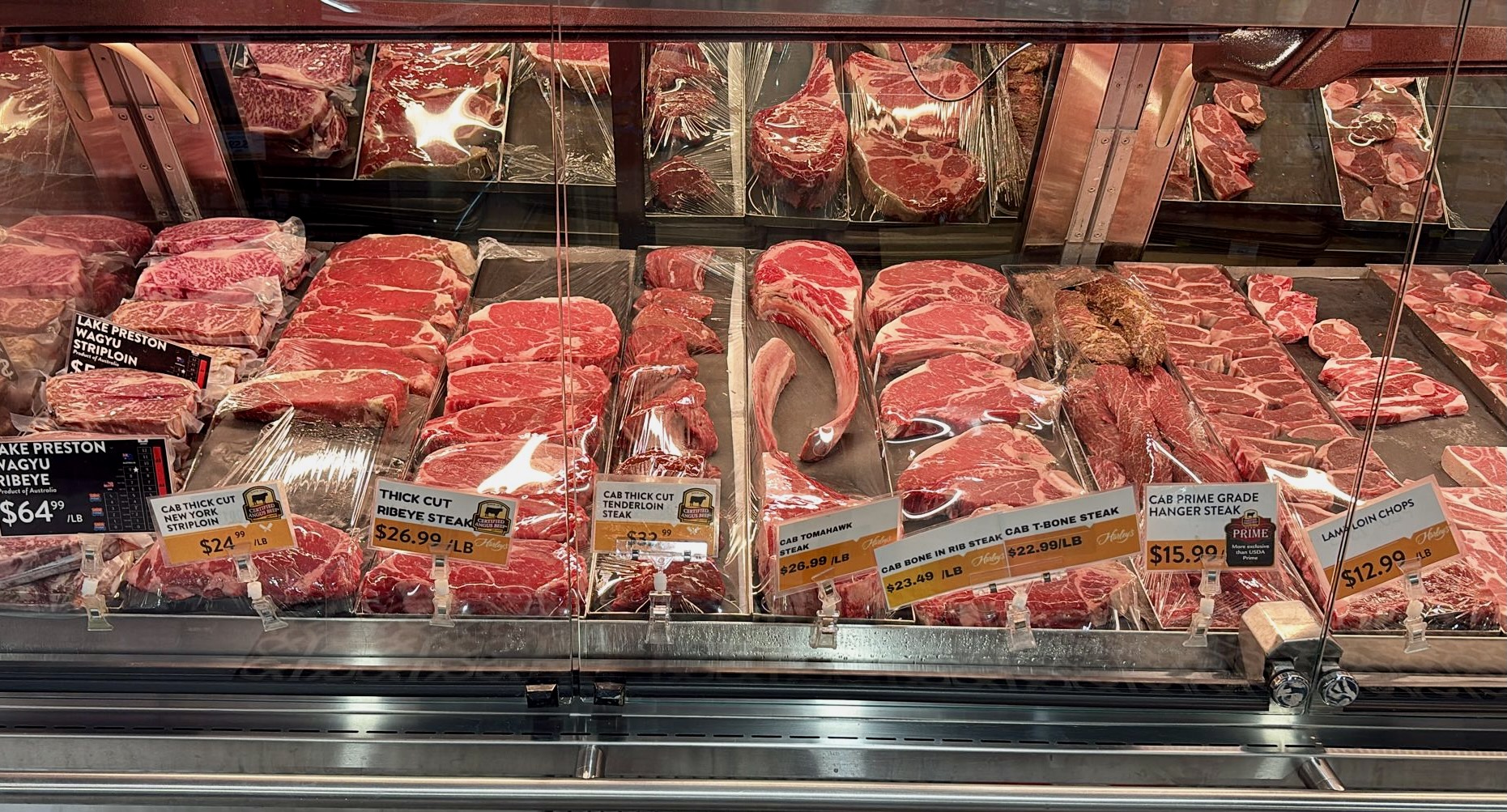
Local meat cannot command the same prices as Certified Angus Beef steaks, but there is strong demand when it is available.
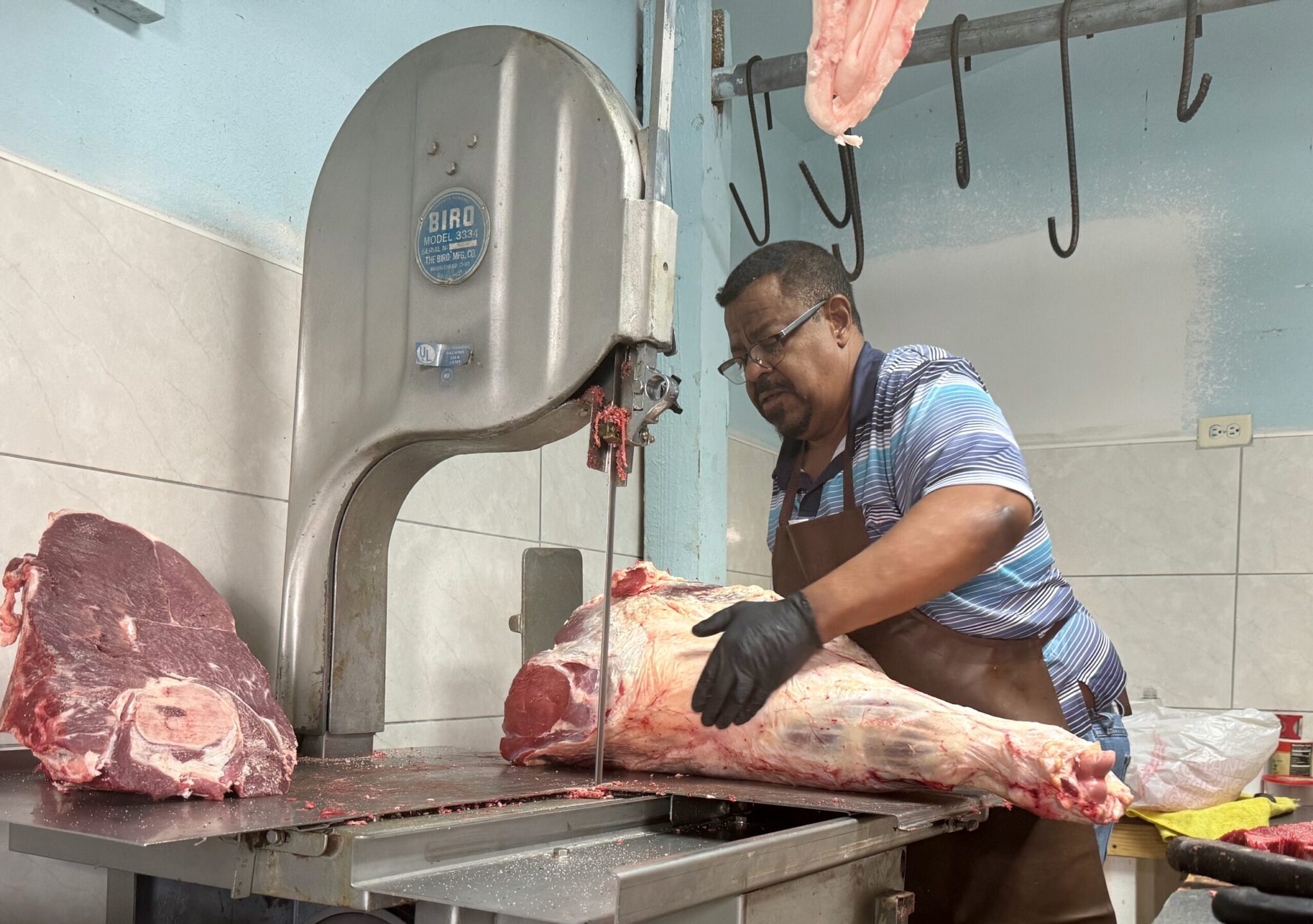
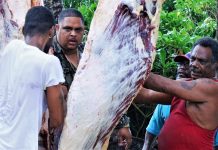
Gillard McLaughlin, a retired detective who runs a butcher shop on Hell Road in West Bay, said demand far outstrips supply.
When he gets an animal, he can sell around 400 pounds of beef in a day or two without advertising.
Farmer Paul Rivers believes production could increase dramatically with the right forage.
“If we can get the right kind of Napier grasses growing here, we could actually quadruple our livestock,” he said.
The fast-growing forage which can reach 4 metres tall (13 feet), he says, is drought-resistant, heat-tolerant and protein-rich.
Currently, Napier grasses are considered invasive. The Department of Agriculture says introducing new species requires ecological assessment in partnership with the National Conservation Council, but it has already tested and proved some higher growing grasses that are available to local farmers.
Demoy Nash, deputy director of the department, said it has invested significantly in researching forage and upgrading breeding stock.
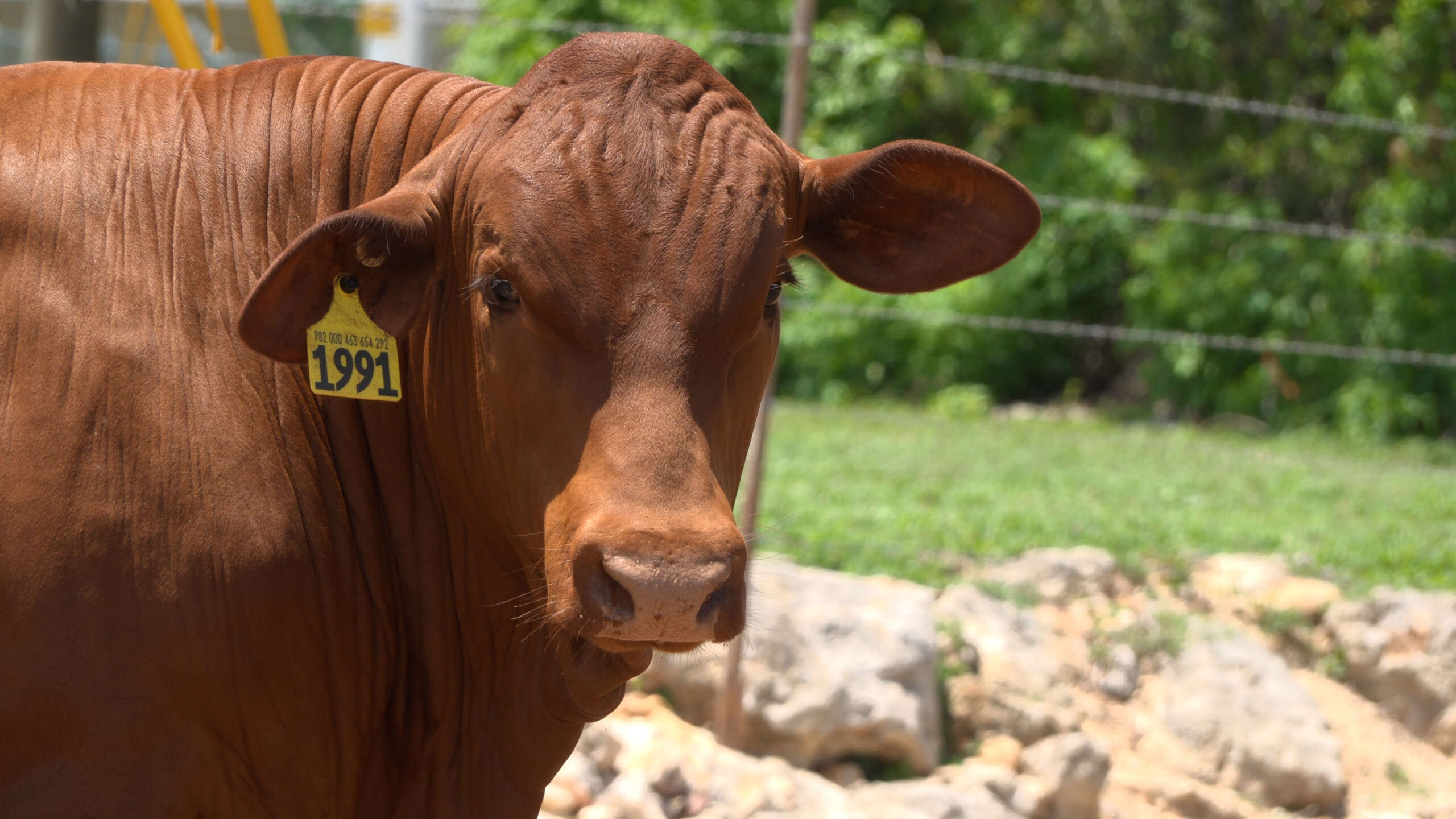
The recent import of Red Poll cattle from Jamaica and the provision of stud services are aimed at improving the quality and quantity of Cayman’s herd. He encourages farmers to take advantage of growing business opportunities in Cayman and meet more of the islands’ food supply locally. In some areas, such as poultry and eggs, that’s already happening.
“I think the market is here … gone are the days where they have to focus on a Christmas slaughter … the demand is there for it,” he said.
“We need our farmers to look at it as a business.”
The government’s food strategy targets a 25% reduction in imports over five years.
But the food and nutrition security policy goes beyond agriculture.
“You can be food secure in different ways. You can have food security based on production. We can also have food security based on trade … so it’s got a combination of those things,” said Claudette McKenzie-Bowen, an agronomist at the Department of Agriculture.
Cayman’s tariff regime
Cayman may not be able to control price fluctuations associated with US tariff policy, but it can look at its own tariff regime.
Like most meat products, beef attracts a 17% import duty.
Home Affairs Minister Nickolas DaCosta said government is working alongside the Chamber of Commerce to review the tariff code with a view to making some items duty free.
The review, he said, must be revenue-neutral.
“The aim is to recalibrate the customs duties in a way that will meaningfully and positively impact the cost of living,” DaCosta said.
Currently, there is no import duty on some luxury items, such as leather handbags, but everyday essentials, including bread and bottled water, are dutiable. The review will examine the extent to which tweaking those codes can make an impact on shopping lists.
According to the Cayman Islands Economics and Statistics Office trade data, imports under the category ‘meat and meat preparations’ were approximately $25.5 million in 2023, the most recent year for which statistics are available.
At the 17% import duty rate, that level of imports would generate roughly $4.3 million annually in government revenue. If government eliminated duty on all food and live animal imports, valued at roughly $286 million in 2024, it would forgo around $50 million per year in revenue, based on the same 17% duty rate.
Any reduction, DaCosta said, would need to be more targeted, likely focussing on healthy food and essentials, and be offset by increases elsewhere to balance the budget.
The larger cost equation
Even if Cayman broadened import rules and reduced duty, beef would remain only one part of a much larger equation.
Anthony calculates that bringing beef from Brazil and waiving import duty could enable him to significantly cut the cost of beef to his restaurants. But, he warns, it would not lead to a similar magnitude shift in menu prices.
There’s more to the cost of a Whopper than just beef, and business owners have been eating cost increases since the pandemic.
Interest rates have increased. Insurance premiums have surged. Shipping costs have risen. Fuel prices have increased. Cayman Islands businesses pay some of the highest electricity costs in the region.
In January, the minimum wage increased by close to 50% and constraints on work permits, along with increased application fees, have added to the cost of doing business.
“There is a massive ripple effect from all these things,” said Anthony. “The amount of things that actually have to change for costs to go down is considerable.”
Related Videos







I am a US citizen however moved from the US to GC 3 ½ years ago, am a full time resident & have no intention of leaving.
I purchase local beef, pork & eggs [& Jamaican chicken] whenever I can so I can attest to the statement that “there is strong demand when it is available” as where I shop it often is not or is extremely limited.
I may have the $$ to afford Japanese wagyu occasionally, however, no thank you.
And as far as the cost of a Burger King Whopper, I spend every morning picking up road side litter that includes plenty from BK – so I’m not among their customers.
And certainly there are political reasons that I shun US products.
However the main reasons I prefer locally raised products are that I want to support the local farming community and I judge it to be an entity raised in a more humane manner and consuming a healthier diet [“you are what you eat eats”].
I hope that the government will support the growth of this local industry for the betterment of all residing on the Island.
Thank you for the article; well written.
Anne Evans