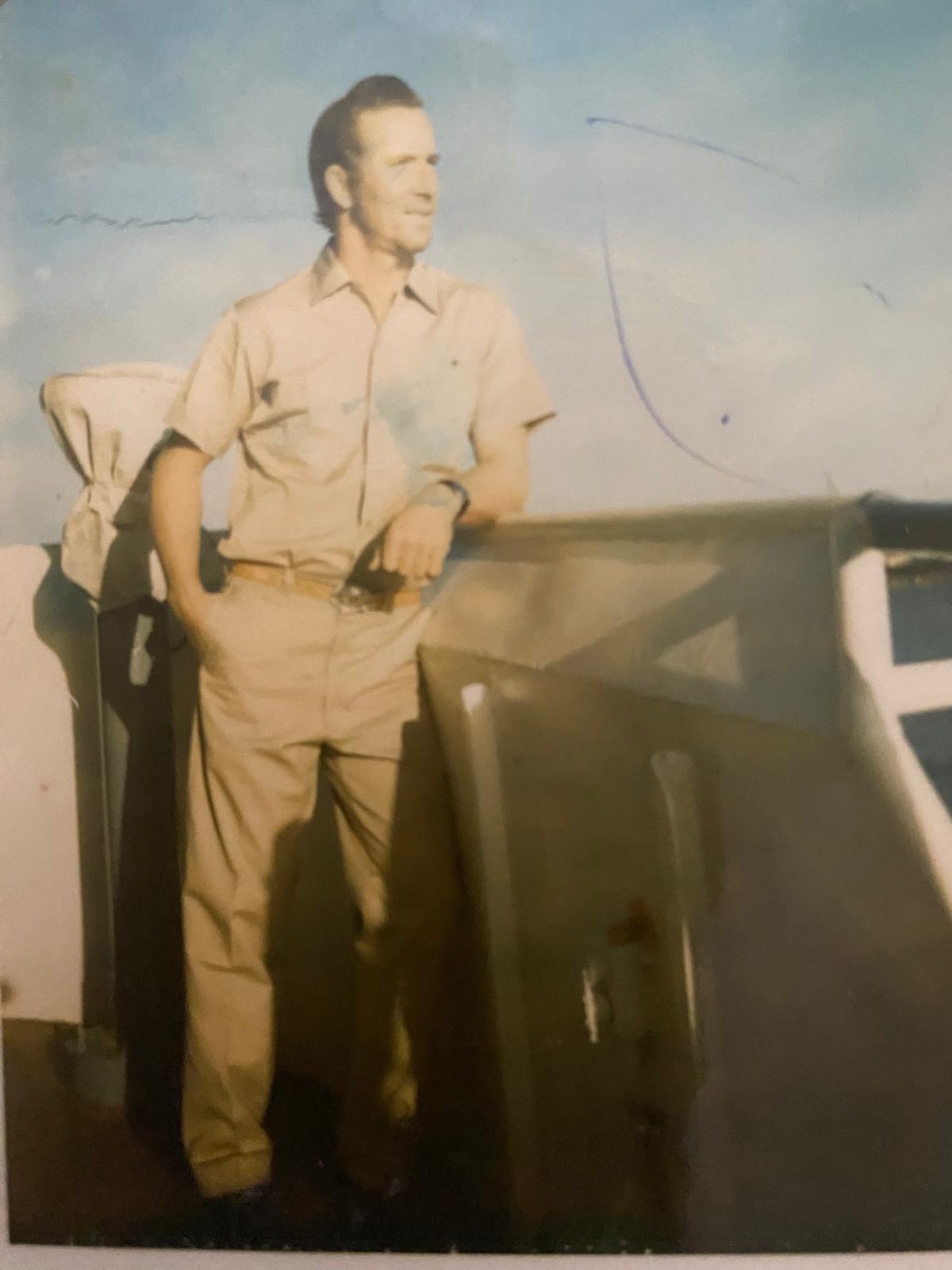
Captain Ashton Bodden was born in Cayman Brac in 1942, at the height of World War II, when German U-boats were active in the Caribbean Sea.
Bodden’s parents, Edgar and Elsie Bodden, raised Ashton, his sister Alex and brother Atlee, in a Christian household where faith, discipline and hard work were non-negotiable. Life in Cayman Brac in the 1940s and 1950s was simple and not easy.
“People survived off what they could catch from the sea or grow from the land,” Bodden recalls. “You learned early that nothing came without effort.”
He said that back then homes were simple wooden structures, often 16 by 20 feet, divided into two rooms: one for parents, one for children. The kitchen with its ever-burning caboose, stood separate from the house.
Firewood had to be cut and stocked constantly. As a young boy, Ashton’s job was to gather buttonwood and sea grape wood to keep that caboose going.
Breakfast was usually sugar water and a Johnny cake. Dinner, eaten mid-afternoon, depended entirely on what was available in the family ‘grounds’; cassava, plantains, yams, pumpkins, tomatoes and whatever could be caught from the sea. Neighbours helped one another clear and plant their plots.
There was no electricity and no streetlights. The road in Cayman Brac was a 12-foot-wide sand track stretching from West End to Spot Bay. Transportation was by foot, horseback or sailboat.
Bodden recalled that when he was a boy, there were only two cars on the island. It could take all day to walk the 12 miles from West End to Spot Bay.
At sundown, smoke fires drove away mosquitoes and families stayed indoors. Ashton slept on a plantain trash bed, though he often joked he wasn’t sure whether the bed or the floor was harder.
He walked barefoot until age seven when he received his first pair of ‘whompers’- slippers made from a car tyre and silver thatch, but he said, “he carried them more than he wore them”. His first proper shoes came at age 14.
Raised in a devout Christian home, he attended Church of God in West End and was later baptised at West End Baptist Church at age 14. Manners, honesty, loyalty and hard work were not optional; they were expected.
School was a one-room building with no partitions, no fans, no lights. His teachers included the late James Algernon ‘Algie’ Ryan, Hettie Ryan and Layman E. Scott. He owned one khaki uniform for the entire week. By Friday, he said, it could “stand up by itself”.
He passed the Jamaica local exams in Grades 5 and 6 and left school at 16; the compulsory leaving age at the time.
He started his work career at Tip Top Store under Captain Kenneth Ritch, then for Nolan Foster, and later in construction alongside men like Captain Keith Tibbetts and Temple Tatum. But like every ambitious young Caymanian man of that era, his eyes were fixed on the sea.
In Cayman Brac, jobs were scarce, education options were limited and the sea, as it had for generations of Caymanian men, meant opportunity.
After working in the construction industry for a time, he signed up with the late Dennis Foster for a job that would change the course of his life: going to sea. Soon after, he learned he had been selected to join the National Bulk Carriers Company, owned by American shipping magnate Daniel K. Ludwig.
For a young man from Cayman Brac, that was no small thing.
Going to sea in those days was not a short adventure. It meant signing a minimum one-year contract before being allowed to return home.
Going to work on the ships
Bodden left Cayman Brac in February 1962 with two long pants and two dress shirts sewn by his aunt, and a long-sleeve shirt made by his mother from chicken feed sacks. In Grand Cayman, Elsie Bernard sold him a trench coat for $10 – a purchase that would prove lifesaving. From there he travelled north to Portland, Maine. It was his first true encounter with winter.
He joined the 850-foot steamship tanker Petroking in Portland Harbour. The cold that greeted him was unlike anything he had ever experienced.
“It was freezing that first day,” he said. “I had never felt cold like that in my life.”
The contrast was startling. From the warm trade winds of the Caribbean to the gales of the North Atlantic winter and from barefoot island pathways to steel decks slick with ice. The young Cayman Bracker who had grown up walking to school and riding catboats stood on the deck of an industrial tanker owned by one of the world’s most powerful shipping companies.
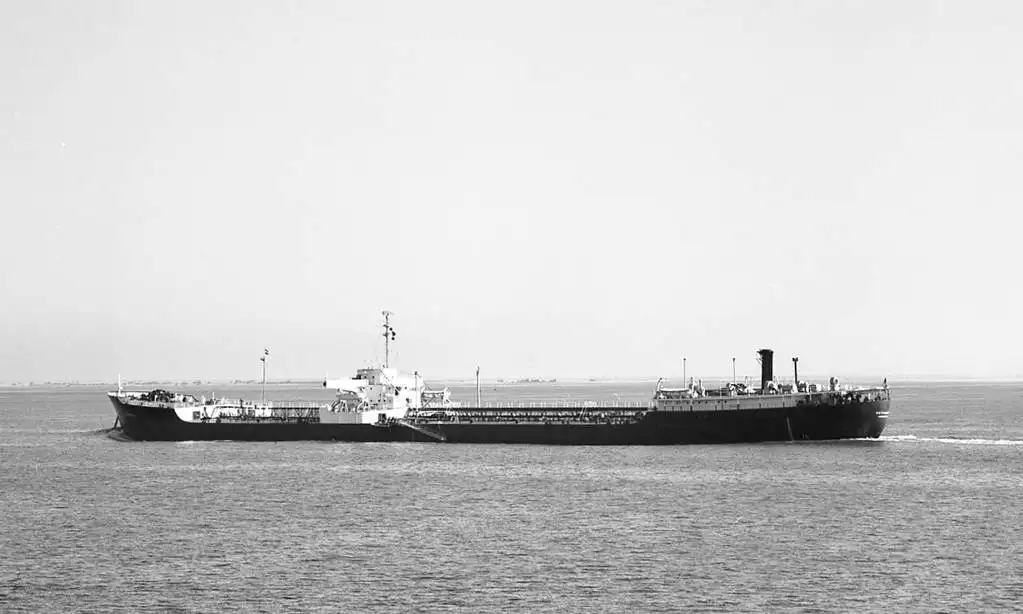
He began as a bedroom steward earning US$95 per month, sending $80 home to his mother and keeping $15 for himself.
Ship life demanded discipline, alertness and steady nerves. Ashton learned quickly. He took orders. He observed. He absorbed. Caymanian seafarers had already earned a reputation for reliability and competence, and he was determined to uphold it.
Hardship was not new to him and ambition pushed him forward. After just three months he was transferred to the deck department as an ordinary seaman, then rose to quartermaster, steering the vessel across vast oceans.
But steering was not enough. He wanted to navigate.
In the early 60s there was no GPS. Navigation meant sextant, chronometer, almanac, mathematical tables and the sun, stars and moon.
While sailing under the command of other sea captains from Cayman Brac, including Captain Fred E. Scott, Captain Harold Banks, Captain Moses I. Kirkconnell and Captain Clifford Lewis, he learned celestial navigation, plotting position from the heavens.
Within 90 days of boarding his first vessel, Ashton Bodden had circled the globe. He would do so three consecutive times and visit more than 50 countries over the course of his career at sea.
Eleven years after starting at the bottom, Bodden was promoted to captain at just 29 years old and was responsible for ship, crew and cargo. Bodden went from a humble island youth to master of ocean-going vessels in just over a decade.
From those first freezing days in Maine, Ashton’s career would span decades, carrying him across oceans and through an era when global shipping was transforming. The world was growing smaller, oil routes were expanding, and Caymanian seafarers were quietly embedding themselves in the machinery of global trade.
And like so many Caymanian captains who followed the horizon north and east, Bodden proved that even from a small rock in the Caribbean Sea, a man could step into the wider world and command it.
Life at sea was often challenging
The contract system was unforgiving. Homesickness was real and letters took weeks to arrive. There were no quick flights back to Cayman, no instant phone calls. A man committed himself to the voyage, and the voyage shaped the man.
Bodden’s time at sea involved many dangers including accidents, challenges, misfortunes and numerous storms. He visited places with temperatures that were minus 30 degrees Fahrenheit and on the opposite end of the temperature spectrum, extreme heat in the Persian Gulf.
As a young sailor aged 19 he fell from a smokestack when the ship was rolling in heavy weather. He was fortunate; badly shaken and bruised, but alive. It was a stark reminder that even tied up alongside or sailing in calm weather, a steel ship could be as dangerous as any storm.
During a typhoon in the Pacific Ocean, the ship he was on ran into 50 to 60 waves. From the bridge, the swells rose like moving cliffs, the bow climbing and then dropping heavily into deep troughs as the ship laboured forward. Discipline and nerve that carried them through.
For a young man from Cayman Brac, those days in extreme heat and towering seas were part of the price and the making of a captain.
He said the responsibility for the crew, ship and cargo was heavy at times, but he felt a great sense of pride in his accomplishment becoming a captain.
During his time on the ships, he visited 52 different countries and worked onboard oil tankers, chemical and oil carriers, bulk carriers, general cargo ships and seismic ships that were exploring for oil. The seismic ships also featured highly sophisticated navigation equipment that could tell the position of the ship within just one foot.
Through it all, he remained the same humble, steady man his parents had raised.
Return to Cayman Brac
After 22 years at sea, Bodden returned home to spend more time with his wife Marlene and two young children. By this time he was seasoned, experienced and carrying decades of maritime knowledge and his service to the sea was not over.
He went to work for Cayman Energy as a pilot and mooring master which required him to maneuver huge supertankers and berth them alongside each other in the open sea; delicate operations requiring precision and strict adherence to safety procedures.
Ship-to-ship transfers are high-stakes undertakings, demanding coordination between vessels, pilots and port authorities. His decades at sea made him uniquely qualified to understand both the risks and the rhythms involved.
While there were no major accidents during his career, he described this work with Cayman Energy as the most challenging and most dangerous.
With Cayman Energy he had the opportunity to work again with Captain Harold Banks and Captain Fred Scott, whom he regarded as two of the best ship-handling captains in the world.
Together they performed the ship-to-ship transfer of oil cargo for Cayman Energy for five years, transferring fuel, oil and petroleum products for nearly 1,000 ships.
After that company moved their operations into the Gulf of Mexico, Bodden went to work for the Cayman Islands government as a senior customs officer; a job he held for 12 years.
For four of those years while working with customs, he also served on a rotational basis as the district officer for Little Cayman, a role that required diplomacy, organisation and steady leadership.
He then got the opportunity to work as the port superintendent in charge of the ports in Cayman Brac and Little Cayman. In this role, which he performed for 14 years, Bodden guided maritime activity in the Sister Islands.
After retiring, he was asked by the government to serve on various boards. He became a justice of the peace in 1997 and served as a member of the Development Control Board for the Sister Islands of Cayman Brac and Little Cayman for 24 years, 12 of which he served as chairman.
He also served for 12 years as a member of the Central Planning Authority board in Grand Cayman ,and 16 years as a member of the Port Authority Board, contributing to the development of maritime policy and local governance.
In 2023, he was awarded the King’s Certificate and Badge of Honour.
His perspective bridged generations; from the era of catboats and handwritten logs to modern port management and regulatory oversight. Through it all, he remained grounded.
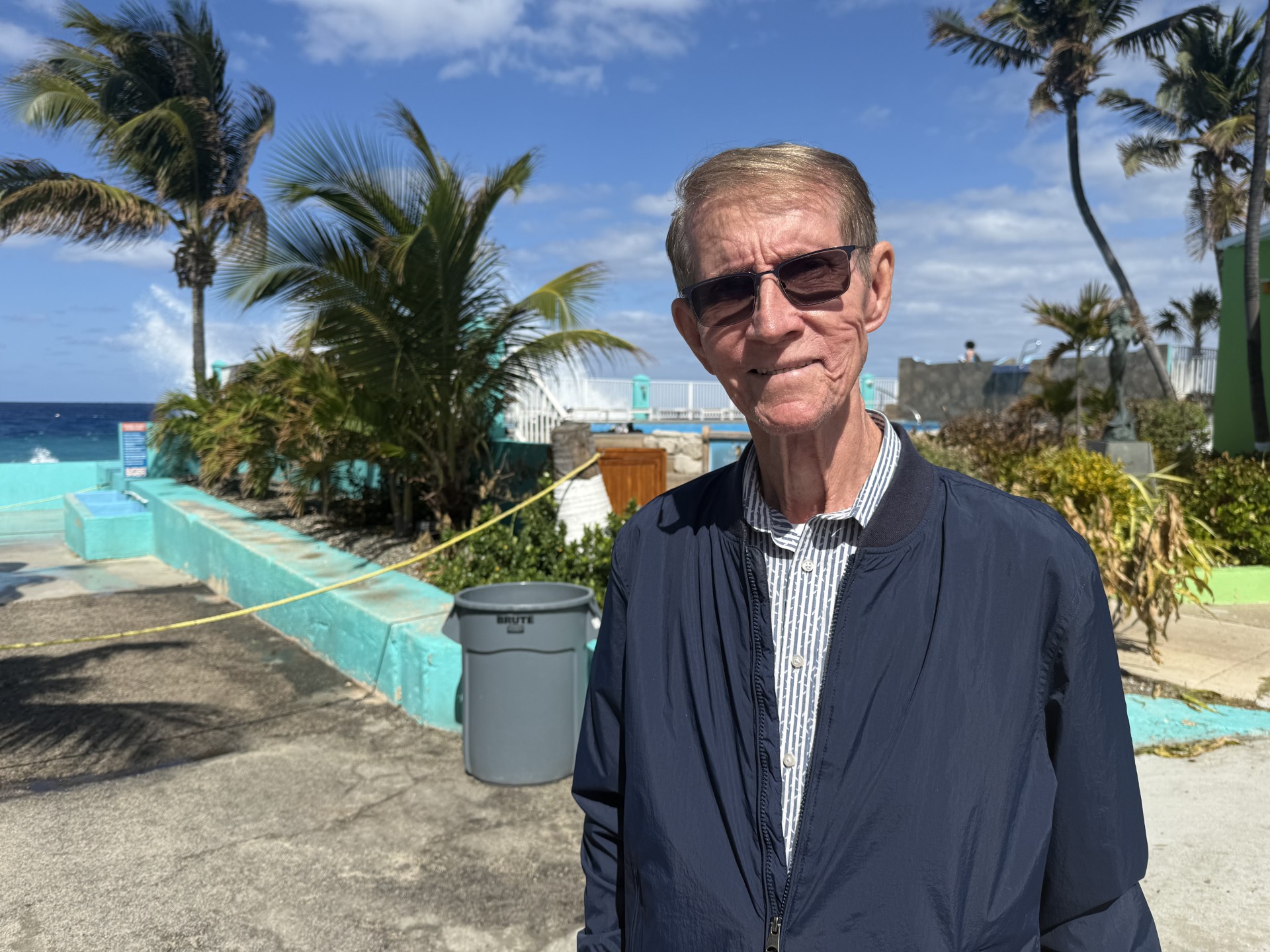
Reflecting on the past
Now at age 83, he does speaking engagements at schools and regularly sings with the choir at the Stake Bay Baptist Church, where he has been a member for 55 years.
Bodden believes the seamen of the Cayman Islands have played a major role in the Islands development, “They started to build the economic foundation of our country,” he said.
“We went away and worked on ships and sent most of our wages home, which served to help and support our families, pay taxes and build homes and other infrastructure, all of which helped to build these Cayman Islands that we love so much.”
He added, “I recognised from my early days that my greatest asset in life was my family, and I never forgot it. One of the greatest joys in my life is the joy I see in the lives of my children and grandchildren.”
His life mirrors the wider Caymanian journey of the 20th century: humble beginnings, global experience and a return home to serve.
Related Videos