By Christopher Tobutt
At the Prospect Playhouse, thunder rolls so vividly the floorboards tremble, as if the building itself is bracing for what’s coming. Lightning flashes, the room drops into pitch dark and for a moment you feel watched – not by the audience, not by the actors but by something listening from the walls.
This is ‘When Darkness Falls’, a play written by James Milton and Paul Morrissey, produced and directed for the Cayman Drama Society by Paul de Freitas and Erica Ebanks.
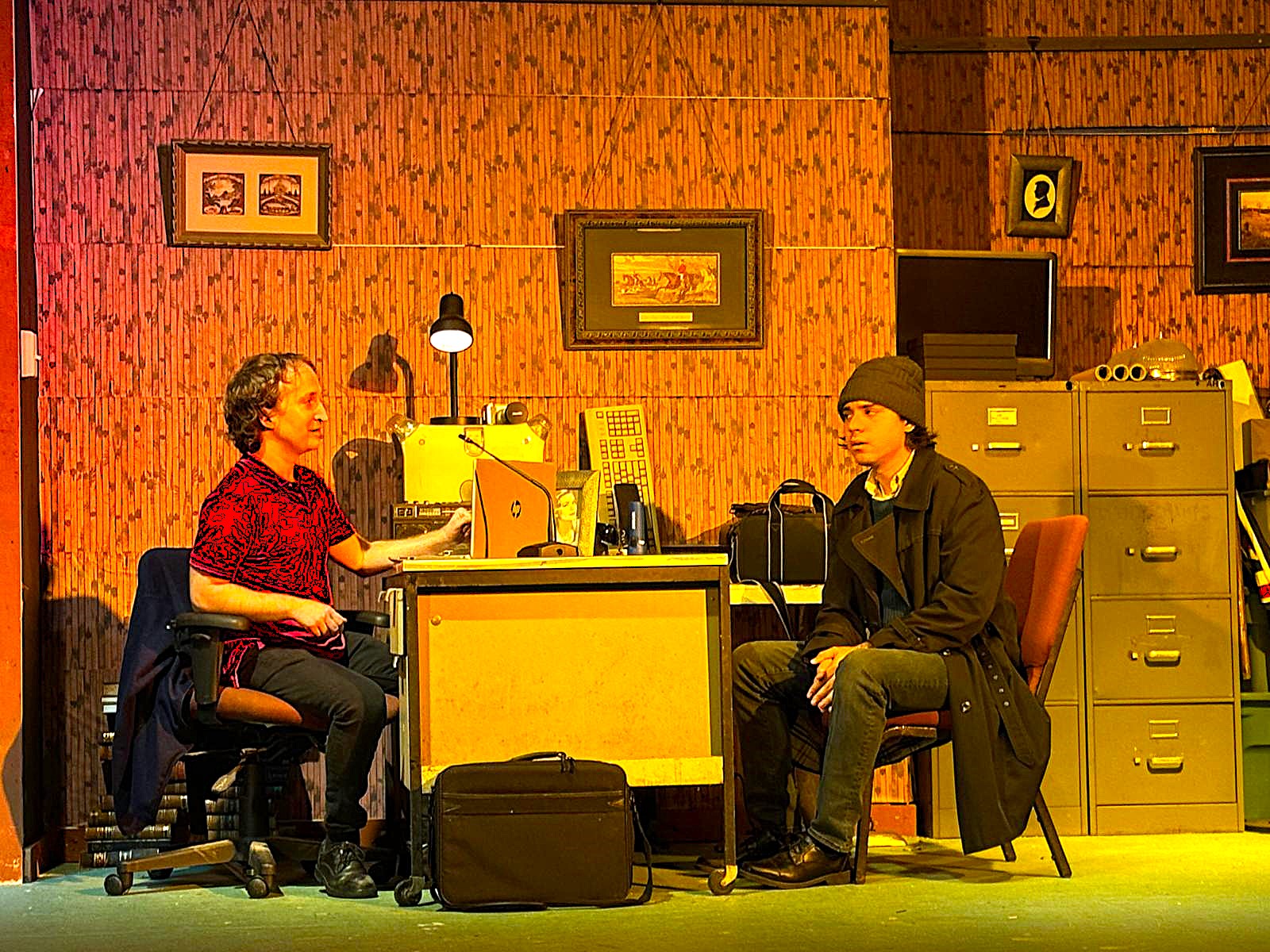
When the lights return, the stage is small, dim and stranded in time. A bulky old Apple computer glows faintly on a desk. A cassette recorder waits beside it, its buttons worn smooth. The year feels like somewhere around 1990 and the play is set on the island of Guernsey in the English Channel. John Blondel, played with brittle precision by Chris Armstrong, is a respected historian, a man who has spent his life refusing to believe in anything he cannot catalogue or control.
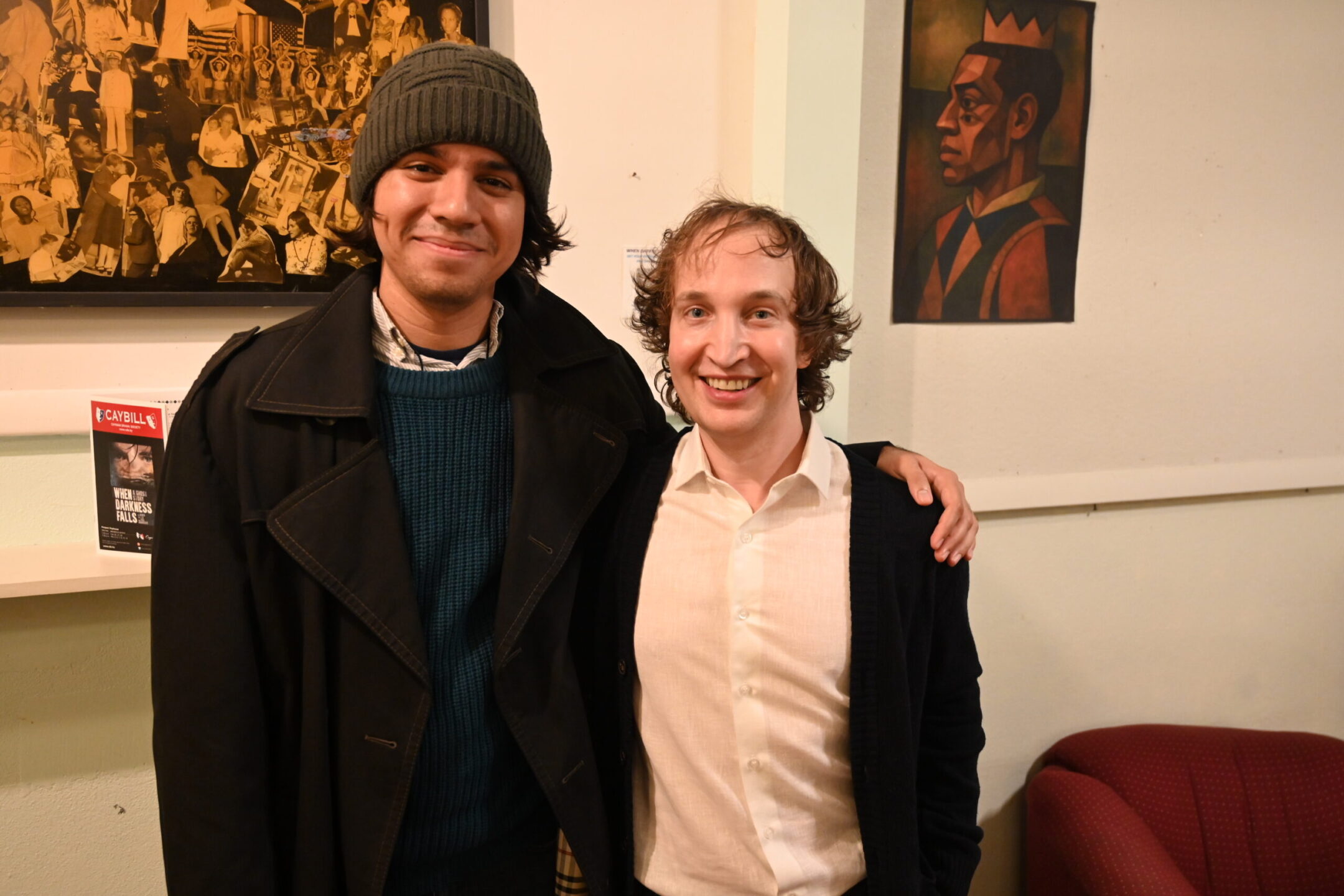
Then the ‘Speaker’ arrives. Actor Ben Tatum gives him a quiet, unsettling confidence, the kind of presence that makes you lean forward without knowing why. He begins to tell stories. Not dramatic ones. Just stories that feel like they’ve been waiting centuries for someone to hear.
The thunder outside answers him.
He speaks of Guernsey’s past – of tunnels dug during the war, of people who vanished underground during the infamous Nazi occupation and, going back further, of ordinary islanders who once looked away while women were burned alive by clerics certain they were doing God’s work.
He doesn’t dwell on the horrors. He lets them flicker at the edges, like shadows that move when you’re not looking. The cruelty is never the point. The point is the silence – the good people who walked by, the justice that never happened, the ghosts that stayed because closure never came.
A boy’s voice emerges from the cassette recorder: Ben. Fragile, frightened, describing things he shouldn’t know. The Host stiffens. The Speaker presses play again and the tape tells its hidden story. The storm deepens. Slowly, the truth begins to seep through the cracks. Yet even here, there is no closure, no true resolution.
These ghosts in this play don’t rattle chains. They accuse. They ask why they were not warned before great calamities, such as the hurricane of 1987 that ravaged the Channel Islands. But even that accusation is slippery. The man – the apparition behind the accusing finger – made his own choices. That forlorn little boat that washed up empty on the beach – that was his doing too. Decisions are locked in time and can never be undone.
In the end, ghosts may not be ghosts at all. They may be conscience, grief or the darkness that enters the collective psyche when we choose acquiescence with evil instead of speaking out. Throughout ‘When the Darkness Falls’, a black dog appears again and again – a local omen, ancient and watchful – padding silently through the island’s tragedies.
Some ghosts stay because they demand justice. Others stay because we haven’t yet found the courage to look the darkness straight in the eye.
‘When the Darkness Falls’ continues at the Prospect Playhouse with 7:30pm showings on Thursdays, Fridays and Saturdays through 14 Mar. For tickets, visit the production’s website page.
Christopher Tobutt is a freelance journalist who has written for various publications in the Cayman Islands since 2003.
Related Videos