

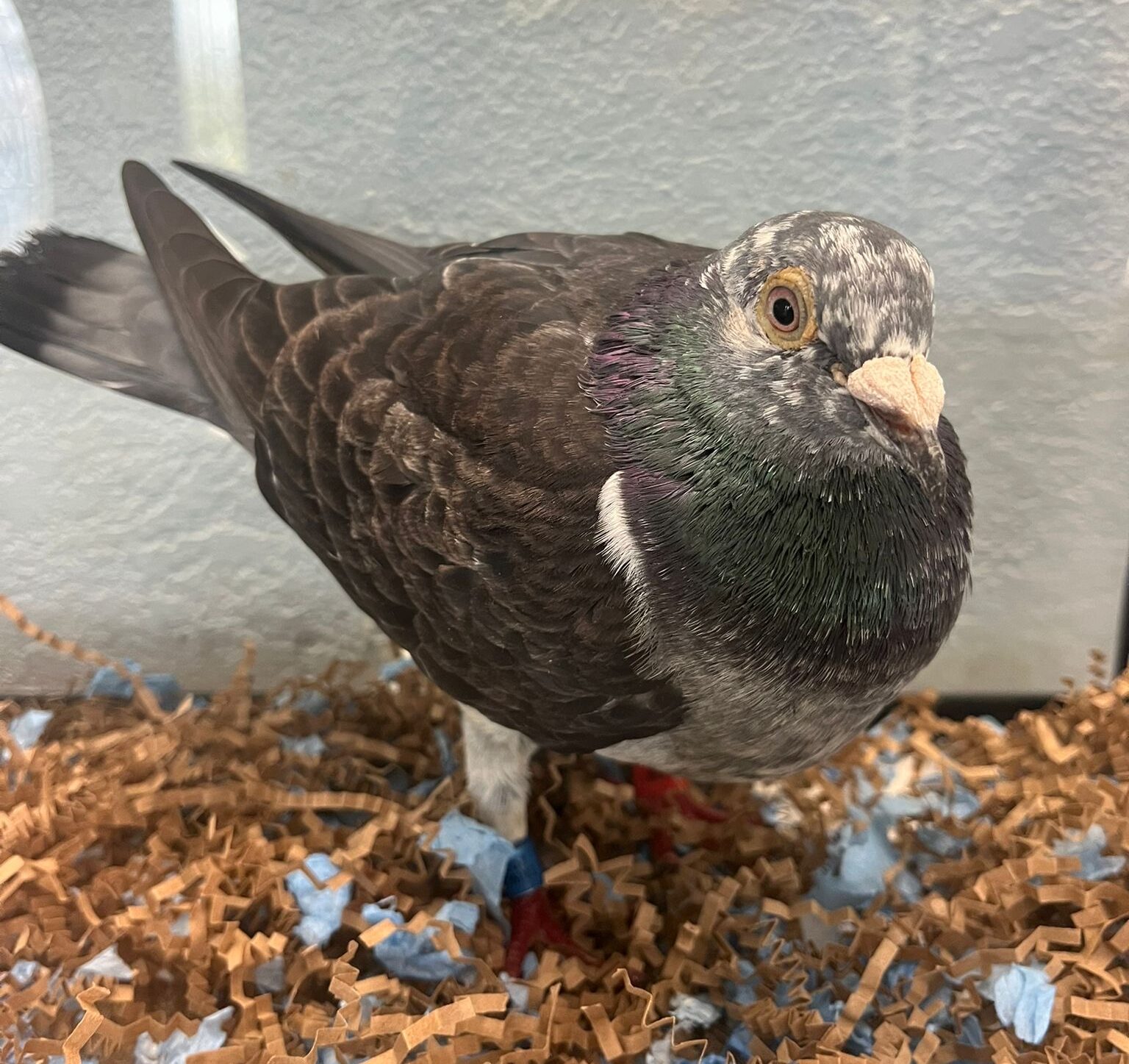
A racing pigeon bearing identification bands from Taiwan has turned up in Grand Cayman; a journey so improbable, it has left even seasoned observers searching for answers.
The bird was discovered at the Queen Elizabeth II Botanic Park, not far from the children’s splash pad, where its arrival went initially unnoticed among the everyday rhythms of the park.
For Peri Smalldon, who works with the Blue Iguana Conservation Programme, something about the bird immediately stood out.

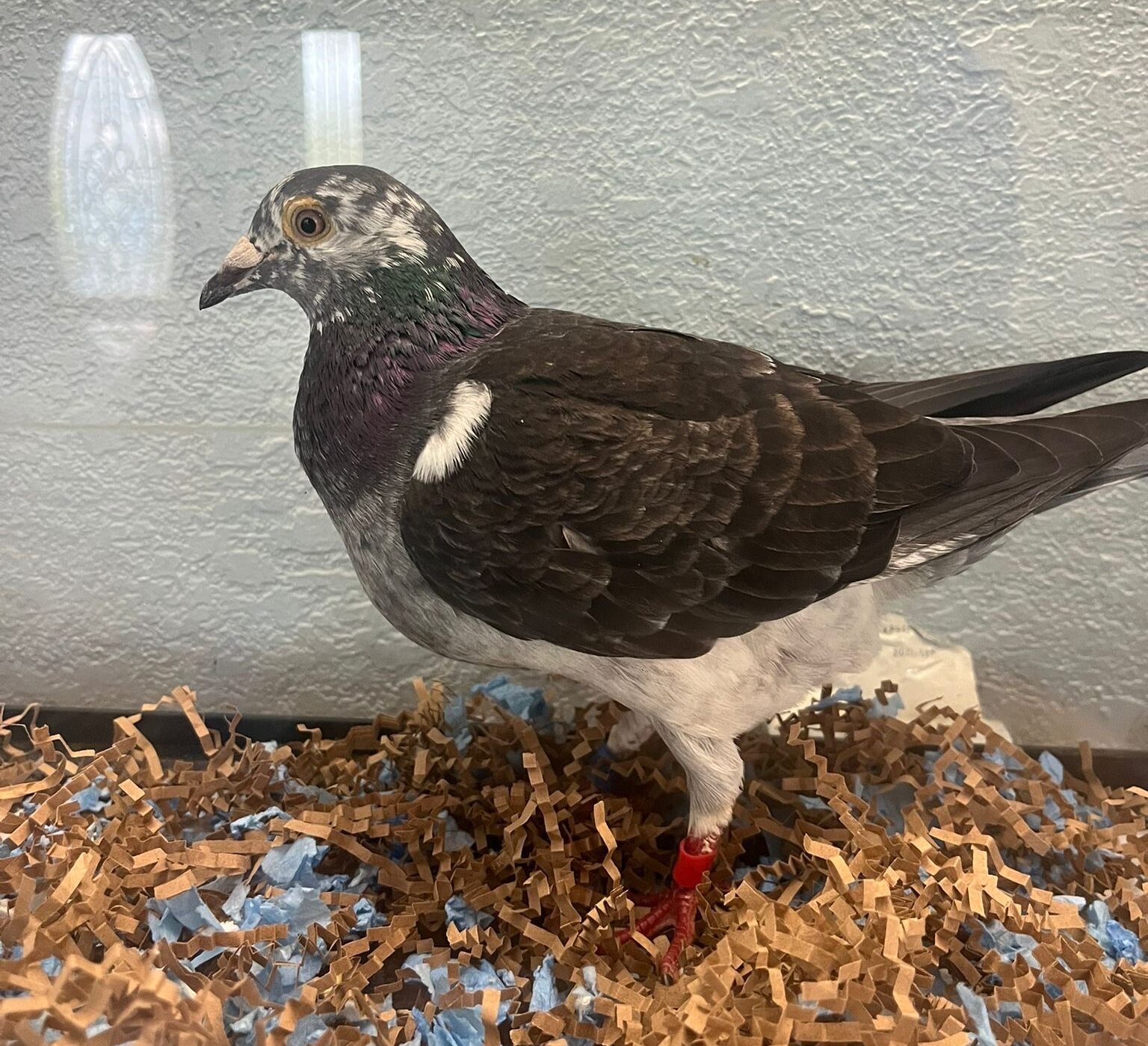
“I am 30 years old now and I have always loved pigeons, and I immediately noticed it had two rubber bands on its ankles. One of the bands says Taiwan and the other band is an identification badge with a number on it,” Smalldon said.
The pigeon was in poor condition when found, and Smalldon has been feeding the bird “because he was very weak”.
Since then, he has taken the bird into his care, placing it in quarantine while he works to trace its origins.
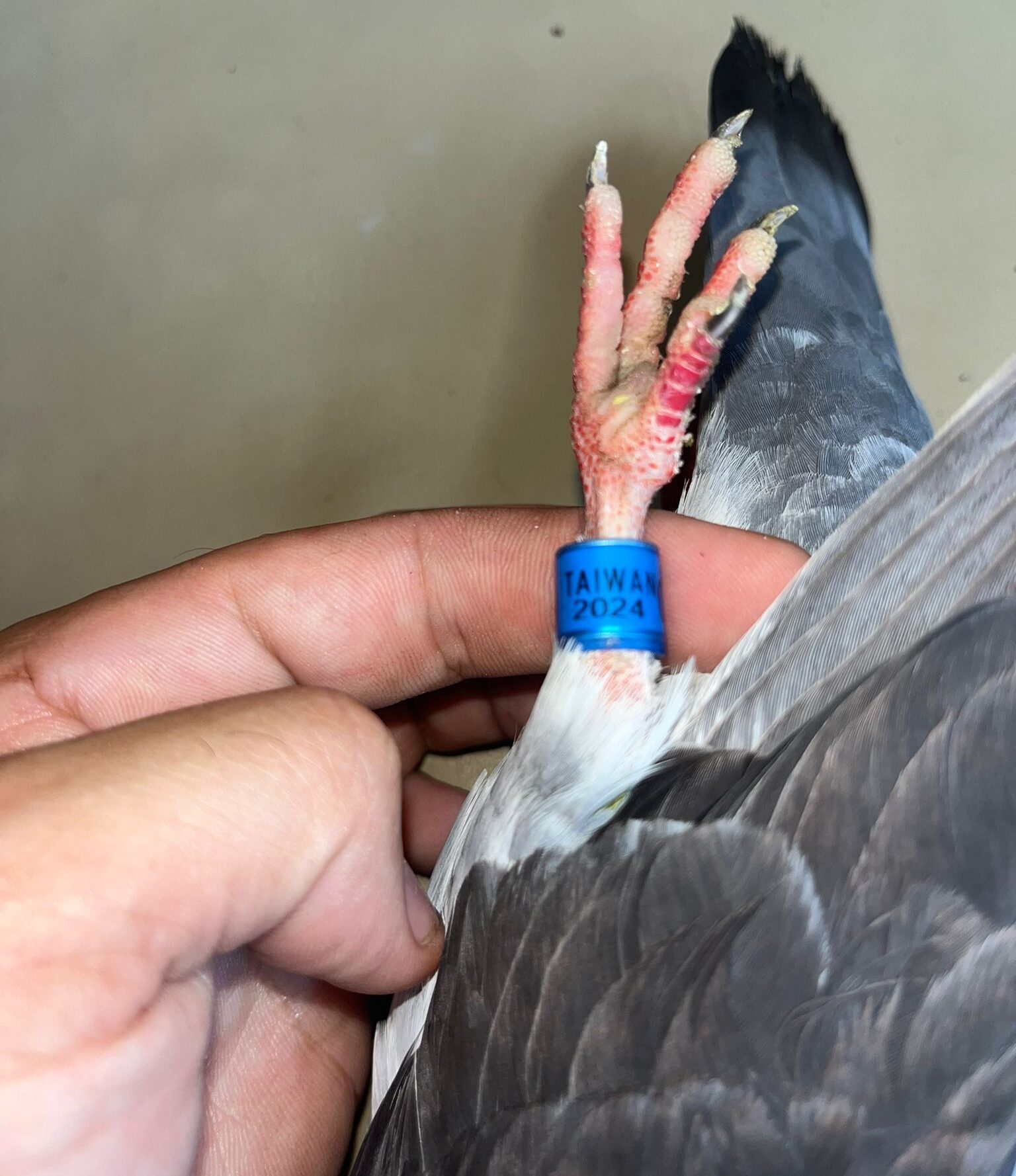
“I have contacted the pigeon club in the United States, because it is hard to find the owner,” Smalldon said.
What remains unclear and perhaps unknowable is how the bird reached Cayman at all.
“I have no idea how the bird managed to get to the Cayman Islands. It really is a complete mystery,” he said, adding that he believes the pigeon may have travelled part of the way aboard a cargo vessel.
Even that explanation only begins to close the gap. The Cayman Islands sit more than 9,000 miles from Taiwan; a distance far beyond even the most extreme pigeon races.
“I was shocked,” Smalldon said. “You are not even able to bring birds into the Cayman Islands from Taiwan.”
History of homing pigeons
To understand how such a journey could even begin, it helps to look back.
Homing pigeons have been used by humans for more than 2,000 years, prized for their ability to navigate across vast distances. Historical records show they carried messages across the Middle East and formed early communication systems long before modern technology.
By the 1800s, their reliability had commercial value. The founders of Reuters news agency famously used pigeons to transmit financial information between cities before telegraph networks were complete.
From that legacy emerged pigeon racing, first formalised in Belgium and England in the mid-19th century.
Today’s races remain deceptively simple: Birds are transported away from home and released, with the fastest return determining the winner. Distances can exceed 600 miles, with speeds approaching 50 miles per hour.
Taiwan’s unforgiving races
The country of Taiwan hosts one of the most intense pigeon racing environments in the world.
Introduced during the early 20th century, the sport has grown into a vast industry involving hundreds of thousands of participants.
Unlike traditional inland races, many Taiwanese competitions are conducted over open ocean. Birds are released far offshore and must navigate back to land without visual reference points.
Survival rates can be low, with only a fraction of birds completing some races.
A journey that defies explanation
Placed against that backdrop, the pigeon’s arrival in Cayman becomes something more than a curiosity.
It may have been blown off course in strong winds. It may have followed or caught a ride on a vessel across open water. Or it may simply represent the outer limits of endurance; a bird that kept flying until it found a place it wanted to land.
For now, its journey has paused in a quiet coop in Grand Cayman.
“I have a pigeon coop, so I have placed him in quarantine – once I see he is pest free, I will mix him with my other birds,” Smalldon said.
And somewhere, perhaps half a world away, there may still be someone waiting for a bird that hasn’t come home to finish a race.
Related Videos












Amazing. Please provide an update to this story