San Juan, Puerto Rico – Economic challenges of recent years have changed the relationship between the private and public sector, with both sides recognising the need to work together to advance tourism.
And yet there is often still mistrust between the two parties, said Richard Skerritt of the Caribbean Tourism Organisation.
“Governments valued investment more because of how difficult it was to find … projects went into decline, resulting in job losses. It was a wake-up call for governments everywhere,” he said. “Some politicians believe government can still go it alone and business operatives often prefer to sit back and wait for government to take the lead. But … you do not have to like each other to understand the desperate need to partner. You do not have to support a government politically to partner.”
He said there was “a lack of regard and trust” between the private and public sector, but that this had to become a thing of a past because the competitiveness of the region depended on an equal relationship.
Karine Roy-Camille, president of the Comite Martiniquais du Tourisme, said tourism was a tool for economic development to create employment. Public sector support, she said, was fundamental to private sector development, so there was a need to work together.
“There is also a third partner – our populations,” she told delegates at the Caribbean Hotel and Tourism Investment Conference. “We need to educate how tourism is important to them, too.”
Whence the money?
Because banks and traditional lenders are reluctant to offer equity and governments did not have funds, there has been a growing need to source capital for projects. According to Martyn Bould of Cayman Islands-based Rider Levitt Bucknall, there are significant funds available from China but “not many investors are being approached”.
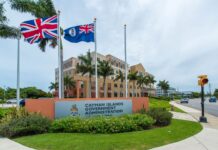
“People are willing to invest in the Caribbean … the funds are available,” he said. “The Cayman Islands is very protective of community and one of the key issues is the possibility of China Harbour Engineering Company building a cruise dock.
“So a threshold decision needs to be made. Do you need a port? Who can fund it? If it is the Chinese, then you need to ask if you want the constructors in the region.” Mr. Bould, whose company is involved in the Baha Mar development, said that there are cultural differences and different customs which dictate what the relationship with Chinese partners may be. These include work permits for incoming workers and the make up of the workforce itself. It was important therefore to measure benefits against costs.
Haydn Hughes, Anguilla’s secretary for tourism, noted that Chinese investment “means Chinese workers”.
“We have relatively high unemployment [in the Caribbean] – how do we balance this. The infrastructure will stay [once built] but whilst it is in development our workers may be unemployed and hungry.”
Mr. Skerritt opined that private-public partnerships had always existed, but in the past the private sector had hiked up prices and the public sector had mismanaged its role.
However, government wastage had necessarily shrunk due to people “having to pay attention and do their homework”, he said. While governments were cash-poor, they have access to infrastructure and land so must put this into the pot.
“Partnership is now a strategy for survival … and for the standard of living. There is no other option. Governments must stop seeing the private sector as potential enemies and the private sector must stop trying to screw governments,” he said.

Related Videos