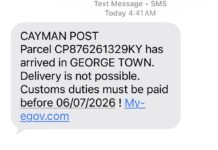
The Royal Cayman Islands Police Service has joined forces with Cable & Wireless and Digicel to warn people about a new scam targeting Cayman Islands cell phone users.
Financial Crime detectives are currently investigating a number of incidents where Cayman residents have been contacted on their cell phone by a man claiming to be a representative working for one of the communications providers. He states that the cell phone holder has won either prizes or money in a competition and in order to claim the goods a specified amount of cash needs to be sent, via money transfer, to Jamaica.
In one case the scammer also asked for the recipient’s bank details and physical address. Both Cable & Wireless and Digicel confirm that neither company would ever ask for these details.
‘When someone wins a competition with Cable & Wireless they may well receive a telephone call from a staff member to inform them,’ said Cable & Wireless Chief Executive Timothy Adam. ‘However, we would never ask for personal details, bank information or money. It simply wouldn’t happen. Our genuine winners are invited to attend our marketing and communications office to collect their prize.’
‘The scammers are after your money,’ said Detective Constable Adrian Neblett. ‘It’s important to remember that if you are contacted by telephone, letter or email and the deal appears too good to be true, it probably is.’
Should you receive correspondence with the following characteristics, it is more than likely to be bogus or seeking to scam or defraud:
• A telephone call, letter or email from someone you have never heard of.
• Offering you money or prizes in exchange for your cash.
• Originating from a foreign country.
• The sender wants you to act urgently, or there is a tight deadline for claiming your winnings.
• In written communications, common characteristics include lots of misspellings, typos, appeals to God, calling you a friend, referring to you as honest or trustworthy, a reference to a barrister or government official as a partner and use of generic language e.g. Sir, your country.
Casandra Harris, head of marketing for Digicel said, ‘For any customer who wins a Digicel competition, we contact the customer directly and invite them to our offices to present them with the prize. We advise all of our customers to never give out personal details such as credit card information or your address over the phone. If you receive a call that you are suspicious of, please make a note of the number and report it to your local police station immediately.’
The easiest way to avoid a scam is never to agree to anything over the phone, never give out any personal details without investigating first to see if it is legitimate. If the call is genuine, no company would mind you checking first.
If you have fallen victim to any type of scam, do not despair. There are things you can do. First, if you have given out financial information contact your bank and make them aware that your details have been compromised. They will be able to monitor your account for suspicious activity. If your credit card details have been released, cancel the card and obtain a new one. And finally, inform the police. Although detecting these types of crimes can be hard due to the overseas nature of them, any information is useful to an enquiry.
‘The people behind these scams are clever,’ said Mr. Neblett. ‘No sooner is one scam uncovered than they have moved onto another. They will keep getting creative with new scams designed to prey people. We ask that people remain vigilant.’
Digicel customers that have any questions can call 100 using their Digicel phone or 623-3444. Cable & Wireless customers should contact Estella Scott-Roberts, corporate communications manager on 949-7800.
Related Videos