Saying he would make the same decision again in the same circumstances, Leader of the Opposition McKeeva Bush vigorously defended the United Democratic Party Government’s negotiated Hurricane Ivan insurance claim settlement with Cayman General Insurance.

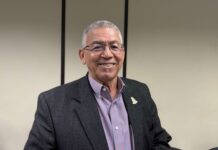
Mr. Bush |
Mr. Bush’s assertions – which came in addition to a letter to the editor he wrote on the subject (see page 4) – followed the recent release of the Auditor General’s special report on the matter. In that report, Auditor General Dan Duguay stated that in his opinion, the government did not get good value for money in the settlement.
‘I have no regrets, no doubts whatsoever about the decision that had to be made,’ Mr. Bush said in a telephone interview Thursday from Ottawa, Canada, where he was attending to official business with the Parliamentary Standing Orders Research Team. ‘I had to make the decision to save the people.’
Mr. Bush said that two Cayman National Corporation directors – one of whom was Truman Bodden – came to him in April 2005 to tell him Cayman General Insurance would not have enough money to pay all of its Hurricane Ivan insurance claims.
‘They said that unless government assisted [with a negotiated settlement of on the government’s claim] the company would go under and it could seriously affect the bank,’ he said, referring to Cayman National Bank.
At the time, Cayman General Insurance was owned by Cayman National Corporation, which also controls Cayman National Bank. Mr. Bush said that he was told the bank would assist Cayman General but could not cover all of the estimated claims.
The Auditor General’s report stated that CNC indicated that the total of its initial adjuster’s claim estimate as a result of Hurricane Ivan damage exceeded its assets and re-insurance by about $85 million. The report also stated that CNC assessed that its maximum amount of assistance – in the form of shareholders’ equity – was $40 million.
Mr. Bush said he was told a decision needed to be made right away to keep CGI from failing.
‘After I heard what the situation was, I made the only decision that could be made in the circumstances,’ he said. ‘Government had to take a bit of a loss in order to save thousands of people.’
By agreeing to the settlement with CGI, the company was able to pay out some $270 million in claims, including $50 million to the Cayman Islands Government. The Government also received 24 per cent of the shares of Cayman General – now called Sagicor General – in the settlement.
‘If they had to call in liquidators, who would have gotten the money?’ Mr. Bush asked. ‘The policyholders? No. The liquidators would have gotten most of it.
‘And government wouldn’t have gotten its money, so the big loser still would have been the government – and the Cayman Islands people.’
Mr. Bush said that had Cayman General Insurance failed it could have caused Cayman National Bank to fail, or at least have serious difficulties. If that had happened, the ramifications could have been far-reaching, he said.
‘The Cayman Islands would have suffered a tremendous international loss of confidence,’ he said. ‘Who knows how far it would have extended.’
Mr. Bush also said there were some problems with the Government’s claim that makes it questionable it would have received more than they got even if CGI had survived and settled by a normal claim adjustment process.
The Auditor General’s report said that process would have taken between 18 months and three years to complete, meaning it still might not be finalised now.
Mr. Bush pointed out that in addition to there being a major discrepancy in the value of the Tower Building – which was insured for $10 million but had been planned for demolition even before Hurricane Ivan – there was the distinct possibility that CGI would have discovered Government was under insured, Mr. Bush said.
The Auditor General’s report stated that the last time government had its assets valued was in 2000, four years before Hurricane Ivan.
‘Who knows where we would have ended up [with a normal settlement process],’ Mr. Bush said. ‘We probably would have ended up with a whole lot less than what we were trying to claim.’
With regard to the Auditor General’s report, Mr. Bush said he believed Mr. Duguay’s reasoning was faulty in that it did not adequately take in to consideration the circumstances of the situation.
‘Should the government have just sat back and made [Cayman General Insurance] go under?’ he asked. ‘I would do it all over again if the situation were the same.’
Based on the criticism he’s received from the current government on the deal, in particular Cabinet Minister Alden McLaughlin who called the settlement ‘a very poor business decision’, Mr. Bush said it is evident that had the People’s Progressive Movement been in power, it would not have made the same decision.
‘They would have let Cayman General go under,’ he said. ‘Their record is one of doing nothing and getting consultants for everything. In the meantime, the people of the Cayman Islands would have suffered.’
Related Videos