

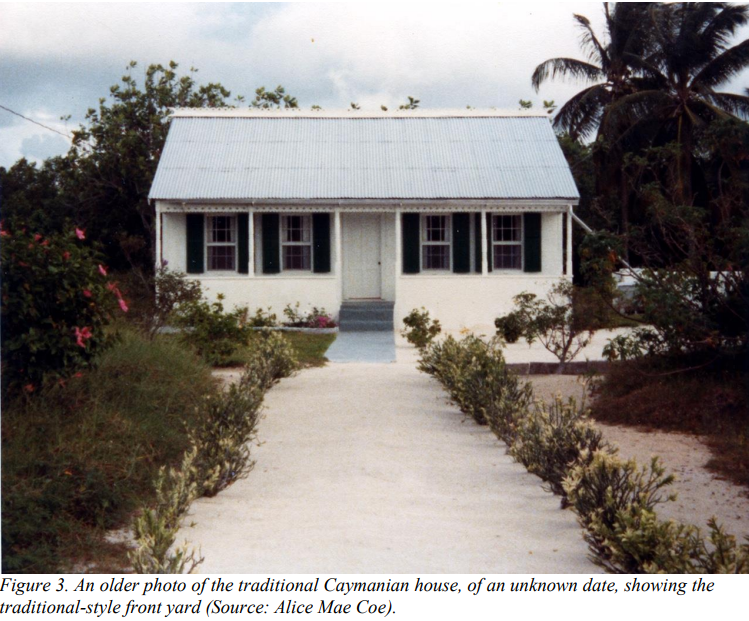
Foster’s supermarket managing director Woody Foster said public outrage towards a proposal for the relocation of an old Caymanian home is misplaced and should be used to fuel a national conversation about implementing a law that will designate and protect items of national cultural significance.
His call for a “law with teeth” comes on the heels of public dismay towards an application for the expansion of the Republix supermarket in West Bay.
“When we first expanded the West Bay supermarket, there was another old Caymanian home which was on the site, and the owner of the home simply moved it to another location,” Foster told the Central Planning Authority board on Wednesday 13 Oct.
He added, “There was no public anger then, and what we are proposing is the same thing now.”
The proposal would see the home dismantled, and transferred to a site in North Side, where it would be re-assembled. A public registered footpath, called “The Bridge”, would be moved to the western edge of the new boundary.
In response to the application, more than 1,200 people have signed an online petition calling on Foster not to remove the house, with some suggesting that it be incorporated into the design of the new building. However, Foster said keeping the house in the current location, “simply is not efficient and presents additional challenges”.
“We have a genuine interest in solving this dilemma, and the answer is not caving to public pressure,” said Foster who added that he “had shaken on the deal and there was no stepping away from it”.
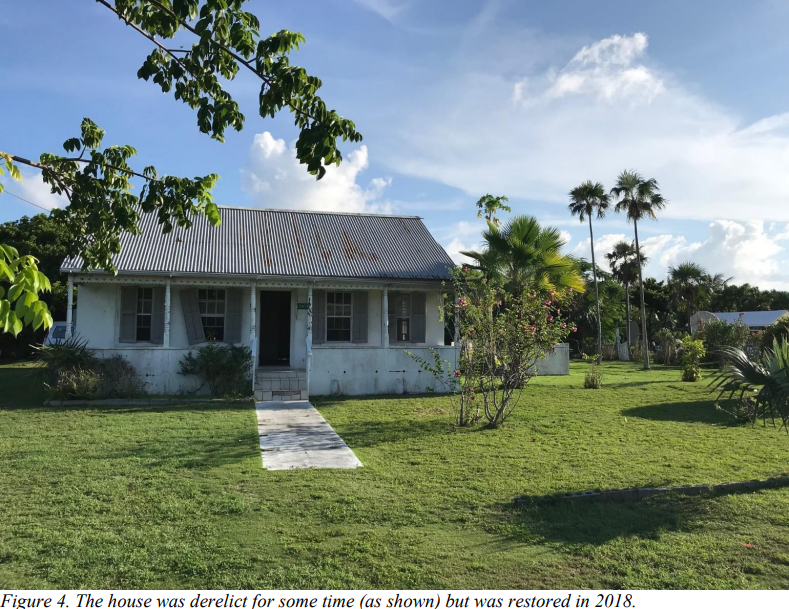
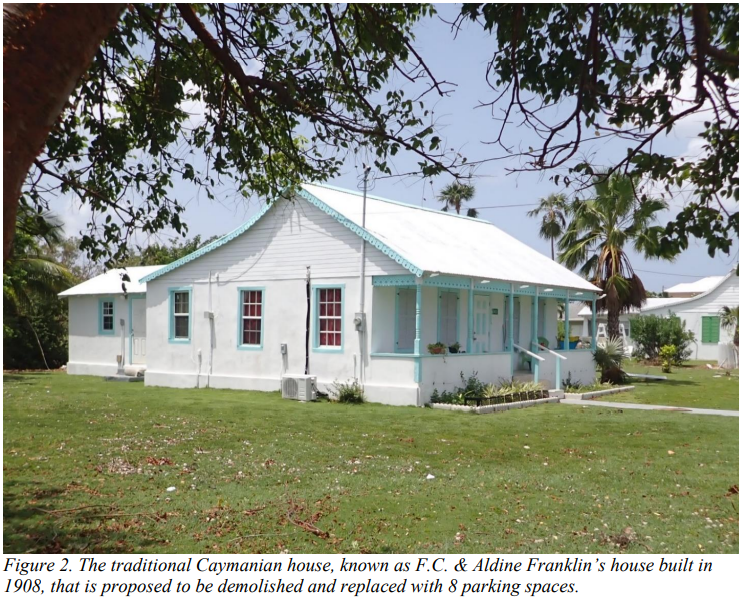
Despite the public outcry, there is nothing to stop the supermarket chain from disassembling and relocating the house, because the planning law only requires that permission be obtained to build on a site, while none is required to demolish a structure. This means there is nothing stopping the Foster’s group from disassembling the home, even if the CPA does not grant the expansion application.
According to the Department of Environment, the house in question was originally built on the spot 113 years ago. It’s called the Aldine Franklin home, and the plot of land on which it is built was declared as a “Historic Overlay Zone” by the planning law 40 years ago and has maintained that designation ever since. In a letter objecting to the application the DoE said the home was registered with the Cayman Islands Heritage Registry as WB 019.
The CIHR falls under the designation of the National Trust of the Cayman Islands. On its website several hundred homes and buildings have been documented, including Ms Aldine Franklin’s home.
In a statement, the National Trust said discussions on how to protect the country’s ‘built history’ are ongoing with the government.
“A few years ago, a proposal drafted by Richard Mileham of the Planning Department in conjunction with the National Trust’s Historic Advisory Committee was submitted to the Cayman Islands Government for consideration in relation to a statutory framework that will govern how the built heritage of the Cayman Islands can be protected by Law,” reads the statement. “Discussions are ongoing with the Government in this regard.”
Foster said he hopes the renewed attention will “shift the public anger to the government for not having created a national cultural preservation document with teeth”.
Related Videos













Stop the hit-or-miss Historic Preservation NOW!
This is a prime example of what happens when the government does not step up and assume its responsibility to the country. In the text of the story, it is detailed that a suggested resolution to the issue of preserving our heritage was submitted to (the former) government years and years ago. NO ACTION. Of course, this is typical of the former government filled with insiders and loopholes to make them richer and safer under the law.
Property owners should have property rights that protect them, not bind them into the momentary demands of a few vocal activists who are not looking at the whole picture of what Cayman should (and can) be.
If Caymanians are really interested in protecting our heritage, they will step up and demand immediate, temporary restrictions are implemented and a permanent law and legal structure be developed within twelve months. A twelve-month deadline is plenty of time for bureaucrats to look at “Best Practices” established by other jurisdictions and have the legislative framework ready for implementation.