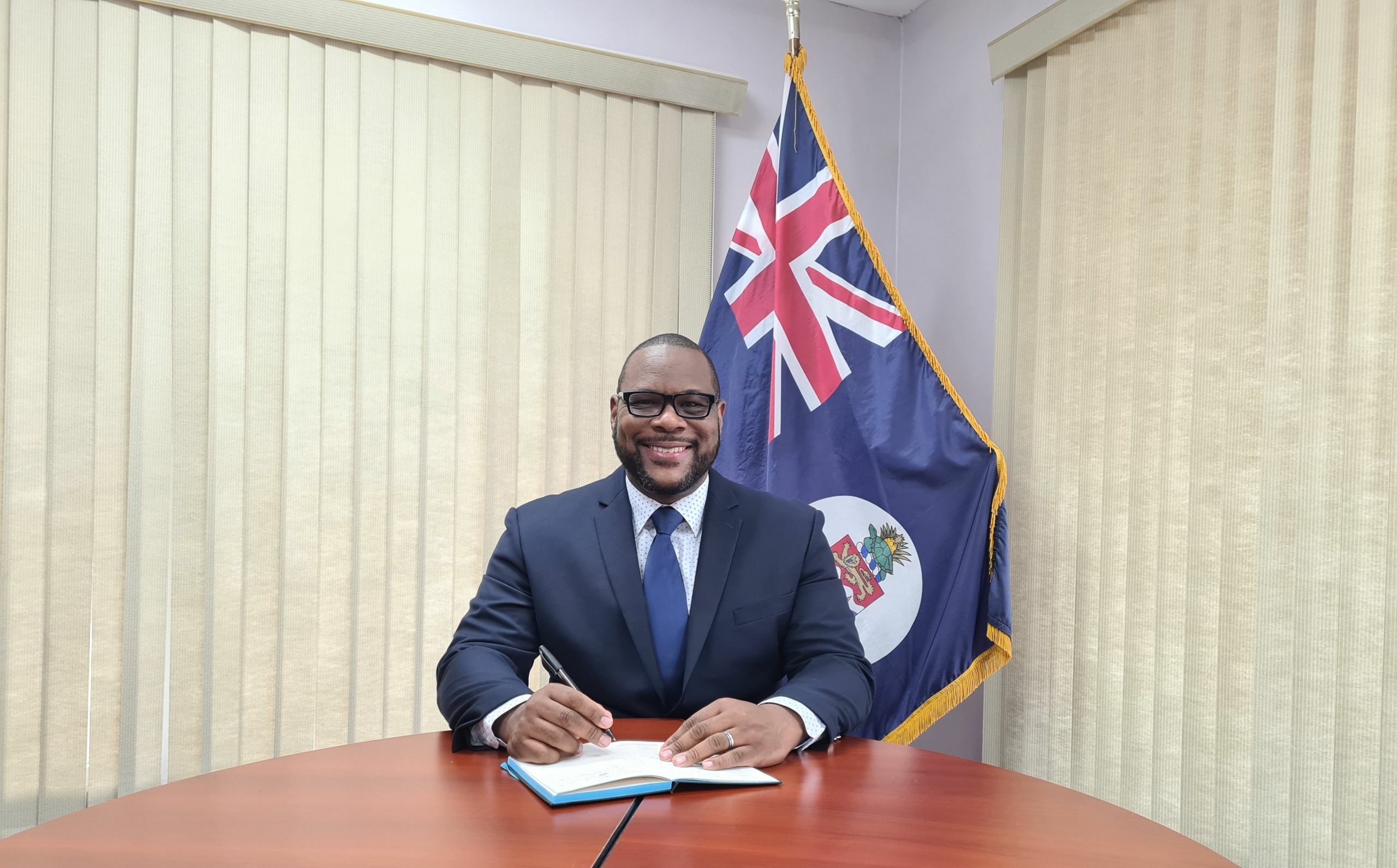
Government schools are on track to reopen as normal Monday, Department of Education Services Director Mark Ray has said.
The confirmation comes after Education Minister Juliana O’Connor-Connolly triggered an early mid-term break this month that was prompted by a spike in COVID-19 cases in local schools and staff shortages due to isolation protocols.
Ray, in a brief emailed statement to the Cayman Compass this week, said, “I can confirm that school is restarting in-person on Monday.”
He was unable, however, to say how many teachers and students were still isolating due to the ongoing outbreak.
John Gray and Clifton Hunter High Schools were closed from Thursday, 7 Oct., and primary schools on Grand Cayman shut for their mid-term break on Monday, 11 Oct.
Ray said steps are in place to ensure the safety of students and staff as they continue with the remainder of the school term.
“We are looking at additional measures to keep students and staff safe and well, both from a physical and mental and emotional wellness standpoint,” he added, in a further statement on Friday.
It is expected that government, at Friday’s media briefing, set for 3pm, will outline its plans for the use of lateral flow tests for local schools as efforts continue to contain and manage the spread of COVID-19 in the community.
Parents urged to follow education rules
Meanwhile, Ray reminded parents to adhere to the rules as outlined in the Education Act, in particular when it comes to keeping kids home from school for extended periods as it could trigger truancy provisions for unexcused absences.
Ray discussed this issue earlier this month when he appearing on the Compass Facebook talk show The Resh Hour after some in the community suggested keeping kids home and using remote learning.
While the DES boss said that facility is available, he advised against students being removed from school without just cause.
“If we have parents who are drawing students from school and it is for a prolonged period, we don’t have the capability to provide that prolonged extended blended kind of support for those students who are in class and out of class.
“Those over a prolonged period really are starting to get into unexcused absences in terms of their [attendance] register and that would be followed up from a truancy standpoint,” he said.
Ray said the DES encourages parents, if their child is having a medical issue, to get the documentation and the department will provide as much support as a school can provide for remote learning.
Reassurances on safety
“But if it is just because you feel this way [fearful] it’s really hard to support that because it’s really difficult for teachers to have that type of constant interaction. I would definitely recommend having conversations with your principal because we want to reassure parents that all of the steps that we’re taking in our schools… our various protocols are for their protection,” he said in the 6 Oct. interview.
The Education Act (2016,) he said in response to further questions on the issue, speaks to absence from school based on illness or other unavoidable cause, as well as religious holidays, exclusions, expulsions, disabilities that in the opinion of a medical practitioner make the student physically incapable of attending school, and work experience or authorised educational programmes.
He said, in his emailed response to queries, that some schools have reported unexcused absences since the start of the school year.
Fines for unexcused absences
As it relates to those absences, he said, “we are guided by the Education Act”.
Attendance officers commence investigations into unexcused absences at five days of non-attendance, he explained.
“If the investigation reveals that the absences are not within the parameters indicated above… then as per the Education Act, the parent/guardian may be liable on summary conviction to a fine of $2,000,” he said.
Looking at a blended format of remote and in-class learning, Ray said, would be a “larger policy discussion regarding attendance and the capacity to effectively deliver a hybrid learning model as discussed on [The Resh Hour]”.
He pointed out this would be a “significant challenge in providing equity in education provision for large portions of a class requiring remote instruction and face-to-face instruction simultaneously”.
The DES, he said, has an IT department which provides support for remote learning.
ICT Manager Lance Barnes, responding to questions on the department’s ICT capacity, said a total of 15 staff members, including himself, are in the unit.
He said there are a number of ways support is administered to parents who have had to use remote learning following last year’s lockdown and the recent outbreaks.
“The ICT unit uses remote technology to administer support. Each school has an ICT staff to offer support and external stakeholders assist with onsite and remote support,” he explained.
Related Videos