

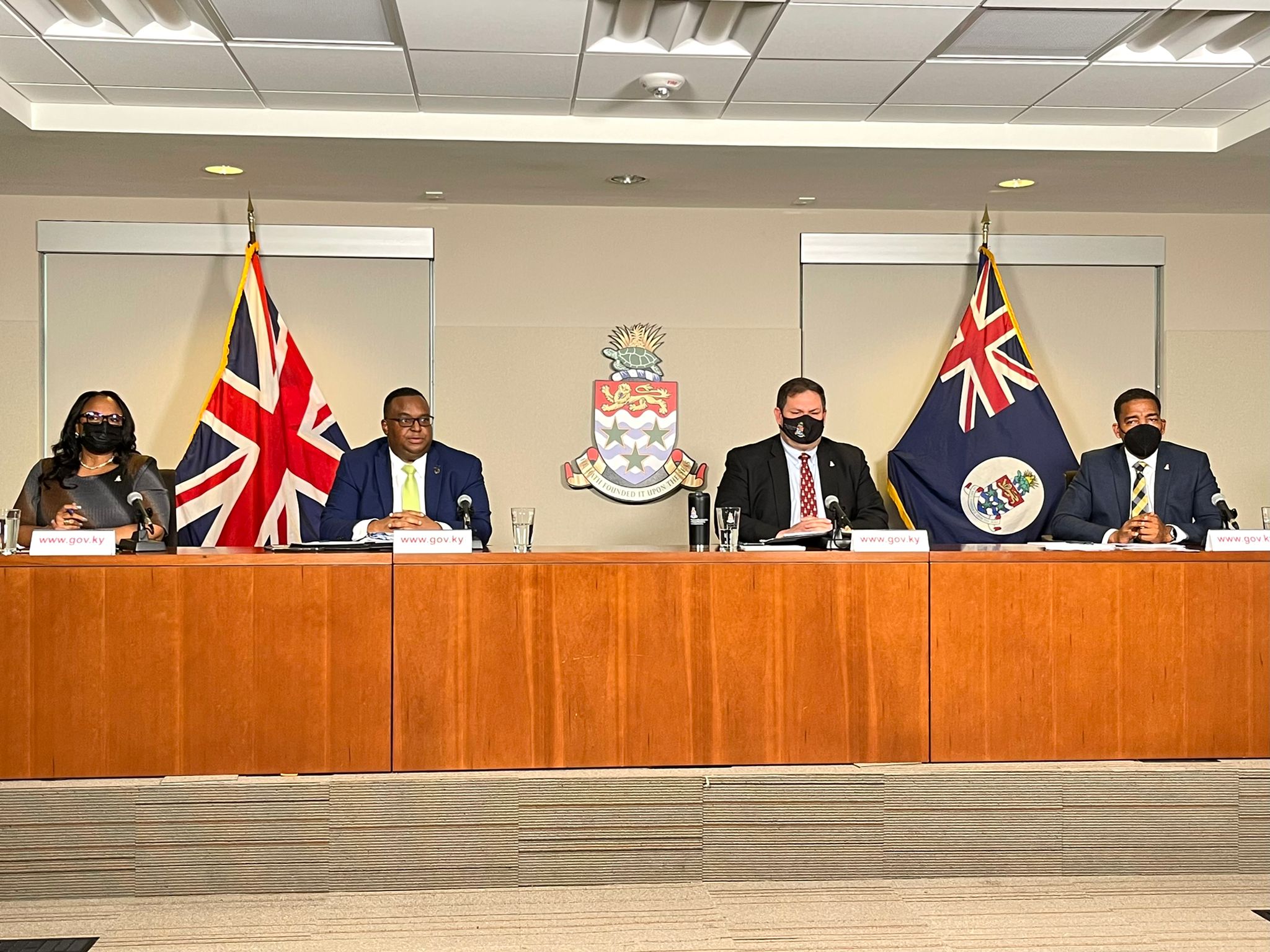
Finance and Labour Minister Chris Saunders said government has flagged incidents of abuse under its tourism stipend programme, but there will be no prosecutions arising out of it.

The Minister added, with a small community like Cayman, “the last thing you want to do is name and shame anyone”.
Abuses from employees, employers found
Saunders said having reviewed the programme, which was shifted to his ministry from the Tourism Ministry, his team came across recipients abusing the facility that was set up back in 2020 to assist displaced tourism workers.
Apart from finding people who were fully employed, Saunders said some employers had taken advantage of the programme.
“We have found cases where employers who have active work permits are submitting work permits for non-Caymanians… paying the work permit fees, actually getting a stipend. Now, if you can afford a cost of a work permit to hire a non-Cayman national I don’t see why you should be on a stipend. That’s just me speaking personally,” he argued.
He said, to their credit, there have been Caymanians who have done “the right thing” and exited the programme when they obtained full employment.
However, he said there are others who have not.
“Where we do our challenges is with the abuses within the system. Some people have been fully employed and are back to pre-pandemic levels in terms of income, and they’re still pushing to get the stipend. I think that is really immoral. I think it is wrong, because there are people out there who genuinely need the help,” he said.
He said government appreciates that some workers may be working full hours, but their gratuity income may not be back to pre-pandemic levels. He said they created a tourism recovery grant programme where those individuals will be transitioned off the $1,500 stipend, and to $1,000 for February and $750 next month.
A further assessment will be done following that, he added.
Opposition: Assessment has to be fairer
Following the minister’s statement, Opposition Leader Roy McTaggart said that while he welcomed government’s revised approach to dealing with the stipend recipients by way of reduced allowances, he suggested government reconsider and “do the right thing for over 600 Caymanian families and assess their situation individually before making any reductions”.
McTaggart said he would have preferred Government take the opposite approach to reduction and assess the 600-plus recipients to determine their individual circumstances before “making random cuts”.
“No one would want the Government to provide a stipend to someone who is now fully employed in a regular job and making sufficient money to care for their families and pay their mortgage and other commitments. We can agree on that. But the review process must be correct, and it must be fair, to ensure that Government is doing right by people whose lives have been turned upside down,” he said.

Pointing to the first survey from the stipend recipients, McTaggart said that most were older and may find it hard to get jobs paying more than they had earned from tourism.
Of those with some employment, he said most did not work regular hours, were underemployed, and made insufficient income to survive adequately.
“Only 26% of those employed worked more than 30 hours weekly. The survey did not determine whether income earned was sufficient to meet the stipend recipients’ needs and adequately replace their income from tourism. The majority still needed help to supplement any income they made to keep a roof over their heads, put food on the table, pay utilities, and survive,” he said.
Saunders, he said, provided no actual updated statistics, “so how certain can he be that their current ‘full employment’ provides them sufficient income? Particularly as we are entering a period of increasing cost of living”.
Prisoners receiving stipends?
Saunders, in response to further questions on the stipend programme, addressed claims about prisoners receiving payments, saying his team is “scrubbing the list” to verify individuals.
He said no one in prison will be getting the stipend “any more”.
He said the vast majority of people receiving a stipend, if not all, are Caymanians. He reiterated the position that he was not prepared to spend limited resources to chase anyone down.
“I’ll prefer use those resources that will help my people find jobs. So for the few that are there, it’s not worth the effort. We find them, we just stop paying them, but our effort is best spent on trying to get people that helping hand… because what people really want is jobs,” he said.
Tourism Minister Kenneth Bryan, speaking on the prison stipend issue, added that the situation must be taken in context.
Pointing out that, for example, it may be a case of a stipend recipient who may have been imprisoned for a driving infraction and upon leaving jail is still faced with unemployment.
Related Videos













CIG and CIG representatives need to stop the misinformation regarding work permits and hiring Caymanians. It has, and will continue to, create divisiveness where it does not need to exist. CIG misinforms the public that there are Caymanians that cannot find jobs. The issue at hand is the jobs available and the qualifications and willingness to do those available jobs. I would love if I didn’t have to pay any work permit fees. However, it has been, and will continue to be difficult to find employees at all levels, who want to do the work available for the value of that available job.
Does CIG imply that Caymanians should take any job for any pay? Is CIG forcing Caymanians to work jobs that may not be jobs they want?
People are defrauding the system but we won’t prosecute them. Instead we’ll say it’s not nice.
Somehow I don’t think that will be effective.
UNBELIVEABLE! Defrauding government results in no consequences???? Great deterrent for wannabe defrauders. What is the point of rules/laws that aren’t enforced?