

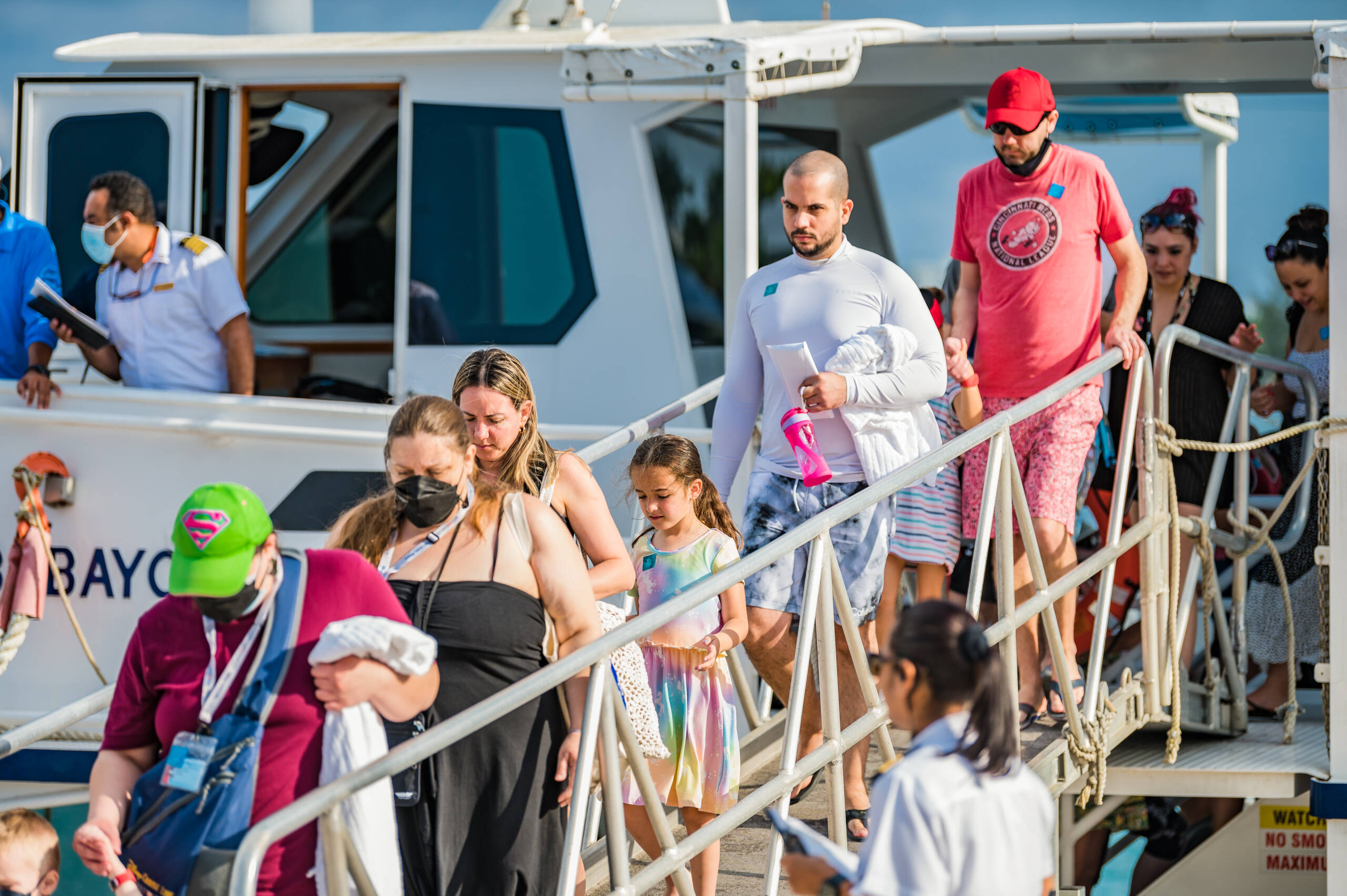
Over the past month, commuters along Seafarers Way in George Town have grumbled about busy intersections now packed with tourists. It’s an all-too-familiar sign that cruise ship passengers are back, after a two-year government-imposed ban due to COVID.
For many who earn a living in the tourism industry, cruise ship passengers were expected to bolster Cayman’s rebounding tourism numbers, as they bring with them much-needed financial relief.
However, in reality the results have been mixed.
“There is no denying that the return of cruise passengers resulted in an immediate uplift of numbers, across the sector,” said Cayman Islands Tourism Association vice president Troy Leacock.
For the past six years, he and his sons have owned and operated Crazy Crab, a water-sports and charter company which caters primarily to stayover tourists.
He said the visitors arriving in the initial wave have been more understanding of the need for higher prices.
“When the borders were just reopening, we discounted our prices tremendously… and kept those discounted rates for some time; however, we soon found that in order to stay in business we could not continue with those rates.”
He added, “What was even more surprising was that when we returned to our regular rates, we still could not survive, so we increased our prices further and the tourists didn’t bat an eye.”
Leacock believes there is a general acceptance of increased costs for goods and services, as part of a larger rise in prices globally.
But not everyone working in the tourism sector has the same story to tell.
Increased numbers do not equal increased spending
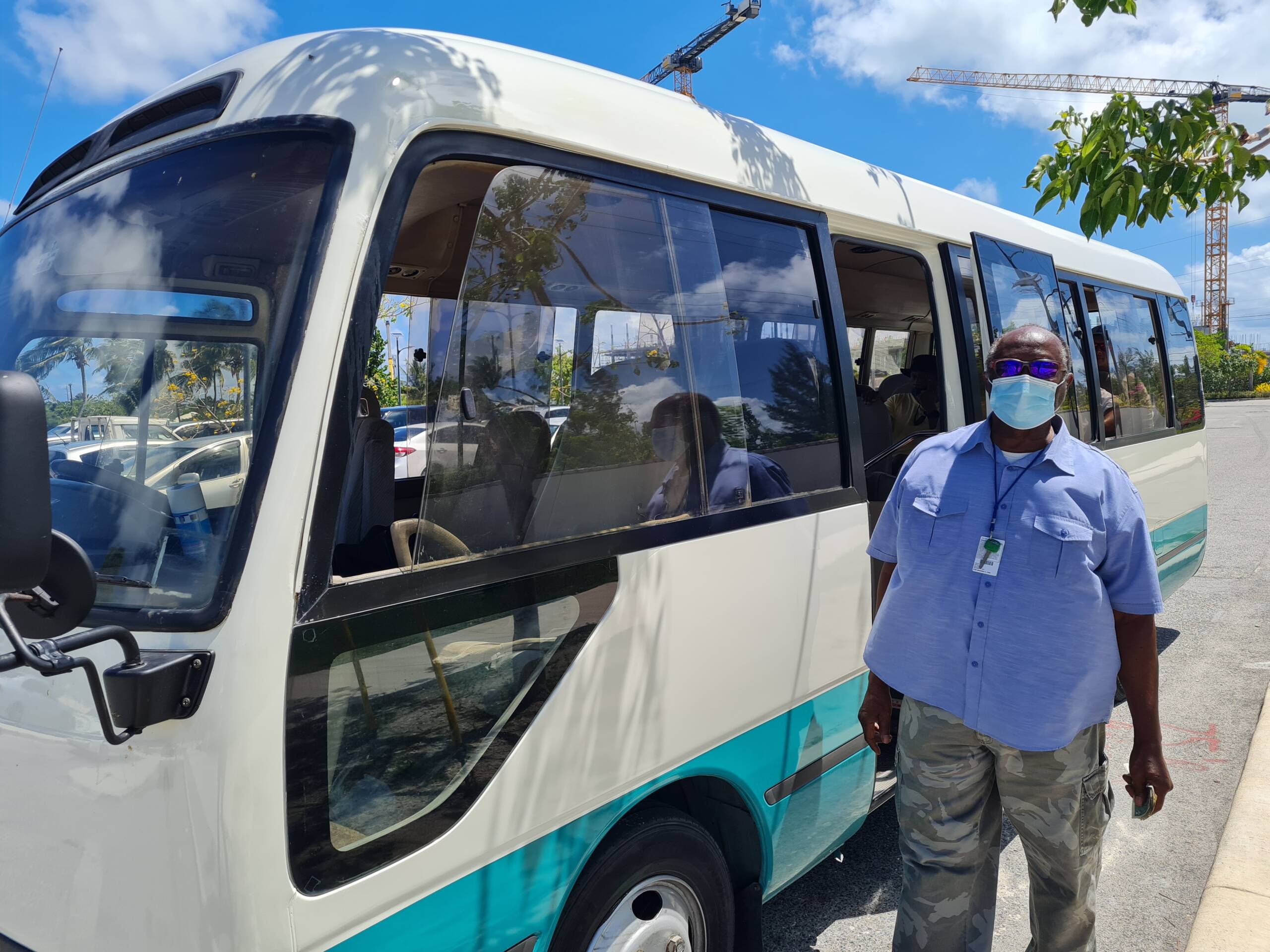
Walter Kidd, a bus operator, has shuttled tourists from the ports to the beach and back for the better part of 10 years. Over the past month, however, he’s noted trends he had hoped would no longer be the case.
“We are getting the trickles,” said Kidd. “When the tourists come, the bigger operators snatch up more than half of them, because they have direct contact with the ships.”
Kidd said the smaller independent operators are then left to compete among themselves, taxis and public buses for the few tourists who were keen to venture outside of the capital.
In March, the government announced that 21 vessels with a passenger capacity of approximately 75,000 were given tentative approval, providing that they followed the COVID regulations stipulated in Phase 1 of the staggered return of cruise ships. But that’s not been enough to ensure everyone gets a cut of the tourists’ expenditure.
“Some days, we only make enough to pay for the gas we burn; other days we don’t even make that much,” Kidd said.
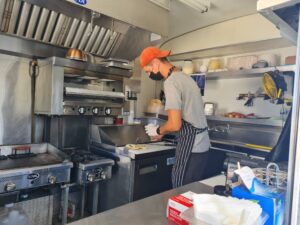
Ernestas Vitunskas is a chef and co-owner of Murph’s Kitchen – a food truck which primarily operates by Seven Mile Public Beach. He and his partner have been in operation for the past five months.
“The other day, the beach was full of cruise ship passengers, but more passengers didn’t mean more money,” said Vitunskas.
“The tourists staying on island are more likely to spend money, which would mean more income. Cruise [passengers] they do spend money, but not as we would probably like,” he explained.
The balancing act
The return of tourists has brought into focus the need to balance several factors seemingly in competition: Ensuring the health and safety of all in Cayman, allowing people to make a profit, protecting the environment and the oft-repeated debate about passenger volume versus passenger experience.
Tourism Minister Kenneth Bryan said government’s position is quite clear, when weighing up the balance between the need to make a living and the administration’s responsibility to keep people safe.
“One [cruise ship] didn’t come and I think it could have been because they weren’t fully vaccinated with their crew,” said Bryan, while speaking on the Cayman Compass Facebook talkshow ‘The Resh Hour’ on 13 April.
“As a result, and as the country expects us to do, [we held] fast on our medical regulations; and our medical regulations were that all crew and passengers have to be vaccinated outside those who are below the age of 12.”
In addition to the vaccination requirements, the regulations also madate social distancing and wearing masks in certain areas.
But, for Kidd and Vitunskas, the balancing act weighs heavily on them, as it does for others in the tourism industry.
“Obviously we are being cautious with face masks, hand santitisers and all of that… just the simple measures that we did at the beginning of COVID,” said Vitunskas.
“At the back of my mind I am always thinking about COVID, like everybody else,” said Kidd. “But we have to make money; the problem is health comes first.”
Restarting the engine
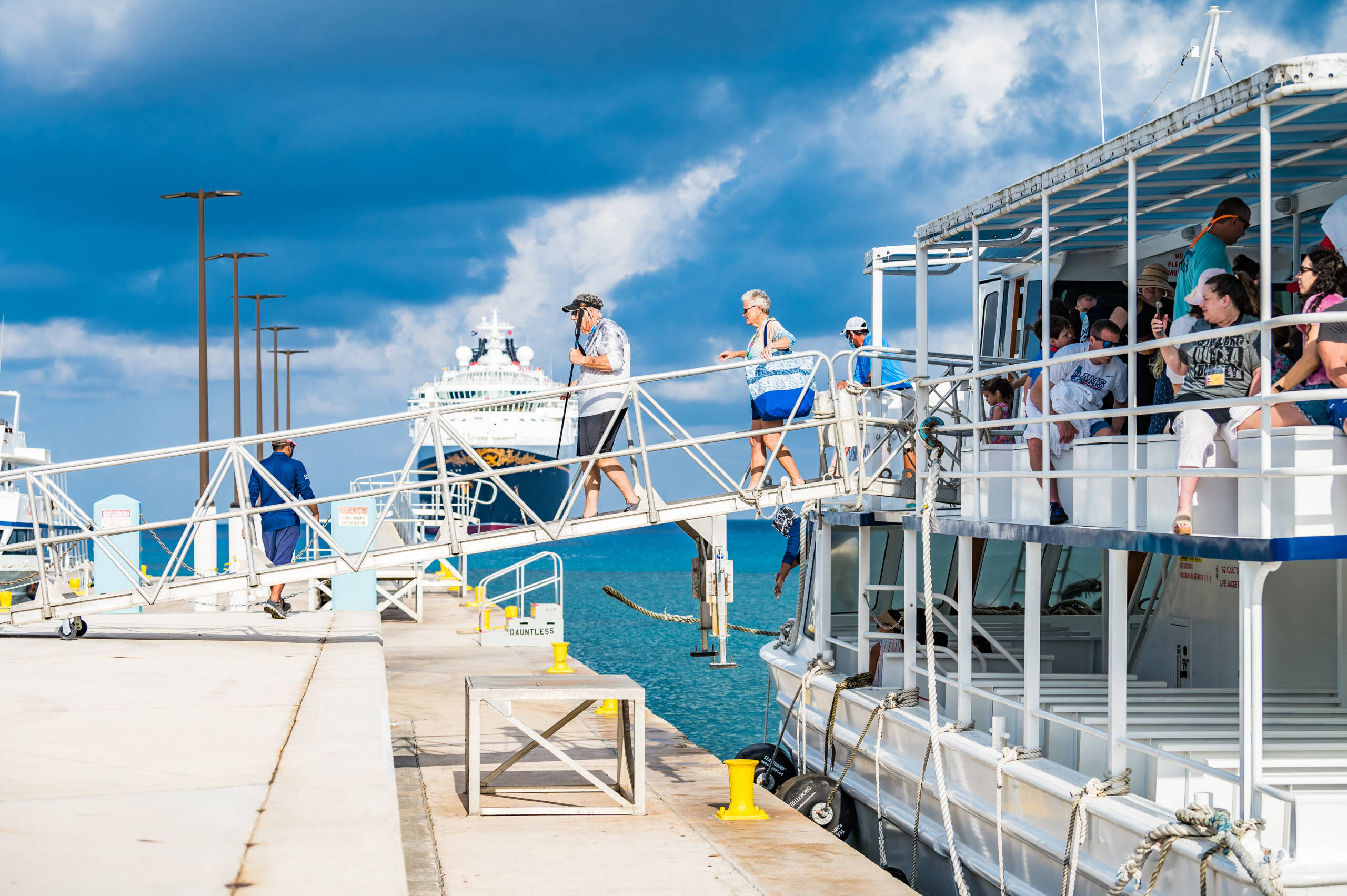
Since reopening to cruise passengers on 21 March, the number of daily visitors to Seven Mile Public Beach seems to ebb and flow like the tide.
Some days, the beach is crammed with lounge chairs and umbrellas, leaving little sight of the water line. Other days, the chairs are stacked and chained together with not a cruise ship on the horizon. For Leacock, the question that needs urgent answering is: What’s the right number of tourists?
Bryan said that answer lies in the strategic tourism plan, which is currently being worked out.
”I think where some people may not be happy is that until we get that plan, we go back to normal as we were,” said Bryan. “But at this particular moment the number one priority for the government is that we have to get the industry back going… Some people wanted us to not bring it back at all until we were ready for the plan, but it’s hard to fix a car without starting the engine and what we have done is started back the engine to fix the problem.”
On 13 April, Cayman entered Phase 2 of its cruise ship return plan, which allows an unlimited number of vessels to arrive, providing that they adhere to COVID-19 regulations.
“As a person whose main business caters to stayover tourists, what I have found is that the quality of the experience drops at places like the sand bar, on days with cruise ship passengers,” said Leacock.
“How many tourists are too much and what’s the right number?” he asked.
Until those answers are found, Leacock said most operators will maintain a cautiously optimistic outlook.
Related Videos









We knew this prior to the pandemic also. The cruise ships offer very limited benefit to anyone except a handful of already extremely wealthy families who have this sector of tourism monopolized.
Since they have the resources to service at high volume they can tolerate low margins and undercut the operating cost of the smaller, less connected, operators.
The high volume of low spending tourists has never had a significant benefit to the local communities, small businesses, or even the public purse when compared with the over-nighting tourists who provide to the welfare of the country through accommodation taxes, stamp duty on rental cars, landing fees, bank fees, duties on food and beverages, and of course their generous gratuities.
We learn nothing new except those in power, despite claiming to work in the best interests of the electorate, are really in office to serve themselves and their friends.
Until we allow the Overnight Visitors back 100% and lift all the restrictions, we will continue to see dismal financial impact from the Cruise visitors. Everyone knew this already. This is not a surprise. Cayman needs to join the world and get back to life. NEWSFLASH: we will get colds, and various sicknesses, as we always have. How have we gotten to a world where getting sick is feared.
Yesterday I returned home from staying 2 months at our apartment near the main public beach on SMB. Unlike pre-covid, the number of ‘cruisers’ was reasonable and they were well mannered.
If cruise ships cause Sand Bar to not be the best experience, maybe it could be managed as a national resource that requires protection for Cayman Islands long-term benefit while still offering a good experience to others. Rwanda’s management of their mountain guerillas experience might be a model that could be modified for Cayman Islands.
Two days ago we had one cruise ship – Carnival, yesterday three cruise ships two of which were Carnival, so much for Mr Bryan’s intention to upgrade the class of ships visiting Cayman. These Carnival passengers are recognised as lightweight spenders who crowd our shores and spend little in return. Mr Bryan should realise this trend will only discourage our stayover visitors who spend at least a hundred times as much as the frugal one day ship visitors, staying for week or more at $ four or five hundred a day for hotel, plus car rental and restaurant visits. Open house for all cruise ships which Mr Bryan has announced is a recipe for disaster, even with the limited ship calls to date our roads have been jammed, exacerbated by the ill considered closure of Cardinal Ave, an arterial route in central G.T.
You need to get back to opening up the island. Allow all stay over visitors even unvaccinated. They are no longer a threat to your health but can hurt your economy by not letting all visitors in. How can letting thousand of visitors a day be any safer?
Amen. We are still waiting to make our 10th stay over trip to GC…a promise my family made to each other we would do to make it an even 10. Until the borders are opened up to everyone despite their vaccination status, and without a silly quarantine, we will be waiting in the states. As stay over visitors who love GC as our own, we have spent very generous amounts of money as a family of 5 willingly. We are not rich. We save all year to do it. It is beyond disappointing reading about the cruising couples/families who are there, long before we will get to be, not quite doing their part for GC’s economy. By means of the environmentally disastrous cruise ship is just a kick while we are already down.