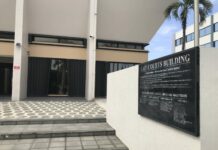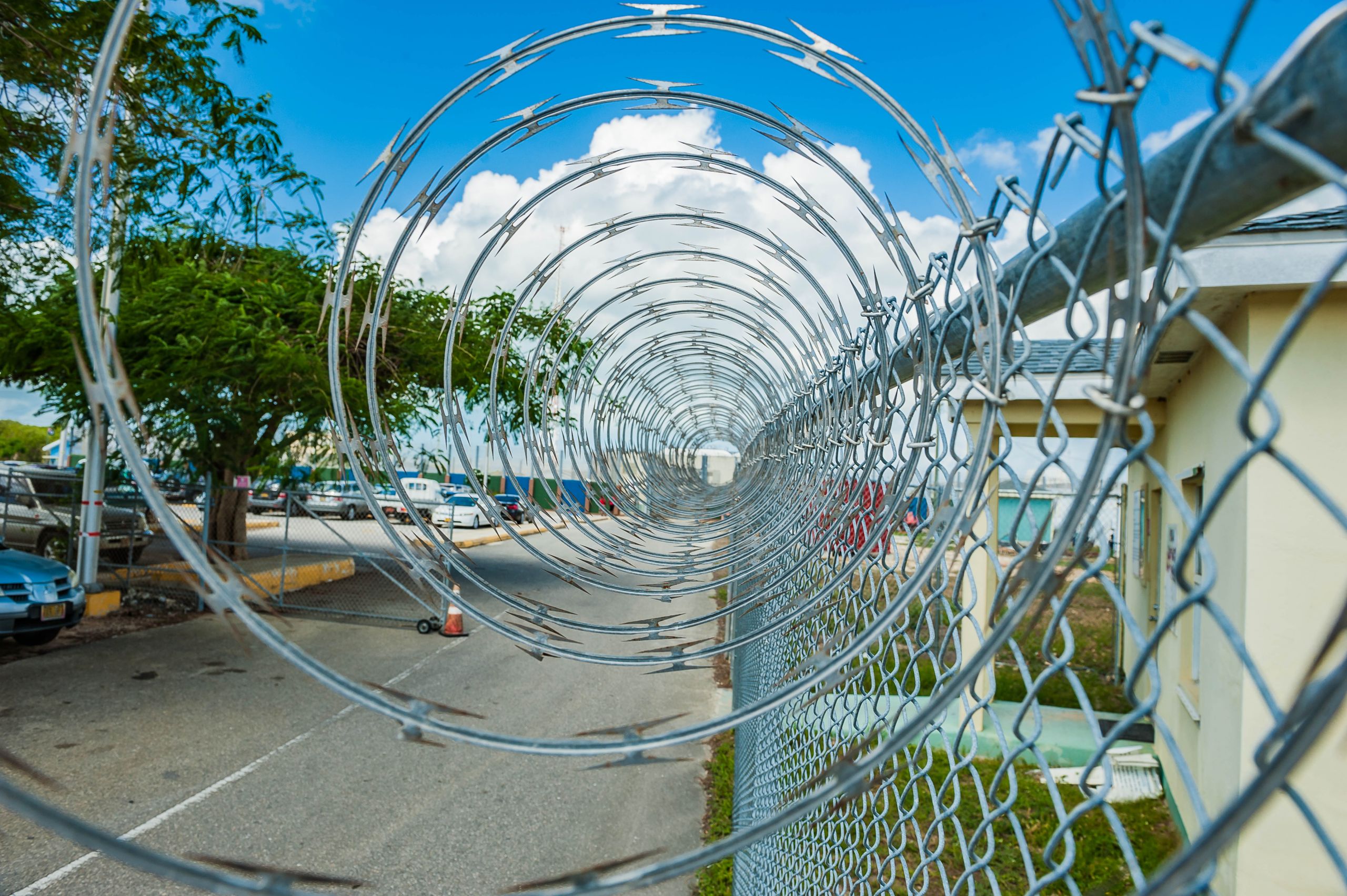
An unprecedented behind-closed-doors court hearing could be held to decide the fates of two Caymanian killers deported to the UK to serve their life sentences.
Osbourne Douglas and Justin Ramoon are challenging the decision to transfer them off the island, after they were deemed a threat to national security.
The court heard claims in previous hearings that there was evidence the men were orchestrating criminal activity from their cells and planning an armed escape.
But none of the evidence for those claims has been heard in public, nor has it been made available to the men, their lawyers, or the judges deciding their future in a case that has rumbled on for almost five years.
Now the Court of Appeal has ruled that a secret hearing known as a ‘Closed Material Procedure’ can be used to help bring the case to a conclusion.
Overturning an earlier decision of the Grand Court, the justices ruled that the procedure – commonly used for terrorist trials in the UK – is available in Cayman, despite the absence of explicit enabling legislation.
That means the brothers’ judicial review case, appealing the transfer, can now be reconsidered by a judge, with access to the full evidence, in closed session. Neither the inmates themselves nor their lawyers will be able to be present at that session.
Douglas’ and Ramoon’s case
The question surrounding the court’s powers to conduct a CMP was raised during the appeal hearing, which was initiated, in part, on behalf of convicted killers, Douglas and Ramoon.

– Photo: James Whittaker
The men are serving 30 and 33 years, respectively, for the 2015 execution-style murder of Jason Powery. The killing was described by the trial judge as “a public-execution of the most chilling kind”.
They were transferred to HMP Belmarsh, a UK maximum security prison, amid claims they were planning an escape.
Upon discovery of the planned jail break in 2017, then-Governor Helen Kilpatrick ordered the transfer of the brothers, after receiving instructions from the UK Foreign and Commonwealth Office and advice from Cayman and UK prison officials.
Douglas and Ramoon have challenged their relocation on the grounds that the 185 documents used as evidence to transfer them by Kilpatrick have been kept from them. They say, as a result, there is no way for them to defend themselves by testing the validity or credibility of the argument against them.

Following their transfer, Justice Marlene Carter granted the governor a ‘Public Interest Immunity’ order, which prevented the brothers from receiving access to the information used to transfer them.
Carter granted the PII on the grounds that, unlike in the UK, Cayman does not have a written law which gives the Grand Court the power to hold a CMP, and she therefore concluded no such procedure was available to the brothers.
Douglas’ and Ramoon’s judicial review was eventually heard by Justice Michael Wood in April 2021 and he ruled in favour of Carter’s findings.
In their 39-page judgment which was handed down earlier today, 27 April, the appeal judges ruled that, although there was no express CMP law, the Grand Court had an implied power to conduct such a hearing.

When returning their ruling, Justice Sir Alan Moses, wrote, “[B]ecause so much of the information is the subject of PII, there can be no effective judicial review, I would rule that a CMP is available so as to enable the court to fulfil its obligation [set out in the Bill of Rights].”
In addition to ruling that the Grand Court does have the power to conduct a CMP, the appeals court has also ordered that the judicial review hearing considering the brothers case be reconducted – however, this time, with the assistance of a CMP.
The court also ruled that the Governor’s Office did take into account the interests of the appellants’ families and children when considering whether to make removal orders.
As a result of the ruling, Douglas and Ramoon will continue to be imprisoned at Belmarsh until the conclusion of the CMP hearing.
What is a Closed Material Procedure?
Cayman is set to hold the first such restricted hearing, often used to adjudicate terrorism cases or other issues of national security, in the jurisdiction’s history.
The evidence presented at the Closed Material Procedure hearing is often sensitive in nature, concerns secret intelligence documents and could possess a threat to national security, if it were made public.
The CMP will be held before a Grand Court judge with two specially appointed lawyers who represent the interests of the prosecution and defendants.
The defendants, their lawyers, the media and, by extension, the wider public are restricted from attending the hearing or viewing the evidence presented.
Related Videos