EN ESPAÑOL: Una suplica de los cubanos que llegan: ‘No nos devuelvan’
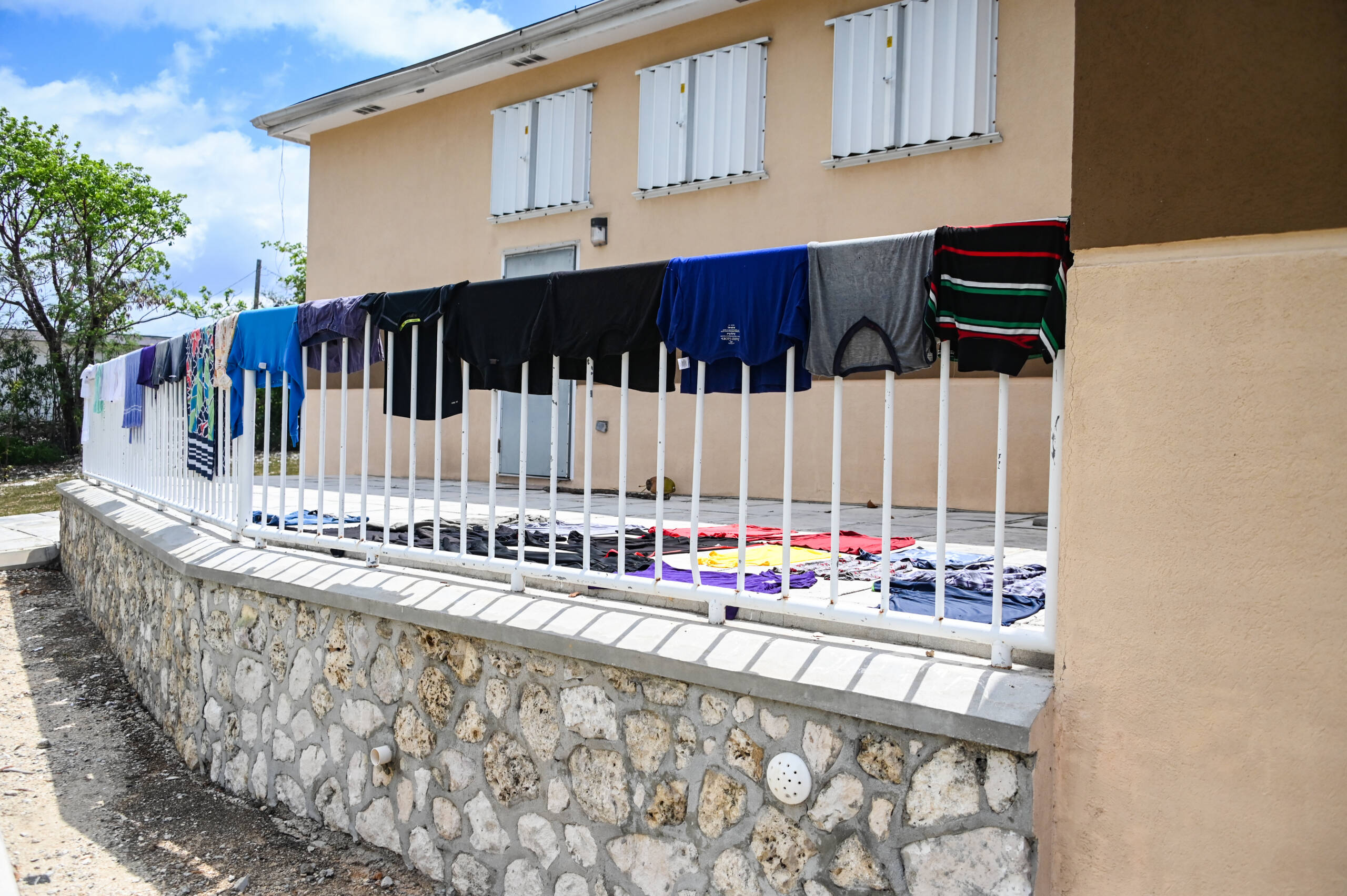
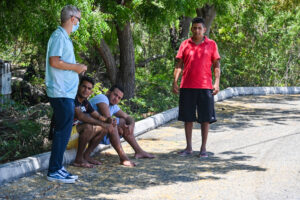
In front of the community centre in East End, a group of Cuban men busy themselves drying hand-washed clothes in the sun, sweeping dust from the steps and making their small communal living space more hospitable.
For now, this is a temporary home. Some hope to remain in Cayman, others wish to travel on to Central America or the United States.
“The only thing we want from the Cayman authorities is that they do not return us to Cuba,” one of the men, named Yoely, told the Compass.
“Because if we go there, they’re going to put us in jail, they’re going to fine us, we don’t know what they can do to us.”
His friend Rafael was more emphatic.
“I would only return to Cuba if they give me a shot,” he said.
“I stay here.”
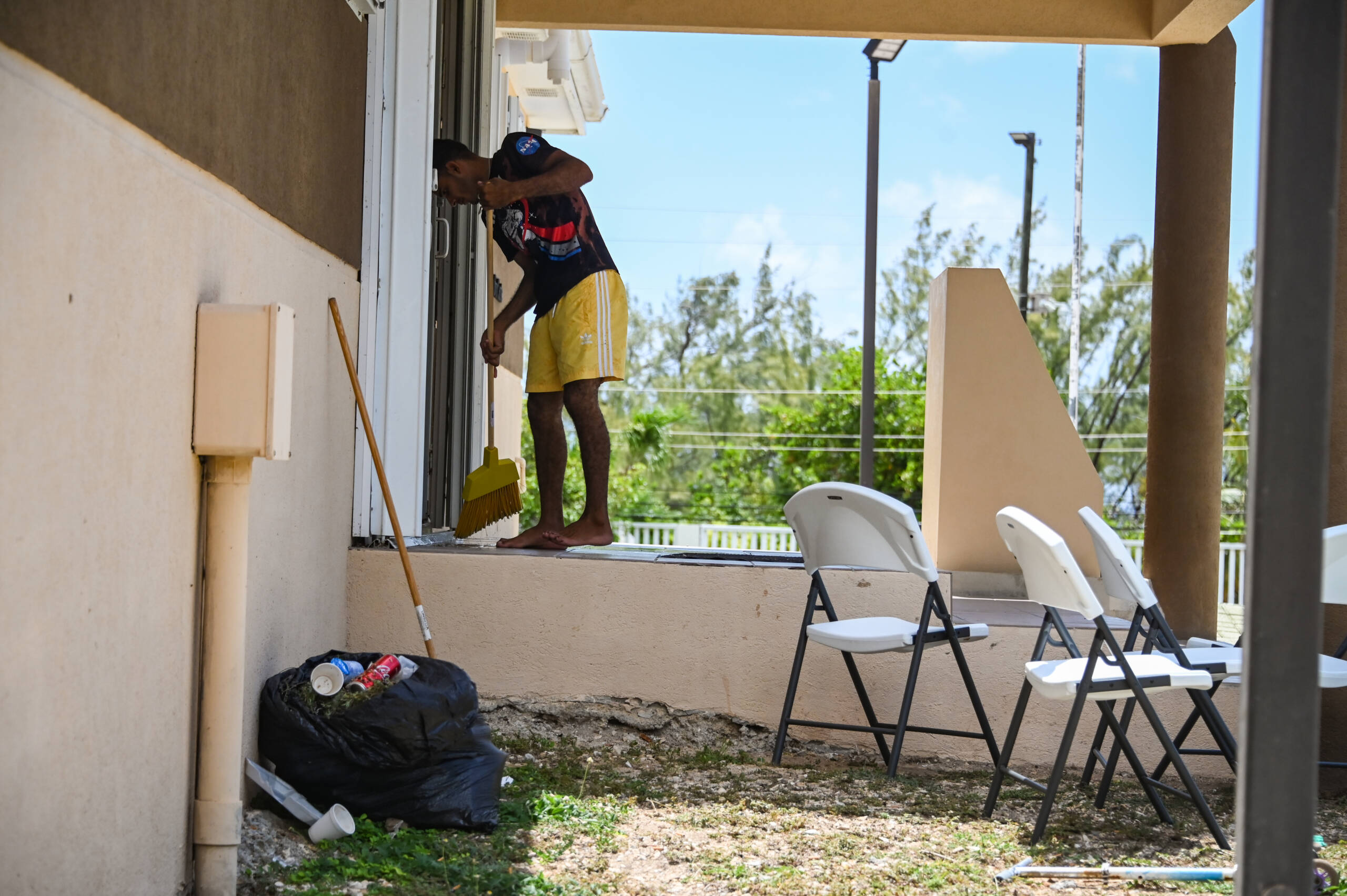
The men – Yoely, Giordino and Rafael – who we agreed to identify only by their first names, are among a group of 24 Cubans currently being housed in the Elliott Conolly Civic Centre in Gun Bay.
Dangerous journeys
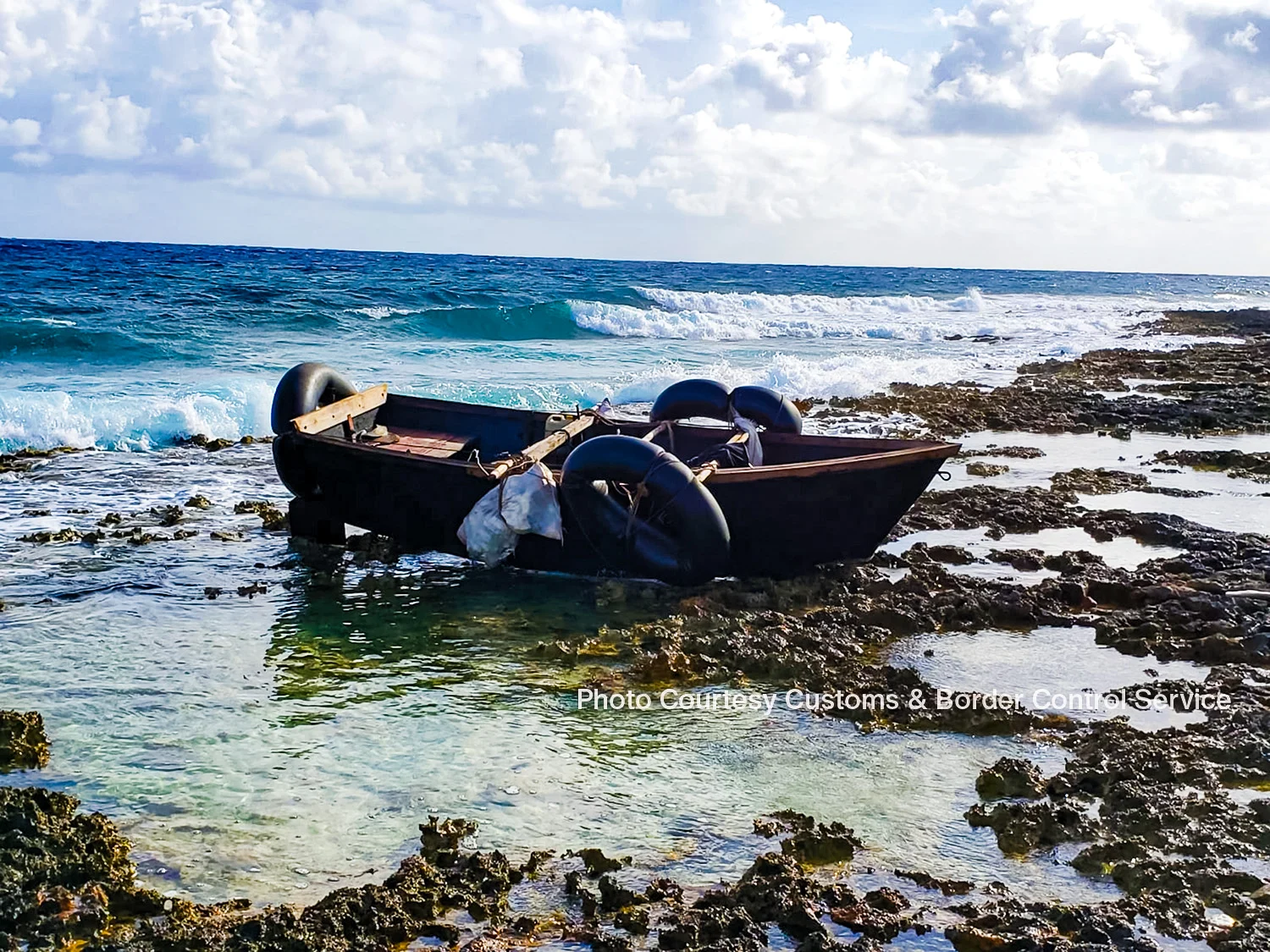
The disparate group arrived over the past month in makeshift boats with only the clothes on their backs.
Braving dangerous seas and evading the increasingly robust scrutiny of government security forces, they left their homeland seeking a better life.
All of this group are from Manzanillo, a port city in the Granma Provence near the delta of the Cauto river.
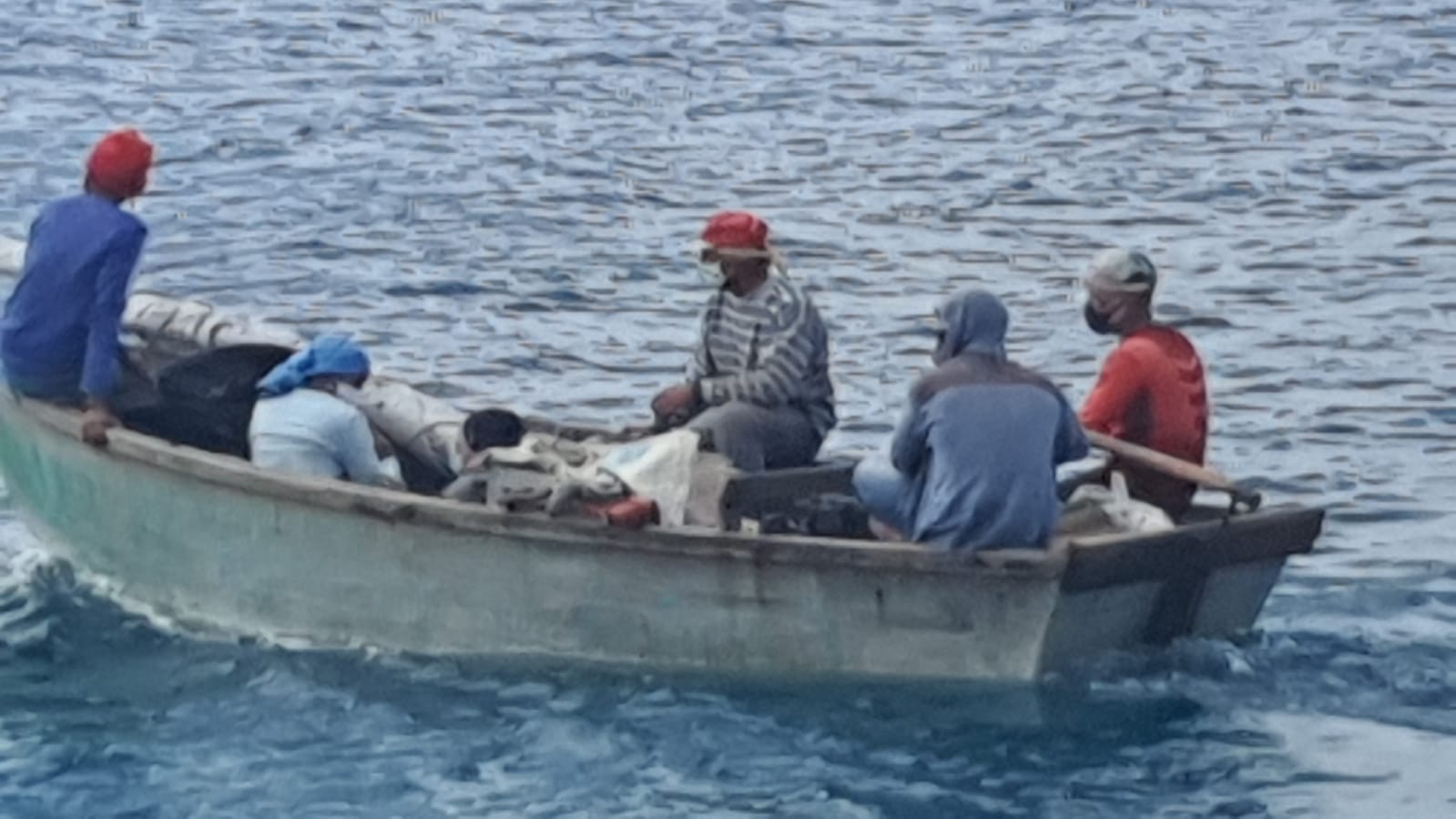
It’s a straight-shot east from there to Cayman Brac and they are not the first voyagers to make the three-day run across open sea in vessels many would not consider taking beyond the reef line.
Rafael and Giordino travelled together in a boat they helped to build “from cans and screws and anything we could find”.
Yoely travelled separately with another group in a similarly ramshackle vessel.
“We ran out of food, we were very cold and thirsty,” said Rafael.
“We left on a Thursday night and arrived here on the Saturday. We were hidden in the hills for five days before leaving.”
Their reasons for leaving Cuba will be familiar to anyone who has listened to the stories of Cubans that periodically arrive on Cayman’s shores.
“In Cuba, the economy no longer gives nothing to the people. The Castros have killed everything,” said Yoely.
“The Cuban government does not give us life. It does not give us freedom of expression. They investigate you and don’t let us conduct our business,” he said.
“One has to work for the state, but I am also a farmer. I sell my products on the street but if they caught me they wouldn’t let me do it.”
Surge in arrivals
Over the past six weeks, multiple boats have arrived in Cayman. Customs and Border Control officials say the islands are now seeing “the highest levels of irregular migration in recent history”.
The detention centre in George Town is full and community centres in the districts are being re-purposed in order to provide temporary shelter.
During the time the Compass spent with the Cubans in East End, government sent out two additional press releases with details of further boats that had arrived on the islands.
In total, there are now 173 Cubans under the supervision of immigration authorities. Officials have highlighted concerns that the trend may continue, with deleterious impacts on Cayman government’s budgets. Almost half-a-million dollars has been spent so far this year on housing, food, medicine and security.
Charles Clifford, director of Customs and Border Control, said in a press release, that it was an expensive proposition for Cayman to handle such high numbers of arrivals.

“With the increasing number of irregular Cuban migrants arriving on our shores now, the situation has the potential to overwhelm our services which could potentially create national security challenges,” he said.
He didn’t specify what those security challenges might be, but highlighted the “high cost” of people management, including Cayman’s obligation, through its own Constitution and in accordance with the International Convention on the Treatment of Refugees, to provide them with food. The men and women are each given a $150 voucher per month to buy groceries.
Why now?
One factor fuelling the recent surge in arrivals is the time of year, before the onset of hurricane season.
Safety is a relative concept for people travelling hundreds of miles in homemade rafts, but April and May, running into June, is considered the least risky period to make the crossing.
Once hurricane season picks up in July and August, only the most desperate consider the journey.
Meanwhile, COVID-19 has ravaged the tourism industry in Cuba – one of the few aspects of the island’s economy that allows ordinary people to earn extra income. The health crisis has been handled badly. Reliable information on infections and deaths is scarce and the country is suffering through price increases and shortages of medicine and other essentials.
“Our people are starving. We don’t have food,” said Giordino.
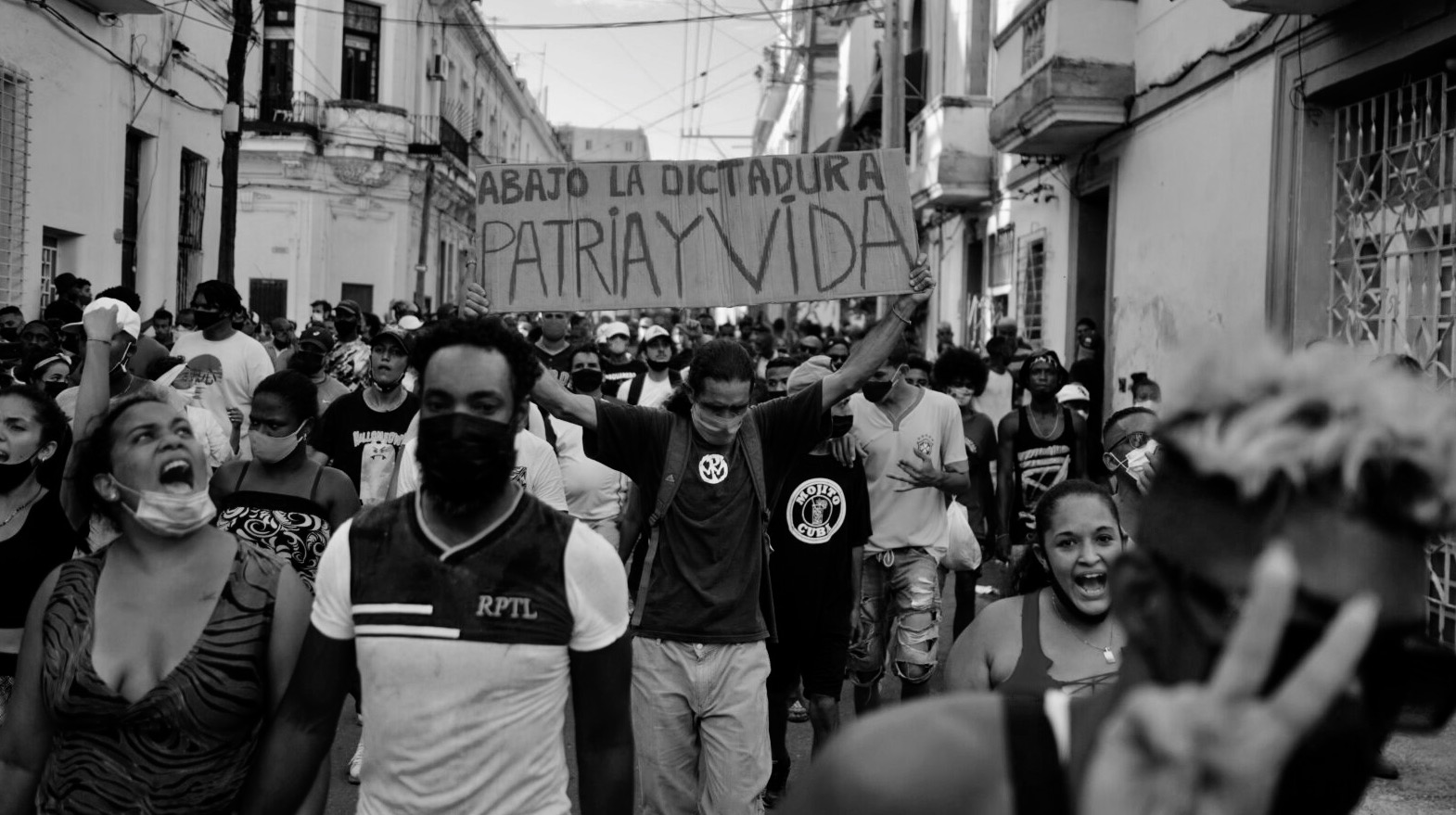
Thousands of people took to the streets across the island in July last year in a rare demonstration against the government.
But the outcry was met with a firm hand. More than 1,000 people were arrested for participating in ‘unauthorised public gatherings’ and more than 100 were charged with sedition, some jailed for over 30 years, according to a recent BBC report.
The Cubans who spoke to the Compass cited government’s response to these protests as a moment where people lost hope that anything would change.
In the aftermath, migration from Cuba has exploded and internal security forces have been on high alert.
“The authorities are realising that the youth is fleeing the country,” said Yoely.
“They are placing more soldiers on the coast to prevent the population from leaving by sea.”
The men believe the recent influx of boats to Cayman may be an indicator of people taking advantage of a last chance to exit Cuba by that method, before it is shut down completely
Exodus from Cuba
It is not just Cayman that is feeling the impact of an exodus of people from Cuba.
Almost 79,000 Cubans reached the US/Mexican border, seeking asylum, between October 2021 and March 2022 – a five-fold increase on the same period 12 months ago and the highest on record.
Jessica Bolter, a policy analyst with the US based Migration Policy Institute, attributes this to the economic impact of COVID, government’s repressive response to the July 21 protests and US policies that have made it impossible for Cubans to apply for visas at the embassy in Havana.
Meanwhile, she said, Nicaragua has opened its borders to Cubans for visa-free travel, meaning those that can afford a plane ticket can easily reach mainland Central America and make their way to the US from there.
Bi-lateral talks took place in Washington last month in an effort to close down that avenue. But Bolter warns, that will not address the underlying issues, leaving more people to resort to the maritime route.
“Cuba is suffering through the worst economic crisis since the 1990s when its economy collapsed after the fall of the Soviet Union,” she said.
COVID has exacerbated an already bleak situation.
“People are really struggling to get basic necessities on a day to day basis, she said.
‘People have given up hope’
José Jasán Nieves, editor-in-chief of a Cuban newspaper based in Florida, highlights the July protests as the moment ordinary Cubans lost hope.
“People came out on to the streets in a massive way without historical precedent and the response from the government was use of force – people are being persecuted for expressing themselves” he said.
Nieves added that the crackdown, along with the Trump administration’s roll-back of Obama-era policies that had opened up more economic activity in Cuba, contributed to a sense of despair, closing a brief window of hope that change was coming after 62 years of socialism
Many of those involved in the July protests were punished to the fullest extent of the law.
“After that people gave up,” he said.
Strong cases for asylum
Alastair David, a lawyer with HSM, has handled a number of asylum cases involving people arriving in Cayman from Cuba.
He said the current situation in that country meant that many of those arriving on Cayman’s shores would have strong cases for political asylum. The simple act of leaving Cuba by that route could be seen as a political statement against the government.
David said Cubans who arrive in Cayman in an “unconventional manner” are typically required to demonstrate that they qualify for asylum under the terms of the 1951 Refugee Convention – chiefly that they have a well-founded fear of persecution if returned to their home country.
In Cayman, they must apply first to WORC and then to the Refugee Protection Appeals Tribunal.
There are human rights concerns, warns David, about the absence of legal aid for anyone at this stage of the process.
“Essentially, you are asking Spanish speakers to investigate and research asylum law and make submissions to a tribunal,” he said.
David believes processing applications quickly and efficiently, with the aid of attorneys, would accelerate the process, cut costs associated with housing and security and deter frivolous applications.
Watching Rwanda
The attorney acknowledged that a significant increase in unconventional migration would present economic and logistics challenges for Cayman.
He believes authorities here will be keeping a close eye on a controversial proposal in the UK, involving refugees who arrive in an “unconventional manner” – usually by boat or truck – being transferred to a centre in Rwanda where their asylum applications can be processed.
Boris Johnson’s government has faced strong criticism and a legal challenge over the plan, dubbed “cruel” and “absolutely chilling” by opponents.
The pilot scheme would initially focus mainly on single men arriving on boats or lorries and would see them given a one-way ticket for the 4,000-mile trip to Rwanda where they would be processed and, if successful, would have long-term accommodation in the African country, the BBC reported.
David said. “I would imagine that if the UK Courts hold that the proposed system in the UK is lawful, then the Cayman Islands will try and introduce a similar type scheme. The question would then become can the Cayman Islands identify a sufficiently stable third party country in this part of the world and if not, is Rwanda suitable for the almost 100% Cuban refugees?”
The UK is ultimately responsible for issues around international relations and national security in Cayman.
Bolter acknowledged that a mass migration crisis in the Caribbean would create problems for island communities.
“There is not a lot of wiggle room in terms of jobs or housing or other resources so it can put a lot of pressure on local communities.
“I don’t have recommendations beyond working diplomatically with other countries in the region, for Cubans to be transferred to countries that have more capacity or possibly repatriated if they don’t have a legal reason to stay.”
Customs and Border Control and the Ministry of Home Affairs did not respond to specific questions from the Compass for this article, instead sending out a press release highlighting the “extremely high costs” of processing people arriving on Cayman’s shores.
| Year | Total Spent |
|---|---|
| 2019 | $1,554,609 |
| 2020 | $1,356,532 |
| 2021 | $946,097 |
| 2022 | Approximately $450,000 |
Figures provided by Customs and Border Control showing the total spent on the management of Cubans arriving irregularly in Cayman since 2019.
“Based on changes in US immigration policies it is expected that the current upward trend in irregular migrant arrivals will continue, and thus, the Cayman Islands can also expect to see additional irregular migrants arrive on our shores as well.
“The Mass Migration Committee continues to meet and monitor the situation as it has serious financial, operational and infrastructural implications, therefore the policies for handling irregular migrants are currently under review,” said Clifford in the release.
The Cayman Islands Human Rights Commission said, in response to questions from the Compass, that it was aware of the situation and had provided comments to Customs and Border Control on a detention policy for migrants, understood to be in the works.
Happy to be here
For the Cubans at East End, the legal, logistic and political struggle over their future is just beginning.
For now they are happy to be here, having survived dangerous journeys and taken the first step in their goal of finding a new life outside of Cuba.
“We are fine, they have treated us with respect. We have food and shelter to sleep,” said Rafael.
“We are grateful to the Cayman Island government and Queen Elizabeth.”
Related Videos