While Grand Cayman’s coastlines continue to see an onslaught of sargassum, District Commissioner Mark Tibbetts says this year is one of the worst he has seen on Cayman Brac.
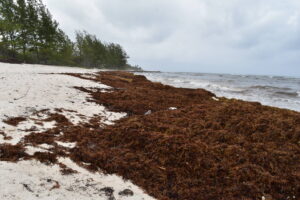
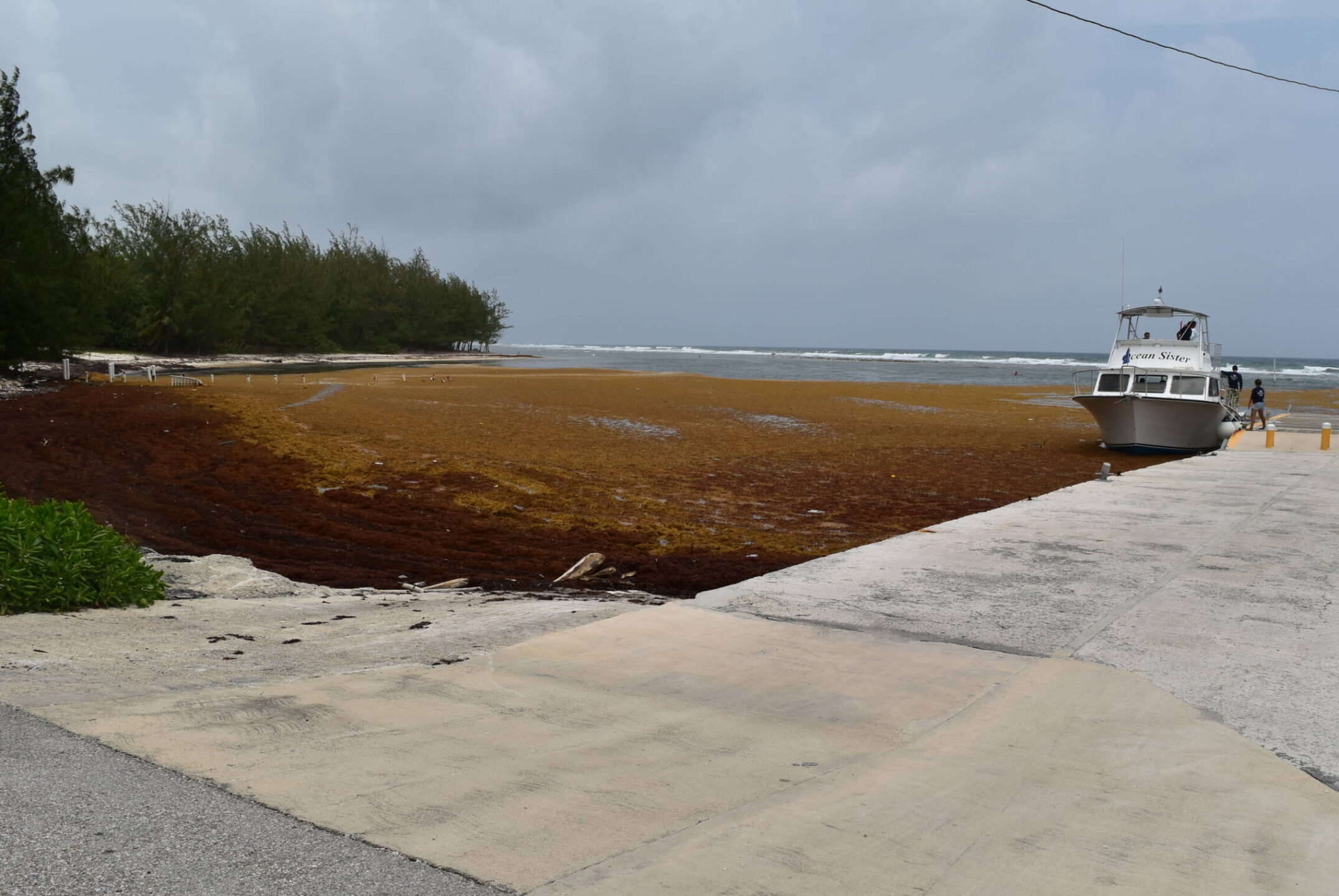
With sargassum ravaging the coastline on the Sister Islands, Tibbetts said he has mobilised the Public Works Department to clear the seaweed, but stemming the flow is proving challenging.
Sargassum getting worse
As the sargassum washes up on the shore, Tibbetts urged the community to bear with the teams are they try to clear the influx of seaweed.
“I think the guys have been doing a great job, however… there is still much there to be done and we just continue to do our best. I just ask each and everyone to be mindful of that and to be patient with us, because I know it does affect, sometimes, some of the main swimming areas and the beach as well,” he said in a recent interview with the Compass on the Brac.
Over at Reef Divers, Joe Kellogg, Dive Operations Supervisor, told the Compass via email that the situation continues to worsen.
“[It’s] quite bad, it seemingly gets worse every year. Public Works cleaned up the boat ramp [Tuesday] morning and it could use another clean up at 3pm. Unfortunately, watching it progress over the last few years, it is what we had expected,” he said.
It pointed out that 2022 will be another major sargassum year, with the amount of seaweed likely continue to increase in the following months.
Tibbetts said the Brac community has been understanding of the situation.
“People know exactly what is taking place and they realise that there are limitations to what we can do and they full well appreciate the fact that we’ve been doing something. If it was a case where it was just there and nothing was being done, then I think you would hear a lot more of the criticism. But for the most part, people I think are quite mindful and understanding that we are trying our best to deal with the situation,” he contended.
Assistance for equipment sought
He said, at this time, District Administration is looking for additional funding from government to secure equipment to assist the crews in clearing the sargassum.
“We have been discussing and hope to be able to procure some additional equipment in the very near future,” he said.
While the increase in seaweed could bring some adverse fallout for the Brac as it tries to rebuild its tourism, Tibbetts said, he does not anticipate a major negative impact.
“I think even the tourists are most mindful and understanding of the situation. So I think they’re quite tolerant with what we’re dealing with,” he said.
Kellogg added that while visitors have concerns regarding the sargassum, they will most likely return for the diving.
“I believe sargassum will discourage beach goers and other beach/shore activities but my guess is little impact to the diving industry. The mandatory quarantine for positive exit LFTs has deterred more tourists over the last few weeks than anything else I have seen or heard of,” Kellogg said.
He said often tourists comment on the smell and will question whether anything can be done in mitigation.
He explained there are also issues with the way it collects around the dock, which impacts Reef Divers’ boats trying to manoeuvre and cool the engines.
He acknowledged the “Public Works Department has always shown up first available day after any weekend to clean up Cayman Brac. They have a lot of ground to cover and do their best to keep up with it.”
Kellogg said it is clear that sargassum is here to stay.
“Understanding where sargassum comes from and why it is getting worse might help us better understand where it is going and what we can do to make things better. My guess is, much like COVID-19, Lionfish and Stony Coral Tissue Loss Disease, sargassum may be a part of our normal operations unless the world is willing to change together,” Kellogg said.
Related Videos