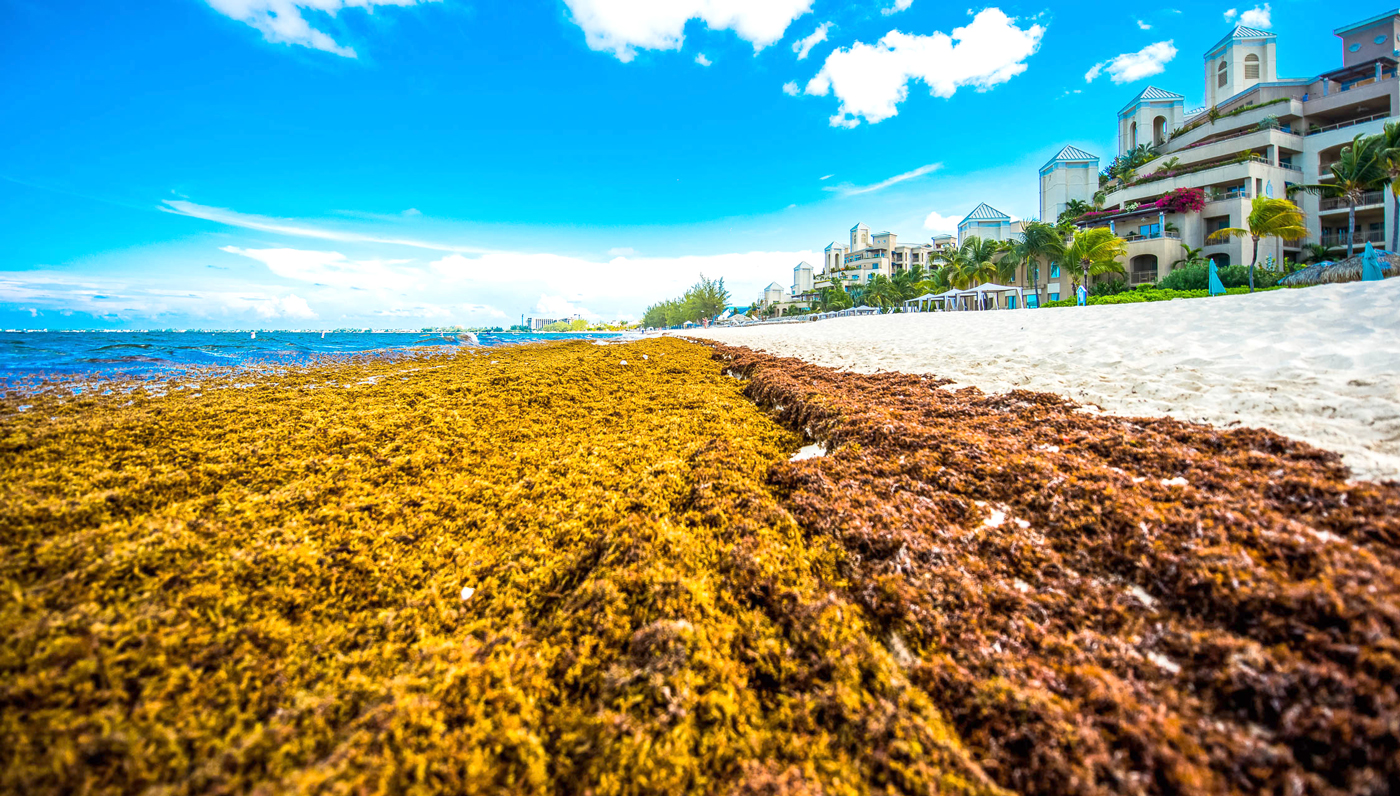
Researchers at NASA and the University of South Florida have confirmed their earlier warning of a growing bloom of sargassum seaweed, after satellite imagery captured the largest-ever April growth of the sea-surface algae.
In its April sargassum outlook bulletin, which was published last week, researchers said a combined total of approximately 14 million tons of the seaweed were detected in batches from the Gulf of Mexico through to the central Caribbean Sea and out into the Atlantic Ocean. The previous largest-ever amount for April was 12.6 million tons recorded in 2018.
“2022 will be another major Sargassum year,” stated the bulletin. “The Sargassum amount will likely continue to increase in the following months, more Sargassum will be found in the (Gulf of Mexico), and more beaching events will occur in the Florida Keys and along the east coast of Florida.”
In the bulletin, researchers said a “[m]oderate amount of Sargassum has reached as north as the Mississippi River mouth, which is about 1–2 months earlier than most previous major bloom years,” adding that a “[s]mall amount was found in the Straits of Florida and along the southeast coast of Florida, indicating possible beaching events. Major beaching
events may have occurred around the nations/islands in the Caribbean Sea, especially along the east coast of the Yucatan Peninsula.”
The figures released by NASA and USF show that sargassum has more than tripled since the start of the year when approximately 4 million tons were detected in January.
The 14 million tons of sargassum noted for April is 6 million tons shy of the overall 20 million tons in November 2020 which was the largest-ever bloom recorded.
Related Videos