

Doctors and residents are raising concerns about health risks posed by the thick brown sargassum piling up on some of Cayman’s shores — a phenomenon that’s also impacting the health of our neighbours in Cuba, where authorities have issued a maximum alert due to foul-smelling gases that are making people sick.
In Cuba, government officials reported headaches and nausea among residents exposed to the rotting seaweed’s stench – a mix of hydrogen sulphide, ammonia and methane.
Less common extreme reactions have been reported in Cayman, where a George Town woman recounted how contact with sargassum triggered a life-threatening anaphylactic reaction that landed her in Anthony S. Eden Hospital in George Town.
The terrifying ordeal, which occurred several years ago, has forced her to avoid the seaweed entirely and carry an EpiPen at all times. Despite her vigilance, she continues to suffer intense skin reactions whenever exposed to the algae.
“I’ve had horrific experiences with sargassum,” she told the Compass, displaying welts still visible three weeks after her latest exposure.
“Every time I come into contact with it, I go into anaphylaxis. I [also] end up with a swollen, blistered, itchy line of skin that looks like a poison ivy reaction. It takes weeks to heal. I’ve had it affect me in South Sound, around Spotts beach, the launching ramp in Bodden town, East End, Morritt’s and even in the North Sound at Stingray City and Rum Point Reef.”
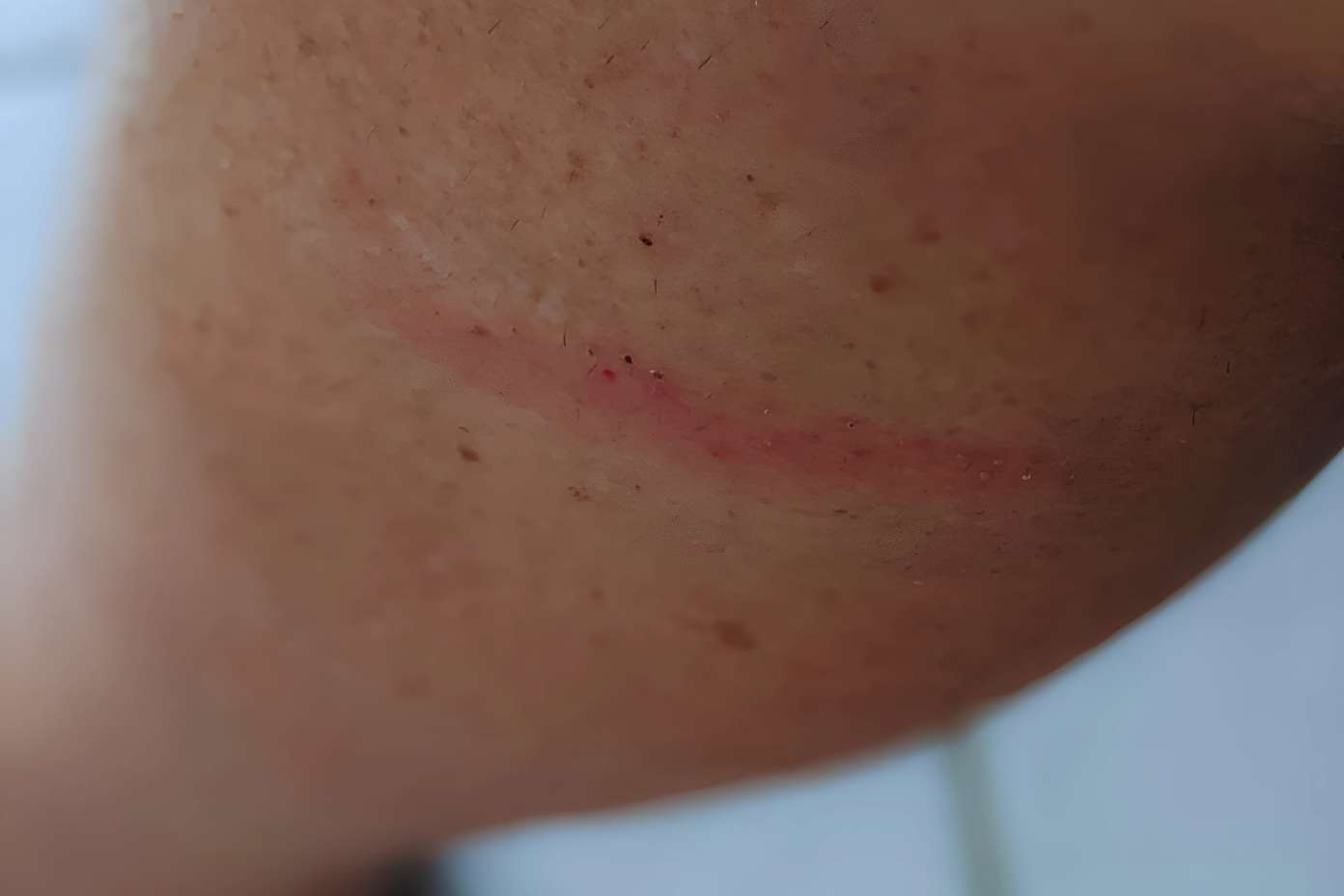
In addition to welts, she described classic anaphylactic symptoms: lightheadedness, difficulty breathing, a fast heartbeat, clammy skin, confusion, anxiety and even feeling like she might collapse. After repeated terrifying episodes, she made the decision to stop going into the water during sargassum season.
Seven Mile Beach remains free of the floating marine algae as it is on the leeward shore of Grand Cayman, whereas other parts of the island and the wider Caribbean are more susceptible to sargassum due to wind and sea currents.
Impacted residents have shared stories of rashes, burning welts, itchy eyes and lingering headaches linked to sargassum exposure.
An 18-year-old Prospect resident was left with red, hive-like welts on her stomach after swimming off East End.
“When I scratched them, it just made the burning worse,” she told the Compass.
In South Sound, one resident told the Compass that the seaweed has affected the health of those living nearby.
“A few years ago, when it was bad, I know some of my neighbours along the beach were having a lot of issues with itchy eyes,” the resident said.
“I get headaches from the gas. So far it hasn’t been as bad in South Sound this year.”
Medical response to sargassum
Chief Medical Officer Dr. Nick Gent has acknowledged public health concerns surrounding sargassum, explaining in a previous statement that although hydrogen sulphide usually disperses quickly outdoors, it can sometimes linger and cause irritation to the eyes, nose and throat.
“When Sargassum mats become stranded on the shoreline, they will decompose,” Dr. Gent said.
“Like all decomposing biomass, they will produce gases such as hydrogen sulfide, which can have an unpleasant smell, even producing feelings of nausea.”
He added that although these gases typically disperse rapidly and are not usually harmful, in certain conditions where they don’t clear quickly, low levels of hydrogen sulphide can irritate the eyes, nose, and throat or cause skin rashes.
Dr. Denise Osterloh, a general and family doctor at Cayman Clinic, told the Compass that people with chronic conditions such as asthma, allergies or other respiratory diseases are particularly vulnerable to the effects of sargassum.
“It can also harbour tiny critters like jellyfish larvae that can cause skin irritation,” she added.
Dr. Scott David of Grand Harbour Medical noted that while he has not seen a sargassum-related case at his clinic this season, extended exposure to large amounts of decaying seaweed can pose health risks.
He recommends avoiding areas with heavy accumulations of decomposing sargassum, wearing protective equipment like masks, eye protection, long sleeves and gloves if exposure is unavoidable and carrying rescue inhalers for those with asthma or COPD.
“Seek medical attention if you experience persistent or worsening respiratory symptoms beyond 24 hours, for severe skin reactions with blistering or infection, in the case of asthma attacks not responding to usual medications, or if there are any signs of systemic allergic reaction,” Dr. David advised.
Dr. Gent recommends that people cleaning up seaweed wear appropriate workwear and wash their hands thoroughly afterward.
Related Videos










Hey Kenny/Julianna I shake my head that you both wasted money on parks, land, housing for construction workers on the Brac, cruise ship referendum cost, yet urgent matters such as the dump and the annual sargassum issues, nothing has been done! If a nation is not healthy, what is the point for parks, schools, land banking, rich airplane hangers, etc? You should be building bigger hospitals and larger cemeteries.