A former salesman for a sports equipment manufacturer told a court Friday he had no knowledge of US$1.54 million dollars worth of invoices filed in the company’s name with regional football governing body CONCACAF.
The invoices bear the name of Forward Sports and were billed to the association, for soccer balls, shirts, bibs and goals, said to be destined for youth teams in multiple countries across the region.
Shakeel Khawaja, a former sales manager for Forward Sports PVT in Pakistan, said he had not drawn up those invoices, that the company had not provided the equipment outlined and had not been paid the $1.54 million.
“I would have liked to have that money but I know nothing about it,” said Khawaja, who is a witness in the ongoing fraud trial against Canover Watson and Bruce Blake, two former executives of the Cayman Islands Football Association and CONCACAF.
The witness, testifying through an interpreter via video link from his home in Germany on Thursday and Friday, also appeared dumbfounded at times that his signature features on company incorporation documents he says he did not sign and how he supposedly chaired meetings he says he did not attend.
At one stage he appeared shocked to see his electronic signature on the bottom of an agreement he says he knew nothing about.
“How did they do that?” he exclaimed.
The charges
The prosecution alleges that Watson set up a similarly named company, Forward Sports International Management, in Panama, and issued three fake invoices amounting to US$1.54 million to CONCACAF for sports equipment that was never delivered.
His fellow former football executive at the Cayman Islands Football Association and CONCACAF, Bruce Blake, is charged with money laundering and false accounting for helping him move the stolen money.
Both have pleaded not guilty.
Adding an additional layer of complexity is the fact that Watson and Khawaja did set up a distribution company for the Forward Sports brand in Panama under the name Forward Sports Inc.
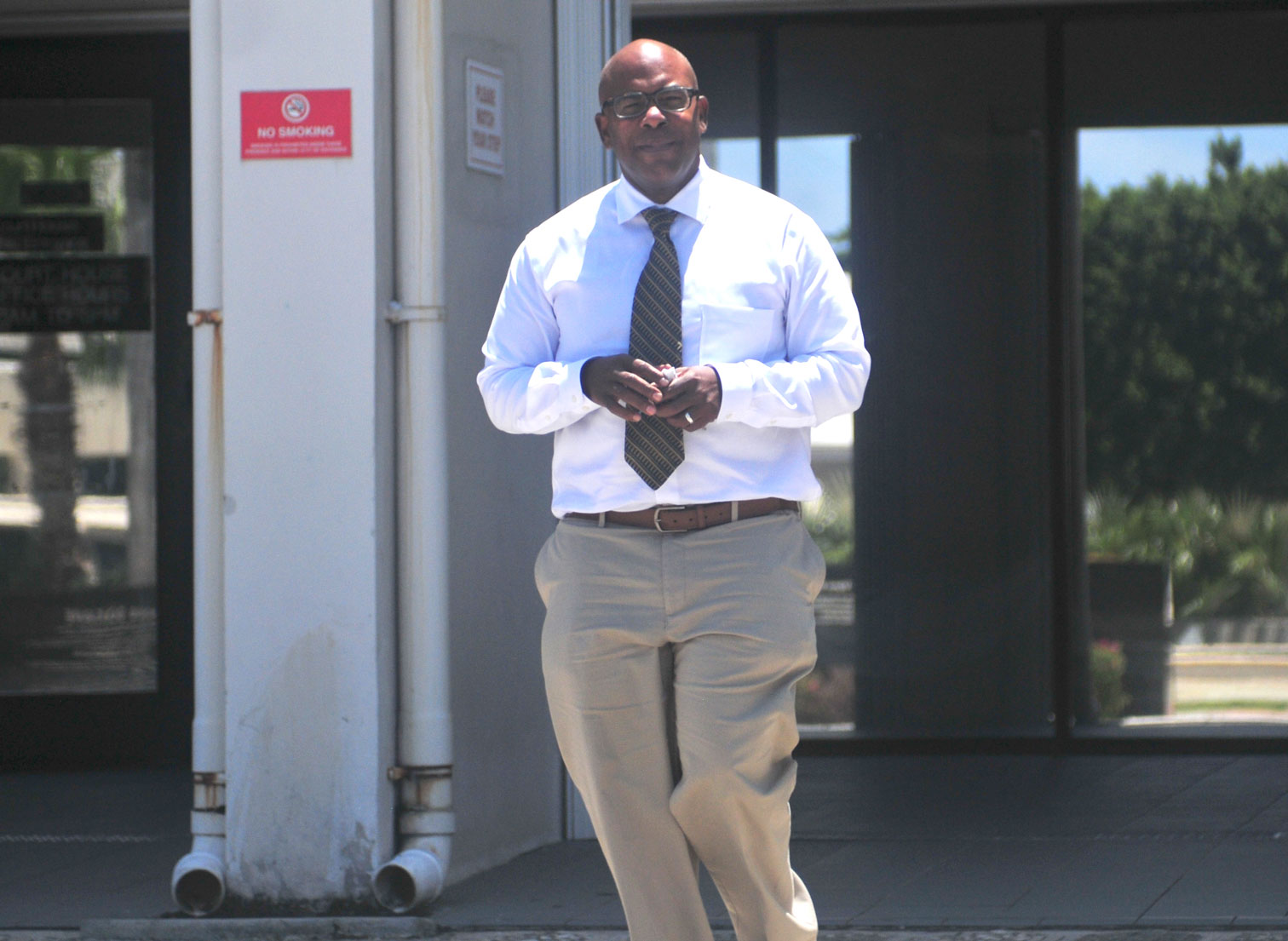
The allegations relating to the fake invoices, however, involve an entirely separate company, Forward Sports International Management, which Watson controlled alone and of which Khawaja says he had no knowledge.
Alleged fake invoices
Khawaja testified that he had a genuine business relationship with Watson and that he had helped broker previous orders of soccer equipment between CONCACAF and Forward Sports. Those agreements totalled around $625,000 and were fulfilled and paid for, according to his evidence.
But he said he had never seen the three separate invoices for $750,000, $148,000 and $642,000, totalling $1.54 million, that form the basis of the charges.
This included an order for 15,000 ushers vests for the Gold Cup, which the prosecution claim was bogus.
“I didn’t know anything about it. It was not placed through me,” said Khawaja, when asked specifically about this invoice.

Asked, in turn, about the three invoices, all dated from 2013, he said he had not drafted them and had not been aware of their existence.
Sponsorship agreement
He also testified that he knew nothing of a loan or financial sponsorship agreement between Forward Sports and the Cayman Islands Football Association.
The charges against Watson and Blake include that they submitted two fake loan agreements for $600,000 each to the CIFA auditors.
The loan agreements were meant to justify the massive cash injection into CIFA and to potentially recoup the total of $1.2 million from the football association later on.
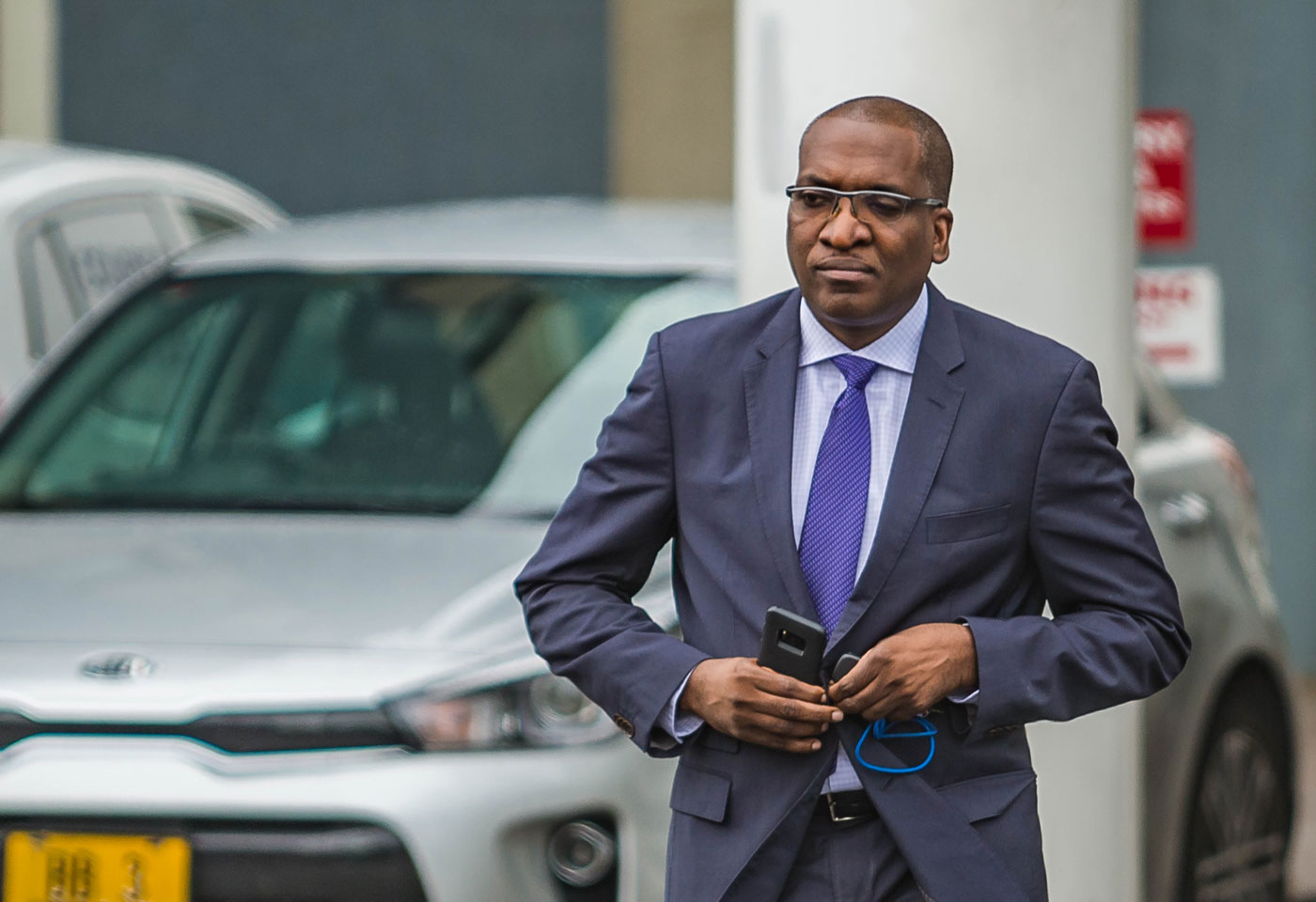
While Watson allegedly claimed the loans were, in fact, from Forward Sports in Pakistan and travel company Cartan in the US, the lenders named in the loan agreements were Watson’s Forward Sports International Management in Panama and, emulating the scheme, a Panama company under the Cartan name, also controlled by Watson.
Both loan agreements were signed by Blake on behalf of CIFA.
Khawaja said his company did have an agreement with CIFA but insisted, “It was not a cash deal, the agreement involved us supplying products to their national team.”
He said he believed Forward Sports subsidiaries – including the company he co-owned with Watson – would not have the resources for a loan or sponsorship of that magnitude either.
“As far as I was aware, these companies had no cash resources. I had my own costs barely covered. I don’t see where that money should have come from,” he said.
Audit request
Khawaja went on to tell how he received numerous emails and calls from both Blake and Watson asking him to sign a document they had prepared, stating that the Cayman Islands Football Association had no existing debts with Forward Sports.
He said he had declined to do so because he was unaware of the details of the accounting side of the Panama subsidiary he co-owned with Watson.
Emails from Blake, read out to the court, indicate that the CIFA executives believed these documents would help them satisfy internal auditors Rankin Berkower who were investigating their accounts.
Khawaja said both men seemed worried in a series of calls.
“(Bruce) said to me that it was very important that I sign the document because the (football association) elections were about to take place and this was the only thing missing to complete the audit.”
Watson also called him saying, “Bruce Blake has a really major problem,” and urging him to sign, he testified.
“He said it was extremely important that this was done and anything else did not matter.”
It was the auditors that referred the matter to the authorities – leading them to investigate CIFA’s finances and ultimately triggering the charges and the trial now taking place.
Khawaja gave evidence Thursday and Friday and has yet to face cross-examination from Watson and Blake’s legal teams.
Confusion over company structure
Speaking at the outset of his evidence on Thursday, the witness said he was “puzzled” by the various names of companies he was supposed to own.
He said there was always a lot of confusion around the Forward Sports company names later mentioned in his conversations with Watson.
Khawaja told the jury that after meeting Watson and Blake at the FIFA Congress in Budapest, Hungary, and later the London Olympics, a business relationship developed.
He said while Blake was interested in ordering sports equipment for CIFA, Watson promised more than $1 million in potential orders for grassroots programmes in Caribbean Football Union member associations.
Although the actual orders turned out to be smaller, he said he finalised an agreement with CIFA that was typed up by Blake.
The court heard that, on a visit to the Cayman Islands, Khawaja was presented by Watson with incorporation documents for a Cayman-based Forward Sports company in his name that he had not authorised and that he “was not happy about”.
The jury was shown the minutes of the first board meeting of that company between Khawaja and Joscelyn Morgan, as directors. Khawaja said he does not know who Morgan is and the meeting did not happen.
He said he had previously told Watson that he could imagine setting up a company in the Caribbean, possibly even in Cayman, so that somebody would be on the ground to take care of business whenever he was absent.
Because his existing business partner had to withdraw from the business, having such a company to facilitate existing orders did seem like a good idea.
Watson then established a company in Panama under the name Forward Sports Inc and presented him with incorporation documents, Khawaja said.
The other shareholder in the document was Green Day Foundation, which Khawaja said he believed to be an investor represented by Watson.
“It was only much later that other facts transpired,” he said, referring to allegations by the Crown that Watson was, in fact, the owner of Green Day.
The jury was shown an email in which Khawaja asked Watson whether any other Forward Sports companies were active and what their ownership structure was.
Watson, in response, sent a corporate diagram showing Forward Sports International Management Inc as a related company owned by Forwards Sports Inc.
Asked who he thought owned Forward Sports International Management, Khawaja said, he believed it to be same shareholders as Forward Sports Inc., “but I don’t know how these things work”.
He said it was more decisive for him that the financial statements he received showed the holding company not to have any cash resources.
“My impression was that Forward Sports Inc had no money and, if a parent company has no cash, it was unclear what that meant for the ownership structure,” he said.
Fake signature allegation
Khawaja was also shown a management and consulting agreement between Forward Sports Inc and Bruce Blake’s M-Management Group Ltd, signed by himself and Bruce Blake.
Khawaja testified he had never seen the agreement, did not know M-Management, and had never signed the document.
Asked by the prosecutor if he had placed his signature electronically, Khawaja asked “how does one do that electronically?”
Looking at the image of his signature in a cut and pasted box on the agreement, he exclaimed “how did they do that?”
The prosecution said it recovered the document from a hard-drive confiscated during the search of Watson’s premises.
He was then shown three invoices to Forward Sports International Management by Blake’s M-Management for $11,900 for professional services, $60,000 in 2013 sales commissions and another $60,000 for legal and consulting services.
Khawaja said he had no knowledge of any such services or commissions.
The trial continues on Monday.
Cayman Compass reporter Michael Klein contributed to this article.
Related Videos