An allegedly fraudulent bill for 15,000 ushers’ vests for the 2013 Gold Cup was sent a week after the football tournament started and the quantity was unrealistic, the court heard in the trial against Canover Watson and Bruce Blake on Tuesday.
Former football executive Watson is accused of having issued three fake invoices for sports equipment totalling $1.54 million to regional football governing body CONCACAF through a Panamanian company he surreptitiously controlled.
Jonathan Martinez, the head of Professional Football Development at CONCACAF, told the jury that he unsuccessfully tried to track down the pre-paid, invoiced sports equipment from vendor company Forward Sports.
The quantity of 15,000 vests for ushers at the Gold Cup event “was quite a bit”, he said, estimating that even a third would have been a large number. “Is it realistic? No. Excessive? Yes.”
Martinez said he never saw any of the vests, if they ever existed.
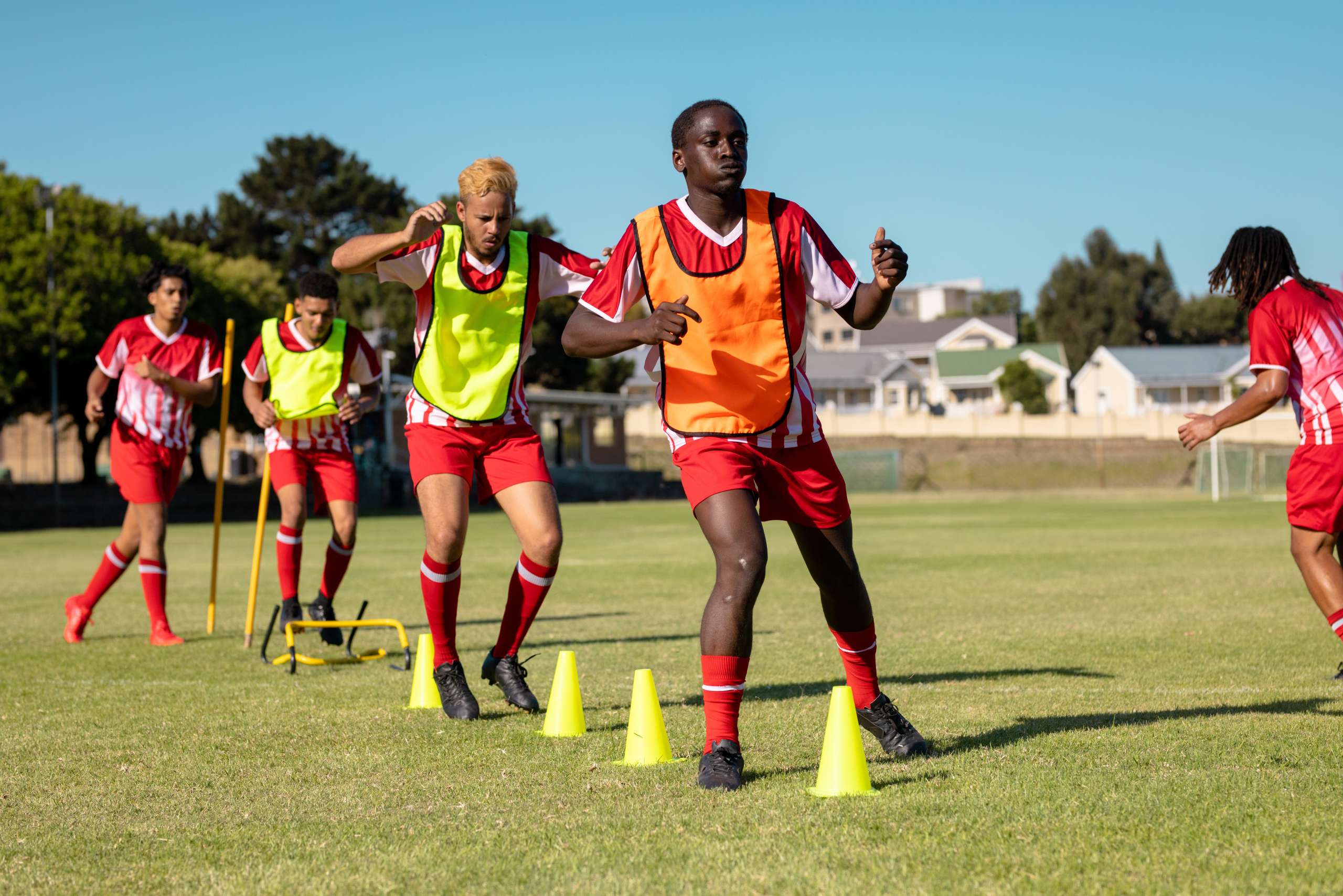
Two other alleged false invoices from Forward Sports related to football equipment, like bibs, cones, footballs and goals, for CONCACAF’s grassroots programme.
That programme was created in 2013, the same year the invoices were paid.
It focused on children under the age of 12 in underserved communities that did not have access to football facilities, equipment, coaches and safe environments.
The programme was entirely funded by grants from world football governing body FIFA.
Martinez testified he was not aware that Watson, who served on CONCACAF’s finance committee at the time, was affiliated with Forward Sports.
Asked why the football confederation’s Secretary General Enrique Sanz would forward an email from Watson containing a Forward Sports invoice, he said, “I took it he was helping out as part of the finance committee.”
Martinez said Watson was close to then-CONCACAF President Jeffrey Webb and part of his entourage.
The manager in charge of delivering the grassroots programme explained that he did not order any of the equipment, nor would he have ordered it from Forward Sports.
Asked what he made of the Forward Sports invoices, Martinez said, “At the time I found them expensive.”
The CONCACAF executive testified that he once emailed Webb in relation to a Forward Sports order, “because it was a large order, and it was not a vendor we were particularly happy with”.
Martinez said he emailed hoping the order would not be approved, which in this case it was not, because, for the same amount of money, the organisation would have been able to buy more equipment from a different vendor and make more of an impact through its grassroots programme.
Cross-examination of CONCACAF finance chief
Dapinder Singh, QC, the defence counsel for Watson, earlier in the day cross-examined the CONCACAF finance chief David Cruz to “get more of an understanding about the documents, the context and the wider picture”.
Cruz had testified that he paid three invoices from Forward Sports in Panama totalling $1.54 million on the instruction of Sanz, but there was no record of any goods ever received in return.
The paid amount was not included in the organisation’s budget.
Singh put to the witness, and Cruz confirmed, that budgets may vary and that it was perfectly normal for budgets to overrun or fall short, because they are essentially trying to predict the future.
It was not unusual, the jury heard, for CONCACAF’s vendors to be paid upfront. It was also not uncommon for funds to be paid to a subsidiary located in a different country to the vendor, or to subsidiaries of a slightly different name. And that there may be commercial reasons for structuring a business that way.
Cruz confirmed there was no supplier for the grassroots programme at the time.
He said the organisation’s then-Head of Development Hugo Salcedo told him Forward Sports had been selected to provide “a consistency of branding” for the programme, following a decision taken by president Webb.
Singh suggested that Cruz’s position as finance supervisor at the time did not make him privy to all the information, discussions or contracts concluded at the executive committee level. “You accepted that you weren’t aware of everything, nor should you have been,” he said. “It is so important that we get away from assumptions.”
“If you are shown a select number of documents, you really could be quite wrong about your conclusion,” the defence counsel said. “When you say they are false documents, and the goods were not received, you could be wrong.”
Cruz said, regarding the specific documents in question, that was not a fair statement. He said his testimony that no sports equipment had been delivered was based on “the review of all the records of CONCACAF”.
“To the extent that there are no records, then I would not have seen the records.”
Cruz said, even though he supervised a small department, and his job title might not have indicated it, his role was significant.
Because he was responsible for the audit, he said, it was customary and necessary for him to have seen all the documentation supporting any payments. Sanz had never provided any supporting documents, other than an email containing the three invoices, instructing the finance supervisor to pay them.
Watson has pleaded not guilty to receiving secret commissions, transferring criminal property and false accounting, while Blake has pleaded not guilty to money laundering-related and false accounting charges.
The trial continues Wednesday with the cross-examination of Martinez.
Related Videos