The OECD expects the global economy to slow further in the coming year as the energy shock triggered by Russia’s war in Ukraine fuels inflationary pressure and saps confidence and household purchasing power.
The organisation’s latest economic outlook highlights the unusually imbalanced and fragile prospects for the global economy over the next two years.
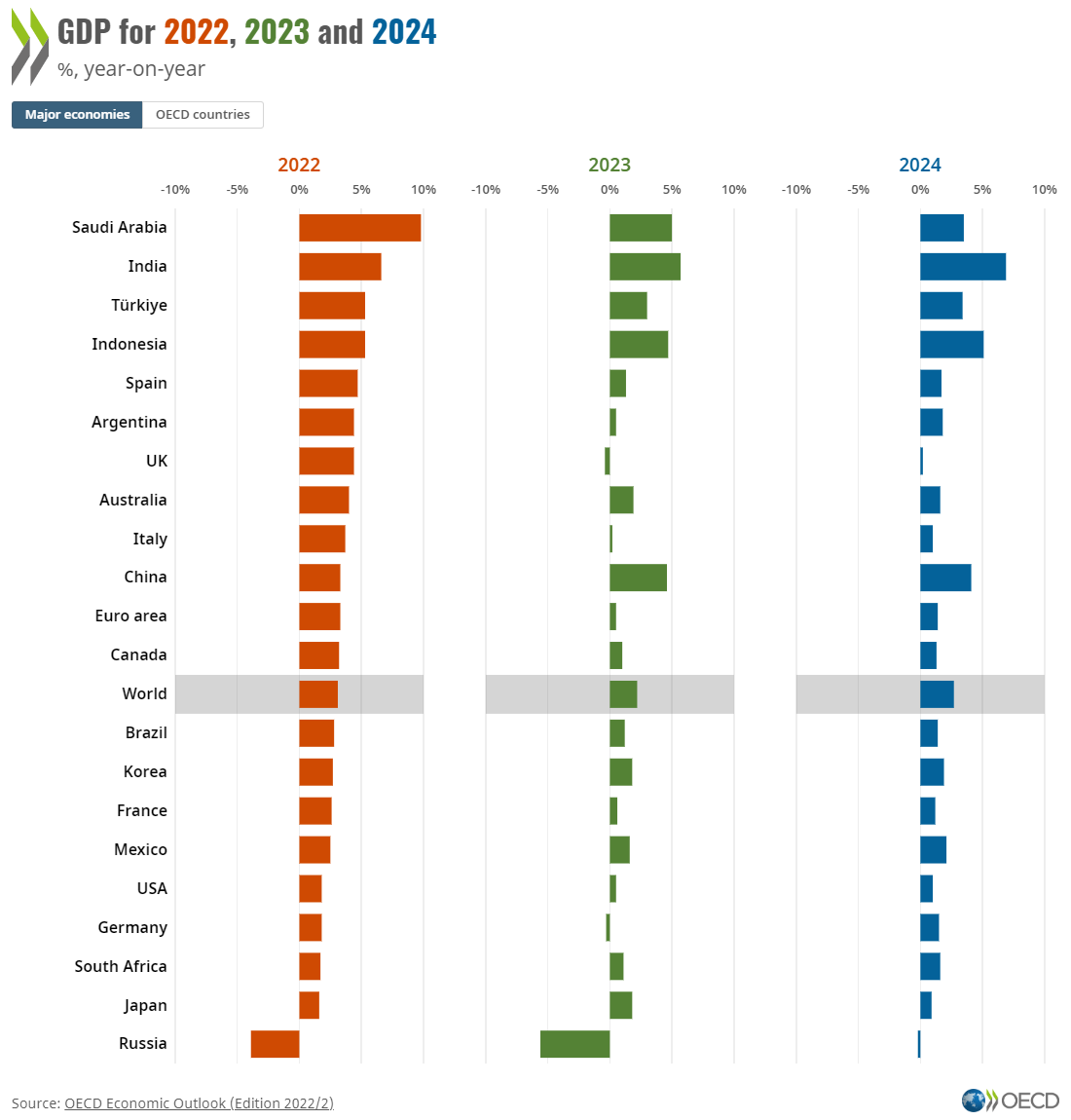
The global economy is projected to grow at a modest 3.1% this year, before slowing to 2.2% in 2023 and recovering moderately to a still sub-par 2.7% pace in 2024.
Growth in 2023 is strongly dependent on the major Asian emerging market economies, which will account for close to three-quarters of global GDP growth next year, while the United States and Europe are decelerating sharply.
Persistent inflation, high energy prices, weak real household income growth, falling confidence and tighter financial conditions are all expected to curtail growth.
Energy price shock
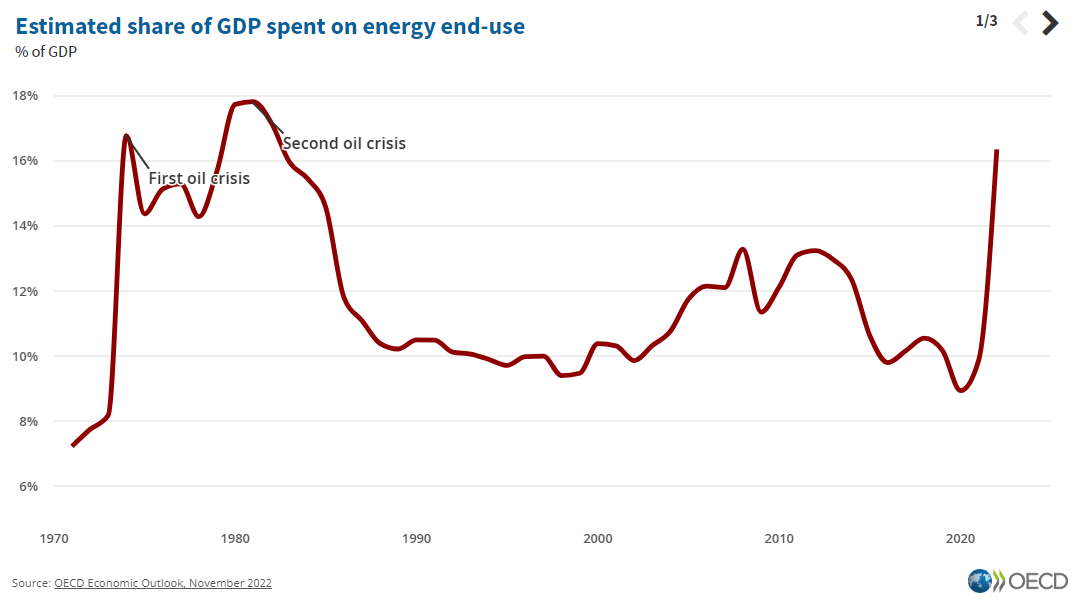 This year the share of GDP spent on energy has increased to 16.4% from less than 10% in 2021, marking the biggest energy price shock since the 1980s.
The OECD said that higher interest rates, while necessary to moderate inflation, will increase financial challenges for both households and corporate borrowers.
Inflation is projected to remain high in the OECD area, at more than 9% this year.
As tighter monetary policy takes effect, demand and energy price pressures diminish and transport costs and delivery times continue to normalise, inflation will gradually moderate to 6.6% in 2023 and 5.1% in 2024.
“The global economy is facing serious headwinds. We are dealing with a major energy crisis and risks continue to be tilted to the downside with lower global growth, high inflation, weak confidence and high levels of uncertainty making successful navigation of the economy out of this crisis and back toward a sustainable recovery very challenging,” OECD Secretary-General Mathias Cormann said during a presentation of the Outlook.
“An end to the war and a just peace for Ukraine would be the most impactful way to improve the global economic outlook right now. Until this happens, it is important that governments deploy both short- and medium-term policy measures to confront the crisis, to cushion its impact in the short term while building the foundations for a stronger and sustainable recovery.”
 The energy market is responsible for significant uncertainty around the economic outlook.
Growth may be weaker than projected if energy prices rise further, or if energy supply disruptions affect gas and electricity markets in Europe and Asia, the OECD said. Rising global interest rates may put many households, firms and governments under greater pressure as debt service burdens rise. Low-income countries will remain particularly vulnerable to high food and energy prices, while tighter global financial conditions may raise the risk of further debt distress.
Limiting inflationary support measures
Still, the organisation recommends further monetary policy tightening in most major advanced economies and in many emerging market economies to lower inflation.
The length and scope of fiscal support measures should be scaled back to minimise fiscal costs, the organisation said.
The cost-of-living crisis, it added, calls for structural reforms that can have a direct effect on household incomes, ease supply constraints and reduce prices.
To this end, countries should focus on policies to improve the functioning of international trade, enhance productivity and tackle gender gaps in the labour market.
Related Videos