

Bubbling frustration over traffic congestion hit a new peak last week as government was forced to issue an apology for shutting down George Town on a Friday for Pirates Fest activities.
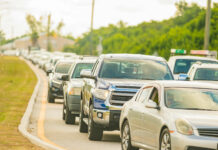
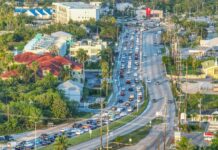
The ensuing gridlock left commuters stuck in two-hour jams and put fresh attention back on the perennial problems on Cayman’s roads.
Aside from the obvious conclusion – that closing off the waterfront on a week day is not sensible – the conversation broadened to re-examine many solutions to the island’s transport malaise.
The Cayman Compass Issues section has examined these problems in-depth over the past few years.
Today we take a look at 12 of the most commonly proposed alternatives and assess their viability as short- or long-term answers to the most talked-about problem in Cayman.
1. Road improvements
This is the one major policy that does seem to have some serious traction. New lanes have been added around George Town and the extension to the East-West Arterial is in motion.
However, it’s hard to gauge the inroads these have made. Anecdotally, there has been some easing of congestion east of the capital. But most of the gains have been peeled back by the addition of new people to the workforce and new vehicles on the road over the past couple of years.
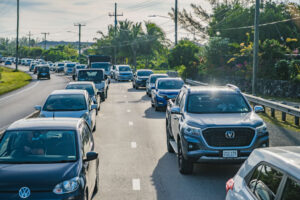
The National Roads Authority has a to-do-list of significant highway upgrades that it believes will ease congestion further. But even the NRA acknowledges this is not a total solution and its own data suggests the best that building roads can achieve is to keep journey times at their current level as Cayman grows.
2. Better public transport
It seems a no-brainer that better public transport would enable lower car-ownership and fewer journeys. Deloitte has been hired to assess options and a report is in the works.
But, realistically, the logistics of creating a viable bus or tram system from scratch mean this will be a long-term solution.
The surrounding infrastructure of bus terminals, park-and-ride facilities and a smooth and convenient system of cashless payment would be necessary. It’s also inevitable that a truly functioning system would need to be funded through a significant annual subsidy from the government.
The question then remains: If Cayman had a proper bus system, would you use it? After all, the bus would still be stuck in traffic.
It seems likely that government would need to offer incentives to get people on board – possibly including a bus-only lane – or perhaps disincentives to get them out of their cars.
3. Ferries and water-taxis
Stuck in a line of cars on South Sound, it’s tempting to look at the water and see an alternate route.
The idea of ferries, used to excellent effect in countries like Bermuda, or water-taxis, was raised again this week following the Friday, 18 Nov. logjam.
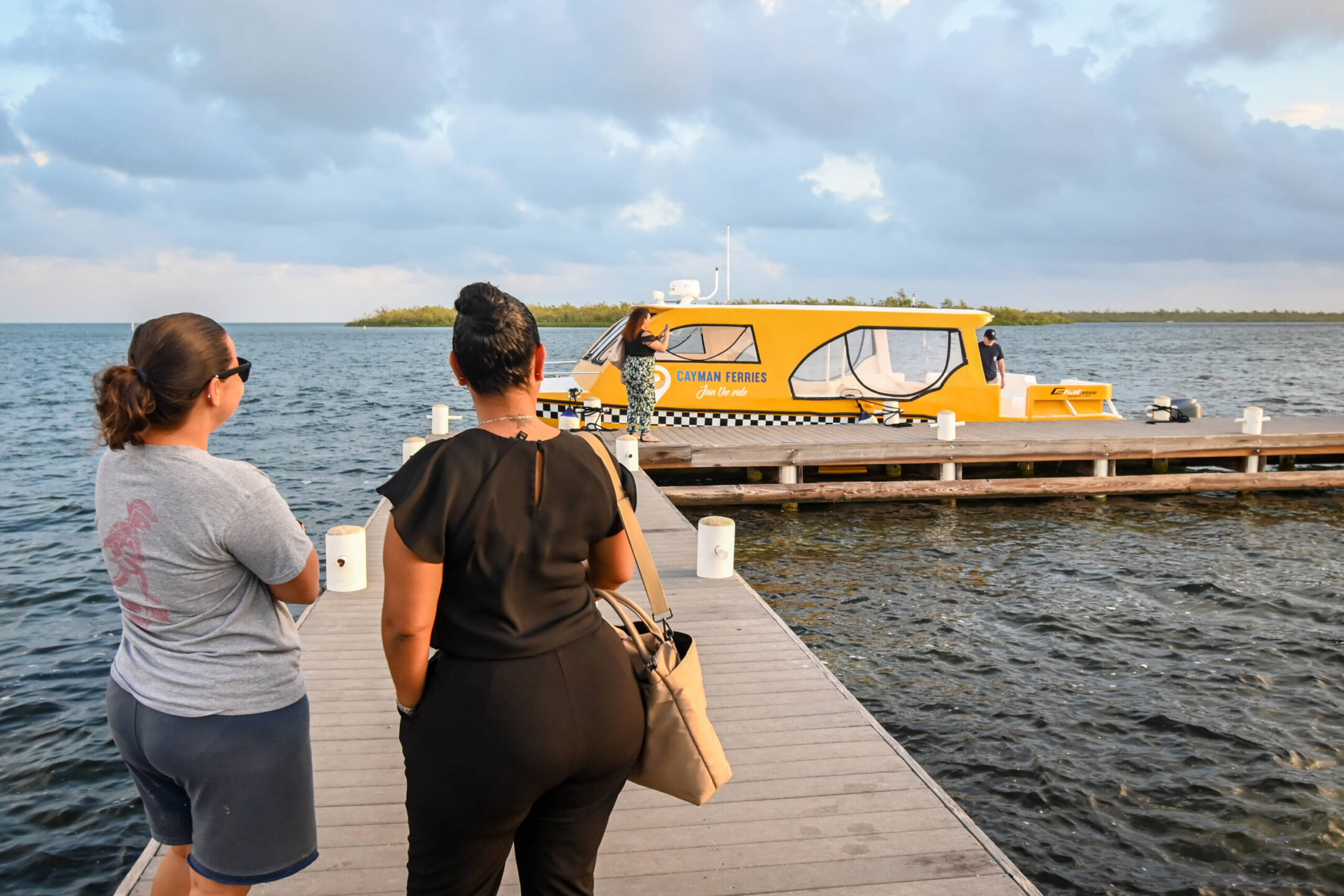
It remains a viable option but again seems to require a massive investment in linked infrastructure, including terminals, car parks and onward transport links. Unless you live and work near the water it’s a non-starter. Even then, people seem disinclined to use that option.
A commuter route from Newlands to Camana Bay was discontinued because of a lack of interest.
Perhaps with more marketing and government support it could have been a success. A larger ferry network linked to parking facilities in the districts and an Uber-style service or the ability to hire bikes and scooters for onward journeys, may aid some of the teething issues.
Weather remains a barrier, with sea conditions not always suited to a smooth commute.
4. Restrictions on importing vehicles
Premier Wayne Panton, in a voice-note apology delivered from the midst of Friday’s traffic, made reference to imminent plans to restrict vehicle imports.
Acknowledging that Pirates Fest road closures were the likely source of the gridlock, he added that they “compound the problem of unrestricted importation of hundreds of new vehicles every month”.
It is not clear what restrictions the current government envisages. A previous committee, led by former MLA Austin Harris, proposed a 10-year age limit on vehicle imports.
It is possible that this would make purchasing vehicles more expensive and lead to less car ownership over time. But while people have no serious alternative to get to and from work, it is hard to see how restricting imports moves commuters out of their cars.
As a solution to environmental or commercial concerns over car sales, this might be good policy. From a traffic perspective, though, it addresses a symptom rather than a cause of the gridlock.
5. Restrictions on vehicle ownership
More controversial than limiting imports is restricting who can own vehicles.
Panton, in his pre-election manifesto, proposed restricting car ownership for work-permit holders.
There’s been previous political discussion around whether people on short-term permits or workers in their first year on the Cayman Islands could be denied the right to own a car.
It’s likely this would be a politically palatable option that keeps people off the roads. But it is hard to see how this could come before an organised public transport system.
Denying people the ability to drive without a safe and reliable alternative would cause all kinds of problems for businesses and their workers. The effect could perhaps be mitigated by allowing motorised bikes or scooters.
6. Motorised scooters and bikes
Borrowing another idea from Bermuda and incentivising electric bikes or scooters could soften the blow of restrictions on car ownership. In our sister territory across the Atlantic, more people use scooters than drive cars.
That’s because car ownership is restricted to one per household. But Bermuda also has single-lane roads that are relatively safe to drive on and ferries that can take mopeds, bicycles and motorbikes on board.
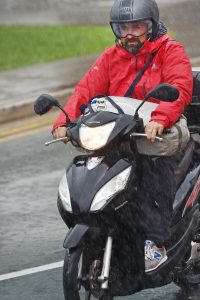
Cayman has no such infrastructure and you need a separate licence to drive anything over a 50cc scooter. The latter point is something that could be changed at the stroke of a pen but safety concerns about riding a moped in heavy traffic will persist.
This is an idea that does have potential, however, for the many people that need the flexibility of their own vehicle but would prefer to avoid the expense.
7. Congestion charges
Wherever it has been attempted, charging people to use their cars in city centres at peak hours has been hugely unpopular. But it has also worked.
Singapore has the most sophisticated approach with a rate that fluctuates based on the intensity of traffic on the road.
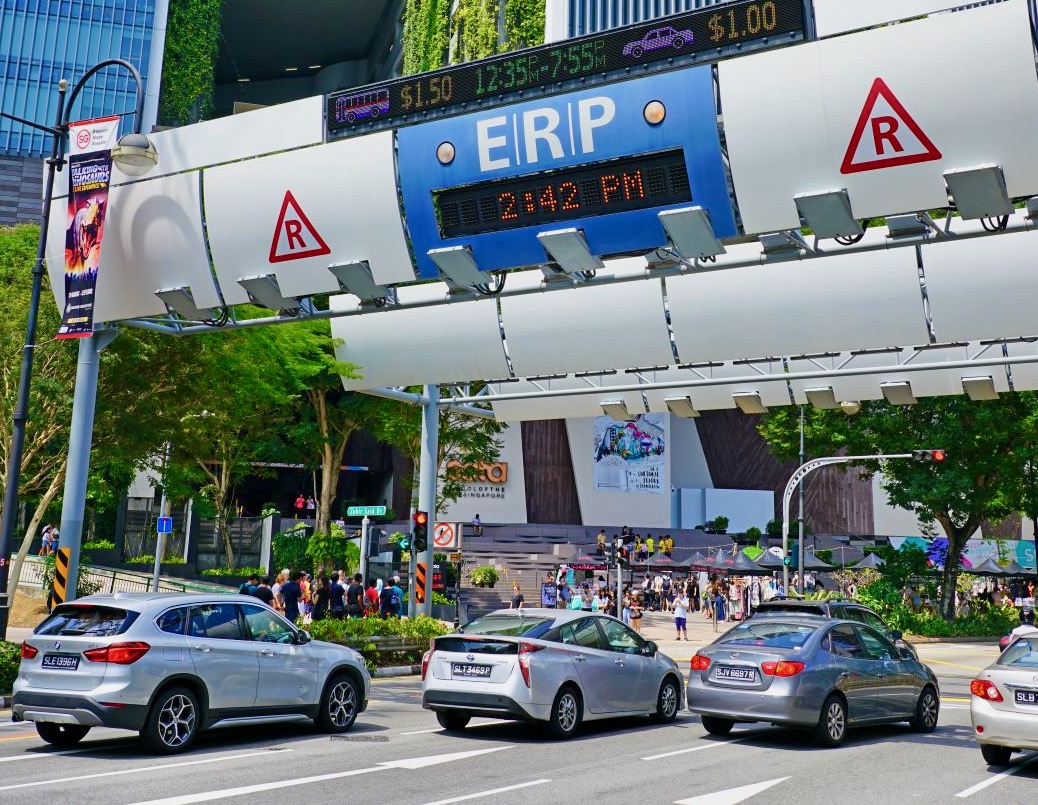
Drivers are charged through an in-car unit with a cash card that automatically links with overhead electronic road pricing platforms equipped with sensors and cameras.
Theoretically, Cayman could charge commuters $5-per-car for entering a designated area around George Town between 7am and 9am and 5pm and 7pm. The approach could be tailored, for example, by exempting vehicles carrying more than one person (Compass research suggests 85% of rush-hour journeys in Cayman are taken by solo car-users).
When we wrote about this issue, in depth, in 2020, Matthias Sweet, a transport policy researcher based at Ryerson University in Toronto told us the best solutions are often politically challenging.
He said, “Very few politicians are eager to embrace road pricing – despite its real potential to alleviate congestion.”
8. School buses for all students
Any commuter knows that the school holidays provide blissful release from the drudgery of bumper-to-bumper traffic. It stands to reason, therefore, that school buses could be used more universally to help ease the pressure when schools are in session.
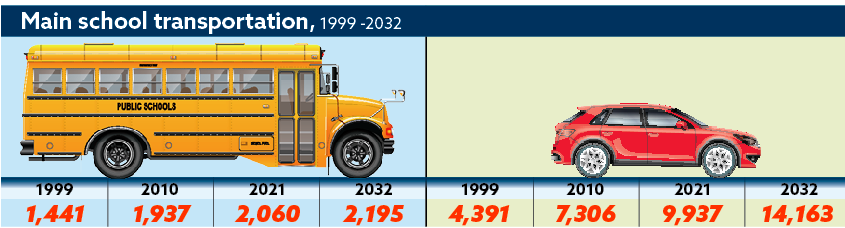
Yet private schools still have no bus system, and data from the census shows bus use is declining for government school students. Of all students, only 14% use the bus to get to school.
In 2021, nearly 10,000 children used cars to travel to school – an increase of more than 2,500 passengers compared to 2010.
Government could provide incentives to parents to get their children back on the bus and assist private schools – which receive grant funding – in incorporating buses. Perhaps, the scores of out-of-work bus drivers could have been repurposed for this project during the COVID shutdown. As cruise tourism dwindles this might still be an option.
9. Monorail
One of the boldest (and most expensive) ideas to be pitched as a potential solution to the traffic problem, the monorail offers some significant advantages over other forms of public transport.
A track could be channelled through the central reservation of existing highways or elevated above the Central Mangrove Wetlands, limiting the environmental and flooding impact of routing a road through the ecological heartland of Grand Cayman.

The ability to bypass the traffic completely would be enough incentive for most in the eastern districts to get out of their cars and – if designed correctly – it could carry mopeds or electric bikes for onward journeys.
The cost of bringing this kind of development to Cayman would be astronomical, however, and the supporting infrastructure of parking and stations in the districts would be another essential added expense.
As Cayman continues to grow, however, it begins to look like less of a pipe dream.
10. National Cycle Way
In 2020, the Compass calculated the average speed of a car in rush-hour traffic at 4mph.
The average speed of a moderately fit cyclist is at least three times that. When we held a commuter race from Bodden Town to Camana Bay, the cyclist was almost twice as fast as the driver.
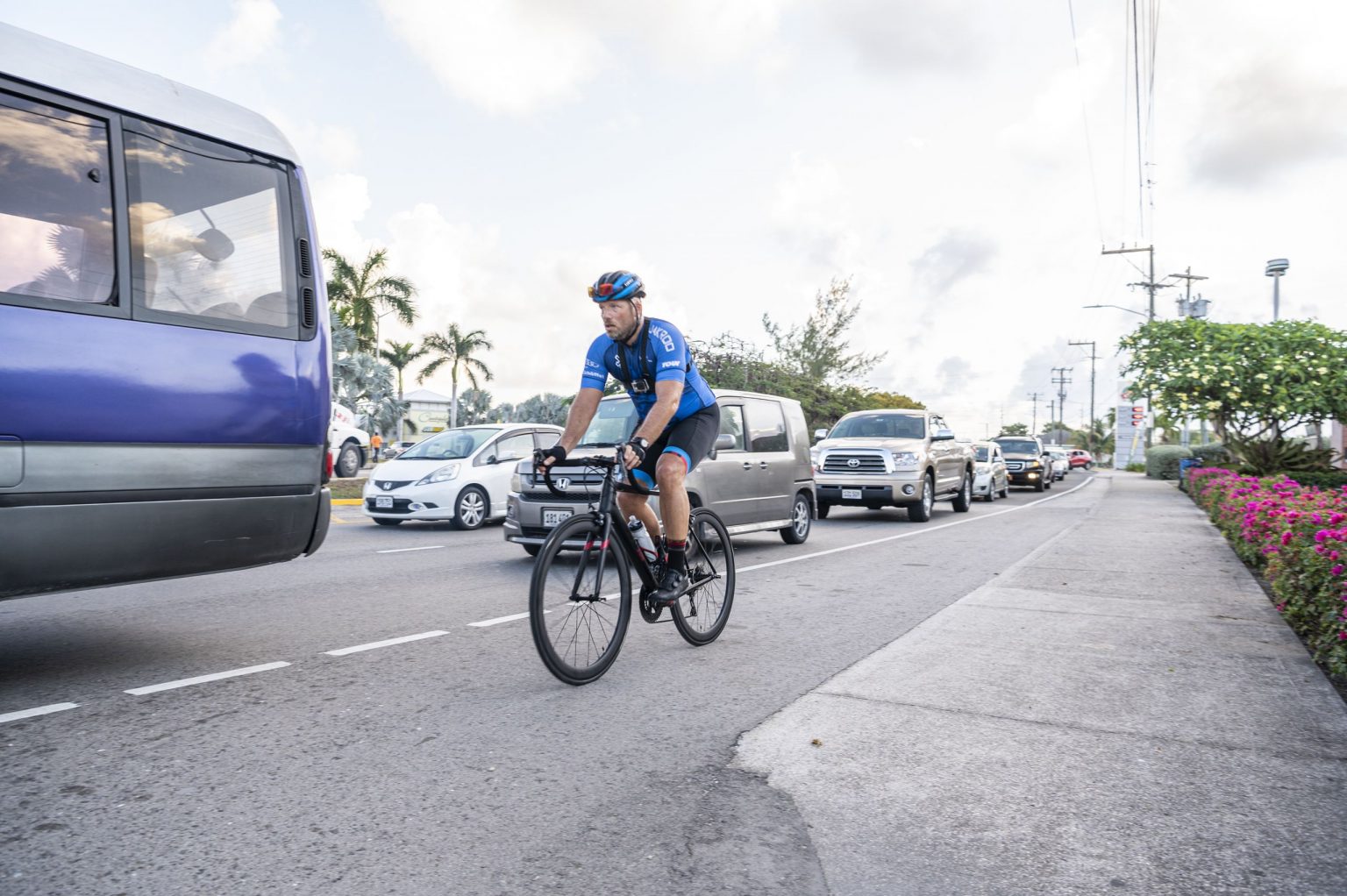
But safety concerns over riding on busy roads, lack of showers in many offices and the climate are barriers to greater adoption of two-wheeled transport.
Could a national network of shaded cycle and footpaths – independent of the highways –make cycling possible as a commuter transport? Acquiring land would be a challenge – particularly around George Town – but government frequently uses eminent domain for road construction.
In Copenhagen, more than 50% of people commute by bike, with specially adapted cycles used in all weathers for everything from grocery shopping to dropping kids off at school.
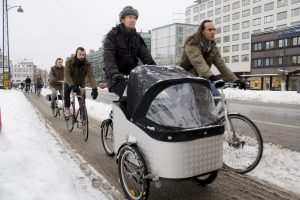
Similar adoption would require a big cultural shift for Cayman, however, and the reluctance of people to ride to work in the heat may mitigate against serious expenditure in this kind of infrastructure
11. Uber for Cayman
One of the key challenges for any kind of mass transit is the onward journeys. Getting to Camana Bay on a ferry or to George Town on a bus is one thing, but making it to your office a few miles away is an added challenge. Equally, it is hard to replace the convenience of the car for lunch meetings, bank appointments, and visiting the doctor or the dentist.
An affordable lift service, like Uber, might help with that.
Right now, the only people allowed to charge for lifts are licensed taxi drivers. The number of people allowed to drive taxis and the amount they charge are tightly controlled by the Public Transport Board.
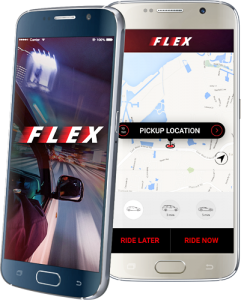
An attempt to set up a Cayman Uber – called Flex – has lacked the projected impact because it has only been allowed to use licensed taxi drivers.
Opening it up to all Caymanians would provide a second-job income stream for those who need it and a convenient lift service for people who use public transport. Again, this would be politically challenging because it would impact the livelihood of taxi drivers.
12. Flexible working arrangements
One of the lessons of COVID was that we don’t need to work 9-5 from an office to thrive. Yet many businesses have gone back to doing just that.
Even before the pandemic, incentivising businesses to stagger their hours, or offer work-from-home arrangements was mooted as a traffic-calming measure.
Mario Ebanks, who provided input to government for a previous traffic think tank, believes this could be one of the most effective and easiest policy interventions.
It would take government and perhaps a couple of key firms to lead from the front, but a 7am-3pm or an 11am-7pm working day would surely be achievable for many. East Enders are getting up at 5am anyway to avoid the traffic.
Related Videos








The elephant in the room is the narrow isthmus which connects east and George Town/West Bay/Camana Bay. No amount of new highways will free up that bottleneck. A few suggestions
1. Clean energy mass transit – it must be frequent and fast enough to get people out of their cars
2. Bus and high-vehicle occupancy lanes for the most congested stretches. if you choose to ride alone in your car then you get the traffic delays. Those who carpool or take mass transit get faster trips.
3. Develop industry and jobs on the East End. Incentivizing businesses to locate east of the bottleneck reduces the demand going into town.
4. Love the rail idea but how do you build it without burdening the budget?
I am 100% against restrictions which limit cars to people based on their income or work status. That is not an inclusive society and reeks of classism.
This IS a long-term problem and should be treated as such. That means long-term solutions should be on the table – like the monorail. It is ok if the current leaders build something that their children will benefit from!
The two big choke points are the ALT and the Hurley’s roundabouts.
Install overpasses and the traffic will be much easier.
The real long term solution is a bridge from Camana Bay to Savannah in the arterial bypass and create overpasses in key congested areas.
A refund on import duty for anyone sending their car back off island would be a small but attractive incentive and would make a contribution to controlling the number of cars on island.
I have just come back from Manchester, England. They have trams running non stop around the city Centre and out to the suburbs. There are no traffic hold ups as with traditional buses as everyone uses the trams. Cheaper than a monorail but still expensive .
However, this is a long term problem so ought to be considered.
Monorail. Do whatever necessary to fund it – e.g. double vehicle import duties for everything except electric vehicles (we need to reduce pollution, so let’s continue to allow them in duty free under $30k).
A monorail system from East End to West Bay is the future, if we have the courage to grasp it. We can either be a third world country, or we can strive to become more like a modern European city, or even as modern as Dubai or Singapore. Presently, the current traffic situation is more like a failed state in Africa.
“A developed country is not a place where the poor have cars. It’s where the rich use public transportation”
As a Caymanian currently living in London, over 95% of all commutes are done by public transport. Virtually no private cars in central London. Nobody drives their expensive car into town, it is simply too slow.
Public transport is clearly the core answer for Cayman, and yes, it is a medium to long-term solution but one that has been obvious to all since I first heard it spoken about in the 80s (some may remember the MGTP)
“a politician thinks of the next election, a statesman of the next generation”.
I implore our politicians to start thinking generationally.
Some core learnings from places where they have made public transportation work.
– Bus lanes – put them in place on key routes and enforce them strictly. Once people see buses whizz past them as they sit in their car in gridlocked traffic they will start to use the bus.
– Make the technology leap. China went straight form a cash society to a fintech/contactless one. Cayman has a public transport system fit for the way the world was decades ago.
– Invest in a state owned (yes, it will work better, look around the world) mass transit system. In Cayman that means buses, integrated with technology (apps, contactless payment, fare systems) that mean it is as fast to use the bus if not faster
– In addition, more ideas that are proven to work elsewhere include:
– Park and ride integration with bus routes.
– congestion charging
– alternate day access to GT (via odd and even number plates)
= school buses being made mandatory for students (this will be key for flexible working) and invested in and committed to
– segregated cycle lanes (not just paint, but concrete to protect cyclists)
– incentives for existing landlords of offices to put in showers, bike racks, changing rooms, plus change in planning laws to mandate these
– reduction (not increase) in parking spaces per new office building linked to public transport incentives
All of these answers are out there and readily available.
“good artists copy, great artists steal”
Let us bravely copy/steal all the best ideas and invest in a transportation future for Cayman fit for future generations !
Outstanding list!