

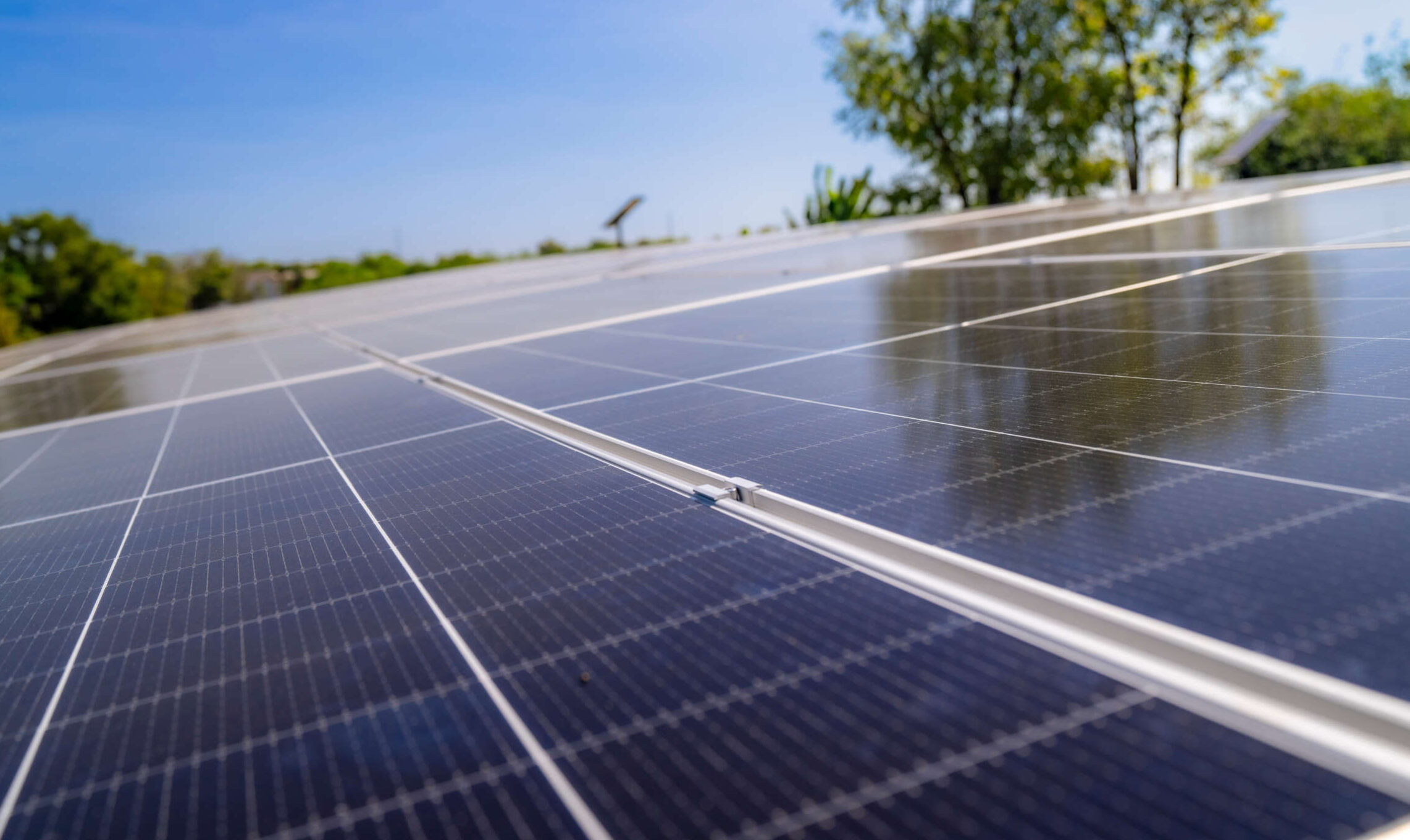
Adding a solar canopy over a bike lane alongside the extended East–West Arterial highway would help solve Cayman’s energy problems and magnify the benefits of the road, according to analysis from environmental engineers.
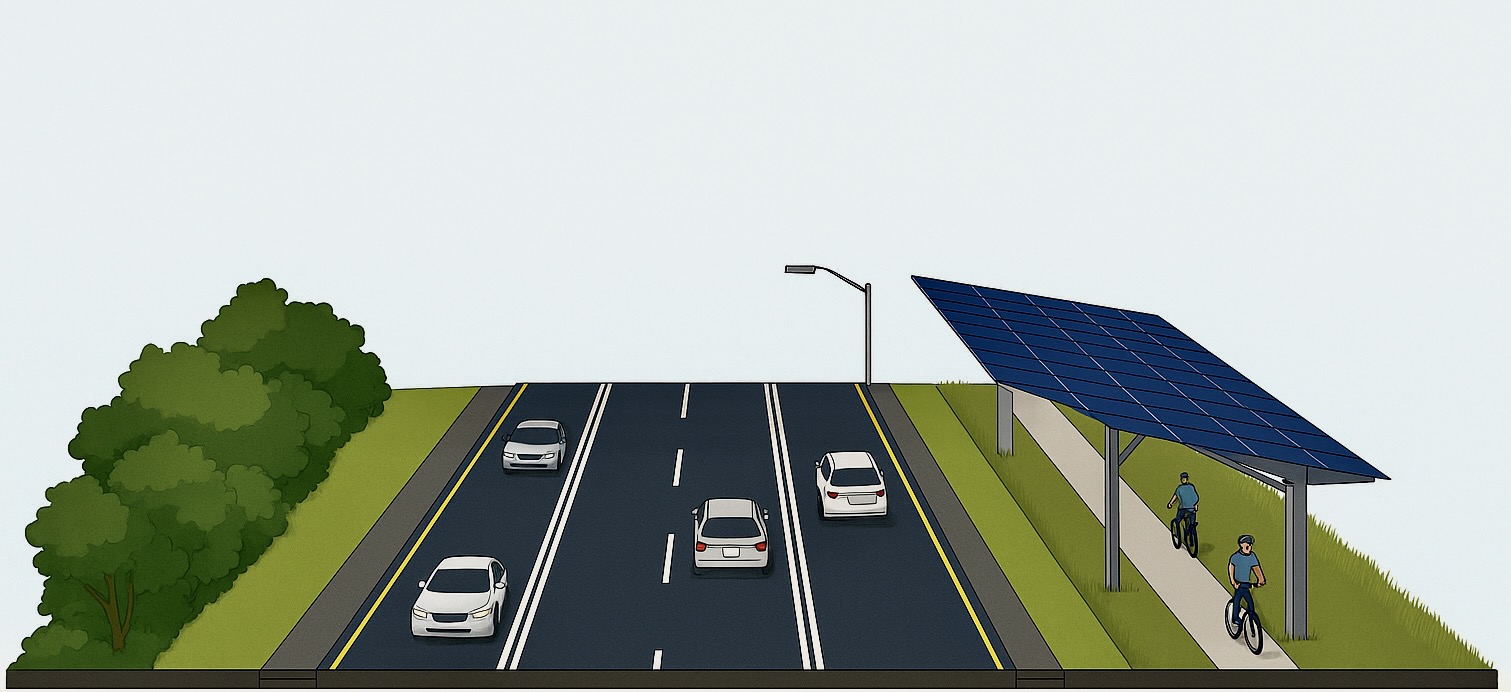
They modelled the concept of linking two major infrastructure goals by adding a corridor of solar panels over a micro-mobility path – for bikes, e-bikes and pedestrians.
A report from the Environmental Assessment Board emphasised the importance of this aspect of the project indicating it would increase the overall benefits by more than $150 million.
The Environmental Statement, prepared by the National Roads Authority’s consultants, outlines a test case for a six-mile, 40-foot-wide solar canopy running alongside the new highway.
The cost estimates in the report vary wildly, between US$36 million and $78 million. But the report is unequivocal that the array would help offset the negative environmental impact of the road. With a capacity of around 22 MW it could supply around 6% of Cayman’s electricity demand, effectively turning the highway into one of Cayman’s largest power plants.
It would also displace 2.5 million gallons of diesel use and offset 703,556 metric tons of carbon dioxide emissions over 30 years. Those factors add up to a combined economic impact of $164 million, the report notes.
The new government has yet to announce which aspects of the project will proceed and at what pace.
Solar project a key to economic justification
The Environmental Assessment Board report included in minutes for the National Conservation Council’s recent meeting notes the importance of the solar installation to the wider benefit of the project.
“The solar canopy scenario materially changes the economic justification of the East–West Arterial.”
Without that impact, the report warns that the economic justification for the road is relatively weak. It will have marginal impact on traffic – preventing things from getting worse rather than making things significantly better. By 2046, the highway is expected to deliver average time savings of just five to seven minutes compared with commutes today.
And it warns that damage to peat and wetlands along the preferred route will also mean ecological and environmental losses.
Lauren Dombowsky, who assisted the Department of Environment on the Environmental Assessment Board, said the board had highlighted the solar project as a key contributor to the overall economic justification for the project.
Cost-benefit ratio important
Sacha Tibbetts, vice president of utilities provider CUC, said it was definitely feasible. He said CUC had previously looked into a similar concept for the airport runway. He said it was not the most efficient way to design a solar farm but given the potential additional benefits it was likely worth considering.
He said the key would be whether those benefits justified the additional level of investment likely to be necessary. He added that right now any solar project would be a step in the right direction for Cayman and if the benefits are multiplied through providing shaded cycle lanes – without tipping the price point too far in the wrong direction – it could be workable.
“The key for us, as always with renewable energy is saving the consumer money, so if it relies on a very high energy price, then what are we gaining?”
On the solar option, the Environmental Assessment Board acknowledges, “Delivery of a solar canopy is uncertain as it lies outside NRA’s remit. Without it, the project’s cost–benefit ratio declines significantly.”
Related Videos









Looks promising but what about the first Honda fit that crashes into it since there won’t be a barrier? Otherwise love the concept. Designated bike lanes are 30 years overdue. Now need to include e-bikes and scooters too.
How much will it cost to put the necessary protection in place to keep it safe from speeding drivers? This would last for how long? 48hours?
Will be great. Until the first hurricane blows it into the North Sound. Solar panels need to be properly secured to a solid structure.
It is costly and poses significant maintenance and security challenges. The extensive supporting structures, panels, and grid connectivity significantly increase the overall cost.
Constant traffic, dust, and vehicle vibrations would affect panel performance and longevity.
Investing in long-term energy security is important — but not at the expense of the natural systems already protecting us for free.
Building solar over wetlands is like draining your lifeboat to build a sail.
We could achieve far more, far sooner, by putting solar on existing rooftops — no bulldozers, no trade-offs.
Why not start there?
Put solar on roof tops, or over parking lots. High voltage next to the highway is a bad idea. And the diagram even has the trafic going the wrong way.