

Government plans to begin survey work on the long-awaited East-West Arterial road in April, with construction targeted to start in September, Parliament heard during last week’s sitting.
Speaking during the 6 March session, Minister for Planning, Lands, Agriculture, Housing and Infrastructure Jay Ebanks said the road remains a priority infrastructure project aimed at improving connectivity and easing congestion between Grand Cayman’s central and eastern districts.
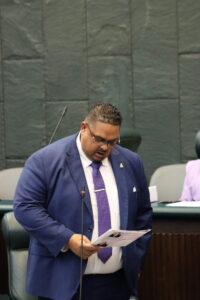
He told members that the National Roads Authority has indicated survey work will begin in April, with preliminary notifications already issued to landowners affected by the project. A final gazette notice is expected to be presented to Cabinet shortly.
If the process goes as planned, the minister said construction could begin in September.
Funding for the initial stage of the project is already included in the current budget, he said, and additional financing could be accessed through the government’s infrastructure account as the road progresses.
The first phase of the project will focus on what the minister described as the most critical section of the route, with current funding expected to take the road roughly to the Lookout Gardens area in Bodden Town.
“There is money in the budget to carry us for what we think is the first part of the most crucial part of the road, which is to get us … close to Lookout Gardens. Within the two-year cycle, the Minister of Finance has also told us that there’s money in the infrastructure account that we will be able to access for the building of this road. So right now, I would say there is money in this budget,” he told Parliament, adding that future phases could be funded in subsequent budget cycles.
Residents could lose 100 hours a year in traffic
Bodden Town East elected member, Dwayne Seymour, welcomed the update but stressed that residents have been waiting many years for progress on the project, which has long been viewed as essential to relieving traffic congestion in the eastern districts.
He noted that people in those communities can lose significant time commuting because of bottlenecks on the island’s existing road network.
“This is a very important project for many persons [who for] about 10 years now have been asking for this,” said Seymour, whose constituency includes Lookout Gardens. He added that residents can lose around 100 hours each year sitting in traffic.
He estimated that the time lost could equate to roughly $10,000 annually when calculated, even at minimum wage levels.
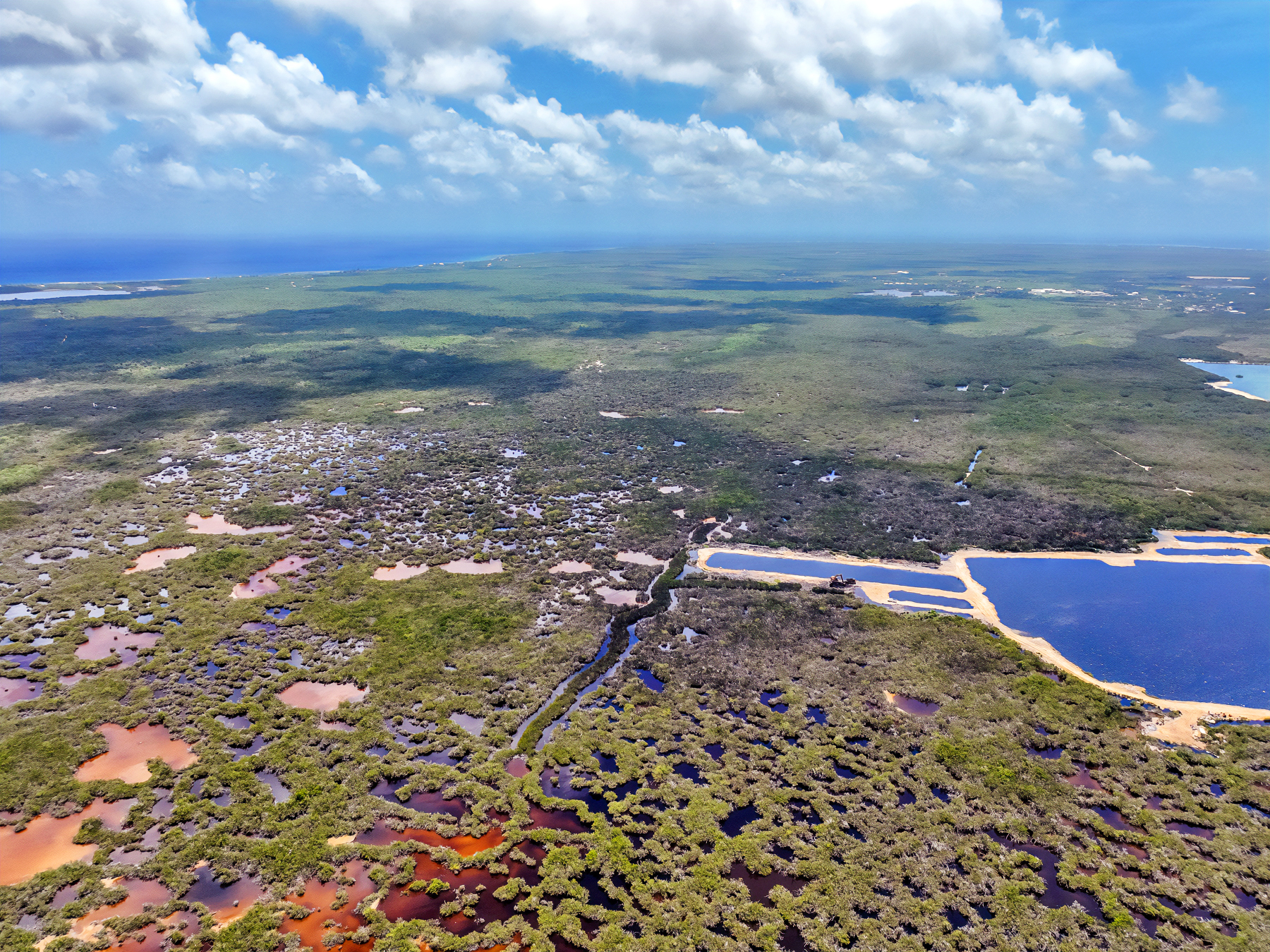
The East-West Arterial extension – an eight-mile road extension from Woodland Drive in Lower Valley to Frank Sound Road – is intended to provide an alternative route linking the eastern districts with George Town and central Grand Cayman. The project has become one of the most contentious infrastructure proposals in the Cayman Islands in recent years.
At the centre of the debate is a clash between competing priorities: easing chronic traffic congestion for commuters from the Eastern Districts, protecting environmentally sensitive areas such as the Central Mangrove Wetlands, and concerns about the project’s cost and the development pressures it could bring.
Ebanks indicated that getting the project started is the most important step, suggesting that once work begins the government will be better positioned to secure funding for later phases of the road.
Related Videos









This road will not solve any traffic issues as per NRA published reports. This road is happening because of landowners (some who are government themselves), pushing for it so their land jumps in value.
I am not a daily commuter from North Side, but having an important appointment I set off from Cayman Kai at 5.15am this morning to get to George Town supposedly ahead of the rush hour. At 5.40am I was sitting bumper to bumper in Bodden Town edging forward in slowly moving traffic, and it took an hour to reach my destination in George Town.
Since “rush hour” from the Eastern districts begins at 5am the estimate of regular commuters losing 100 hours per year sitting in traffic would appear to be a considerable underestimate.
Even as a member of the National Trust and someone who is very concerned with the environment and preserving the wetlands, I personally cannot wait for the East-West Arterial to be completed all the way to the Frank Sound Road!
That is a massive pond in the picture and we can only see part of it, with what looks like another one nearby. When were these excavated and how much fill was removed?.
In my opinion, the E-W arterial will serve to get commuters to the choke points entering George Town a bit quicker. So yes, some time saved. That’ll be the only transport-related benefit.
Nothing will really solve those traffic clusters entering GT unless less vehicles use those routes. Until Go East initiatives and real public transport solutions take hold, there will be no less vehicles entering and leaving our capital on weekday mornings and evenings. The foreseeable future.
Meanwhile, we’re seemingly hell-bent on passing the 100k population mark!
This road is long overdue. The issue isn’t just about the daily commute into George Town for work—it’s about safety, resilience, and common-sense planning for the entire island.
Right now, the eastern districts essentially rely on one main route. That is a serious vulnerability. When an accident happens anywhere past Northward Road, everything comes to a complete standstill—not for a few minutes, but often for hours. In the event of a major accident, emergency, or natural disaster, having only one primary route in and out of the eastern districts is simply not sustainable.
As a West Baya who purchased property in Bodden Town, I can say firsthand how frustrating the situation has become. It is unreasonable that I have to leave my home at 5:00 a.m. just to reach George Town by 8:30 a.m. That’s not a minor inconvenience—that’s a clear sign the system is failing the people who live and work here.
Adding more lanes in isolated areas doesn’t solve the core problem. Many of these new multi-lane roads simply bottleneck back into a single lane. That’s where the real congestion begins, and it’s an issue that planning authorities and the government need to acknowledge.
Another part of the problem is that nearly everything—jobs, services, and major offices—is concentrated in George Town. That kind of centralization puts enormous pressure on the road network and forces thousands of people to make the same commute every single day.
This conversation shouldn’t just be about convenience; it should be about smart infrastructure, public safety, and planning for the future growth of the Cayman Islands. The eastern districts deserve reliable access, and the island deserves a transportation system that actually works.
Traffic relief is needed for the eastern districts. But the Central Mangrove Wetlands are not empty land — they protect Cayman from flooding, support fisheries, and sustain the North Sound. As the East–West Arterial moves forward, we hope Government will clarify how these critical wetlands will be protected — including how future development around the corridor will be carefully managed to preserve the integrity of this nationally important ecosystem.
As a young person born and raised in Cayman, I have a very hard time with the EWA moving forward because I don’t believe it takes the whole picture into account. It feels like an easy way out of a very real problem. And I have no issue saying that yes, there is indeed a massive problem with people having to sit in traffic for 2–4 hours a day just to put bread on the table.
However, the proposed solution is something that has not only been shown to fail at fixing the problem long term, but also threatens vital ecosystems that support Cayman’s tourism and livelihood. To me, that reflects a lack of forethought when it comes to the future young Caymanians will inherit—let alone a sustainable one.
There are many other alternatives to this issue that feel like they deserve serious consideration: public transportation; alternative road alignments (such as the proposal previously put forward by Sustainable Cayman); work-from-home or hybrid policies where possible; and other long-term planning approaches that reduce the number of cars on the road rather than simply building more roads.
Given that the NRA’s own evidence suggests this road is not a complete or long-term solution, how the project can still move forward is truly baffling to me. When a project impacts ecosystems and natural resources that have sustained us for generations—and must continue to do so into the future—it becomes very difficult to justify. It begins to feel as though the benefits to those involved outweigh any benefits the public can realistically expect.
Not only will it likely fail to dramatically change the daily reality for people who must organize their lives around traffic, but it will dramatically alter the future of development in Cayman. It could also act as a catalyst for further damage to the already fragile ecosystem of the Central Mangrove Wetlands.
I am not simply trying to protect the environment by saying all this, it’s not as surface level as that. I am trying to protect the future I had hoped my island would have. Right now, that hope feels like it is slipping through the cracks.
I’m pretty frustrated by this. I understand the dire need to reduce traffic, but adding more roads and lanes has clearly never worked for us, or anyone, long term. I also understand the concern of only having one road during emergencies, however building a road through a WETland seems like a one way street to flooding for both the road and the surrounding communities. I wish that the government would take more time and care to consider better routes like the proposed B2 which is more connected, clears less CMW, and is cheaper. Truthfully, I wish they would reconsider all together, and focus on real long term solutions like public transport (why do we only have one person in each car?), school buses for all schools, reducing bottle necks in town, staggered work hours, AFFORDABLE ferries, and walkable/bikeable infrastructure. No roads has never been the answer and never will be, especially at the expense of yet another chunk of our mangroves, creating habitat loss and fragmentation for our local species. We are killing the guardians of our island. When we lose everything, what will be left?
I completely understand the need to address the awful traffic congestion, no one wants to spend hours on the road. However, there are better, more sustainable options with less environmental impact and more lasting benefits. To start off with, there have been numerous studies conducted that show that new roads, in turn, create more demand for more cars on the road. A real Field of Dreams scenario. Another example, investing in public transport would reduce the number of cars on the road and actually address the problem, instead of repeating the same cycle while causing completely unnecessary environmental harm. Like I said I completely recognize the need to reduce the amount of time we spend on the road, all I ask is that we look at this long term. If we consider an alternate route such as B2 which clears less mangroves and is even cheaper then we are still achieving our goal at getting places faster while continuing to preserve Cayman’s culture and heritage that is directly related to this environment at threat.