

Ten years on from the campaign for ‘one man, one vote’, it is time to consider further electoral reform.
The step towards electoral equality that was made through that change solved one set of problems, but without further tweaks, it risks entrenching an entirely different set of issues.
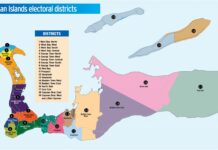
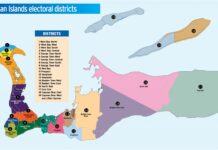
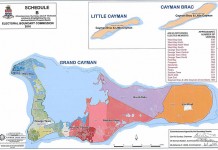
Cayman’s single member constituencies are simply too small. In multiple districts, the margin of victory can be as slim as the number of cousins each candidate can count on to show up at the polling booth.
The reality is that Cayman is no longer the islands that time forgot. We live in an inter-dependent world, where our fortunes are tightly intertwined with those of our neighbours and trading partners. The decisions required of Cayman’s leaders are increasingly complex, long term and national, with broad international implications, yet our politics is driven by goals that are short term, simple and local to the point of being parochial.
A good political campaign needs simply target a handful of community issues, as Roy Bodden points out in today’s main story.
Fix the pot-holes, ensure the bins are collected and send a turkey at Christmas, and that should be enough to guarantee re-election in many constituencies. The system requires politicians to think local.
A good political decision involves simple, bite-size content that can be put in a WhatsApp message and shared with a targeted group of specific constituents on their cellphones.
Fundamentally, there is nothing wrong with that. Voter participation is to be encouraged and, as Premier Wayne Panton’s campaign slogan attests, ‘community builds country’.
But the current system does not offer a counter-balancing imperative to think national.
Presenting a coherent plan to reform Cayman’s health insurance system or to protect and expand its financial services industry, for example, might win votes nationally but won’t resonate as powerfully in a series of mini district elections, which is what Cayman has.
If we want leaders who have a long-term, mountain-top vision for Cayman’s future, for how the islands develop and how they grow, who have a plan to improve our education system, reform healthcare and set national goals for tourism, then we need a system that encourages politicians to campaign island-wide.
That has to be through a national vote.
Every Caymanian should have a direct say in who leads the jurisdiction and who forms the government.
And those campaigning for that job should be incentivised to prioritise those fundamental areas that impact everyone. At the moment, the opposite is true. Arguably, no one knows that better than the sitting premier, whose Cabinet work between 2013-2017 as environment and financial services minister feasibly prevented him from doing the constituency glad-handing necessary to ensure re-election, when the voting system changed for the 2017 poll.
Single member constituencies bring other risks, too, like creating ‘garrison politics’ where competition for services becomes a zero-sum-game between districts, and resources are allocated on the basis of political patronage rather than according to need.
That’s not to say that local issues should be subordinated. The long-promised district council system would offer an alternative platform to allow community issues to be raised and resolved.
Perhaps some hybrid of local and national votes, à la BVI, could also offer an alternative route to the same goal.
The means and the method remain open for debate. But the Compass supports a discussion of electoral reform that helps create politics that prioritises sophisticated solutions to the many challenges faced by one of the world’s largest financial centres in the 21st century and puts our billion-dollar budget in the hands of those who prove themselves most qualified to spend it.
Related Videos








The UK has about 60 million residents and about 600 MPs. That’s about 100,000 residents per MP.
The Cayman Islands has about 60,000 residents ( including work permit holders and permanent residents) and has 19 MPs.
Is that too many? Remembering that this is a fully functioning country with similar needs, education, finance, social services etc. as a far larger country.
Should West Bay be all one district, George Town another and the same with the Eastern districts?