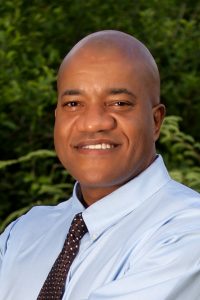
In a special feature today, the Cayman Compass Issues section takes a deep dive into the case of Travis Webb. The former athlete is detained indefinitely at George Town Hospital after being found ‘not guilty by reason of insanity’ in a gruesome attempted murder case. The details of what happened before, during and after the incident highlight gaping holes in the islands’ mental health care system.

Travis Webb has thought for so long about what he might do if he was a free man, he can almost go there in his mind as he describes it.
“Boy…” he says, rolling out the word in one long exhale. “If it was a Sunday, I have this one racer bike at home. I would just ride that up and down, go the beach, swim, ride back home and just cook, you know? Cook some Sunday dinner or something.”
Right now, this kind of wishful reverie is almost the only way Webb can travel beyond the walls of the Cayman Islands Hospital, where he is incarcerated on a mental health ward until further notice.
For much of the week, he is confined to the unit’s small ward.
He wakes up early and drinks some tea. When the doors of the ward open at 9am, he goes out into the little picnic yard and performs his exercises – squats, push-ups, calisthenics.
Sometimes he does his laundry or chats to the other patients drifting through the ward, watches some sports on the communal television, or sits in the shade and eats his meals.
On Fridays, a physical therapist accompanies him on a two-mile run.
“How I am living right now,” Webb explains, “it’s like a little routine. I can’t really think about the future.”
The former athlete is detained at the ‘governor’s pleasure’, which means his imprisonment is essentially open-ended.
He doesn’t know if or when his circumstances might change. No one seems to be able to give him a clear answer. In part, that’s because there isn’t one.
His case is morally complex and more or less unique in Cayman Islands history. But it has exposed deep fissures in the mental health infrastructure of the territory, from the community support system, to the judicial process to the prisons, the hospital and outpatient services.
Efforts to find an appropriate solution for Webb have rubbed against the reality of an outdated and underfunded system at every turn. And while his situation is extreme, experts caution that Cayman Islands people are falling through the cracks every day.
“Something about my case, they say it is the first time it has ever happened,” says Webb.
“I guess they never dealt with anything like this before, so they don’t know how to deal with it. It’s a never-ending cycle.”
‘Buried alive’
There’s an almost childlike innocence to Webb’s manner and way of speaking that is at odds with the notorious crime he was charged with.
Under the influence of a troubled mind that doctors later diagnosed as a schizophrenic episode, in 2018 Webb took a 3-year-old child into the yard of a Bodden Town home and buried him alive. The child was discovered, distressed and struggling to breathe, and was revived by emergency services. Webb was arrested and charged with attempted murder.
The reality behind that horrific incident is far more nuanced and complex than those blunt details can convey, says Oliver Grimwood, who represented Webb at trial, mounting the first successful insanity defence in the history of the Cayman Islands.

Psychiatric evaluations, accepted by the prosecution, indicated he was unaware of the nature of his actions and he was ultimately found not guilty by a judge on account of his diminished responsibility.
There was no dispute about the serious nature of the incident or that Webb carried out the actions described in the charges. However, there was also no dispute, when it came to the medical analysis, that he was suffering from schizophrenia and had experienced what a psychiatrist at trial described as a serious psychotic episode.
“We did not challenge what the Crown said occurred that day, and the Crown did not challenge the assessment of Travis’ mental health,” said Grimwood.
He said the medical evidence suggested Webb had no knowledge of the “nature or quality” of the act, meaning he could not understand the implication of his actions or determine right from wrong in that scenario.
Prison designated as a ‘mental hospital’
Cayman’s Criminal Procedure Code states that anyone found not guilty of a crime by reason of insanity must be conveyed, in the words of the law, to a “mental hospital for the reception of the criminally insane persons to be kept until discharged by order of the Governor”.
In the absence of any such facility, practice directions from the chief justice designate Northward Prison, for legal purposes, as a mental hospital, despite the acknowledged absence of adequate expertise or programmes for people with serious mental health conditions.
Webb spent 20 months at Northward, first on a secure unit and then in the general population, before an agreement was reached in 2020 to move him to the acute mental health care ward at the Cayman Islands Hospital.
The hospital ward, designed for short-stay patients suffering from severe episodes of ill health, has been his home ever since.

People flit in and out – some for days at a time, some for weeks. There are teenagers suffering anxiety, distressed drug addicts, people suffering under the weight of mental breakdowns. The under-pressure centre bears almost the entire weight of Cayman’s mental health issues in a few square feet.
But the atmosphere on the ward can be intimidating for Webb. Sometimes other patients steal his clothes or his shaver. When extra capacity is needed, he is moved to another part of the hospital.
Psychiatrist Dr. Marc Lockhart, the former head of the Mental Health Commission and one of the doctors who has treated Webb, said the ward was a better option than the prison, but is far from ideal.
If Webb is really a danger to the public, he questions why he would be kept on a ward with vulnerable patients. If he isn’t, then he wonders why Webb can’t be released under a community supervision order, as Lockhart and other doctors have recommended.
“This is really an unbearable situation because the hospital is an acute unit,” he said. “It is not designed for long-term care, and this young man has essentially been living there since 2020.”
Lockhart warns there are diminishing returns for Webb’s recovery in remaining in the unit.
The psychiatrist says Webb needs physical exercise, he needs to rebuild his family ties and rehabilitate in the community, but most of all, he needs hope and purpose.
“We have to be careful sometimes about using punitive measures to address medical concerns,” he said.
The challenge for the governor is to find an appropriate solution that keeps the public safe from the consequences of any potential relapse.
Myself and other psychiatrists have assessed this young man and provided reports and options for his management, but as the law stands now, it is up to the governor of the Cayman Islands to weigh that information and decide if he can be released.”
-Dr. Marc Lockhart on Travis Webb’s ongoing incarceration at Cayman Islands Hospital
Lockhart understands the dilemma. He accepts that Cayman’s mental health infrastructure may not currently be robust enough to give the ultimate decision-makers comfort to be sure that Webb can be adequately monitored beyond the perimeter of the hospital.
The slow pace of change on that fundamental issue is what prompted Lockhart quit the Mental Health Commission. While he accepts some validity to the concern, he warns that Webb is currently bearing the consequences.
Warning signs
This is not the first time in this case that Webb’s family believe they have been let down by the system. When he first started to display erratic behaviour, they had nowhere to turn.
The warning signs were there long before the incident itself: When Travis spent every night for a period of months standing in the garden staring into space. When he pulled his track and soccer medals from their display case and hid them. When he dragged paintings and a rug outside the home and set them on fire.
His mother took him to the emergency room and asked for help. But it wasn’t until after the incident that people really started to listen.
Ironically, the court proceedings were the first time he was given access to proper medical support, assessment and diagnosis.
Looking back on that time, Webb muses, “If I had got the help back then, maybe it wouldn’t have turned out this way.”
Track star
The idea that Travis Webb could be deemed ‘criminally insane’ is confounding to many who knew him as a young man.
Andrel Harris, who shot video and images and contributed to the interviews for this article, went to school with Webb. They sat next to each other in class and Webb would surreptitiously copy answers on a tricky test. On the sports field, though, it was Webb who excelled.
The cabinets of his mother’s home are still filled with trophies and other accolades, all the way back to inter-primary sports. He represented Cayman at CARIFTA in long jump and high jump, and played soccer, cricket and basketball to a high level.

He was always an active young man, says his mother Miriam Webb. He worked from the time he was 11 years old, and he loved to look after his dog and work out at the gym.
There was nothing in his childhood or youth that suggested any kind of mental illness. But things started to change around 2015.
He was suffering from insomnia. His mother would find him at night sitting on the sofa staring into space. She made arrangements for him to spend some time with family in Jamaica and his health seemed to improve.
Erratic behaviour
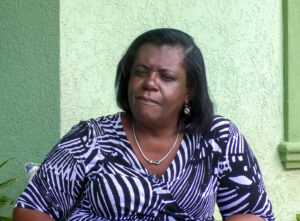
By 2018, however, things had escalated.
“Oh dear Jesus,” she said, “Sometimes I would come in from work and see no house. He was taking down the drapes from the windows, moving around the furniture, rearranging his trophies and stuff like that.”
On several occasions, she found he had made a fire in the yard and burned paintings or a rug from the house. Sometimes he would push his mattress into the closet.
“I was just tired, tired,” she said. “I kept calling the police because I didn’t know what else to do.”
A friend at the RCIPS – a former classmate of Travis – did come by and talk to him.
“He told me something is wrong, ‘this is not Travis’.”
Eventually, she took him to the hospital and passed a note to the doctor asking for a drug test. When that came back clean, his family began to ask for a psychiatric evaluation.
His sister Rochelle Webb believes they were not given enough support.
“They asked us to come back in a month,” she said. “I am not sure what the emergency services are around mental health but if you come into the emergency room asking for help, that should be treated urgently.
“He did not get the help he should have.”
For his mother, this was the hardest time. She recollects that the doctors told her that her son was OK, something she couldn’t reconcile with his behaviour.
“At that point, I didn’t know what else to do,” she said.
It was just weeks later he took the young child into the yard and laid him in a shallow hole in the dirt, leaving him in need of resuscitation.
No parole
The irony of Webb’s not guilty verdict following the charge of attempted murder that flowed from the incident is that, if he had been found guilty, several people close to the case have noted, he would likely be closer to release at this point.
At the very least, like every prisoner in Northward Prison, he would have a parole date.
When a person is facing such serious allegations, Grimwood insists, it is not a game of numbers.
Despite the “long, drawn-out process’ that has ensued, he believes the evidence pointed to a defence on mental health grounds, and that Webb was right to pursue that.
For his part, Webb is conscious of the practical reality that if things had gone down differently, he could be close to being free. But he believes in his innocence and is happy not to have such a terrible crime on his criminal record.
His sister Rochelle is adamant that he “is not a criminal, he has not been convicted of any criminal offence”.
The fact that Webb was found not guilty is an important distinction that Grimwood hopes does not get lost in the debate about how to handle his case.
Where the court has made a finding that a person is not guilty, that is justice. Evidence has been heard, challenged, and findings have been made and verdicts returned. If that verdict is not guilty, it is hard to say that isn’t justice.
-Webb’s lawyer Oliver Grimwood
When serious incidents occur and someone is hurt, especially a child, there is naturally a public thirst for justice, especially in a case where there is no dispute about the physical act.
Grimwood says, “Where the court has made a finding that a person is not guilty, that is justice. Evidence has been heard, challenged, and findings have been made and verdicts returned. If that verdict is not guilty, it is hard to say that isn’t justice.”
Lockhart encourages people to view Webb not simply as the perpetrator in this case.
“When we hear a story that someone has been struck down by a heart attack or a stroke, we could consider that person to be an unfortunate victim of a major health concern,” he said. “What we are proposing as mental health professionals is that if somebody has to go to the emergency room because they are hearing voices and they are not sleeping and they can’t think to function, they are also a victim of a major health concern.”
The governor’s dilemma
In this case, the issue is complicated and amplified by the fact of a secondary victim – a 3-year-old child. To some extent, it doesn’t matter whether Webb bears criminal responsibility for what happened or not. If his mental health state is such that he could do something similar in future, then how could the governor possibly make a decision to release him?
Lockhart has reported that Webb’s condition is treatable with medication, that his mental state is currently within normal limits, and that he can be discharged with community supervision.
“Myself and other psychiatrists have assessed this young man and provided reports and options for his management, but as the law stands now, it is up to the governor of the Cayman Islands to weigh that information and decide if he can be released.”
The Governor’s Office won’t comment on individual cases. But a spokesperson told the Cayman Compass that any decision to discharge any individual deemed criminally insane by the courts would “only ever be premised on the advice of medical professionals, other key stakeholders and available options for placement of individuals once discharged”.
The decision to discharge will only be made once the Governor is satisfied that all risks have been mitigated, a discharge placement option has been found and stakeholders have confirmed they have the resources to provide the required support on release.
-Governor’s office statement on how decisions are made regarding a patient who has been conveyed to hospital after being found not guilty of a crime on mental health grounds
Comprehensive reports, including details of proposed outpatient treatment, risks to public safety, any personal health and safety risks, proposed conditions and victim impact assessments are all required as part of the process.
“The decision to discharge will only be made once the Governor is satisfied that all risks have been mitigated, a discharge placement option has been found and stakeholders have confirmed they have the resources to provide the required support on release,” the spokesperson said.
She added that “regular stakeholder meetings” are held to discuss the options in such cases.
Support network lacking
Lockhart acknowledged the governor faces a difficult decision, given the lack of community care services for people with mental health challenges.
He said, “I can understand any governor thinking, ‘If we do not have the resources, am I releasing this person into the community to deteriorate and risk this happening again?
“We need to have the proper institutions and support structures in place in our society to be able to provide the care and support and monitoring to make it easier for the governor to make that decision.”
The opening of a long-term mental health care facility in East End may alleviate some, but not all, of the issues.
The Cayman Islands still has no secure facilities for prisoners with mental health challenges, there are less than half the number of community psychiatric nurses that Lockhart believes are needed, and there is an absence of group homes where people can get support and monitoring in the community.
Those are issues that the Cayman Islands needs to fix, not just for Travis Webb, but for hundreds of others, says Lockhart. Right now, he believes the criminal justice system has become a default clearing house for the islands’ most serious mental health concerns.
“If we were to ask what entity or facility in the Cayman Islands has the largest number of people with mental health illnesses, it is not the hospital; unfortunately, it is the prison,” he added.
Plea for a second chance
Webb’s family say they are ready for him to come home and are willing to abide by any conditions, supervision or monitoring orders that may be required.
His mother told the Compass that he had spent time with his own children, under supervision, at times when he has been allowed day-release. She says her son is back to himself and she urged the new governor, Jane Owen, to consider discharging him.
His kids are getting older and we can’t all continue to live life in limbo. If there was a date, at least there would be something to look forward to. It is all so indefinite. If you were a prisoner, at least you would have that, no matter what you did.
-Webb’s sister, Rochelle Webb
Rochelle Webb believes his ongoing incarceration in the hospital is a result of the lack of a clear idea from the authorities on what to do with him.
“This is the first case like this and the mental health laws, as we say in Cayman, are still ‘coming to come’. He is the guinea pig,” she said.

“His kids are getting older and we can’t all continue to live life in limbo. If there was a date at least, there would be something to look forward to. It is all so indefinite. If you were a prisoner, at least you would have that, no matter what you did.”
Webb was hoping his case could be dealt with before Martyn Roper left office. Now he feels like he might have to start the process afresh with a new person in post.
He doesn’t believe he is a danger to himself or the community.
“You have to ask the doctor, but for me, I feel OK,” he said. “I feel focused and stable and I am on medication. I am strong in the mind. This is the best I felt in a long time.
“I just want a second chance. I feel rehabilitated and I just ask for a second chance.”
Related Videos