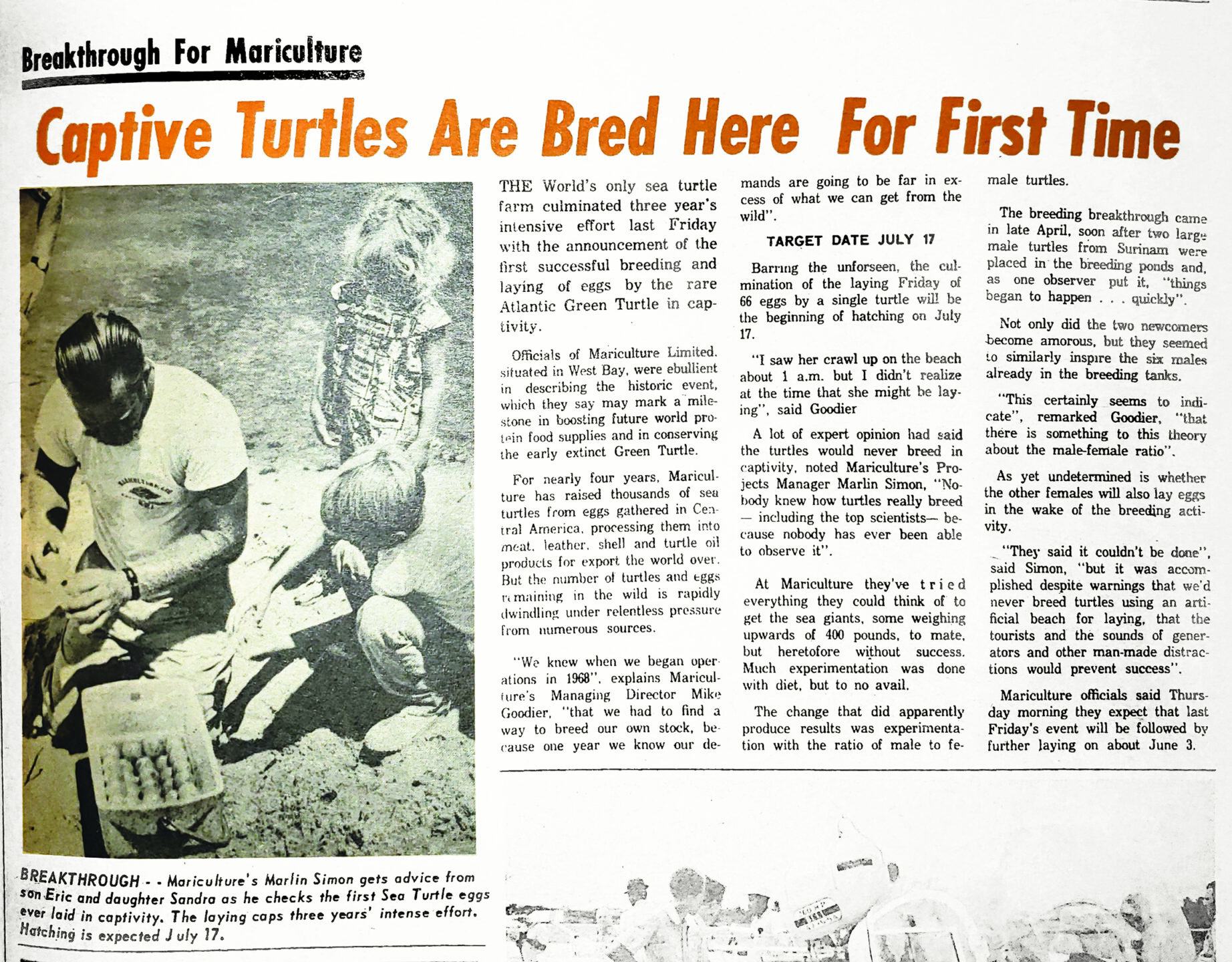
Turtles were front and centre in the 24 May 1973 edition of the Cayman Compass. ‘Captive Turtles Are Bred Here For First Time’ told of how “The World’s only sea turtle farm culminated three years intensive effort… [with] the first successful breeding and laying of eggs by the rare Atlantic Green Turtle in captivity”. Officials at Mariculture, which would later become the Cayman Turtle Centre, said the event could mark a “milestone in boosting future world protein food supplies and in conserving the early extinct Green Turtle”.
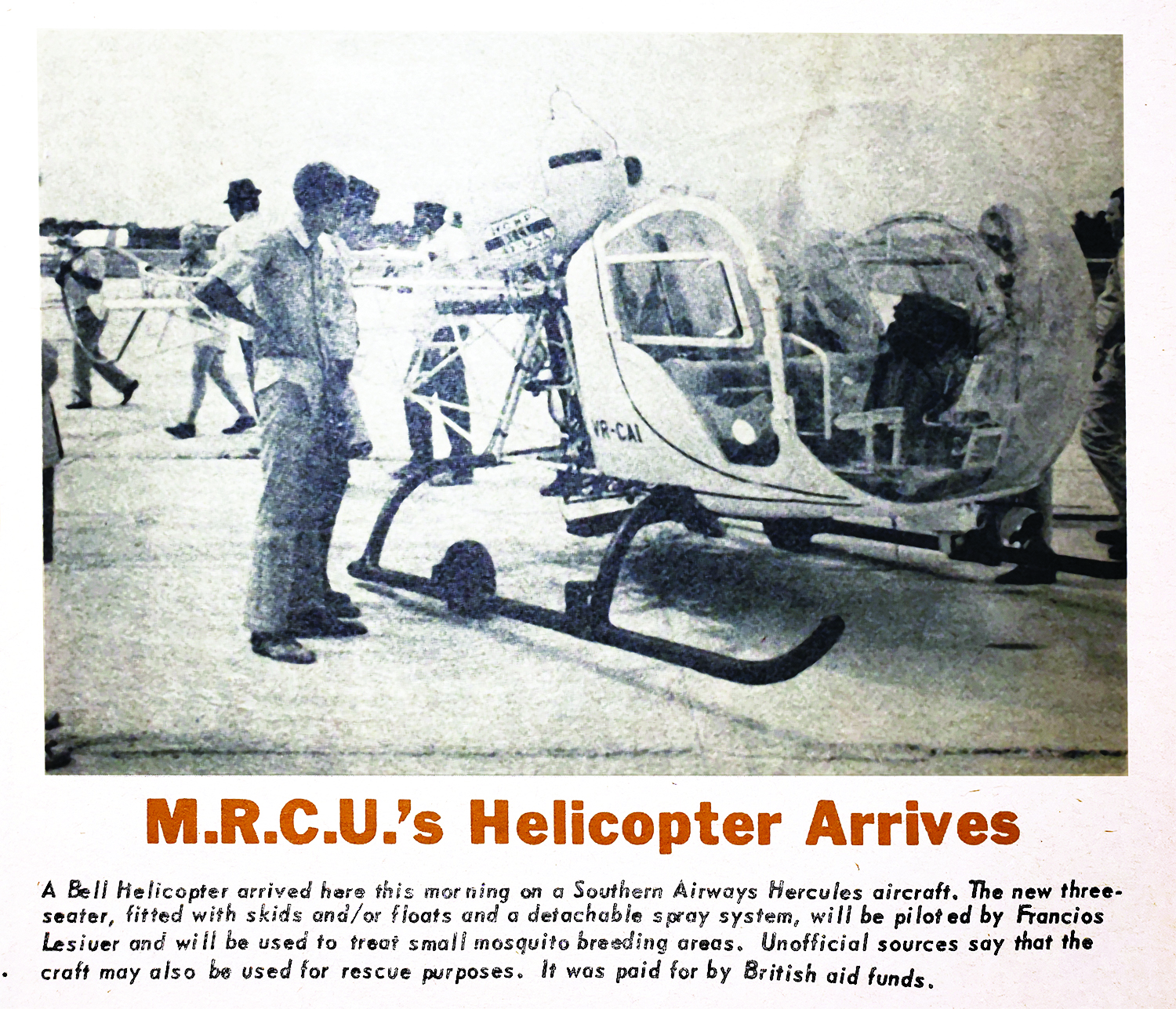
Also on the front page was a photo of the Mosquito Research and Control Unit’ new three-seater helicopter, fitted with skids and/or floats and a detachable spray system. The chopper was to be used to “treat small mosquito breeding areas”. In addition, “unofficial sources” said the helicopter, paid for by British aid funds, might also be used for rescues.
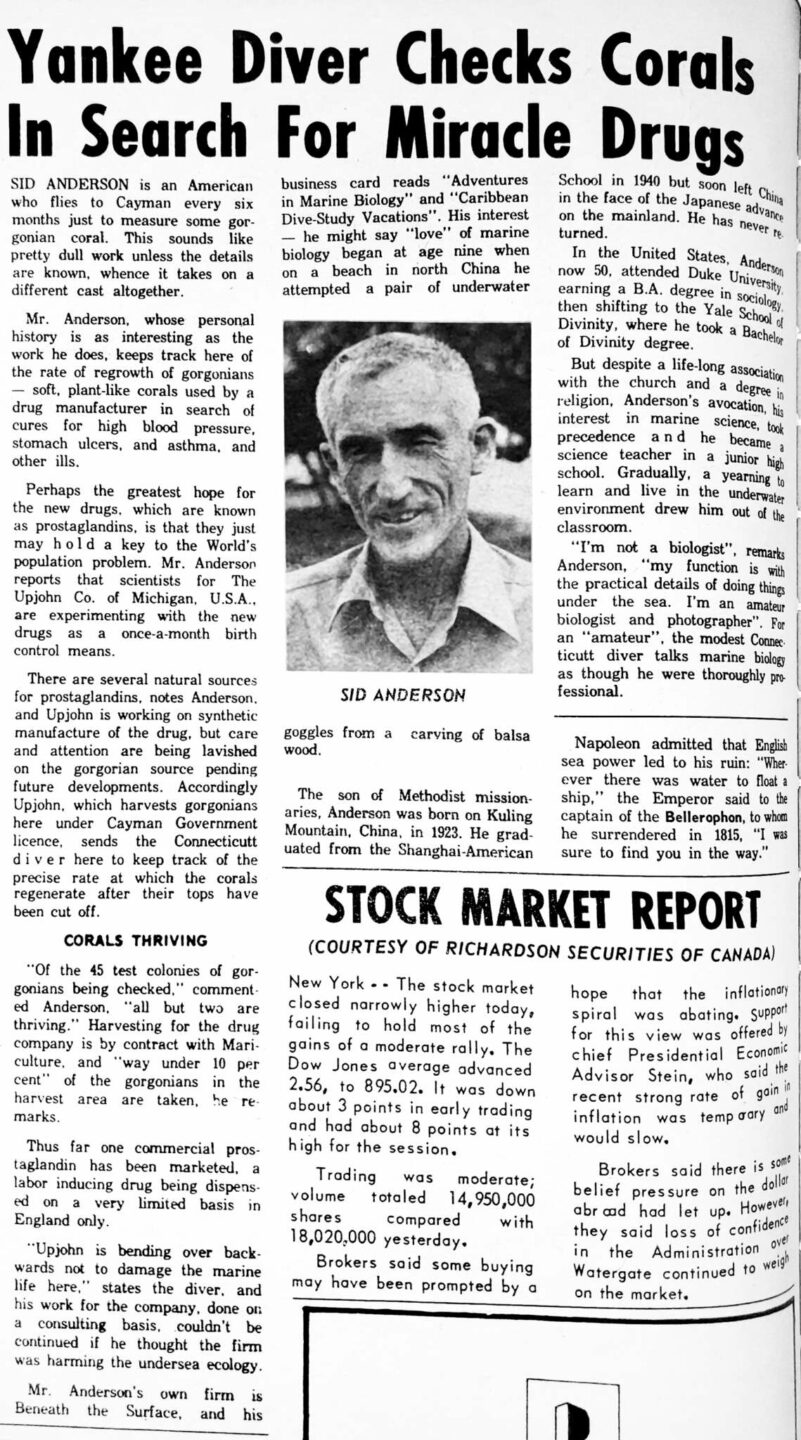
A story on ‘Yankee Diver Checks Corals In Search For Miracle Drugs’ told of an American who visited Cayman twice a year to measure the growth of gorgonian coral. These “soft, plant-like corals [were] used by a drug manufacturer in search of cures for high blood pressure, stomach ulcers, and asthma, and other ills”. The “greatest hope” for the new drugs, known as prostaglandins, the article said, was perhaps as a means of once-a-month birth control.
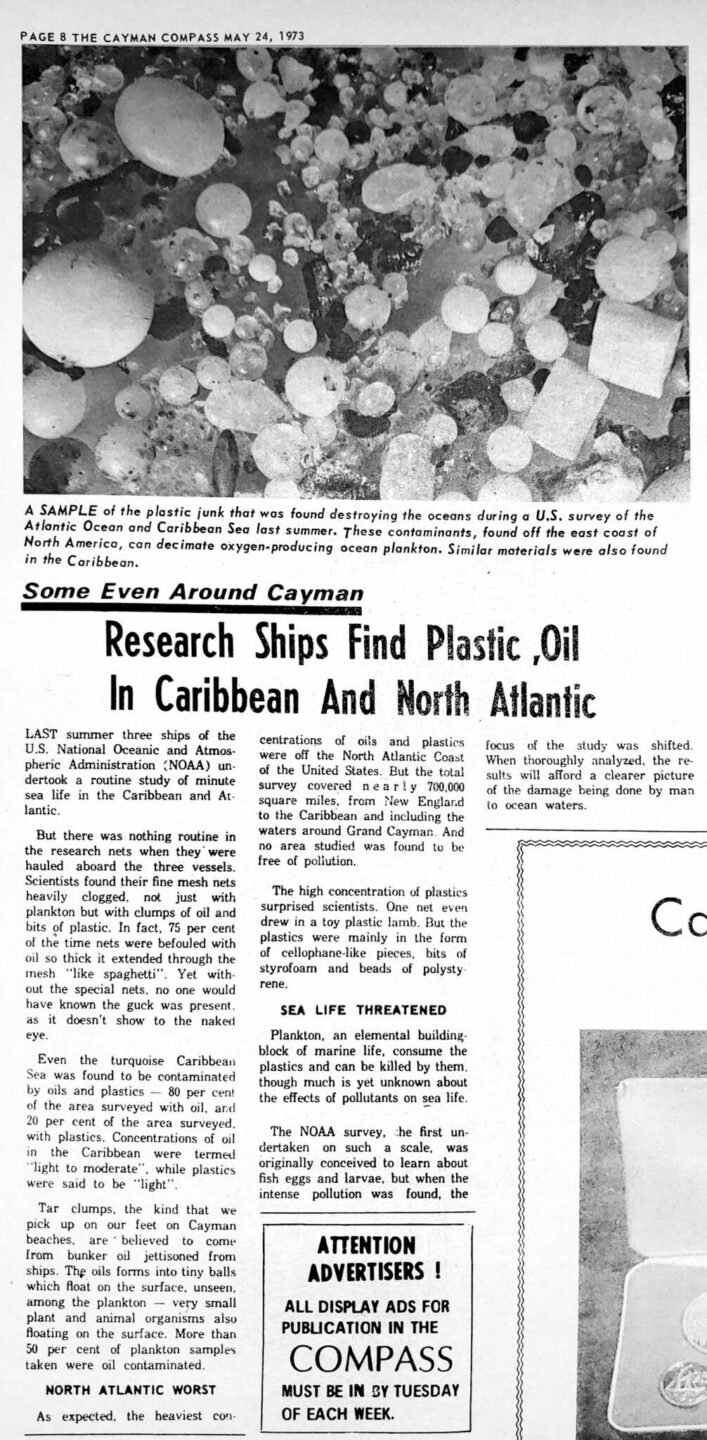
And, finally, proving that plastic pollution is not a new topic, the article, ‘Research Ships Find Plastic, Oil In Caribbean And North Atlantic’, noted that even 50 years ago Cayman was not spared from this plight. Though the heaviest concentrations of oils and plastics were seen off the North Atlantic coast, the survey, which covered almost 700,000 square miles, “from New England to the Caribbean and including the waters around Grand Cayman”, showed that “no area was found to be free of pollution”.
Related Videos