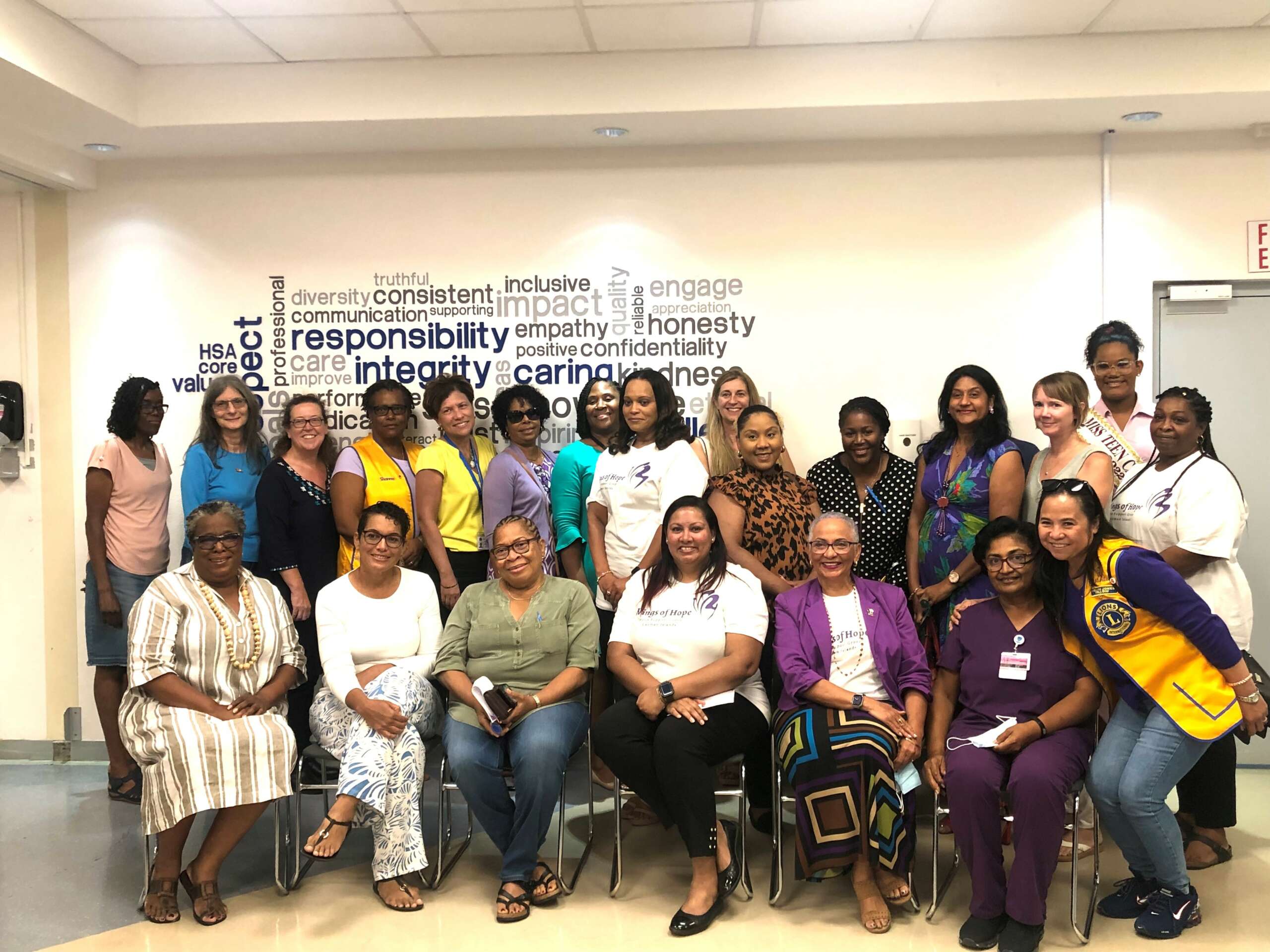
Wings of Hope, a new support group for lupus sufferers, held its first meeting this week, bringing together members of the medical community, charities and the people living with the debilitating chronic condition.
There is no cure for lupus and not much understanding about why some people develop this autoimmune disease and why others don’t.
Attendees at Thursday’s gathering in the Hibiscus Room at the Cayman Islands Hospital heard from some of Cayman’s lupus sufferers – of their struggles with the fatigue, depression, joint inflammation, painful rashes, hair loss, and wide array of other symptoms the condition brings, as well as the challenges to meet the associated medical bills that health insurance often does not cover.
Wings of Hope founder Reshma Ragoonath described how, ironically, she was relieved to finally be diagnosed with lupus in October 2010, because “in the months before that I had no clue why I was getting sick or why my body was behaving the way it was, with widespread swelling and pain”.
“That’s a reality many lupus patients face,” she said, “as diagnosis is a process that takes some time, and lots of tests and checks.”
She says there are cycles of “good days, bad days and really bad days, when my joints become so inflamed, my fingers so swollen to the point that it was too painful to hold a pen or lift a teacup, and it was too difficult to function as my brain is clouded and thoughts didn’t come as clear. There are days when I am fatigued, even though I’ve had a full night’s rest.”
When those really bad days happened, when she feels like she is “falling backwards”, she remembers the three Rs – rest, recuperate and resume.
Andrew Vincent, of Doctors Hospital, made a presentation on behalf of rheumatologist Dr. Sharon Chambers, who was unable to attend the meeting.
Chambers’ presentation noted that, simply explained, lupus is an autoimmune disease which arises as a result of a “complex interplay of several factors including genetic, hormonal and environmental factors, which results in a cascade of events in which the immune system which normally protects the body against invading organisms, turns against itself and begins to attack the body’s own tissues leading to inflammation and organ damage”.
Lupus is nine times more common in females, and usually begins between the late teens and early 40s. While no ethnic groups is spared, people of African or Asian ancestry are more at risk of developing lupus and the disease may be more severe in these groups compared to Caucasian patients.
The prevalence of lupus in Cayman is unknown, as there is no registry for the condition.
It is estimated that about 5 million people are affected with lupus worldwide, but misdiagnoses and non-diagnoses mean it is likely the number is higher.
Among some of the high-profile sufferers of lupus are Seal, Lady Gaga, Paula Abdul, Toni Braxton and Nick Cannon.
Chambers’ presentation noted that in the Caribbean, only four epidemiological studies of lupus – also known as systemic lupus erythematosus or SLE – have been carried out.
The earliest was in Jamaica in 1979, which reported a prevalence of 5-17 in 100,000. A study in Curacao between 1980 and 1989 showed a prevalence of 47 in 100,000, while a 1999 study in Martinique indicated a prevalence of 64.2 in 100,000. And in Barbados, where a national lupus registry exists, researchers found that, between the years 2001 and 2009, the annual incidence rate of the condition was 12.21 in 100,000 in women, and 0.84 in 100,000 in men.
“We do not have a lupus registry in the Cayman Islands, neither do we have any prevalence or incidence studies of the disease in Cayman,” Chambers’ presentation noted.
Since arriving on island in 2015, the doctor has personally been involved in caring for 52 patients with lupus, of whom five have kidney disease ranging from mild-to-severe and six have chronic lung disease, whilst the majority have disease limited to the skin, musculoskeletal and haematological (blood) systems.
Those living with the disease have been dubbed ‘Lupus Warriors’ by the Wings of Hope group, which offers support and assistance for those newly diagnosed and getting to grips with the condition, as well as those who have been going about their daily lives while struggling with the illness.
One lupus sufferer in the audience told of how she had been paying for the thousands of dollars in regular medical care for her illness for more than six years, as she cannot get insurance because her lupus was a pre-existing condition, while another spoke of the importance of a support network of friends, family and neighbours who check in on them or simply offer to make them a cup of tea.
The Wings of Hope logo is a purple butterfly, signifying the colour that represents the condition, and the shape of the facial rash that many lupus sufferers experience when they’re having a ‘flare’.
Editor’s note: Reshma Ragoonath is a Compass Media journalist.
Related Videos