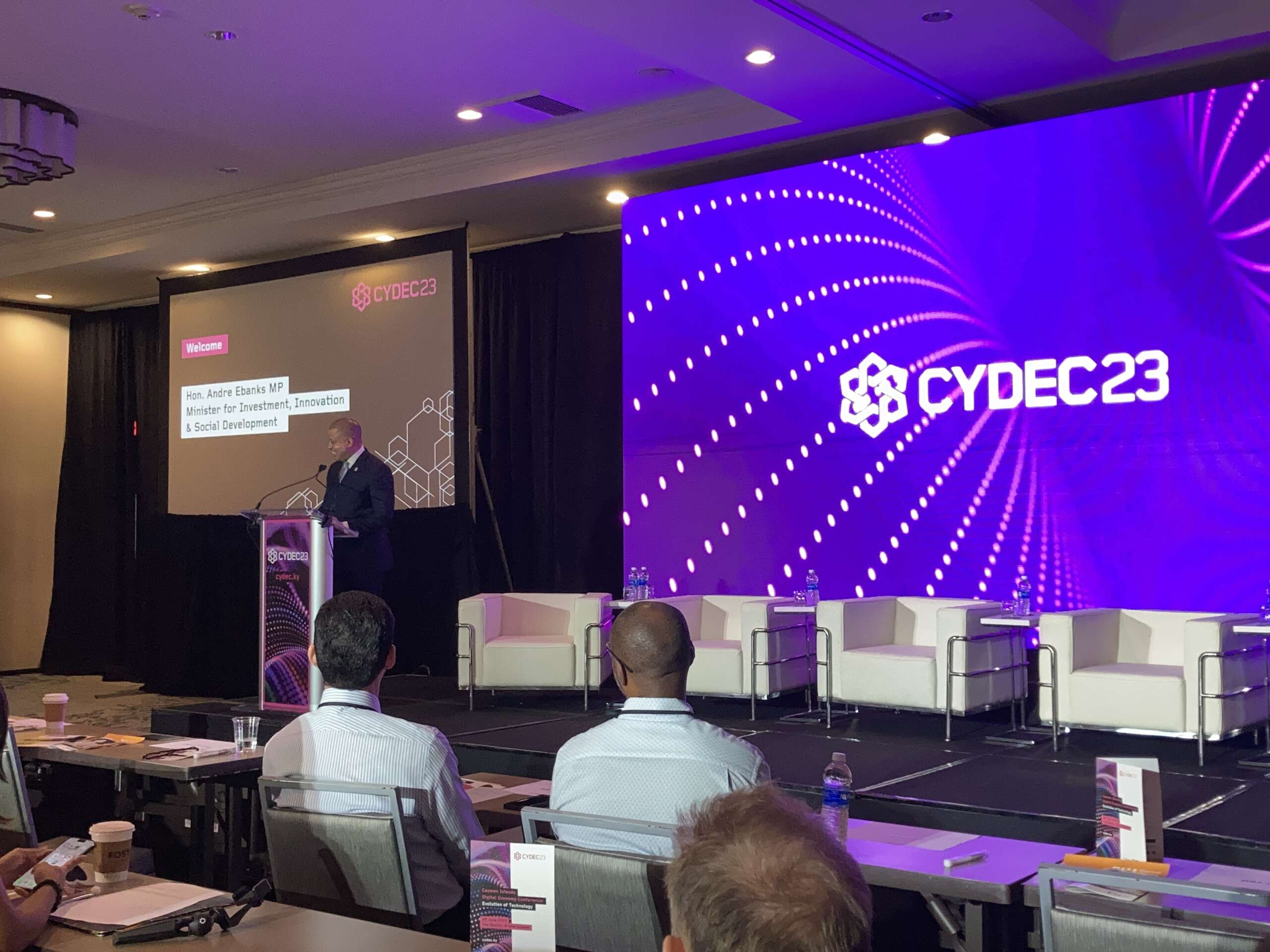
Industry experts gathered to share their knowledge during a day-long conference on the evolution of technology in Grand Cayman on Wednesday, 28 June.
International guests joined local specialists to present lectures and speak on panels during the sixth Cayman Islands Digital Economy Conference (CYDEC) held at The Westin resort.
Topics included Web 3.0, the use of technology in education, artificial intelligence and ChatGPT, disruptive innovation, and cryptocurrencies.
Tammi Sulliman, director of communications for technology-focused investment firm B1, who acted as MC, said it was an important event for Cayman.
“It’s really one that brings together all the thought leaders, the experts in this emerging space,” she told attendees during her welcome speech.
“It helps to keep the Cayman Islands at the forefront of where we need to be, especially as these trends continue to emerge.”
‘Is it good? Is it bad?’
Governor Jane Owen, who gave introductory remarks during the opening of the conference, said she had noticed that artificial intelligence has become a common topic of conversation.
“Every time you look at the news at the moment, there is some article about AI,” she said.
“It’s usually kind of talking about the future of mankind. Is it good? Is it bad? Is it going to be the end of the world?”
She said she hoped the conference would bring the topic “down to earth a little bit” and focus on the future of technology in Cayman.
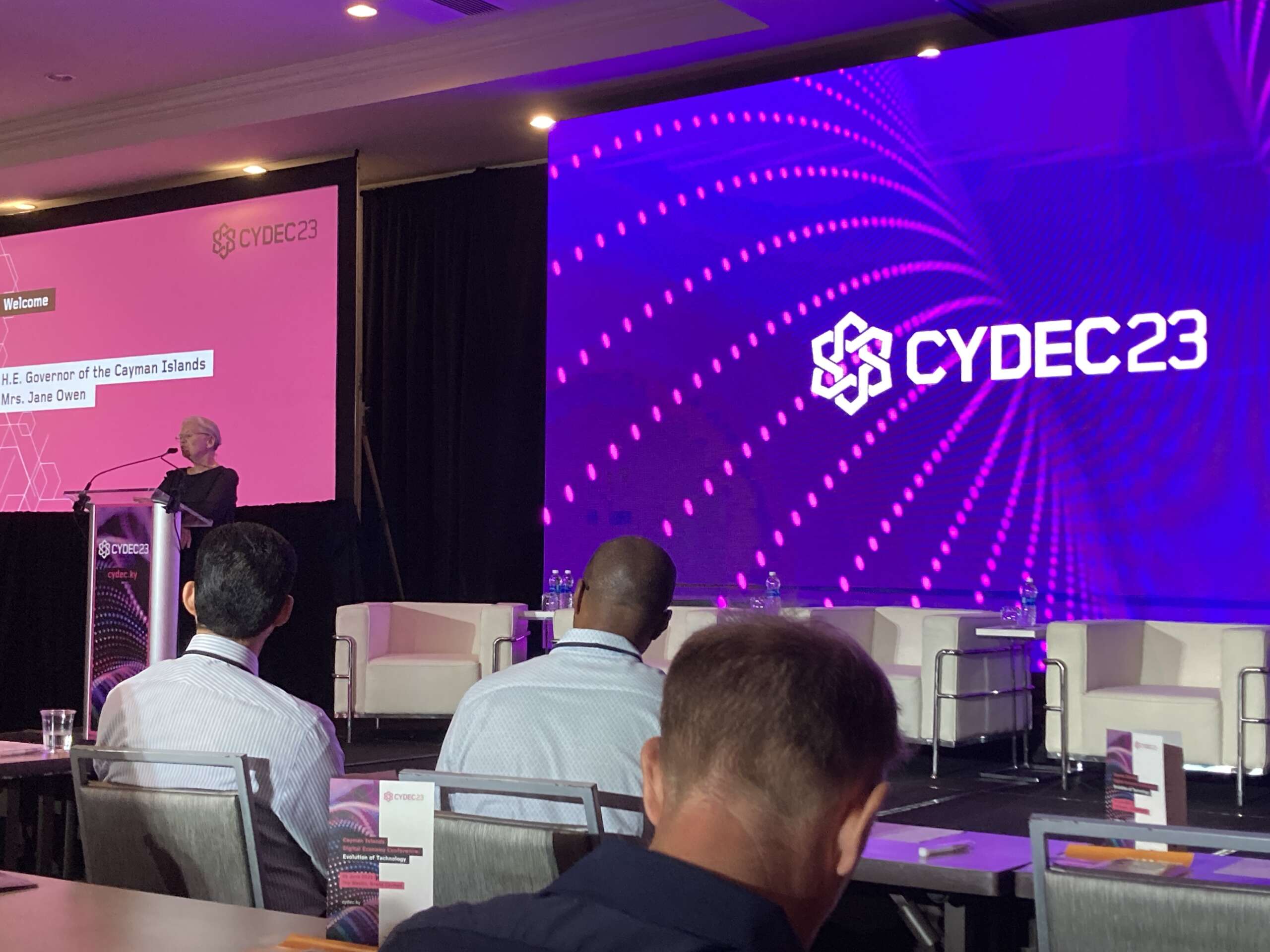
Owen said the three areas of technology that were to be discussed during the day which are especially important are the economy, security and education.
“It’s about risks but opportunities, and it’s about thinking about how we make this real for Cayman,” the governor said.
She added that her office is “absolutely committed” to supporting Andre Ebanks, Minister of Investment, Innovation and Social Development, and the public with evolving technology.
‘A force for good’
Ebanks, in his welcome address, spoke about a spiritual experience he had with an app and said “infinite sources working through us are using the technology of the era to talk to us”.
“And if that’s the case, and my hypothesis is correct, then that means that our job here today is to make this evolution of technology a force for good in this world.”
On education technology or EdTech, he said in Cayman it has the ability to “transform education and take care of our young people in the future in ways we can’t even imagine”.
Meanwhile, ChatGPT needs to be embraced, he said, “it’s going to happen anyway, so we have to embrace it and make it a force for good”.
He spoke briefly on the proposed digital identification card which he said is in the testing phase. “It’s about simplifying transactions, simplifying your life,” he said.
Evolving technologies
Visiting expert Arian Mogos, emerging tech and education lead at the Hasso Plattner Institute of Design at Stanford, was the first to present on the topic of Web 3.0.
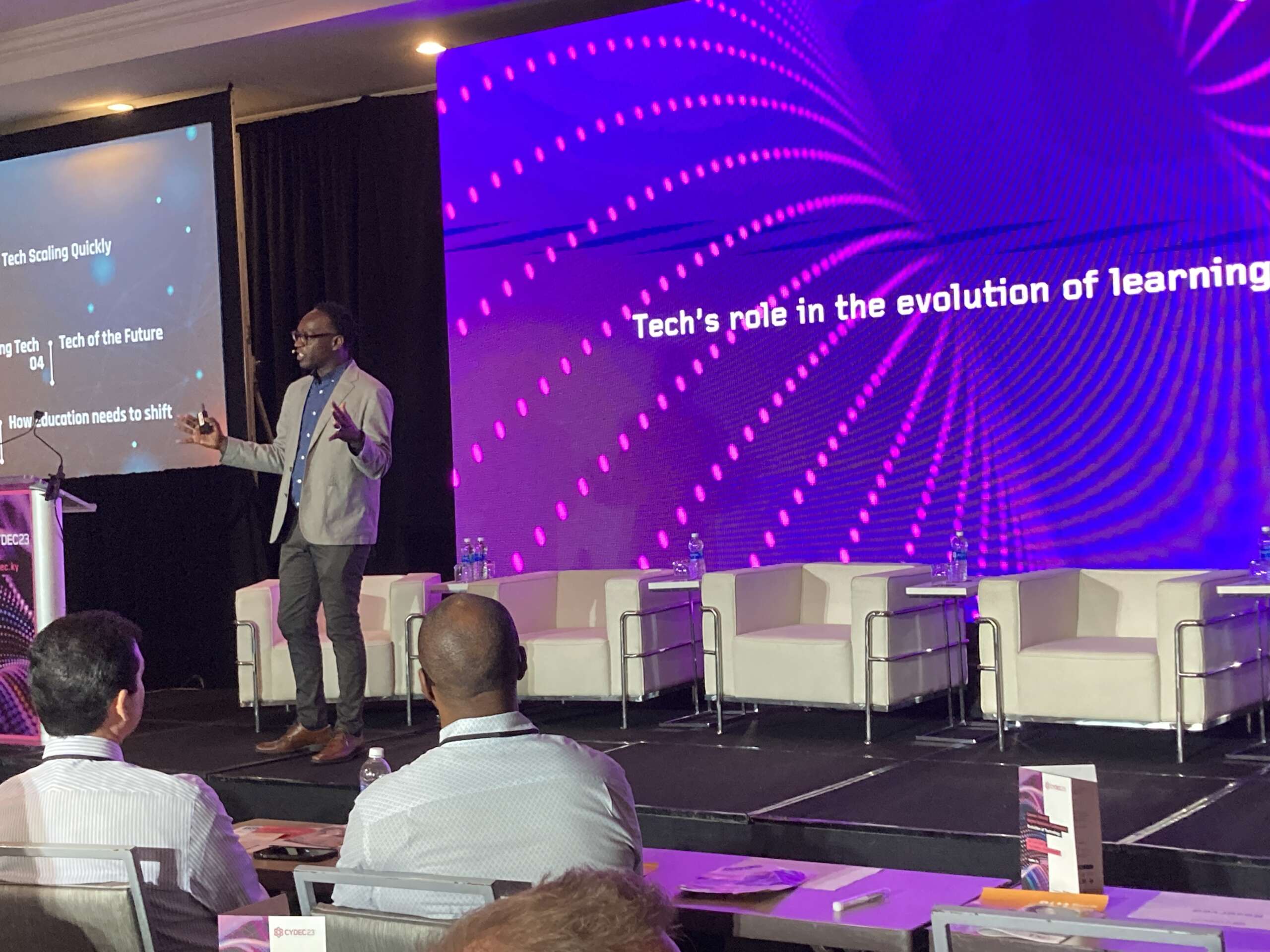
She was followed by Kwaku Aning, director at the Center for Innovation and Entrepreneurial Thinking, who gave an overview of tech’s role in the evolution of learning.
A panel discussion on EdTech preceded a lecture on AI and ChatGPT from LauraMcBain, managing director at Stanford’s design school.
The AI spectrum was the topic of the second panel discussion, followed by a talk on safety of digital assets and information from Daniel Tobok, CEO of cyber security company CYPFER.
Former hacker Monica Verma of Digital Services Europe and Monica Talks Cyber discussed disruptive innovation before a panel on digital currency exchange platform FTX and CBDCs.
Related Videos