

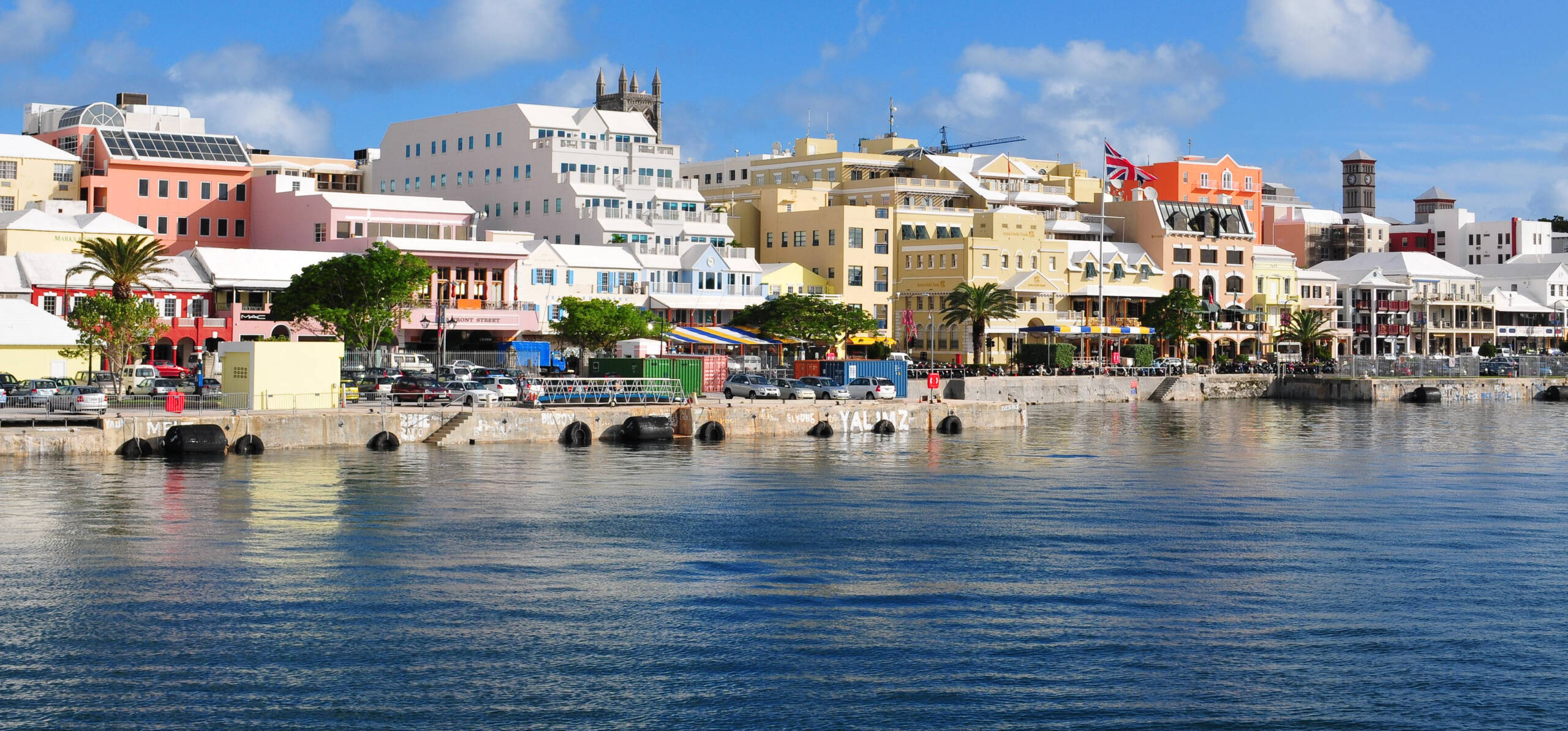
The Cayman Islands should resist global pressure to introduce corporate income taxes, some financial services industry leaders believe.
Government leaders in Bermuda – another British overseas territory – announced this week they are contemplating levying taxes on business’s profits.
The move would be a major shift for a historically tax-free island that is a hub of international finance.
The conundrum for Cayman, if it considers following suit, is to weigh the benefits of a possible annual windfall for government coffers against the reputational damage of losing its tax-neutral status, a key selling point for investors.
Bermuda’s announcement comes in response to an initiative from the Organisation for Economic Co-operation and Development to introduce a global minimum tax rate for companies with global revenues of more than 750 million euros.
Under the proposed OECD rules, supported by more than 130 countries including the Cayman Islands, large multi-nationals will have to pay a minimum tax rate of 15% in each jurisdiction they operate in.
If they pay less than 15%, the difference will be levied by another country to make up for it – normally the country in which the company is headquartered.
That means those taxes will have to be paid somewhere, it is just a question of where.
Pre-empting the implication of that protocol, Bermuda’s Premier David Burt signalled his government’s intent to explore the idea of introducing taxes for the impacted companies on the island. That would affect around 2,000 of the approximately 16,000 international companies registered in Bermuda, Burt told the media at a press conference this week.
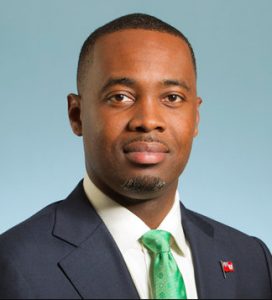
He indicated the aim, from Bermuda’s perspective, was to ensure the country benefitted from taxes that would likely be charged anyway under the OECD’s new regime.
Bermuda is essentially embracing the new global tax rules and seeking to leverage it as a new income stream.
Global pressure building on Cayman
Should Cayman follow suit?
The response from financial industry leaders, economists and politicians in Cayman this week was overwhelmingly against, though there is a sense of pressure building globally, with Jersey and the Bahamas, as well as Bermuda, seriously contemplating tax reform.
There are no clear estimates of how much government could expect to pull in from corporate income tax of those high revenue international businesses, but if Bermuda or Jersey does push forward with reforms along those lines it would provide an indicator for Cayman.
Cayman Finance, the group which represents the financial services industry, is in the process of canvassing members on the issue.
But CEO Steve McIntosh said the government in Cayman was less in need of a financial windfall than other jurisdictions like Bermuda, which has substantial government debt.

The 750 million euro threshold and the fact that investment funds and trusts are exempt means much of Cayman’s financial services landscape will not fall within the scope of the initiative, as envisaged by the OECD and mirrored by the Bermuda government in its contemplated reforms.
“Cayman hasn’t announced any plans to implement a corporation tax along the lines of Bermuda,” said McIntosh.
“However, in line with our history of cooperation, the Cayman Islands will fulfil the international reporting obligations related to the Global Minimum Tax with jurisdictions that have direct-tax regimes.
“The situation here is quite different as we lack the fiscal imperative of Bermuda and the Crown Dependencies and the bulk of our financial services business is exempt in any case,” he said.
Image problems
Cayman-based economist Julian Morris said the costs of implementing a corporate income tax regime and the damage to the island’s image as a good place to do business outweighed any short-term financial gains of such a move.
“The introduction of corporate income tax, albeit only for entities with worldwide income in excess of 750 million euros, will end Bermuda’s status as a tax-neutral jurisdiction,” he said.
“So, while it could generate significant revenue for the government in the short term, it is likely to harm the jurisdiction’s long-term prospects as a financial centre, especially if some major jurisdictions such as the US do not implement the global minimum tax.”
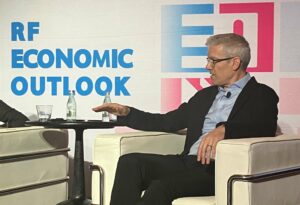
He believes Cayman should demonstrate a clear commitment to its existing model and let other countries worry about levying global minimum taxes, which he believes would only impact a fraction of companies doing business here.
“Cayman’s financial services industry is in no small part predicated on the jurisdiction’s tax neutrality. As other jurisdictions contemplate the introduction of taxation for businesses above a certain size, Cayman can differentiate itself by remaining a pure tax-neutral jurisdiction with no corporation taxes.”
Caribbean economist Marla Dukharan told the Compass that the OECD’s global minimum tax initiative is a “solution looking for a problem”.
Even the Tax Justice Network’s own figures show countries like the US, Switzerland, Singapore, Hong Kong and Japan leading the way on tax secrecy, Dukharan insisted.
She added, “The countries pushing this global minimum tax deal are responsible for two-thirds of the world’s corporate tax abuse, according to the Tax Justice Network. Let’s start there.
“This is a Global North and an OECD problem, not a small island developing state or a Global South problem. So why should our countries be amending our tax laws to satisfy this mis-placed global minimum tax?”
Political stances
Government did not respond to questions from the Compass Thursday.
Former Premier Sir Alden McLaughlin said the Progressives party is against any form of corporate income tax.
“Every country has the right to decide its own tax regime. Bermuda is exploring introducing corporate tax as is their right. From a Cayman Islands perspective, the Opposition do not believe a corporate tax is needed nor would it serve us well.
“However, it will be interesting to hear whether the PACT government would consider exploring such a tax.”
- Additional reporting by Reshma Ragoonath
Related Videos












For many years the high tax countries have sought to destroy our country.
By blacklisting us for “money laundering” while the reality is that the easiest places in the world to launder money are the USA and the UK. Anyone who has ever opened a bank account here or tried to deposit a payment knows.
Then there’s FATCA, imposed on the world by the USA, but it’s a one-way law only. No country has ever persuaded the USA to provide information on USA banks that might be laundering dirty money. Nor has it resulted in the tax windfall the proponents predicted.
Now we have the OECD agreement, which is an outrageous imposition on a country’s sovereignty.
We should fight this and remain a tax neutral country.
Make no mistake: they hate the fact we can successfully run a country without direct taxes.
100% correct.
This global income tax is rubbish. Bermuda has a national debt north of 4 billion (excluding unfunded future liabilities – same way Cayman does it) on a population of 65k people and decreasing. Bermuda had zero national debt in 1998 when the visionary labour government first took power. Their government is incompetent and they likely secretly are welcoming this opportunity to introduce a new tax and blame it on the OECD. No organization has the right to tell any country how to tax its people and raise its funds. The idea that no income tax is not fair to others is also garbage. Ontario and the US north east have low manufacturing costs as electricity is cheap due to hydro power and coal. Should we be lobbying them to raise electricity costs (let us say triple it for example?) to ensure global equalization and harmony ?? These high tax economies need to realize that people and businesses are more mobile than ever and that they will chose where they want to be and all the laws in the world won’t stop it. They need to wake up !
I agree with Mr. Morris. This is a great opportunity for Cayman to stay the course and differentiate itself from the rest