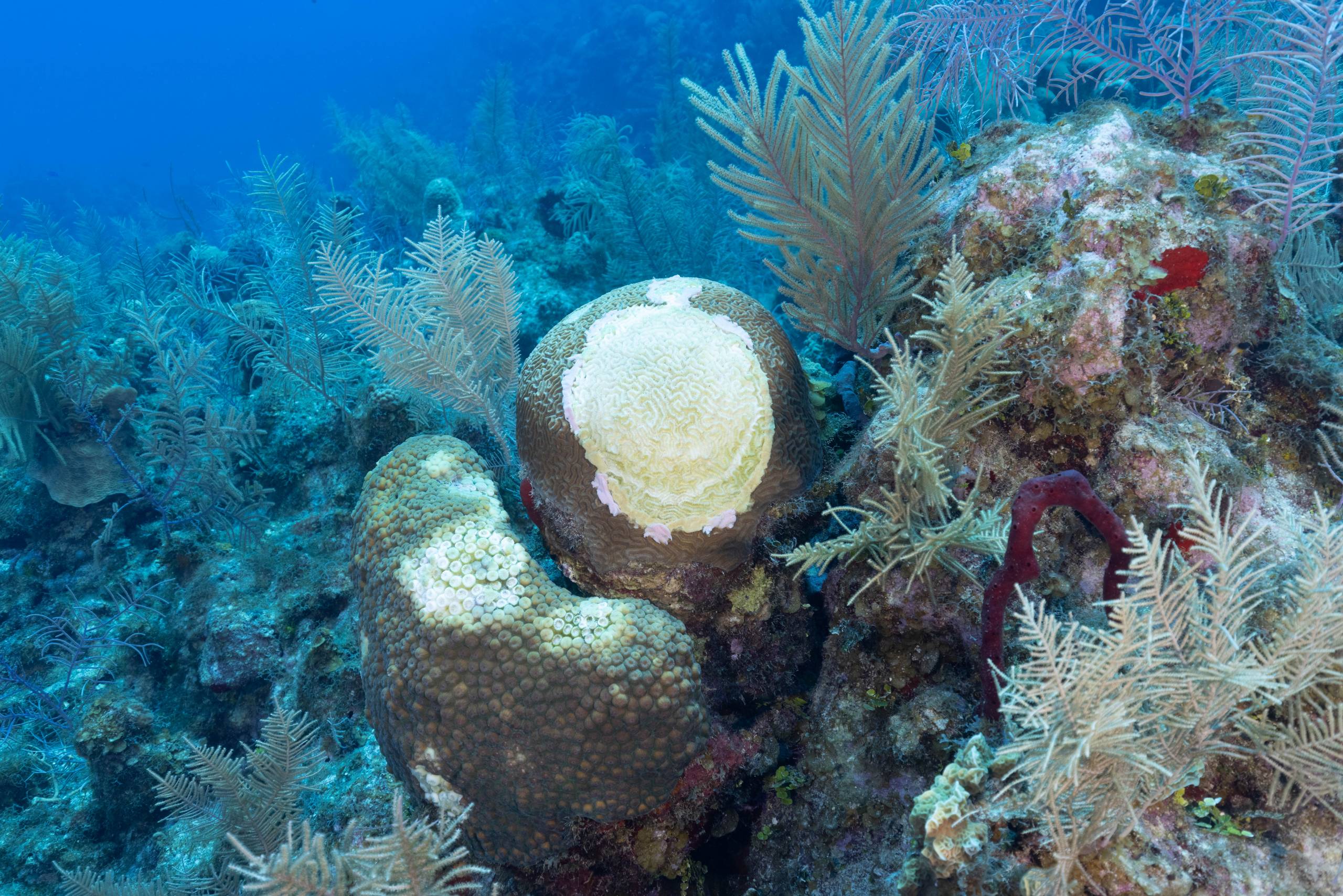
With local sea temperatures hitting record highs this summer, the Department of Environment is monitoring the effect this is having on the spread of stony coral tissue loss disease.
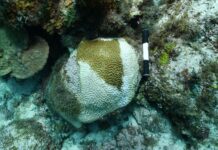
DoE teams have been tackling the disease, known as SCTLD, using antibiotics, after it was first discovered in Cayman, off Rum Point, in June 2020.
Deputy director of the DoE Tim Austin said the teams are continuing to treat affected corals, but are also working towards using different approaches to battling the problem, such as coral restoration.
“The water is the warmest it’s been since 1985, when NOAA started reporting water temperatures,” Austin said.
He added that, for example, Tuesday this week was the hottest 8 Aug. on record.
“There is likely to be a lot of coral bleaching,” he said, noting that at this point, DoE teams are seeing a significant amount of “paling” of coral, and the bleaching level is at level one.
“The highest is level two,” he said.
“We have no idea how SCTLD reacts with corals that are bleached,” he added. “Does it slow the disease or make it more virulent?”
Some good news though is that SCTLD has still not shown up on the Sister Islands, though the DoE is continuing to ask people taking their dive gear to Little Cayman or Cayman Brac to disinfect it before they depart or when they arrive.
The spread of disease has slowed down since its rapid proliferation in Grand Cayman. In fewer than 18 months, it had spread throughout the entire circumference of the island.
“It is still spreading,” Austin said. “It has slowed down, but it is by no means over yet.”
One theory for the slowing spread is many of the corals that are susceptible to the disease have already been infected, leaving the more resilient ones on the reef. But as bleaching and warming temperatures impact the surviving corals, the concern is that this will affect their resilience and leave them more vulnerable to diseases like SCTLD.
The resiliency of reefs and the management of the impacts of coral disease in Cayman and other overseas territories are currently part of a Coral Conservation in the Overseas Territories Working Group (C-COT) project, funded through Darwin Plus.
The Central Caribbean Marine Institute, based in Little Cayman, is also carrying out ongoing projects to study the resiliency of that island’s reefs.
Related Videos