Marine turtles appear to be responding to hotter sea temperatures amid shifts in climate by beginning their nesting seasons earlier, new research carried out in the Cayman Islands has shown.
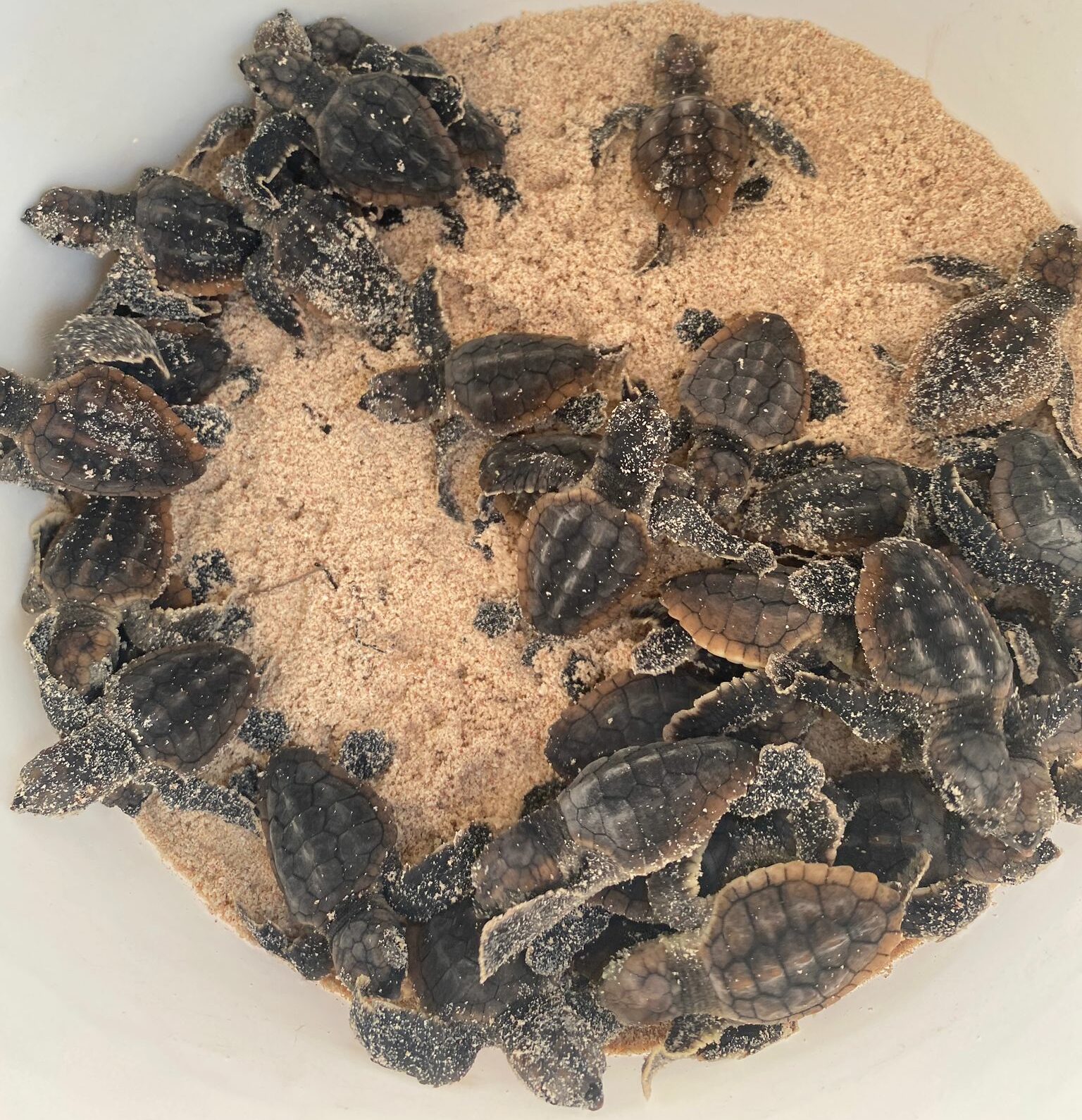
Green sea turtles and loggerhead turtles in Cayman are starting their nesting seasons two and three weeks earlier, respectively, than a quarter century ago, scientists have found.
Cayman’s Department of Environment and the UK’s University of Exeter, using 26 years of analysis of population trends and nesting habits of green and loggerhead turtles, produced the peer-reviewed report, which was published on 31 Dec. 2025.
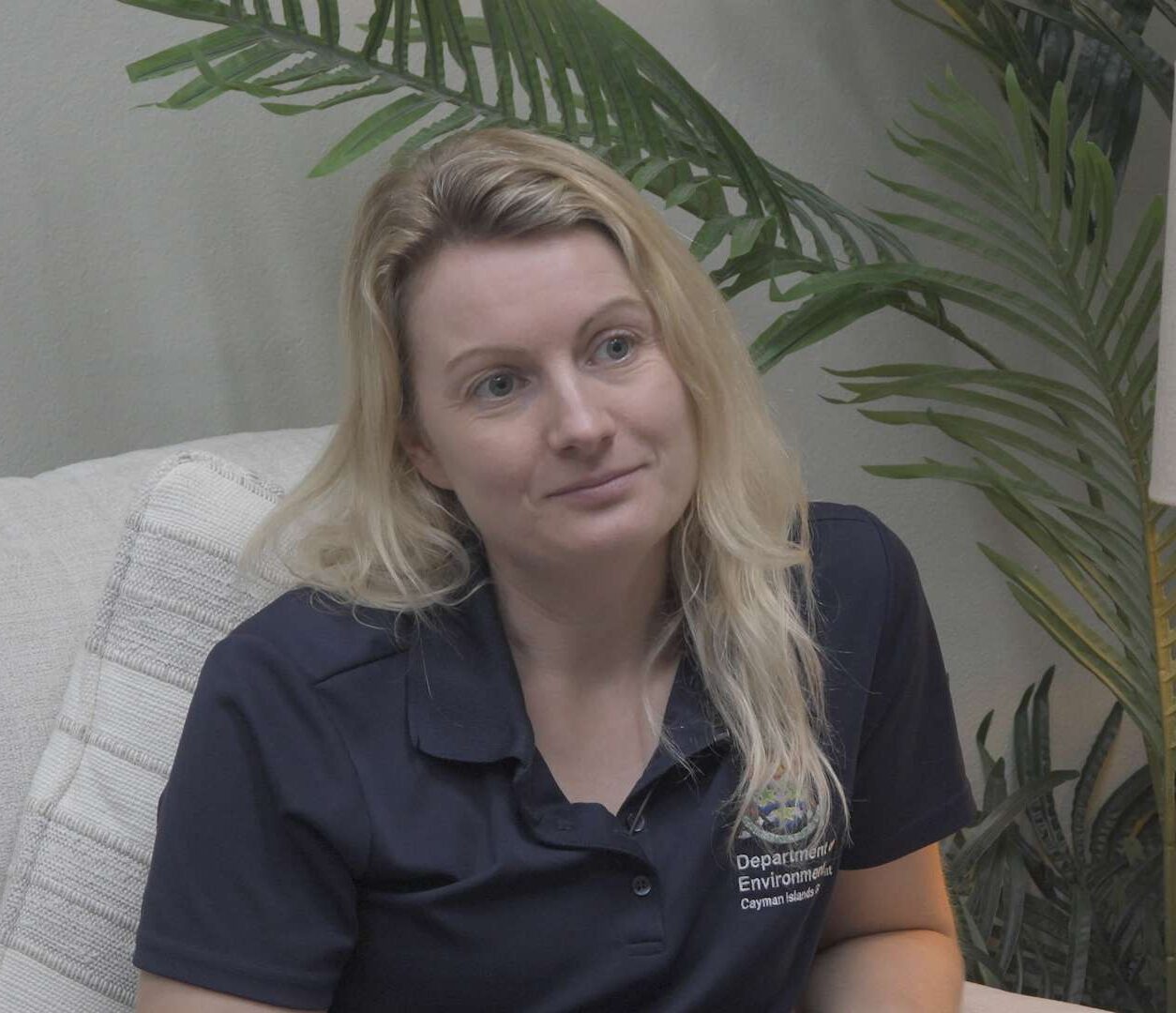
Jane Hardwick, Department of Environment Marine Resources Unit research officer, and one of the authors of the study into the impact on climate on marine turtle nesting habits, told Compass Media, “In years where the sea surface temperature was warmer, nesting began earlier for both species. So we can expect, with a warming climate and warmer sea surface temperatures over time, that that we should see that shift more.
“And that is very important because turtles have temperature-dependent sex determination.”
She noted that as turtle eggs are incubating in a nest, if the temperature of the sand is warmer – above 29° Celsius (84.2°F) – more females are born. If it’s colder, more males are born.
“As global temperatures rise, it’s very concerning that we may see a very strong shift in the sex ratio of sea turtle population, so that we have almost no males. Therefore, turtles being able to nest at a slightly cooler time of year, shifting their nest timing, may help to compensate for climate change in some ways,” Hardwick said.
She added, “We do actually see that from temperature data we’ve collected. For example, the loggerheads’ sex ratios of hatchlings are slightly less skewed than what we see for green turtles, and that’s because loggerheads nest earlier in the year than green turtles. The peak of the green turtle nesting tends to be the peak of summer, the hottest time of year. So we’re seeing more female hatchlings produced by green turtles than we do by loggerhead turtles.”
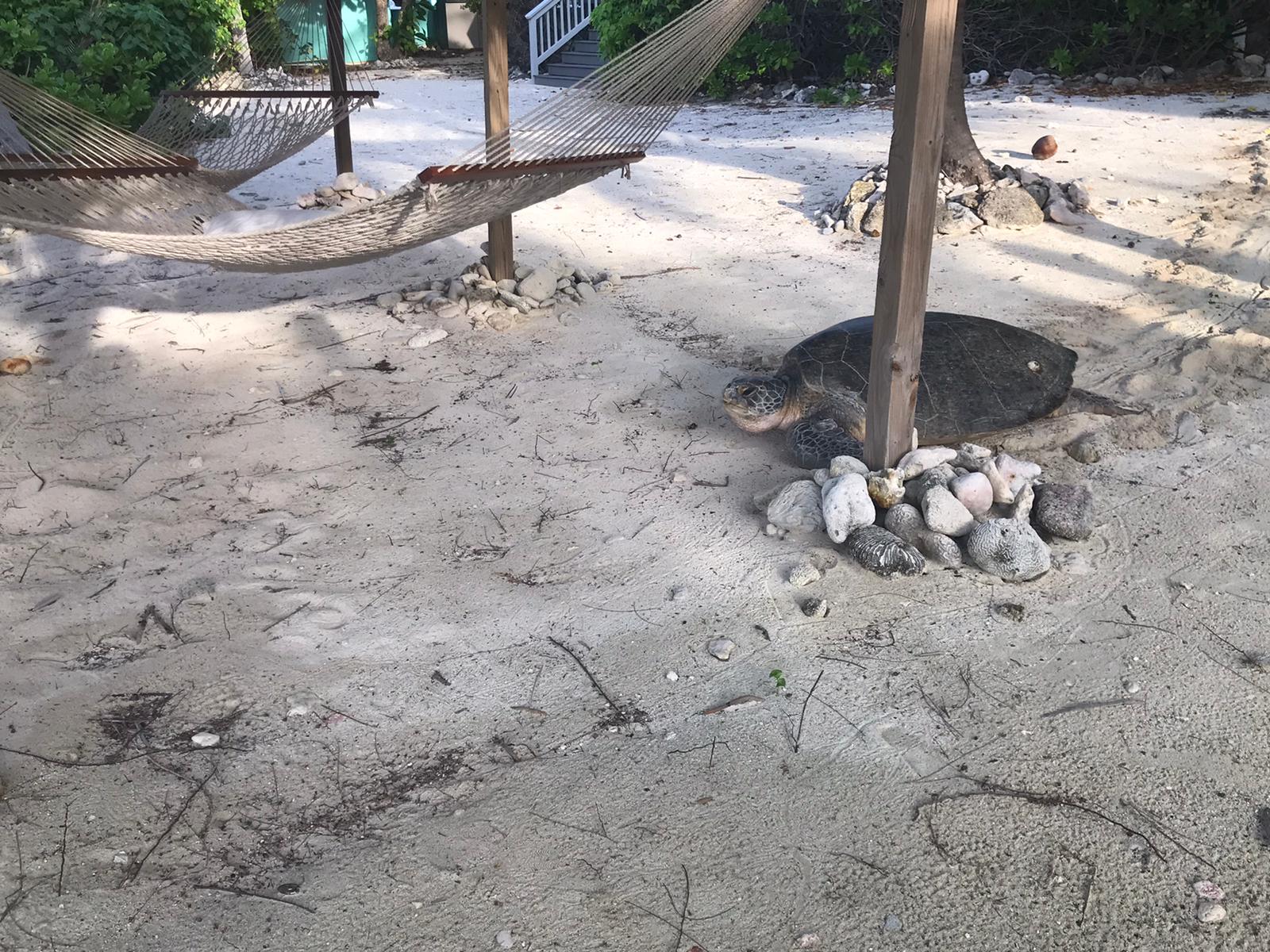
Hardwick’s colleague Janice Blumenthal, another author of the report, explained that over the 26 years of analysis, year on year, the start of the turtle’s nesting season has been getting incrementally earlier.
“For green turtles, it’s about .6 days earlier every year,” she said. “And for loggerheads, it’s about .7 days earlier every year.

“It doesn’t sound like much, but we have this incredible data set that, thanks to our volunteers who walk beaches every summer recording nests and marking nests, … over the whole monitoring period, starting in 1999 in Grand Cayman, we have seen green turtles nesting about two weeks earlier and loggerhead turtles nesting about three weeks earlier.”
During the more than quarter-century of study, the researchers noted that sea surface temperature had increased significantly, “with warmer temperatures correlating with earlier nesting”.
Department of Environment staff and teams of ‘turtle patrol’ volunteers have been monitoring Grand Cayman’s beaches for turtle nests and hatchlings since 1999, and Sister Islands beaches since 1998.
Blumenthal has been part of the DoE’s turtle nest monitoring team since the beginning. She says she had noticed from her own experience “walking the beaches” since 1999, that “the nesting season got longer and hotter”. This new analysis backs up her observation.
Growing population
The researchers noted that the number of nests counted on Cayman’s beaches had risen annually, by 12.4% for green sea turtles and 8.1% for loggerheads.
Between 1999 and 2024, a total of 4,670 green turtle clutches and 3,696 loggerhead clutches were laid across the Cayman Islands, with numbers generally increasing year on year, the researchers noted. Numbers in 1999 were considered critically low, with just 82 nests found on Grand Cayman beaches. That has now risen considerably, with the first count of more than 1,000 nests being recorded in 2023.

Hardwick explained that, with the growth of the turtle population over the years, “we’re naturally going to see some turtles arriving a little bit earlier and nesting a little bit earlier than others, but that is something that was tested statistically in the models, and it did show there’s more of a link to sea surface temperature than with population growth”.
The scientists found that changes to sea surface temperature, which they measured, were “significantly related to the onset of nesting season, duration of nesting season, and magnitude of nesting, indicating that warmer conditions are associated with earlier onsets, longer durations and increase nesting activity”, the report noted.
Nesting season for green turtles in Cayman typically starts at the end of May, peaks in August, and ends in mid-October. The research has shown that the season is now starting earlier, and finishing later, than previously.
The report indicates that for every 1° Celsius increase in April over the relevant years of the study, the onset of green sea turtle nesting advanced by 11.3 days.
Loggerhead turtle nesting season typically begins at the start of April, peaks in mid-June and finishes at the end of August. Unlike with green sea turtles, no significant trends were found in relation to the end of the loggerhead nesting season.
The report also noted that higher sea surface temperatures have been associated with shorter intervals between nestings, which may enable green turtles to lay more clutches per season. Similar findings have been seen in studies in Australia, where earlier nesters exhibited higher clutch frequencies.
The findings of the research team could help inform what steps can be taken to mitigate against higher sand temperatures on local beaches, as the scientists have also been looking at the role of natural shading from vegetation on nesting beaches. As well as providing cooler shaded areas for nests, the vegetation also helps stabilise the beaches against erosion.
“We would love to encourage people who live on the beach or [are building] new developments to retain vegetation or to plant native vegetation,” said Hardwick, “because we are seeing that this is so important for sea turtles for many reasons”.
Funding for the three-year study was supplied through Darwin Plus, the UK government’s Overseas Territories environment and climate fund.
Related Videos