At a glance
- Endangered corals, decimated by years of disease and bleaching, are being spawned and grown in the Department of Environment’s lab.
- Plans are under way to expand the laboratory to facilitate accelerated growth and out-planting.
- So far, successful spawning within the lab of four species of brain coral has been completed.
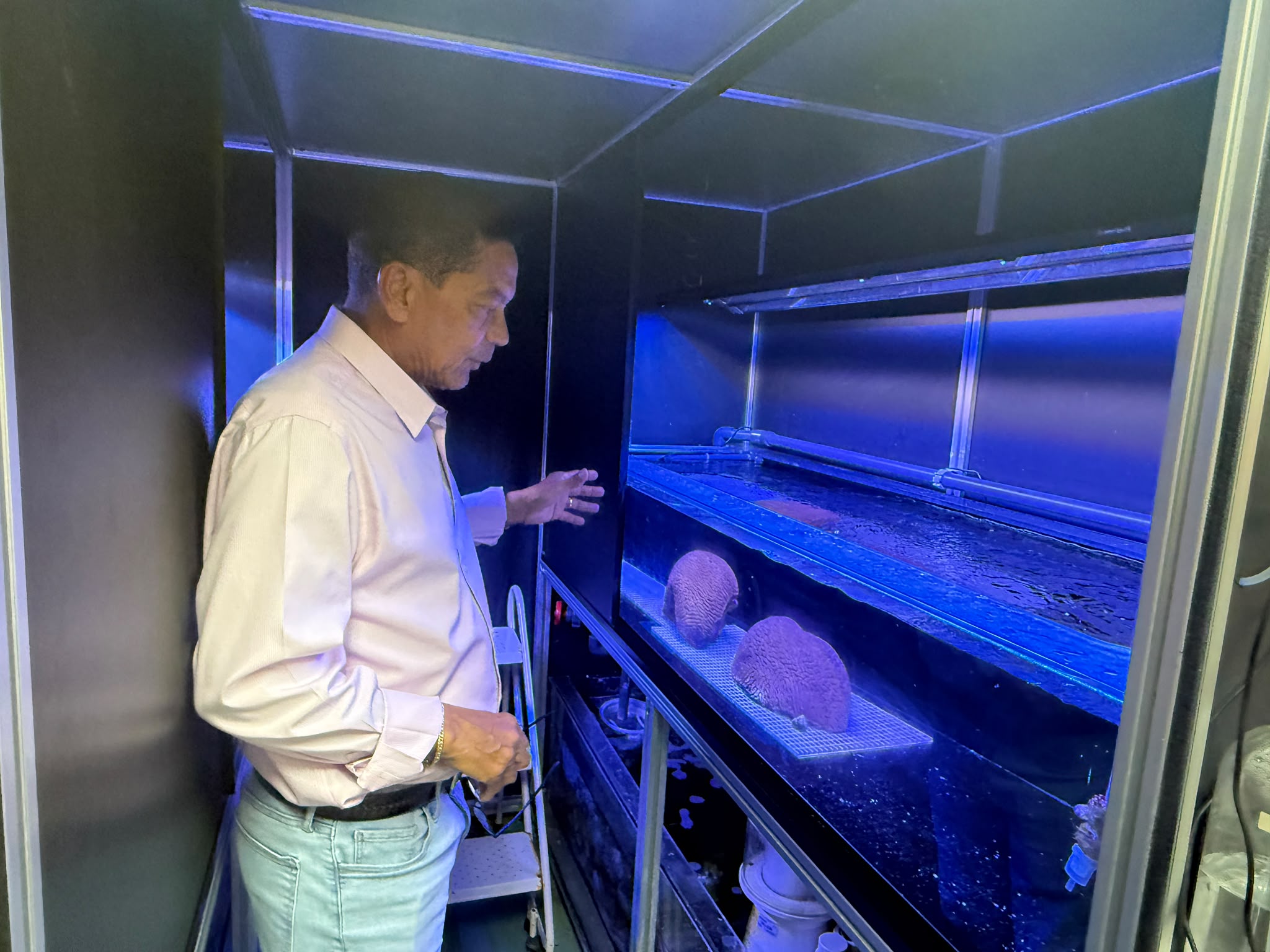
In a room on the ground floor of the Cayman Islands Department of Environment offices in George Town lies the islands’ only lab dedicated to growing corals, the building blocks of Cayman’s reefs.
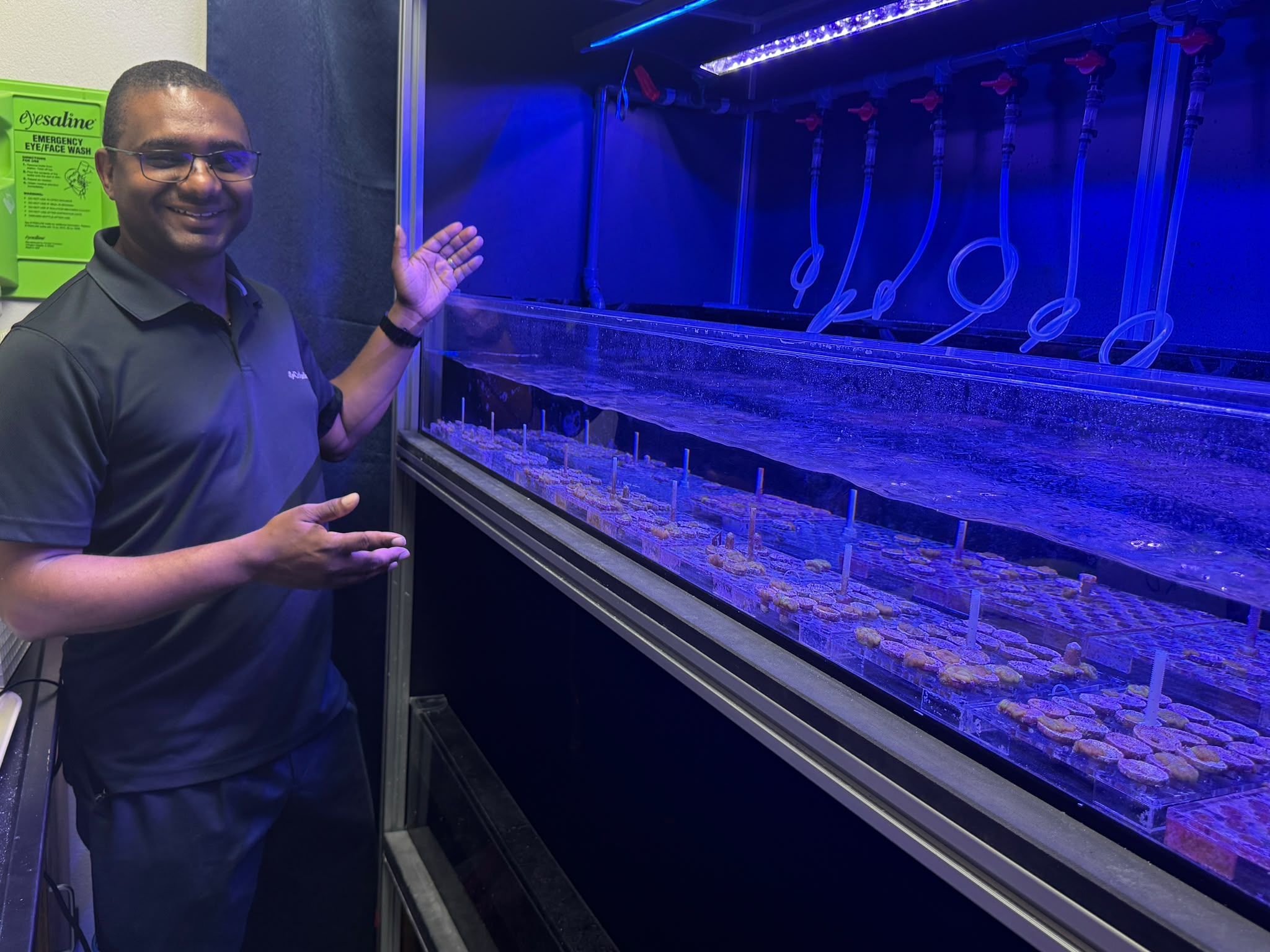
There, inside temperature-controlled tanks full of ‘artificial’ sea water, illuminated by blue lights, sit clear plastic trays holding scores of inch-wide circular pucks on which hundreds of juvenile brain corals are growing.
Those tiny corals have never been on a reef, as they were spawned in the lab from their parent corals, which have been temporarily removed from the reef. One day soon, certainly before the end of this year, some of them will get a chance to experience life in their natural habitat, as DoE scientists will out-plant them to determine if they’re big enough and strong enough to survive in the wild.
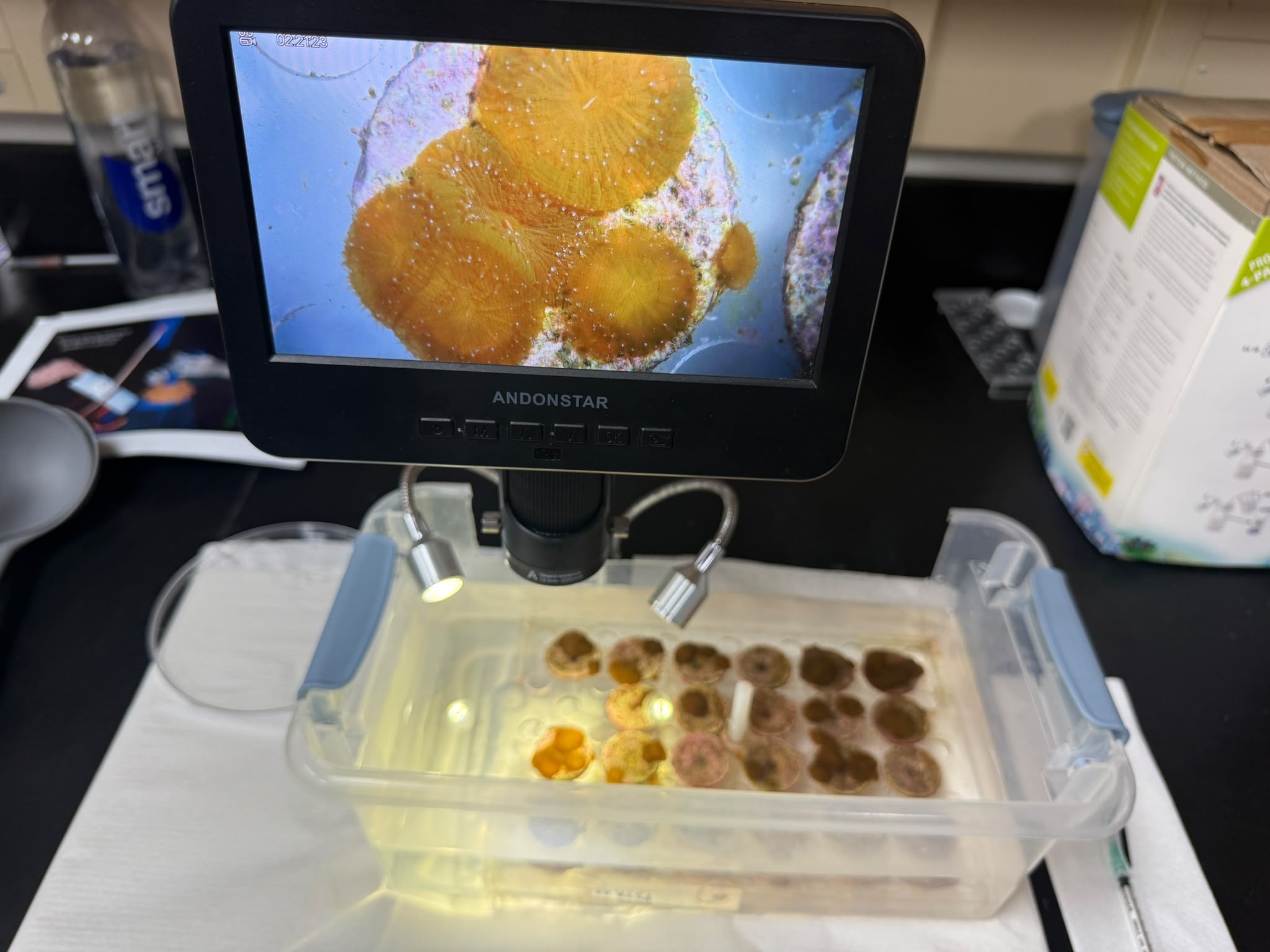
These are the offspring of corals that have survived the devastation of disease and repeated bleaching events, including the catastrophic worldwide bleaching event in 2023.
Establishing the lab three years ago, with the help of funding from the Foster’s Group, “was in response to the threats that we were dealing with, more so the stony coral tissue loss disease that has been rampant on the reefs in Grand Cayman”, said Croy McCoy, manager of the Department of Environment’s Marine Resource Unit.
Stony coral tissue loss disease has reduced coral cover on the local reefs from an average of 15% around Grand Cayman to about 6% or 7%, he said.
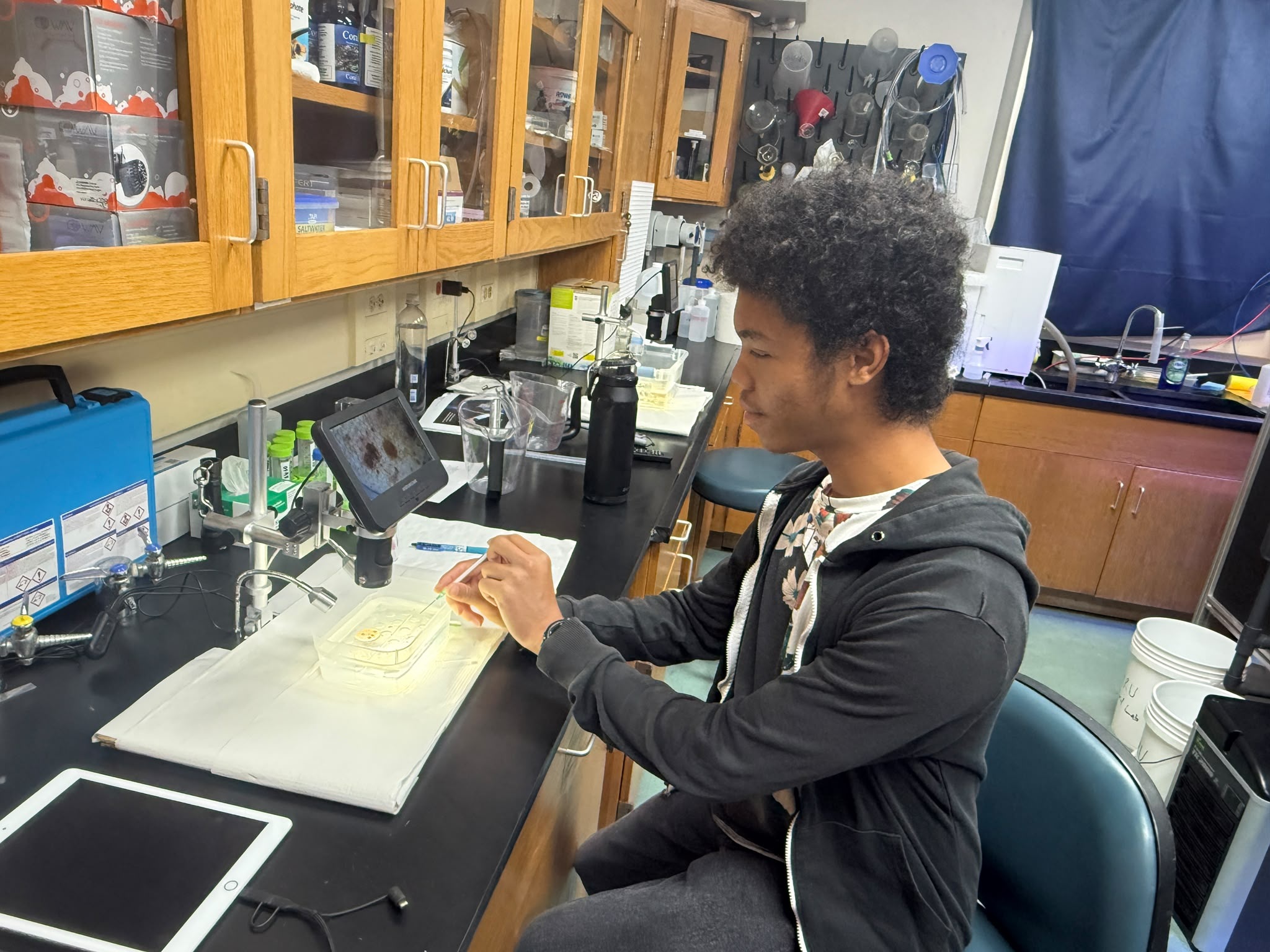
Under strict conditions of a permit issued by the National Conservation Council, the DoE team took some of the survivors and placed them inside the new lab, where they were able to manipulate natural underwater conditions, mimicking the necessary moon phases, lighting and temperatures that induce annual spawning.
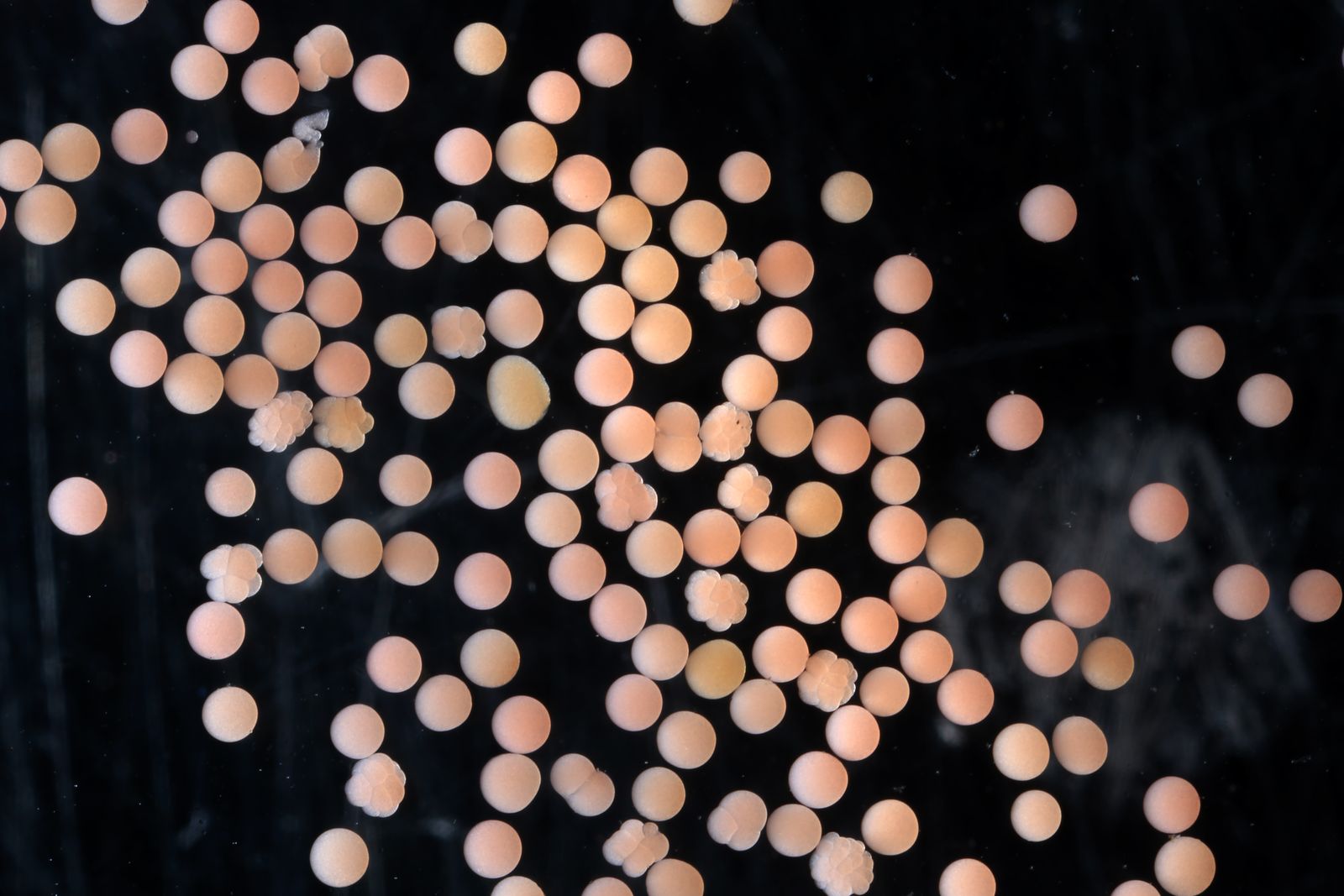
Once the corals spawn, the scientists collect the egg bundles, fertilise them with the sperm, and wait for cell division. Then, comes the morula stage when the cell cluster appears, followed by the so-called ‘prawn chip’ stage, and finally the development into free-swimming larvae. Once they develop mouths, they are fed ‘golden pearls’, the eggs of brine shrimp, commonly known as sea monkeys.
The scientists will continue to feed and care for the baby corals until they are deemed large enough to fend for themselves and be out-planted. “The larger they are, the higher the survivorship,” McCoy said.
Eventually, it is hoped that 70% of the out-planted corals will survive.
So far, the team has successfully spawned four species of brain coral – Diploria strigosa (symmetrical brain coral) of which they have grown 800-900 juveniles; Orbicella faveolata (mountainous star coral) of which they have grown 300-400 juveniles; Orbicella annularis (boulder star coral); and Diploria labyrinthiformis (groove brain coral).
“We were the first in the Caribbean to have a unit like this, and we were the first ones to actually successfully spawn the corals totally exit [the marine environment],” said McCoy, who has a doctorate in ocean sciences.
The water in which these corals are growing isn’t simple sea water, as that can contain parasites and other threats to the vulnerable tiny creatures. Instead, the DoE is using ‘synthetic’ or ‘artificial’ water “where you mix your own salt and don’t introduce anything from the outside, so you have a very bio-secure environment of raising juveniles”, McCoy explained.
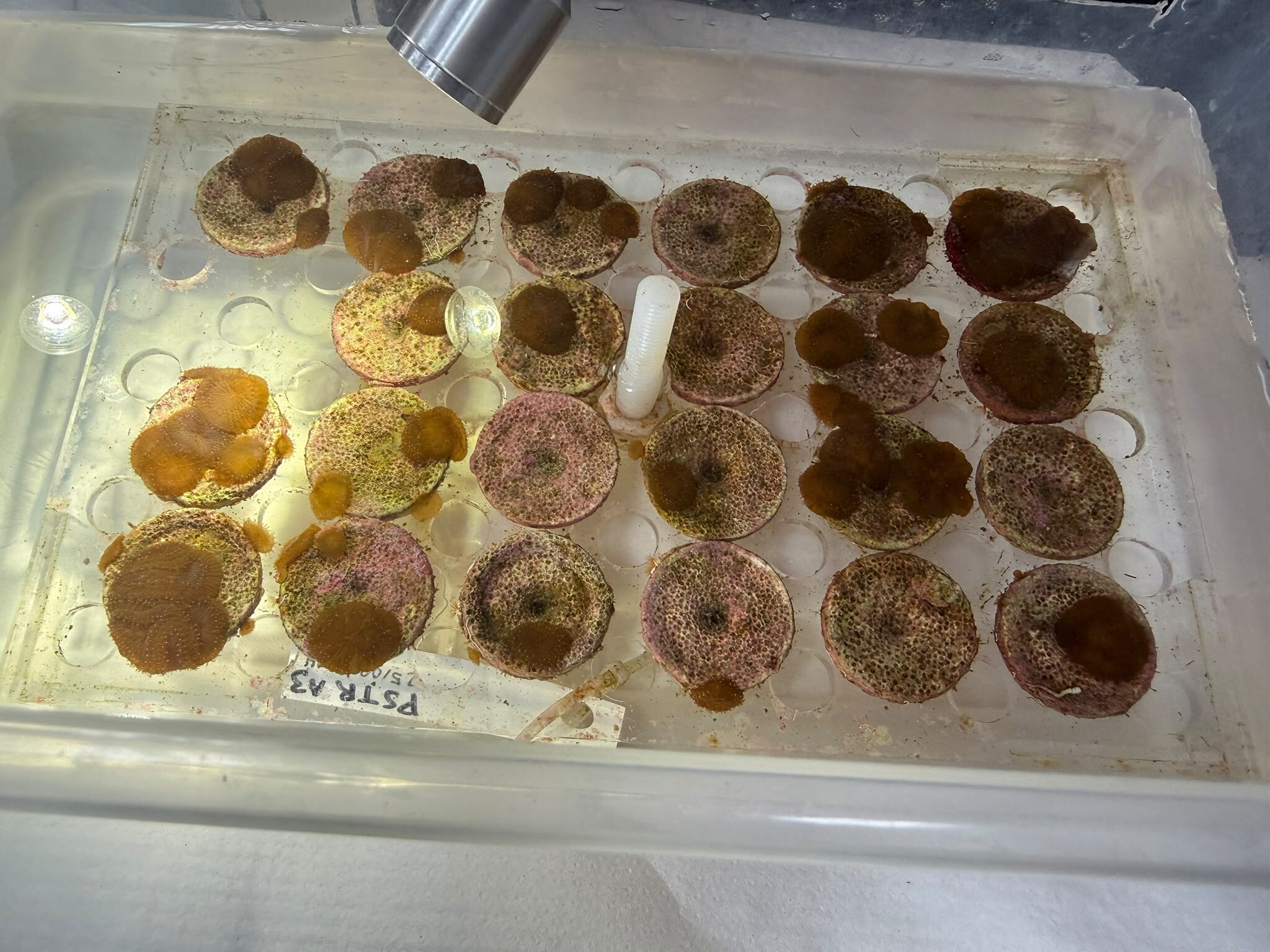
With many of juvenile corals now measuring over 2 centimetres – about an inch – it will soon be time to place them on the reef and see how they fare.
“One of the issues with small corals is grazing pressure, and we have a lot of grazers here, so our plan is to put some out in the natural environment, and see their survivorship,” McCoy said.
While some will be placed without protection, others will have cages built around them to keep grazing herbivores, such as parrotfish, away.
“That will give us a benchmark. What we need to evaluate is what is the proper size to put them out there for survivorship,” McCoy said.
Expanding the lab
With an expanded lab, to be built inside a hurricane-proof, solar-powered, mobile 40-foot container outside the DoE building – which is planned to be set up before the end of this year – work on accelerating the growth of the corals can be undertaken and the entire operation can be scaled up.
“To be effective, you can’t be putting out 1,000 corals a year, you need to put out 10,000 or more,” said McCoy.
He added that the expansion of the lab, for which funding has been granted for two years via the Environmental Protection Fund, is going to allow the DoE team to move the juveniles to an area dedicated to their accelerated growth.
McCoy said the current lab acted as the “proof of concept”, showing the approach to spawning and growing coral in an artificial environment could be done. “Now, we’re at a stage where we have the expertise, we have the staffing to run it, and we can scale it up, and we can be effective putting [the corals] out on the reef,” he said.
The DoE is working with the REEF Institute, a Florida-based non-profit that focuses on biobanking, growing and out-planting corals, on building the new lab, which will be modular and expandable.
Related Videos