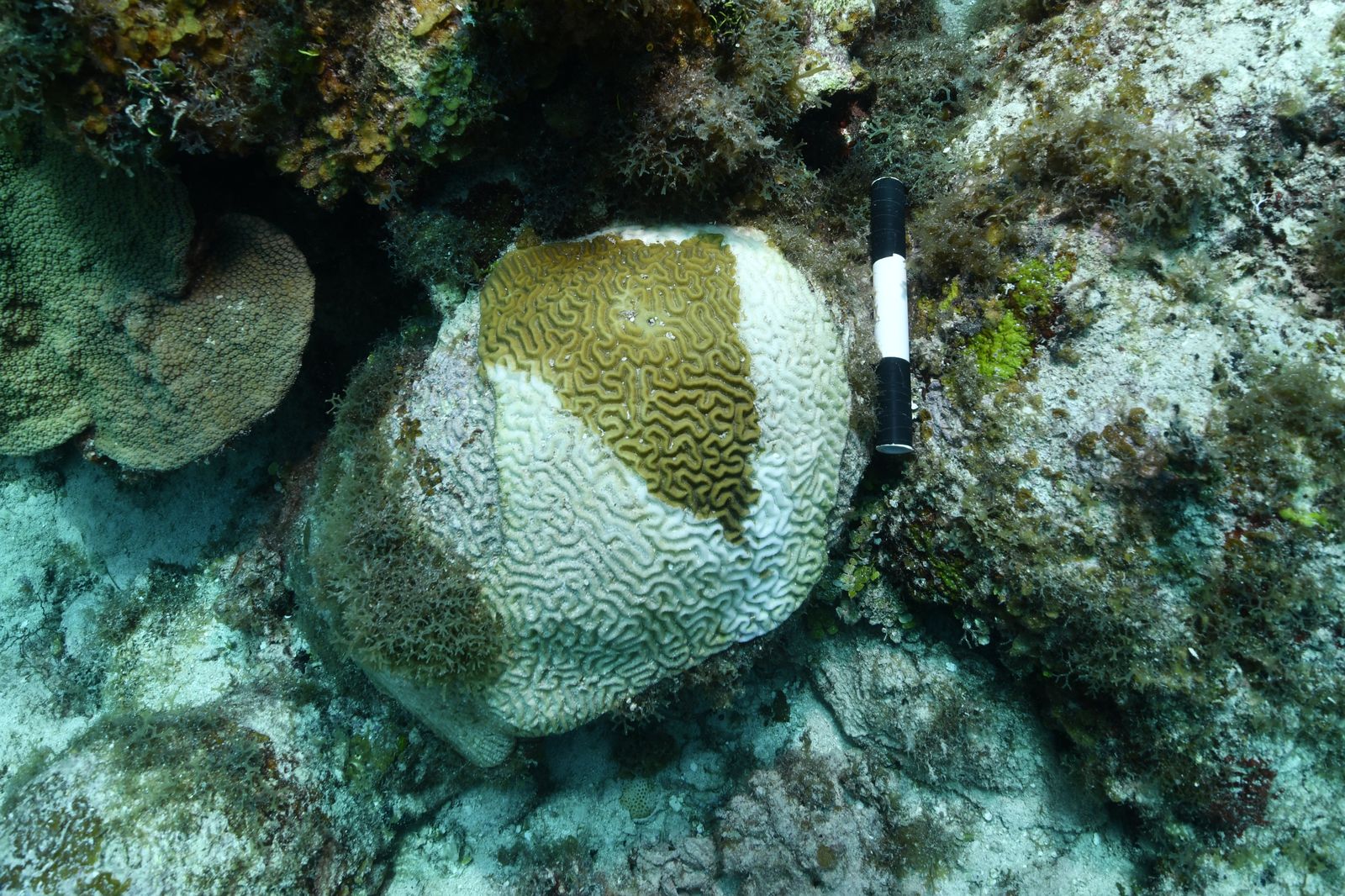
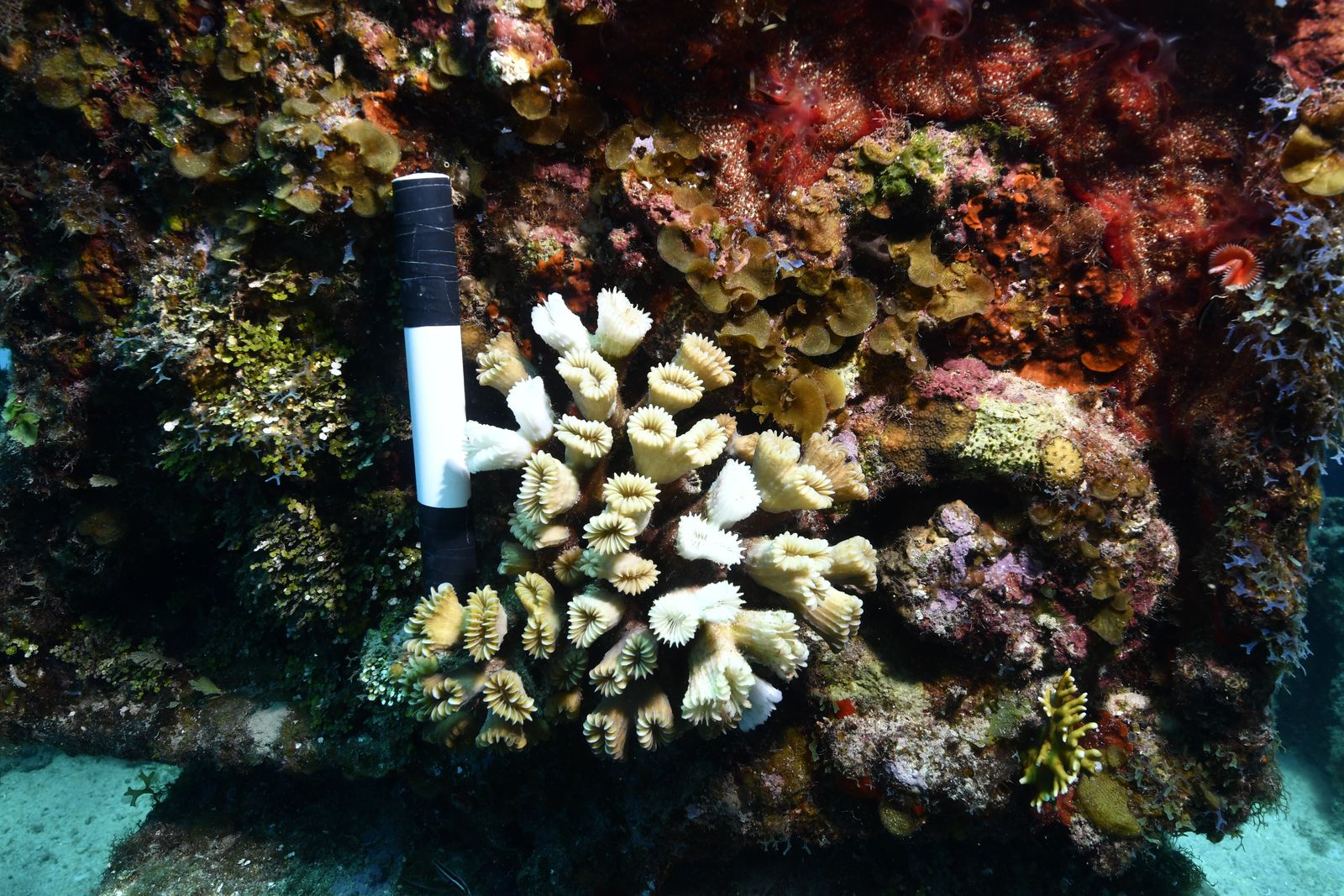
Stony coral tissue loss disease is slowly making its way around the coastline of Little Cayman, though currents on the smallest of Cayman’s three islands may be slowing its progress.
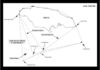
The disease, which had decimated many species of hard corals on Grand Cayman since it appeared locally in 2020, reached Little Cayman in August last year, when the distinctive white lesions were found on corals at dive sites on the south west part of the island.
The Department of Environment’s Marine Resources Unit manager Croy McCoy said the department’s team will be visiting Little Cayman later this month to track the progress of the disease.
Because of the knowledge garnered in Grand Cayman about how the disease moves along reefs, McCoy said, “We knew it was going to accelerate down the south coast when it was discovered at Soto Trader in August last year, which it did. … But [we knew] once it looped around, the prevailing currents are going east-west, and it would slow down to half speed.”
He noted that the speed at which the disease progresses depend on two factors – the density of the corals coverage and the susceptibility of the coral species along its path.
McCoy says the disease is currently tracking along the south coast of the island and has made it more than halfway along. So far, it has not hit the iconic Bloody Bay Wall on the north of the island.
The geological structure of Blood Bay’s sheer wall, which unlike other areas around the island and in Grand Cayman, begins in relatively shallow depths and then drops straight down to hundreds of feet, likely will assist in slowing down the speed of the spread of the disease, he believes.
“Bloody Bay has historically low coral coverage. It’s a huge rock structure where the shallow terrace extends out to the deep terrace and plummets,” he said.
“When [SCTLD] is going to get in the Bloody Bay area on the north, it’s going to slow down again till it gets to … the Jackson Bight area,” where there is higher coral coverage and shallow and deep terraces.
Cause still unknown
The actual cause of the disease, known as SCTLD and often pronounced ‘Skittle-D’, is still unknown.
“There’s been so much research and so much money poured into trying to figure this out,” McCoy said. “It’s the COVID of the sea. Trying to figure something out in an open system that’s out there is very difficult. But we know that it responds to antibiotics.”
DoE scientists and divers have treated infected corals with antibiotic paste, which has been shown to slow the spread of the disease.
“All of this seems confusing because nothing equates to what we know is normal, that would cause this,” said McCoy, who is working with scientists at the University of Miami on SCTLD research.
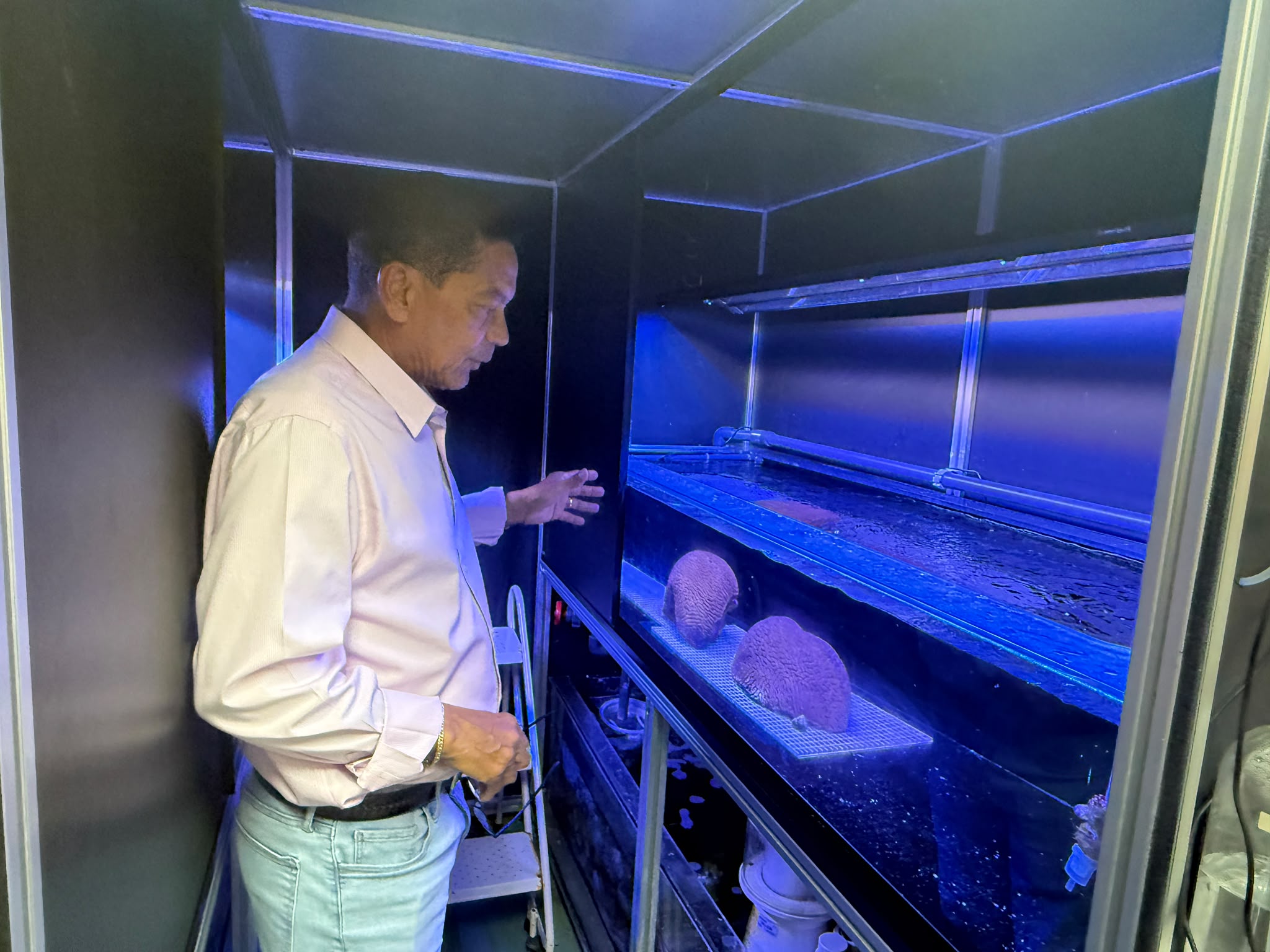
What is known is that the virus initially affects zooxanthellae, a microscopic algae that has a symbiotic relationship with the corals and gives them their colour.
McCoy, who holds a PhD in ocean sciences, says Cayman probably has the most extensive database on the progression of the disease of anywhere in the region where it has appeared.
“We know a lot about [SCTLD] … because we found it when it was no bigger than 10 feet by 10 feet. We tracked it, documented it all the way around Grand Cayman, so we know a lot about how it moves, and possibly the vectors for it,” he said.
Disinfecting dive gear
McCoy appealed to divers and dive operators to ensure that anyone diving in an area where the disease is present to disinfect their dive gear before moving to unaffected sites.
Once SCTLD appears on a reef, “there’s no stopping it after that”, he said. All that can be done is to slow it down, giving corals time to spawn and reproduce.
“Again, it’s up to residents and the resorts … that if they do dive in any infected area, it’s best just to take a few minutes and sterilise your gear before actually diving in an uninfected area,” he said.
So far, he said, there have been no reports of the disease being found on Cayman Brac, but the DoE team is also planning to visit that island at the end of this month to do spot checks.
Related Videos