A landowner who planned to build seven apartments on a pond-side plot in Savannah had a change of heart and has instead sold the land to the National Trust.
Fabian Whorms learned the area was ecologically significant after applying to the Central Planning Authority to develop there in 2022.
The Department of Environment explained at the time that the land was made up of mostly protected mangroves and it was adjacent to the Governor Gore Bird Sanctuary.
Meanwhile, the National Trust submitted an official objection to the $1.8 million project, saying the development would take away the “peace and serenity” of the sanctuary.
“We feel strongly that the preservation of this sanctuary which benefits our community should not be sacrificed for the benefit of just one landowner,” it wrote.
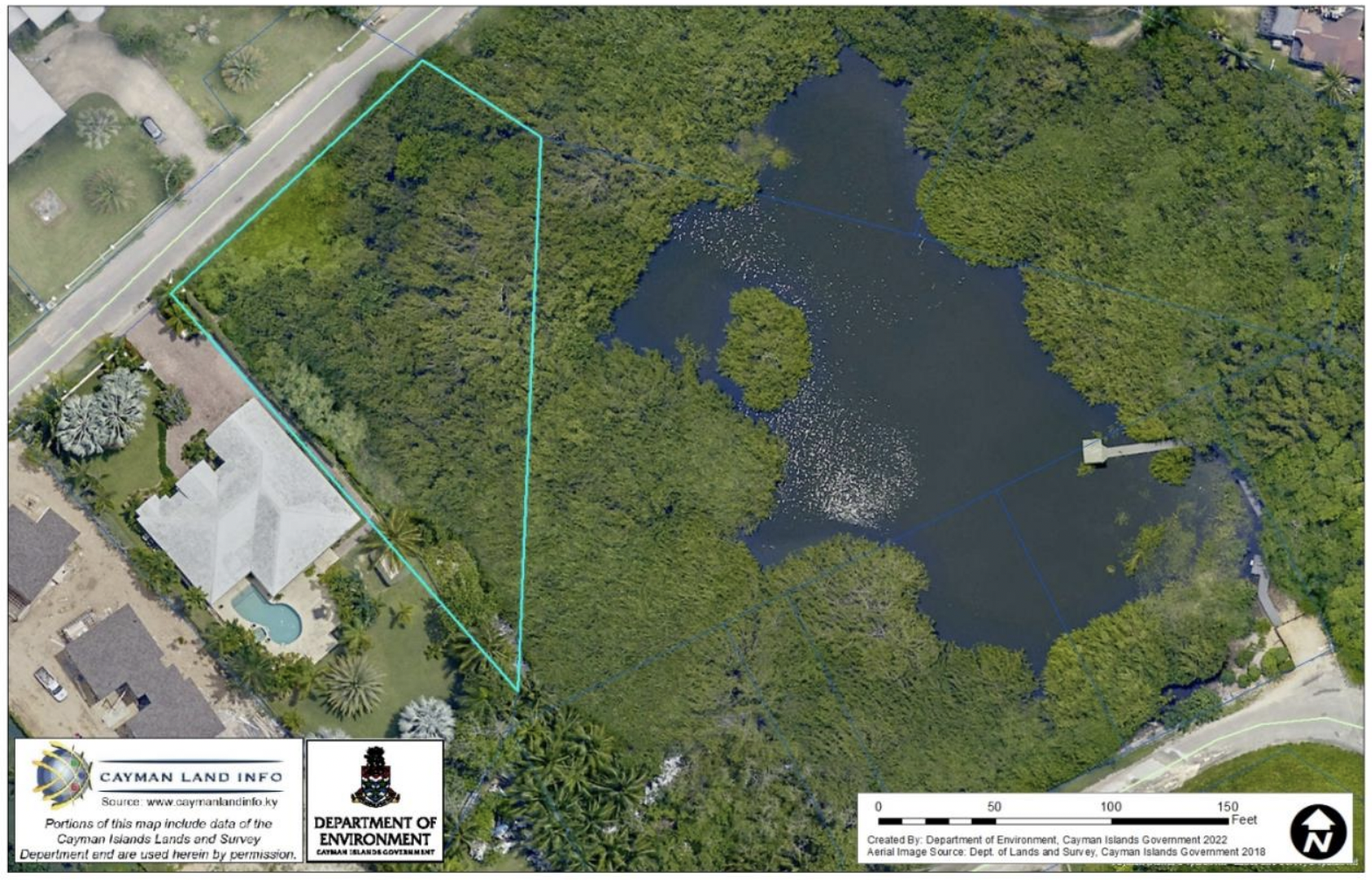
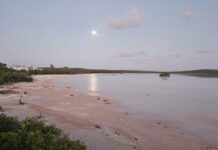
Gore’s Bird Sanctuary. – Image: Lands and Survey 2018
It added that it had offered to purchase the parcel from Whorms “at fair market value including the expenses incurred so far in the planning and development process”.
“Governor Gore’s Bird Sanctuary provides a valuable amenity to the neighbouring community and to our overall tourism product,” the trust said.
“We cannot allow incursions into our irreplaceable and rapidly disappearing national environmental assets.”
Whorms’s application was refused due to technicalities, and rather than pursue the project, he decided to sell it to the National Trust for use by the public.
In a recent press release, the landowner said he was “happy to contribute to the preservation of the future of these islands” and wished the National Trust every success.
Freshwater marshes
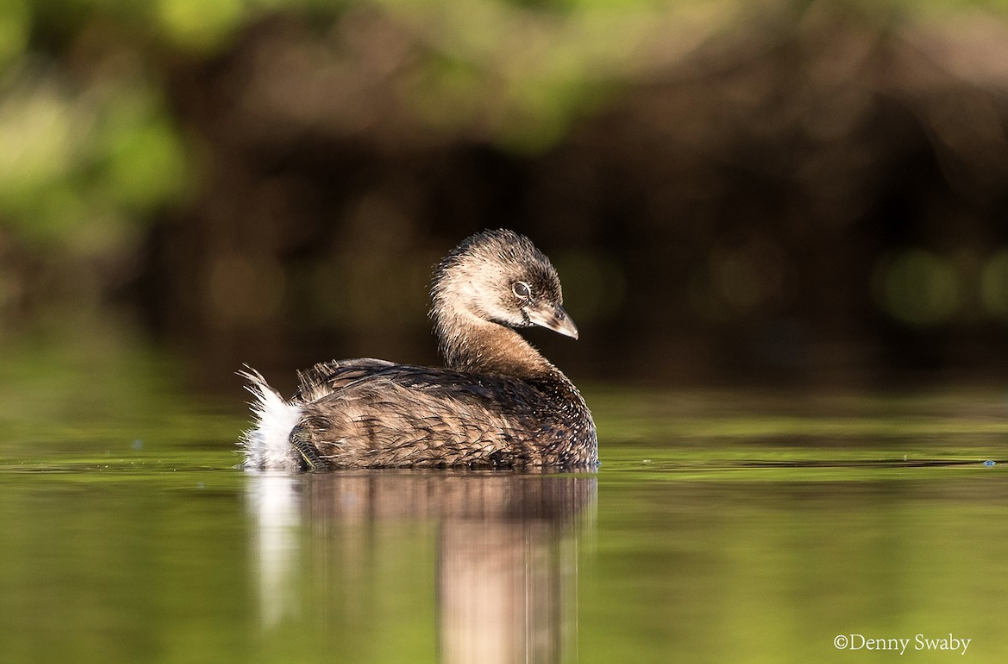
Named after Cayman’s former Governor Michael J Gore, the freshwater marshes of the pond are a roosting, feeding and breeding habitat for over 60 bird species.
They are also a stopover for migratory birds where they rest and feed before completing their long journeys.
Other species found there include hickatee freshwater turtles, native butterflies, the endemic freshwater mosquito fish, and an endemic subspecies of water snake.
Due to Cayman’s porous limestone terrain, areas of surface water like the pond are very rare.
“This pond can be critical during the dry season when it may be the only substantial body of freshwater in the area,” the National Trust said in its objection letter.
The sanctuary is located in a suburban area and also acts as a community park for nearby residents.
“Studies show that time in parks and other outdoor spaces are significantly correlated with reductions in stress, lowered blood pressure, physical health and mental wellbeing.
“Parks are a major factor in the quality of life in a given community and enhance property values,” the National Trust added.
Mangrove protection
On 13 Sept., Governor Jane Owen hosted a reception on behalf of the National Trust to thank the landowner as well as donors to the National Trust’s Land Reserve Fund.
The fund, launched in 2010, aims to acquire designated high priority environmental areas, particularly mangroves, for protection under the National Trust.
Currently, the National Trust protects 6% of Cayman’s natural environment. Its goal is to safeguard 11% across all three islands.
Catherine Childs, environmental programmes manager for the National Trust, said Grand Cayman has already seen significant mangrove destruction.
“The western side of the island has lost more than 70% of this critical ecosystem and deforestation is spreading rapidly eastward.”

Mangrove forests provide benefits such as flood control and carbon sequestration, assisting to mitigate the effects of climate change.
Inland wetlands in urban areas are valuable to surrounding development, counteracting the greatly increased rate and volume of surface-water runoff from hardstanding and buildings.
They also improve water quality by filtering, diluting and degrading toxic wastes, nutrients, sediments and other pollutants.
“We cannot afford to lose more wetlands,” Childs said.
“By working together with generous sponsors, international partners, and local landowners, we can accomplish more together and succeed in protecting Cayman’s irreplaceable natural areas.”
Editor’s note: The Fabian Whorms in this article is not the CEO of Cayman Airways.
Related Videos