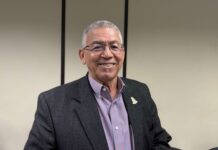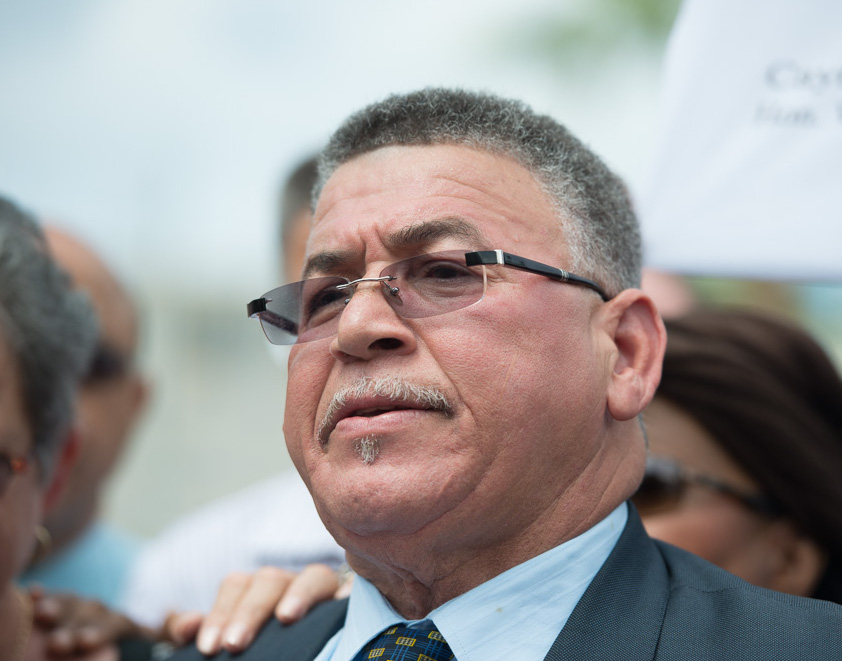
McKeeva Bush has quit the PACT coalition, leaving Parliament deadlocked at 9-9 on the floor of the House and government holding on to power by the slimmest of margins.
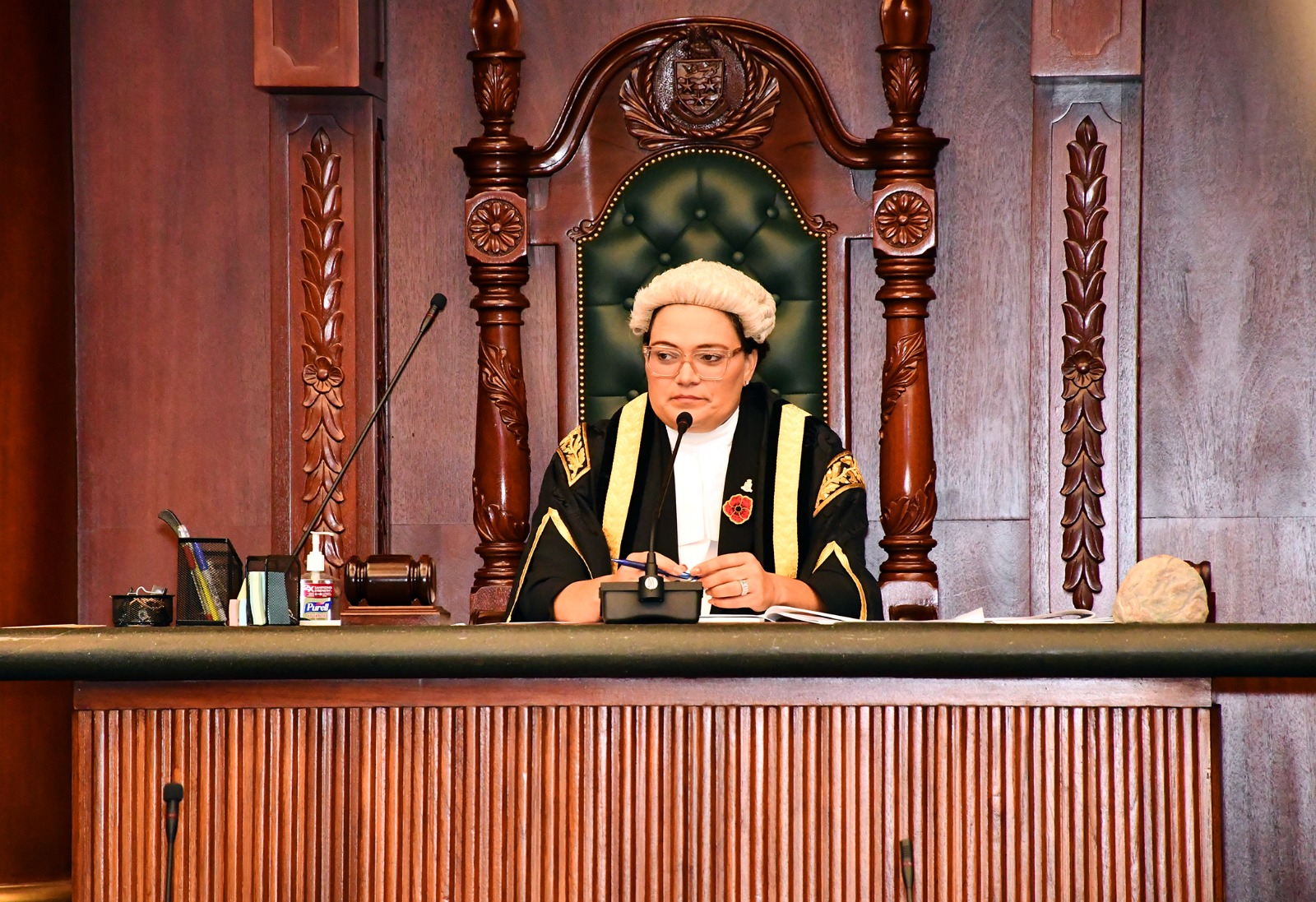
The PACT majority – needed to pass any legislation, including the forthcoming budget – is now dependent on Speaker of the House Katherine Ebanks-Wilks, who has a deciding vote in Parliament.
Bush said he no longer had faith in the direction of the government and was left with no choice but to resign. He has indicated he would be willing to support an alternate government.
Bush’s resignation, which stems from divisions within the government over spending priorities for the next budget, which is still not finalised, leaves Premier Wayne Panton and his group of independents in a precarious position.
The Cayman Compass understands that government caucus was meeting Thursday afternoon in an effort to resolve the latest crisis.
Further complicating matters is the constitutional requirement for a quorum of 10 members to be present, as well as the Speaker, before a meeting of Parliament can be held.
That means any parliamentary meetings – including the critical upcoming budget sessions – would require at least one member of the Opposition to be present. For practical purposes, government, at this time, does not have a functional majority.
It is possible that Speaker Ebanks-Wilks could be asked to resign from the position and rejoin the government benches in an effort to give PACT a working majority. That would mean an outside Speaker would have to be appointed.
It remains unclear whether the West Bay Central MP, who has embraced the role of Speaker, would agree to that. She did not respond to calls from the Compass Thursday.
Another option is for a new coalition to emerge, with either a new PACT leader persuading departed members to rejoin the fold or the Progressives seeking to attract disaffected government members to its side.
Bush told the Compass he was willing to work with the Progressives and others, though he insisted he was not seeking any leadership role.
“I am not looking for a Cabinet seat or anything like that,” he said. “This is not about me getting any chair. It is about getting the country on the right track and with the right priorities.”
Highlighting in-fighting over the budget, Bush said he was frustrated with the process and the lack of political organisation in an independent coalition where he indicated some members were pulling in different directions.
“We are talking about spending $1 billion,” he said,
“The people of this country didn’t want political parties, they thought we needed independents. We have an independent government, and look at where we are. We are headed in the wrong direction.”
Bush said he had made his priorities – including new school infrastructure and cost of living increases for civil servants and seniors – clear, but felt his voice had not been heard.
The West Bay West MP had already stepped down as Speaker but was supporting the government from the back benches until his decision Thursday.
Swift resolution ‘unlikely’
Politicians on both sides, speaking to the Compass on condition of anonymity Thursday, felt a swift resolution to the latest impasse was unlikely.
“We have been down this road so many times now, I have little confidence that anything workable will come out of this,” one senior MP told the Compass.
Bush follows former Deputy Premier Chris Saunders and, more recently, former Labour Minister Dwayne Seymour in withdrawing his support from the government, meaning that a solid 12-6 majority for government has diminished in the space of less than a year.
He said he believed the PACT administration had its priorities wrong over the budget, which will set the spending plans for the country over the next two years.
In a letter to Governor Jane Owen Thursday morning, Bush wrote, “After much serious and deep consideration, I have made the decision not to continue to support the present make up of government, meaning I can’t support the PACT grouping any longer, as of today, the 9th day of November 2023.
“In my opinion, the country is headed in the wrong direction. Our people are hurting like I’ve never seen before.”
Bush filed a similar letter with Ebanks-Wilks.
His missive indicated divisions over the forthcoming two-year budget, adding, “Matters given priority, as far as I am concerned, are not the right ones.”
Early elections?
The functional deadlock could paralyse government and raises the possibility of early elections.
Bush said he hoped that would not be the case and that a partnership between the Opposition and some of the PACT group could prevail.
The looming budget debate adds a degree of complexity and uncertainty for the country.
Government does not have authority to spend money after 31 Dec., unless a new financial appropriations bill can be passed.
Potential budget crisis
Bush’s resignation is just one symptom of discord among the PACT group over the budget – which the Compass understands has yet to be finalised, despite aims for an early December hearing to pass the bill in Parliament.
Several other key ministers are understood to be holding out for funding for certain projects.
Even if the PACT group can agree a budget, it is not certain that it would be passed by Parliament.
Though the Speaker can cast a deciding vote, long-held parliamentary convention dictates that she is expected to do so only to ‘preserve the status quo’ – meaning she would be restricted in how she used that power.
In the case of the budget, if the House was locked at 9-9, she would have to vote to send government into finance committee and then the premier, who as finance minister, would chair the budget debate, would need to also cast a deciding vote for every item in the budget.
With government apparently far from united over its spending plan, it would only take one member to be absent or to vote against parts of the bill for it to fail.
In a worst-case scenario, if no budget is passed by 31 Dec., then government would be headed for a shutdown, as there would be no legal authority for any spending, including on salaries.
There is scope for an emergency short-term budget to be passed, with agreement from the parliamentarians. In certain circumstances, such as an early election or a change in government, that could provide breathing space to formulate a new spending plan.
Governor Owen is currently in London, ahead of the Joint Ministerial Council meeting between Overseas Territories leaders and UK Parliamentarians. Premier Panton is also scheduled to fly to London for the meetings shortly. Panton was not available for comment Thursday afternoon.
Acting Governor Franz Manderson said, “I am aware of Mr. Bush’s stated position which he shared with the Governor’s office early this afternoon.
“I remain in close touch with the Hon Premier but have no further comment to make at this time.”
- Additional reporting by Reshma Ragoonath
Related Videos