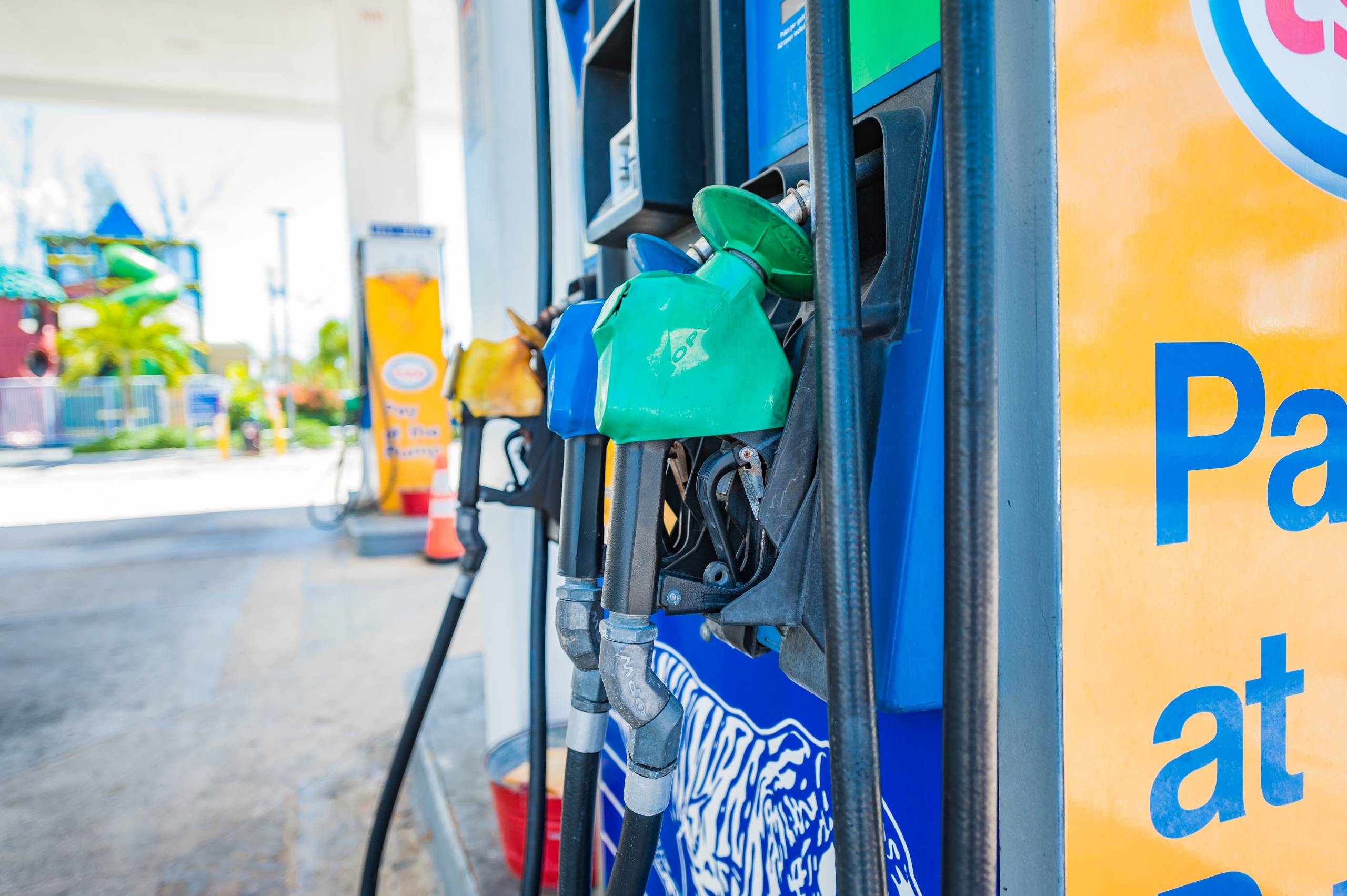
A near 30% jump in fuels and lubricant prices last year drove Cayman’s inflation to record levels at the end of 2022, according to recently released statistics from the Economics and Statistics Office.
Many in the Cayman Islands felt the effects of inflation at the petrol pump or at the cash register last year, and ESO’s recently published Cayman Islands Annual Economic Report 2022 details the difficulties consumers faced.
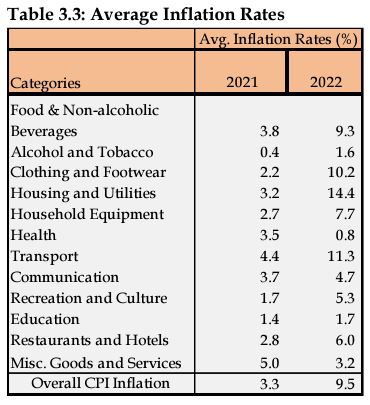
Looking at the 2022 numbers, the ESO report noted, “All divisional indices rose for 2022, led by a surge in energy-related divisions.
“The index for housing and utilities rose by 14.4%, reflecting a 28.6% increase in the electricity sub-index and a 36.7% increase in water and miscellaneous services. The transport price index grew by 11.3%, mainly driven by a 28.9% increase in the cost of fuels and lubricants for personal transport equipment.”
Inflation in the Cayman Islands hit record levels in 2022, with core inflation peaking at 7.4% and consumer prices rising to a historic high of 9.5%, according to ESO data.
The 9.5% average inflation rate for last year was the highest on record for the islands, based on ESO statistics dating back to 1996. The previous high was 7.3% in 2005.
These increases in 2022 were quite sharp compared to 2021, when core inflation stood at 2.4% and consumer prices were 3.3% at year end.
When it came to average price index for food and non-alcoholic beverages, inflation closed at 9.3% in December 2022, compared to 3.8% the year before, while the index for clothing and footwear hit 10.2%, almost five times more than the 2.2% recorded in 2021.
“The rise in the index for food and non-alcoholic beverages was largely due to increases in the price of processed foods which is linked to imported prices. Notable food groups which increased were meat and meat products, fish and seafood, tea, coffee and cocoa. Higher prices for clothing and footwear largely reflected higher costs for clothing purchased locally,” the report said.
The 2022 ESO economic report was one of three released last week, along with the 2022 Foreign Trade Report and 2023 Q1 Trade Statistics Bulletin.
The ESO economic report forecast inflation to come down to 5.2% in 2023, “a deceleration relative to the 9.5% observed in 2022”.
The 2023 second quarter inflation rate was 4.1%, down from 6.6% in the first quarter.
Statistics for the third quarter of this year have not yet been released.
In August this year, Opposition Leader Roy McTaggart called for the release of the ESO reports, as he flagged an apparent slowdown in the construction sector this year.
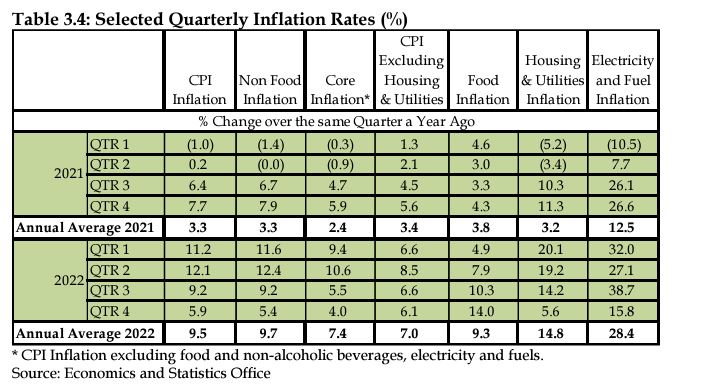
The price index for household equipment rose to 7.7%, while the index for restaurants and hotels increased to 6.0% from 2.8%.
The average cost of electricity and fuels in 2022, the report stated, was higher by 28.4% for the year.
Concurrently, the rise in non-food inflation averaged 9.7% compared to a year ago when it was 3.3%.
“The strong increase in the various indices confirms the broad-based nature of the price increases during the period, with the sharpest increases seen in the indices related to energy and food prices,” the report stated.
In explaining the increases, the ESO pointed to the Russian invasion of Ukraine in February 2022 as further destabilising the global supply system which was “still reeling from the impact of the COVID-19 pandemic and subsequent supply chain constraints”.
Implications for housing market
The report also noted an increase in foreclosed properties in 2022.
“Data from CIMA showed that the average foreclosure inventory in 2022 reached 56 properties valued at US$15.2 million. This represents an increase from 49 properties valued at US$14.1 million in 2021,” according to the report.
However, despite the increase in inventory, the average foreclosure rate – the value of foreclosure inventory over the total value of residential mortgages – was unchanged at 0.5% throughout 2022, the report stated.
The Federal Funds Target Rate increased multiple times throughout the year, pushing Cayman’s prime lending rate up by 371 basis points to 6.96% at the end of 2022.
The rise in the prime rate supported a 212 basis points increase in the weighted average rate on Cayman Islands dollar loans, which rose to 7.95%.
The weighted average rate on KYD deposits increased by 28 basis points to 0.34% at the end of 2022.
Growth in gross domestic product
Though consumers felt the pinch in 2022, the local economy performed well, with the real gross domestic product estimated to have expanded by 3.8% in 2022, continuing on the recovery of 4.0% seen in 2021.
“In real terms, gross domestic product is estimated at $4,638.4 million, relative to $4,470.3 million in 2021. Economic growth for the year was robust globally, as international demand remained strong despite rising uncertainties and prices,” the report said.
Growth in Cayman was led by the hotels and restaurants sector, which strongly recovered in the first full year since the Islands’ ports reopened.
“The hotels and restaurants sector is estimated to have expanded by 23.2%. The reopening of the ports and rebound in visitor arrivals facilitated a similar expansion in the transportation sector. The transport, storage and communication sector expanded by 11.4%. Tourism growth also contributed to a 6.1% increase in the ‘other’ services sector,” the report said.
Related Videos