

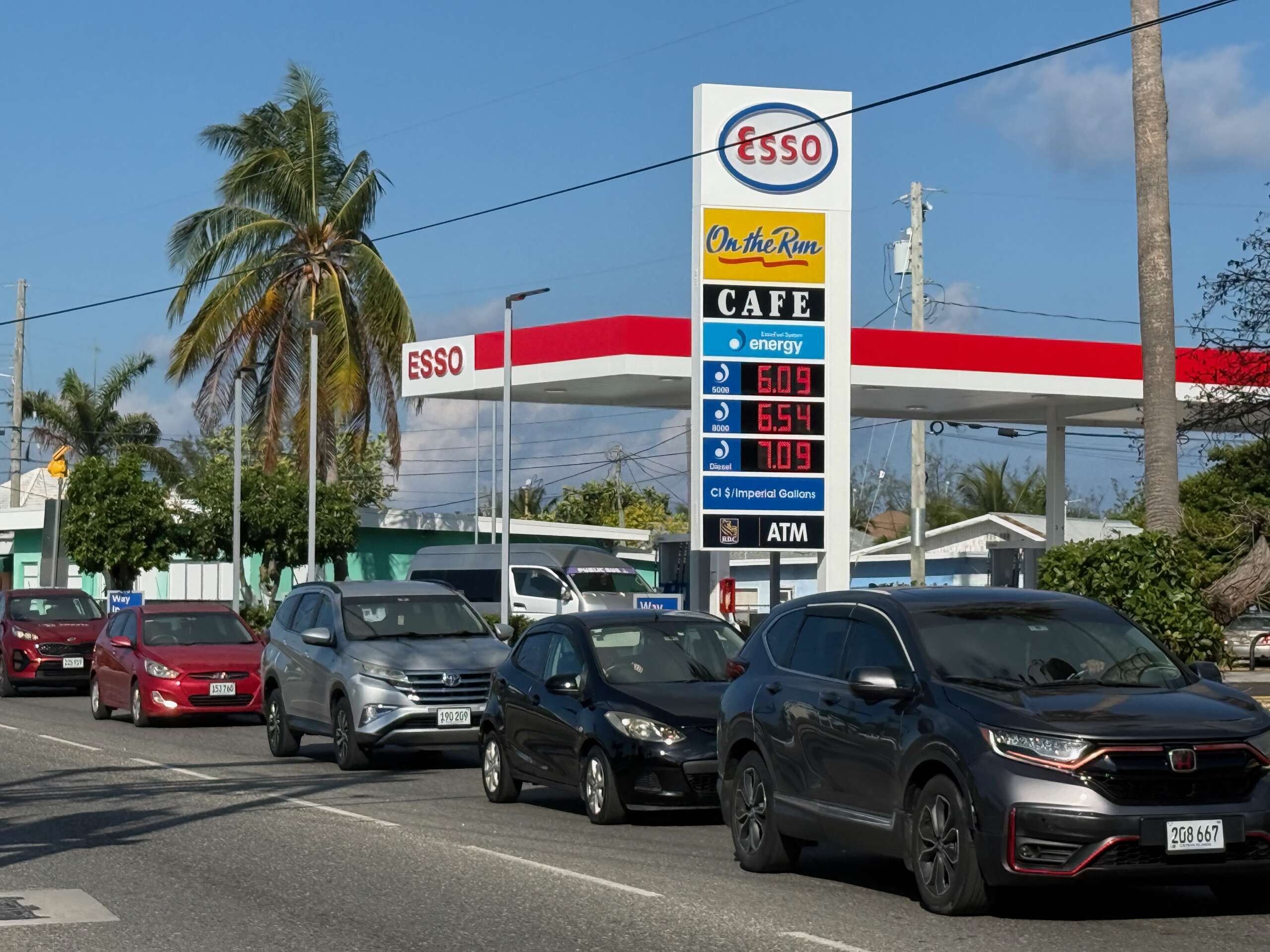
Projections by the Economics and Statistics Office indicate that inflation is expected to rise to 5.3% in 2026, more than four times higher than last year.
Finance Minister Rolston Anglin said the global impact of the conflict in the Middle East had affected the projections, which had earlier estimated inflation in 2026 to be 2.6%. By contrast, the average inflation rate for Cayman in 2025 was 1.2%.
Anglin said the projected increase was “driven primarily by developments in global energy markets”.
However, the minister said the latest forecast from the ESO, issued on 22 April, did not take into account government’s announcement that it would waive import duty on fuel, which will impact the escalating cost of petrol and diesel at local gas pumps and the price of electricity.
“Right now, in the projections … the key driver is an expectation that electricity, gas and other fuels would rise 14%,” Anglin told legislators, adding that new inflation-projection figures would be requested from the ESO.
The minister gave the update in response to a parliamentary question from Red Bay MP Roy Tatum on 1 May.
Fuel prices driving cost-of-living increases worldwide
Anglin noted that international crude oil prices were substantially higher in March this year compared to March 2025, “and are expected to remain elevated in 2026, consistent within the International Monetary Fund’s projection of 21.4% increase in 2026”.
The minster added, “Given our energy and food import dependence, this higher energy oil price is expected to quickly feed through the domestic economy in electricity, transport and shipping costs.
“The estimates also highlight that food prices are likely to contribute to upward pressure on cost of living.”
He added that the IMF expects global food commodity prices to increase by 6% in 2026 and that the World Bank’s food price index has already increased by 5.1% year on year as of March 2026. Also, the price of fertiliser, of which roughly 20-30% of global shipments pass through the Strait of Hormuz, rose by 42.5% year on year in March.
Anglin told legislators that these increases typically take several quarters to work through global supply chains. “As a result, food inflation may persist in 2027, even if energy markets stabilise,” he warned.
He said the ESO report emphasised that as war in the Middle East continues, the exact magnitude of its inflationary effects “remains uncertain”.
To help address the financial pressure on residents, Anglin said government had already announced some relief measures, including the fuel duty waivers.
Tatum asked if government was considering any further relief measures.
Anglin pointed out that government had earlier implemented action to help financially challenged residents, including increasing funding for the Early Childhood Assistance Programme, known as ECAP.
He added, “Right now, we are reviewing the tariff codes, and looking very closely at whether there’s other areas that we potentially could try to pass on savings.”
To assist with Cayman’s supply chain, the minister said government is also exploring new trade routes, “but that is going to be something that will bear fruit in the more medium term”.
Related Videos













School prices should be a crime in Cayman. Must be all run by political figures profiting off expats then kicking them out with new laws.
No matter how high the rate of inflation is, our Civil Servants will not suffer thanks to the annual cost of living adjustment to their salaries, yet they still receive an annual bonus.