


A new report on early childhood care centres shows that tuition fees in Cayman are the most expensive among comparable countries.
This, along with limited available spaces, especially in West Bay and Bodden Town, is making it challenging for some parents to be able to send their young children to kindergartens and nurseries.
The KPMG report noted that parents are paying an average of $1,144 a month to send their children to early childhood education centres, which the researchers found to be among the highest of the six jurisdictions to which they compared Cayman.
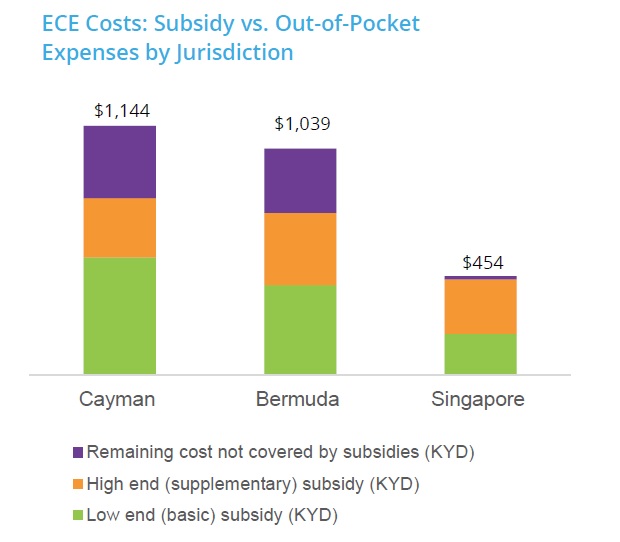
According to KPMG researchers, as of late 2024, there were nearly 2,200 children attending early education centres, accounting for 59% of the under-5 population.
This is far lower than other island nations, such as Jamaica (91%) and Singapore (81%), but higher than England (41%) and Ontario (58%), to which comparisons were also made, the report showed. The figure is, however, on par with the Organisation for Economic Co-operation and Development average of 63%.
The findings were revealed at the inaugural literacy conference, held at Kimpton Seafire + Spa on 1 Nov. and hosted by non-profit Literacy Is For Everyone, known as LIFE, which commissioned the report.
Staci Scott, a KPMG director, who presented the findings before a 250-strong audience of educators and policymakers, pointed out that the Sister Islands, with their smaller population, are the best served, with an average of one early childhood education centre per 31 children, followed by George Town with an average of one centre per 65 children.
East End and North Side both have one centre per 86 children, while West Bay has one per 100 children.
Bodden Town, considered Cayman’s fastest growing district, has a “staggering” one centre per 257 children, Scott said.

Throughout Cayman, there is a 6:1 student-to-teacher ratio, which is close to the OECD’s 5:1 average ratio.
However, Scott pointed out that, in conversations with interviewees for the report, it was noted that these figures refer to “teaching professionals, not necessarily qualified teachers”.
“That is a real concern that we heard throughout the interview process,” she said. “That it is becoming increasingly difficult to not only attract, but to retain, high-quality teachers in terms of offering them the salaries that they would expect, to maintain the quality of living that they need in Cayman. And that was particularly pronounced among the lower-cost private centres.”
The report, while acknowledging that parents often apply to multiple centres in efforts to find places for their children, noted that interviewees, when asked about the capacity within their centres, said their waitlists ranged in size “from 30 children to as many as 475 children”.
A panel of speakers at the conference said that the cost of childcare and lack of spaces at kindergartens and nurseries, along with Cayman’s short maternity and paternity leave, meant parents were facing increasing challenges in ensuring their children get the best start to life.

Three-quarters of centres privately owned
The KPMG report showed that 32 of Cayman’s 43 early childhood centres or school reception classes are privately owned, and that 84% of children who attend are enrolled in a private centre.
The data in the report was compiled by incorporating publicly available information, such as school and early childhood education centre inspection findings and Economics and Statistics Office reports, along with interviews with local practitioners and experts.
Scott told the audience that while Cayman was “spot on” with its competitors in certain areas, such as enrolment figures and teacher-to-children ratios, the cost of care for under-5s was a “Cayman-specific challenge”.
And while improvements had been made in recent years, such as a wider acceptance of the importance of early childhood education for very young children, there were still several interlinked challenges, she said.
“Cost, access, availability and training and retention of practitioners,” were high among those challenges, she pointed out.
“Stakeholders really indicated a need for more affordable early childhood education centres, for greater subsidies, for enhanced collaboration of agency stakeholders, and for uniform curriculum standards,” she said.
Increased funding in upcoming budget
The KPMG report noted that just 1% of Cayman’s annual education budget is spent on early childhood care, compared to 3% to 6% in the other jurisdictions the researchers looked at.
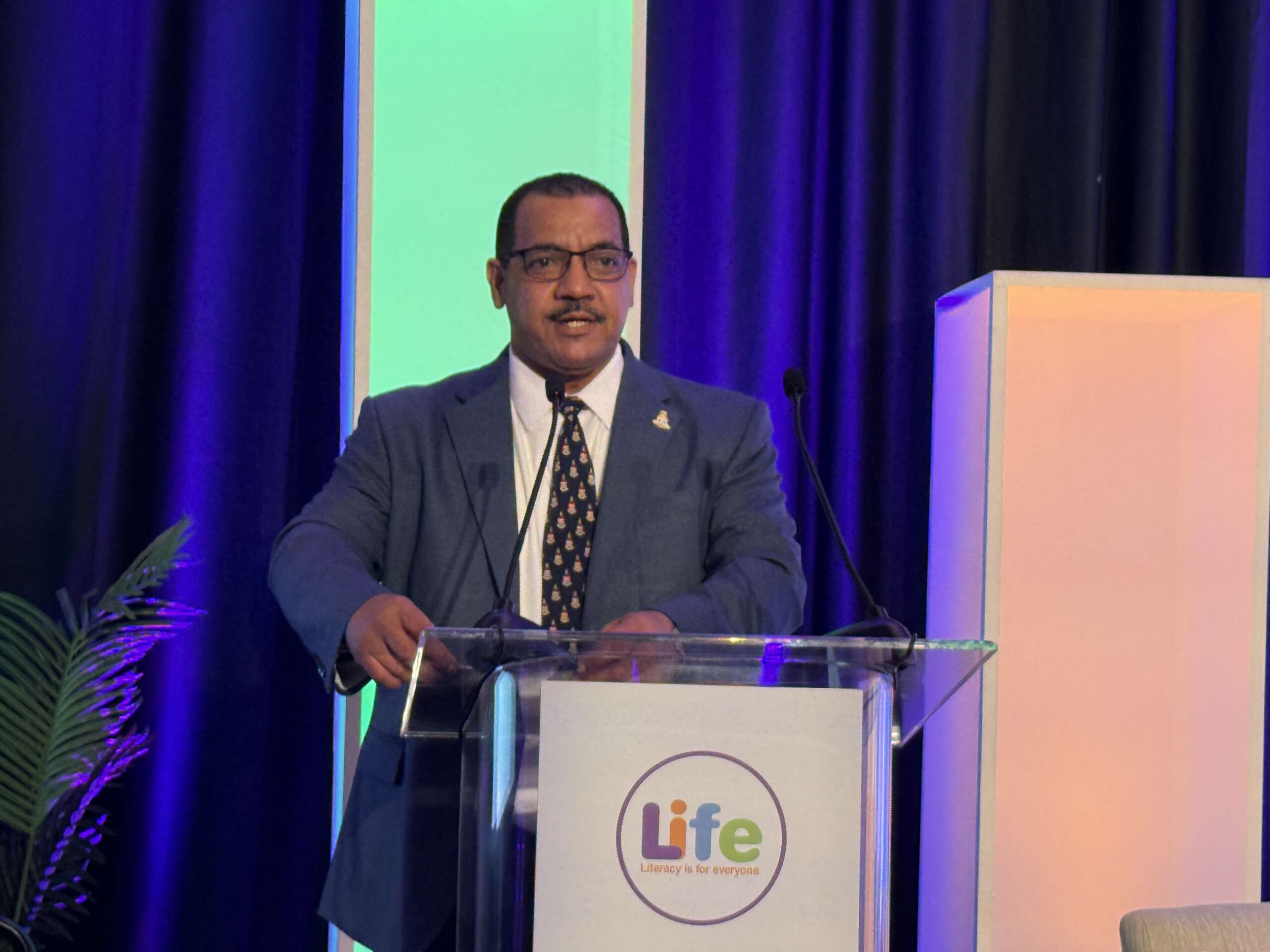
Education Minister Rolston Anglin, who also spoke at the literacy conference, pledged that more money would be made available in the upcoming budget – which will be announced 5 Nov. – to help parents pay for their children to attend pre-schools and nurseries.
Earlier this year, the government increased funding for financial assistance toward tuition fees in the Early Childhood Assistance Programme, known as ECAP, as well as the income thresholds for eligibility. This enabled the number of children over the age of 3 assisted by the programme to increase from 83 in October last year to 110 currently, Anglin noted.
Currently, ECAP provides financial assistance of up to $812 per month towards tuition fees at approved early childhood centres.
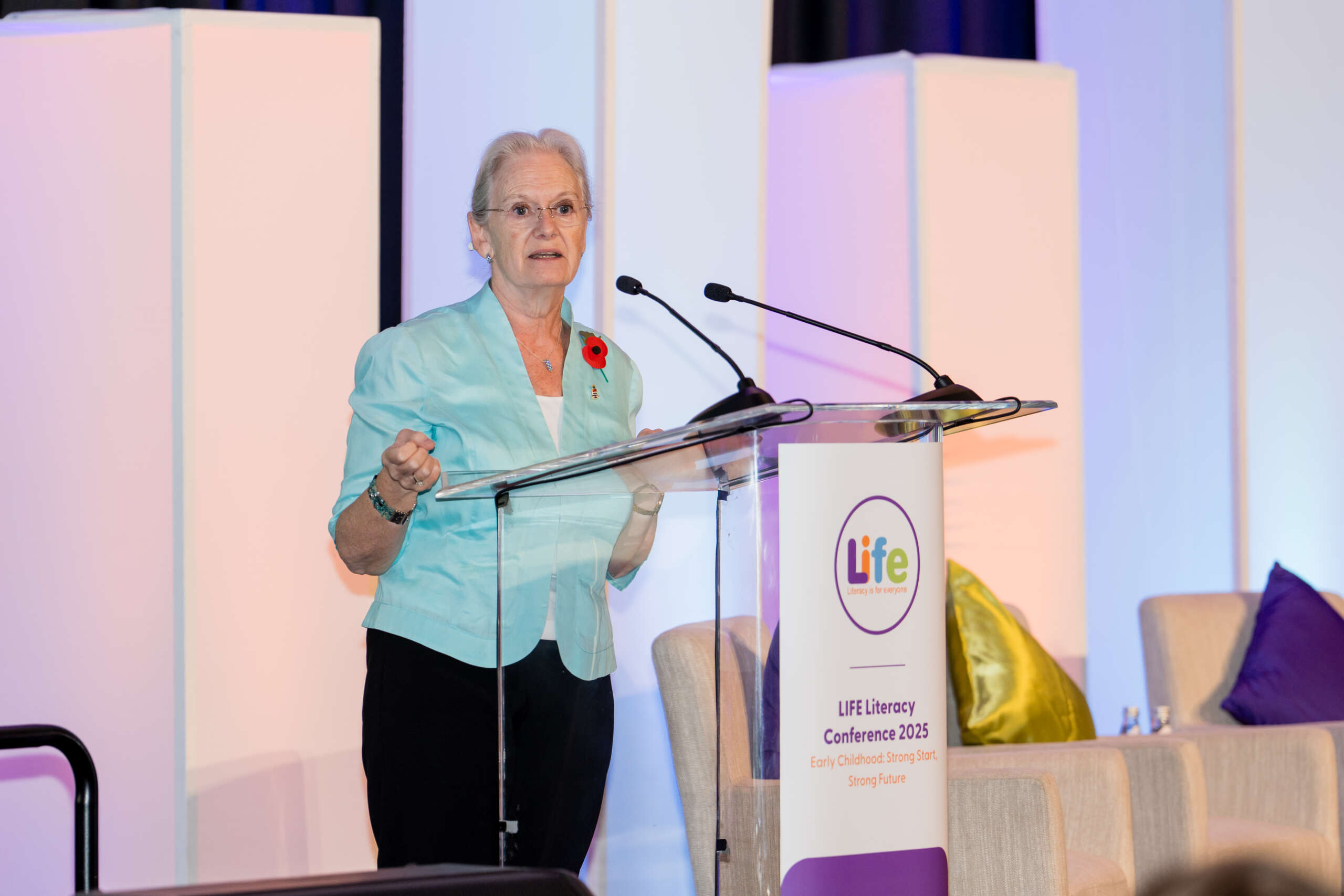
Anglin told the audience that, in the upcoming budget, government would increase ECAP funding from $910,000 this year to $2.1 million in 2026/27.
“So, by 2027, basic funding will cover up to 50% of the average monthly tuition, and supplementary funding will cover up to 75% with the hardship category introduced for the most vulnerable families,” he said.
“Investing in early childhood is our most important investment,” the minister said, adding that he was committed during his political term to expanding ECAP to children as young as 2 years old.
Anglin, who told the audience he is a father of five, described the KPMG report as providing “valuable insight into the progress, challenges and priorities shaping this critical sector”.
Acknowledging that the availability and affordability of early childhood care, “especially in some districts, has not always kept pace with demand”, he said progress had been made with the opening of the North East Nursery at the East End Primary School, and recent approval by Cabinet for expanding the Theoline McCoy Primary School in Bodden Town.
He added there were also plans to open “at least” one more government-operated nursery in 2028.
Read the full report here.
Related Videos











Just another reason why any educated expat wouldn’t come to island to work amid the immigration changes. Not worth it if you want a kid in the future, a family or already have a family. Cayman childcare isn’t expensive, it’s broken. The costs are outrageous.
Great to see some light shed in this area becuase it has trickle down effects. Again, sadly Cayman not positioning themselves as the leading financial hub due to things like these.