

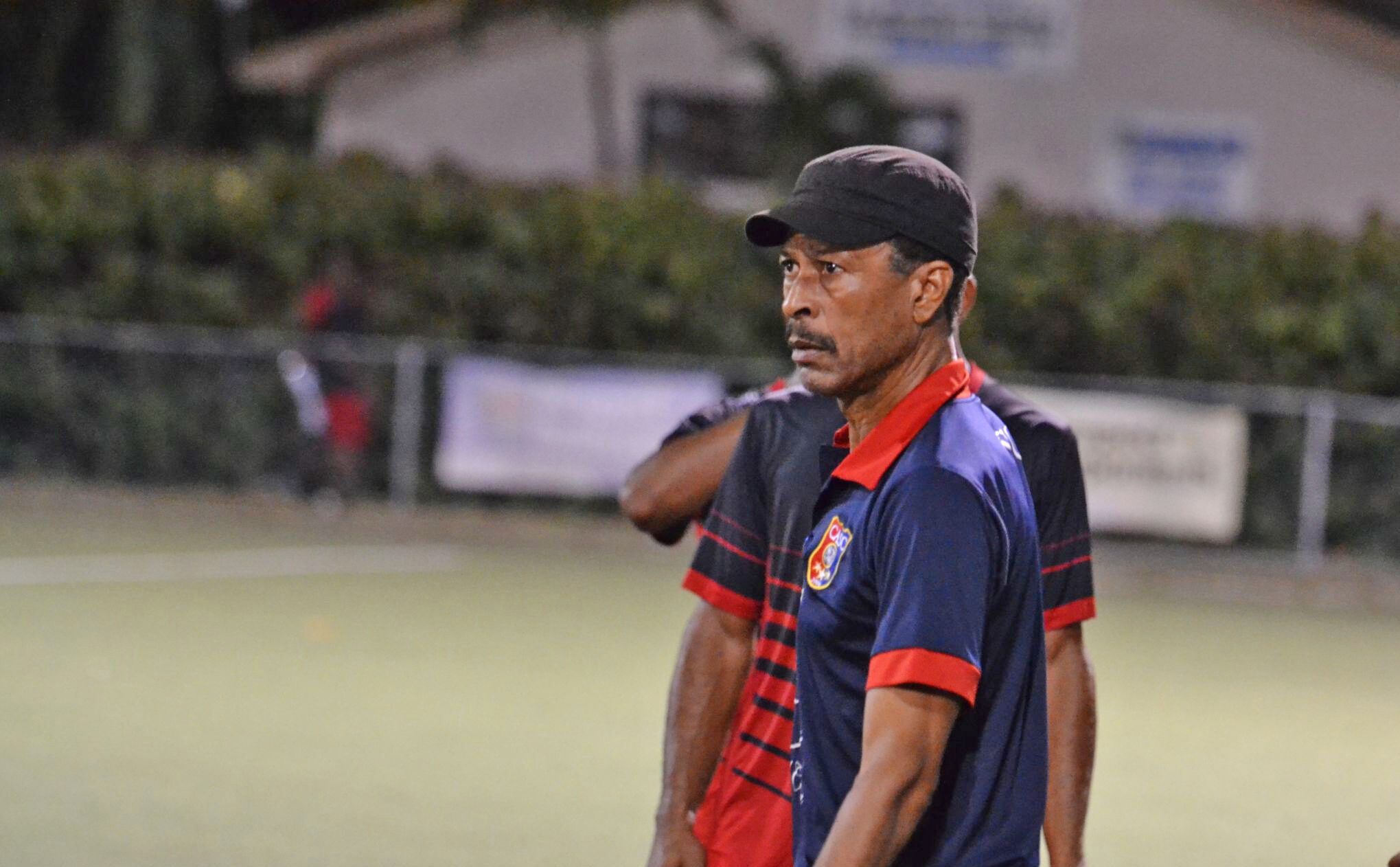
The state of football in the Cayman Islands has taken a turn for the worse, both on the field and administratively, according to Ernie ‘Coach Gillie’ Seymour, who told the Compass that at 67 years old, it’s no longer worth the stress.
After expressing frustrations at the beginning of the 2023-24 season, following the downward spiral of his long-time team – Cayman Athletic Sports Club – Seymour said nothing has changed and as a result he will be leaving the sport as a coach.
“I am walking away from sideline coaching in the league,” he said. “There is nothing more for me to achieve by going out there to try and win a little medal because that is all you are playing for… and it’s not worth it.”
Seymour said outside of the Cayman Islands Football Association discriminating against him, his club – which he founded 17 years ago – has slowly deteriorated from its past glories, and it’s taken a personal toll.
“I see a lot of people dropping down now and I come to find out it’s because of stress. I’m going to take it easy for my heart at this age because I don’t know when my calling time will come, and I just want to relax,” he said, noting, however, that he will remain the technical director of his club to assisting the younger generation of coaches coming up.
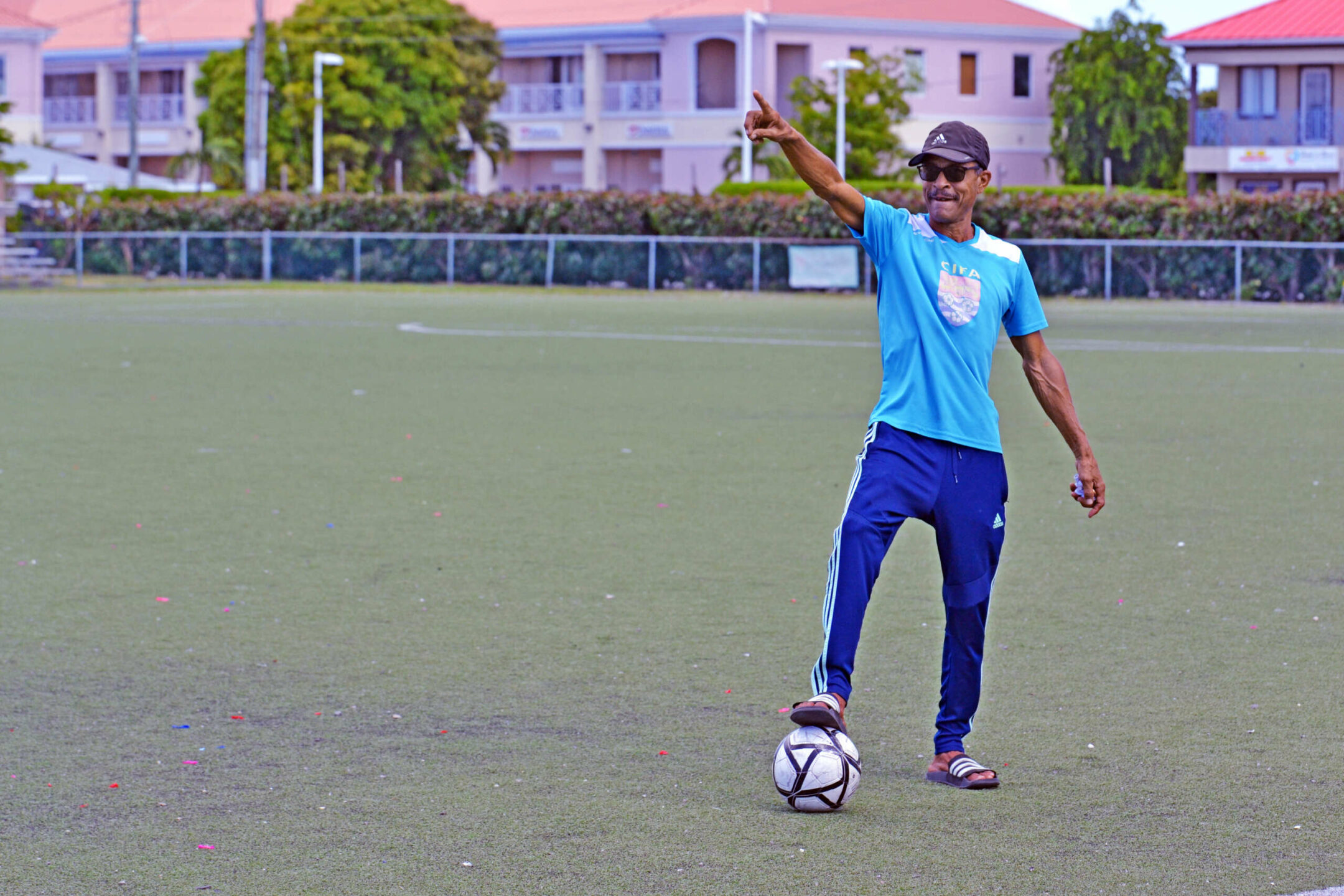
Football in Cayman changed for the worse?
He reflected on all the success his club had achieved during a time when he said football was popular because it had more to offer to youngsters looking to get exposure in the sport.
“One of the things that has changed from a coaching perspective is the dedication of the players; the players are not committed anymore, they find a bag of excuses when they have to train,” he said. “Years back… I had to literally run the players home. Today you have to beg players to show up for training.
The team had planned to compete for the CIFA Men’s Vice Presidents Cup earlier in the season, but only about eight players actually came.
“How can you prepare a team like that to compete for a cup, and only half of the guys show up?”
He said he understands that many of the players have job obligations and football has become an activity they choose to participate in when convenient. However, “back in the day” he said, they had similar responsibilities but a lot more to play for.
“In those days we would take the senior boys to Canada and play all the top college teams and we won that tournament three times when I was coach,” he said, adding that domestic clubs had more opportunities to compete overseas, at events like the Miami Classics and the Jamaican Milo tournament.
“Our players used to look forward to these events,” he said. “Our under-19 team even won the Miami Classics, and they were always aspiring to go to, but now it’s just a national team [that travels],” adding that there are some exceptions for the more financially privileged teams.
“Only the rich clubs go [overseas]… but the poor clubs don’t go anywhere with players anymore so there is nothing to aspire to, so it is hard to motivate them.”
Seymour has left a legacy of accomplishments in his career, including in the U21 league; the CIFA youth domestic leagues, where he led his team to three consecutive U15 league titles, while going undefeated; the Men’s FA Cup and Charity Shield; and numerous individual player awards.
Perhaps his most notable achievement in football came in 2015, when he led Cayman to its first national medal during the 2015 Caribbean Football Union (CFU) Boys’ Under-15 Championship. Cayman has not won a national medal since.
He was a Gold Medal of Merit and Pioneer of Sports recipient, coached many prominent Caymanians, such as Deputy Governor Franz Manderson, Cabinet Secretary Samuel Rose and youth activist Michael Myles.
But according to Seymour, those achievements have been disrespected and disregarded by people who could have used their influence to help the sport advance in Cayman.
Gillie lashes out at detractors

“[CIFA and the government have] discriminated against us, saying we are a ganja team and that we are this and that,” Gillie said, noting that despite that apparent bitterness towards his players and his style of coaching, his club still dominated on the field.
“Those inside of CIFA and the rest of them within all those clubs who we were beating on the field wouldn’t stop until they mashed up my club,” saying all he does is “curse”.
“So, all the good work I have done all these years, that is how you class me, when I have the only medal for Cayman at the CFU and a gold medal of merit. All the many hours I have spent from my family, all the sacrifices, all the courses that I have taken for football in Brazil, in Canada, courses in Cayman and [cursing] is all I do? That is discrimination and that is what destroyed our football.”
He recalled a time when his team won the FA Cup, which came with a $2,000 prize.
“We didn’t get one dollar out of that $2,000 to even buy the boys some pizza to honour their victory because the football association deducted the money from what they said the club had owed in yellow cards and red cards.”
Within the last 15 years, Seymour said that only two Cayman politician has ever helped him with his club.
“The only politician from George Town that came and assisted me with my programme was Mike Adam, and McKeeva Bush.
“The other one that did anything for the footballers was when Dr. Frank McField started to give the national team some incentive to come to training with a little money. But even Dr. Frank didn’t come down to the Annex and ask if I needed any help with my programme.”

“A lot of the boys pulling guns today were top footballers”
Abandoning the underprivileged
The Cayman Islands football scene has had its fair share of dark clouds, most recently when seven people were shot during a game at the Ed Bush Stadium.
Seymour believes the underlying cause has deep roots, noting the discrimination against young players, often called ‘bad boys’, led them to quit the sport they loved.
“Instead of [the government and CIFA] saying, ‘Coach Gillie, how much more money do you need to keep these boys in the programme?’… what they did was discriminate… [against] the boys,” he said, which he believes led some of the young men to do “bad things”.
Seymour pointed to the corruption scandal involving Jeffrey Webb, the disgraced former FIFA vice president, and president of CONCACAF and CIFA, was the beginning of Cayman football falling apart.
“Jeffrey Webb put a monkey wrench in Cayman’s football when he and his entourage started taking the money and doing all these things instead of spending it on the boys.
“A lot of the boys pulling guns today were top footballers. If I go to Northward [Prison], you will hear my name ring across…you will hear ‘Coach Gillie in the house’.”
Related Videos













Thank you for such an informative and well-written article. It is extremely sad to read, and I wish government were a little more pro-active regarding the health and well-being of Cayman. A quick look around will show how little exercise is being taken and how little regard there is for this aspect of health.
I hope those boys get a new coach with a view of what youth athletics is all about.
I coached my sons team for years and winning a trophy was never my objective. Most of the young men on the team came from broken homes; the 6 hours a week that I had them was more time than most would have spent with their fathers in a year. My job was really to be a mentor and life coach, winning was fun when it happened but low on the priority list.
What made me want to coach? One of my sons coaches just yelled and berated the boys whenever they messed up without teaching them. Next year I volunteered as an assistant coach and provided constructive criticism and encouragement.
I soon realized that many of the kids had emotional issues that were kind of solved or improved along the way. The year after I was the coach.
In our huddles, we talked about values and I made sure every player got to play equal time. I valued the kids who were not good at sports and did not have many friends equally as the good players. When the rest of the team saw the weaker team mates trying and actually getting better they earned the respect of his fellow team mates.
When a kid like that made a successful play, it was a big deal. When their team mates said good job it was life changing.
I am praying those boys don’t just get a new coach but a coaching team of men who will care for them like they were family.