

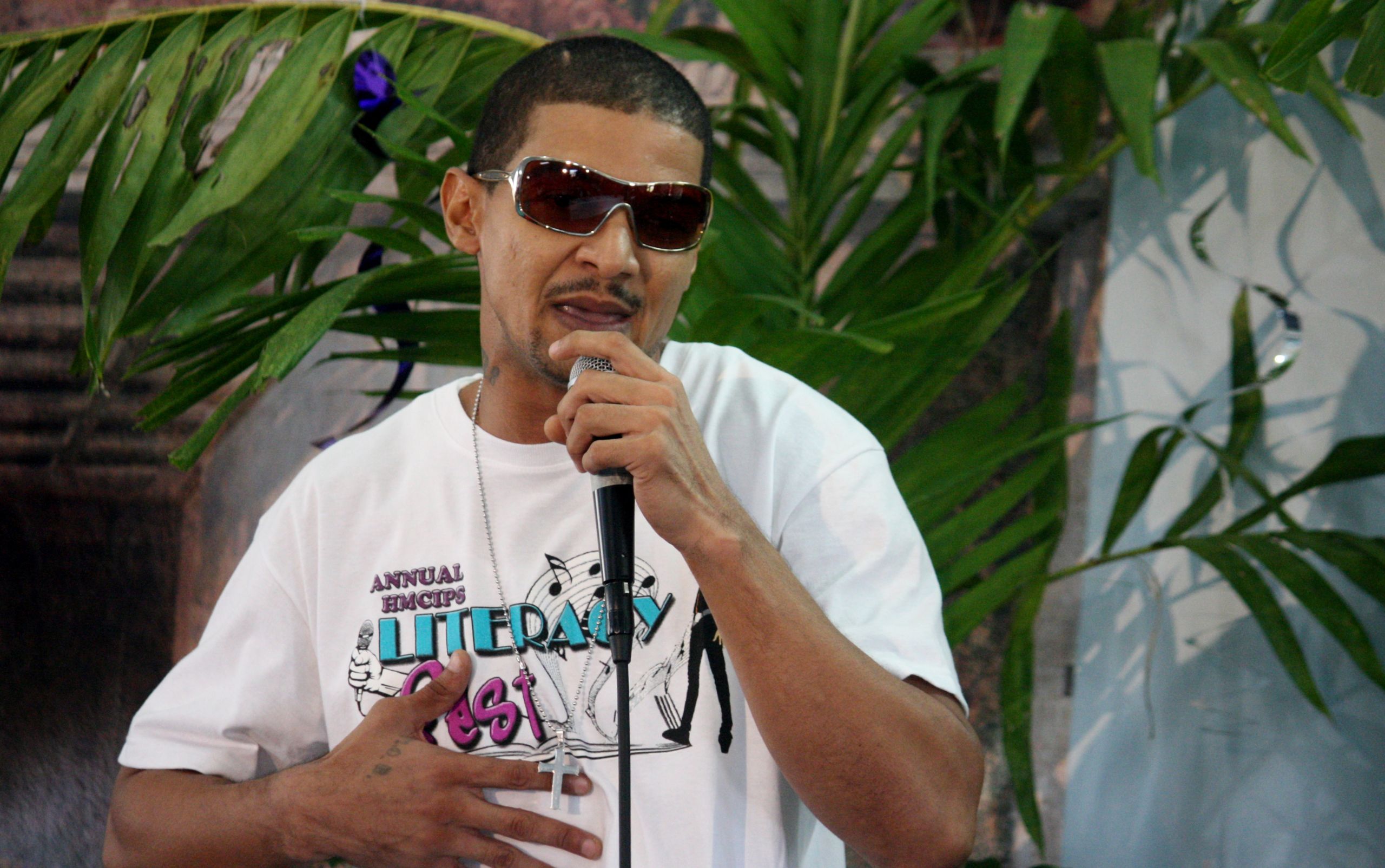
As the news broke about a mass stadium shooting in West Bay, a group of prisoners gathered around a small communal television to watch Cayman’s leaders promise swift action against gang and gun crime.
Among them was Devon Anglin, a former gang member serving life for murder.
“They brought all of the ministers out on the television and we were all watching in the prison and thinking, ‘What is missing here’?” The answer, Anglin believes, is the voice of the prisoners themselves.
As someone who grew up on Birch Tree Hill Road and got seduced into a world of guns and drugs, Anglin believes he has a powerful message to impart to young people who glorify that world and think that the guns and drugs lifestyle is cool.
“I have had close friends and family members shot and killed. At that point the lifestyle is not cool any more. It’s at that point that you realise that all that glitters is not gold.”
Anglin estimates he has lost 15 close friends and family to gang violence.
“When it is your family, your friends and you are watching them get lowered into the ground it really hits home. They have been with you every day and you are never going to see them again,” he told the Compass.
“At that time, it is natural to want to retaliate, but violence only begets more violence. It doesn’t solve problems; it leads to more problems, to more hurt, more pain, more despair, more sorrow.”
Anglin is serving a life sentence for shooting and killing Carlos Webster at the Next Level nightclub in 2009.
He was 22 at the time of the murder. He will be in his 50s when he is released from prison. “A one-second decision can bring a lifetime of regret,” he said.
‘The prison is full of people who thought they couldn’t be caught’
Within the walls of HMP Northward, where he now preaches at the prison chapel as often as called on, he says he is focused on sending a positive message to fellow inmates who he hopes will leave the prison and positively impact society.
What moves him most is when he sees men, who were children before his incarceration, coming into prison for gun crimes.
“I just wish I could have talked to them, I wish I could have reached them before they came in here rather than after,” he said.
“People used to tell me ‘you will end up dead or in jail’ and I would say ‘not me’, and you know the ones that said they wouldn’t end up in jail? Well, the prison is full, it is over capacity, and they are in here with me.
“And life is not easy in here. This is not a hotel, despite what people might want you to believe.
“The ones that thought they couldn’t get killed, they got killed. Their families will never see them or speak to them again. This is the reality of the guns-and-drugs lifestyle.”
Message for young people
Anglin got a rare opportunity to talk to young people at John Gray High School at a special presentation in 2017.
“The principal said that the kids don’t normally pay attention but that when I spoke you could hear a pin drop,” he said, “but that was because I was not speaking from a distance.
“I used to be at John Gray. I was a top student. I didn’t wake up one day and decide to be a gangster. It was a series of events that led to one bad choice after another, to that lifestyle and to where I am now.”
He said he had started hanging out and smoking weed with people in his neighbourhood and ended up getting kicked out of school. From there he started selling drugs to get by and got embroiled in a world of crime.

By the time he realised how far in he was, it was too late to get out.
Even though he was part of the Birch Tree Hill gang, then battling with the Logwoods gang in West Bay, Anglin says those on either side all grew up together.
Some were friends from childhood, others were family, but “drugs got in the way”, he said.
After nearly 15 years inside, Anglin has had plenty of time to reflect on the path his life has taken.
Now he believes his purpose is to help Cayman’s youth from making the same mistakes and Cayman’s leaders to understand the causes that lead to these mistakes and how to prevent and intervene in them.
The battle for hearts and minds
He said police enforcement would not fix the island’s gun and gang issues.
“The police can pitch a tent anywhere for a few months and eventually things will quiet down. It will go ‘back to normal’, but that is a superficial peace for that moment. Until the next event.”
“It is not about military force – it is about hearts and minds,” he said. “It’s about addressing the issues they are dealing with.”
That’s where Anglin believes he and other prisoners can help by going into schools on a regular basis and talking to young people with a voice and perspective they recognise.
“This is something I take seriously. I believe God gave me a duty to do. That’s where I am at, I am in it for real, for real.
“A lot of these children are intelligent, they just never had the proper support. I know that story very well. A lot of us in here know that story very well.”
Family links
Kattina Anglin, Devon’s mother, is on her own journey of redemption.
Pregnant at 14, she was kicked out of school, and then struggled with drug addiction for decades from when her son was young. Though the pair are now very close, she admits she wasn’t always there for him when he was growing up.
Anglin turned her life around, getting free of drugs and qualifying as a lawyer.
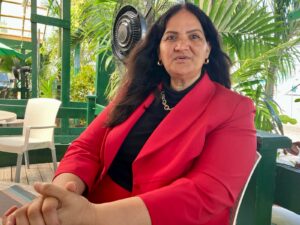
She argues that Cayman’s political, church and community leaders need to focus on intervention in the chaotic lives of young men falling into a world of crime.
While she acknowledges her own failings, it is also true that in any society a certain percentage of parents will be absent, either because of their own drug and health issues, imprisonment, or simply working to feed multiple children on low wages.
“There is room for the country to do more to step in with children and parents when they are falling,” she said, citing initiatives like the SNAP – Stop Now and Plan – intervention programme as examples of the kind of work that could be expanded.
“Yes, parents fail, but when parents fail, what do we do as a society to fill the gaps and provide these children with the opportunities they need to be productive members of our community?
“It is then that the village must step in to raise the child, providing the care and support that the child needs. If we don’t invest time, money and resources in them in their youth, we will eventually pay the price but it will be most higher in the future.”
She suggests mediation between rival factions of youths on Cayman’s streets would be a far more effective strategy than increased police presence or anti-gang legislation if the goal is a “true peace”.
Anglin argues there are social and financial benefits too, to focusing on mediation and intervention in the lives of young people at risk.
She suggests anti-gang legislation is ineffective because Cayman doesn’t have gangs in the sense of the criminal syndicates seen in the US and other countries.
“These are kids that grew up in certain neighbourhoods and hang out together, they are not the mafia,” she said.
“They are young, angry and driven by fear for their lives in some instances and caught up with the ‘gangsta glitz’ in other cases. They need support and intervention that deals with their issues, hearts, and minds… not legislation.”
Related Videos













But we could not find the time to support or fund a Youth Crime Prevention Programme, delivered by Youth Anti-Crime Trust (aka Youth ACT), in the schools. The chickens coming home to roost.