

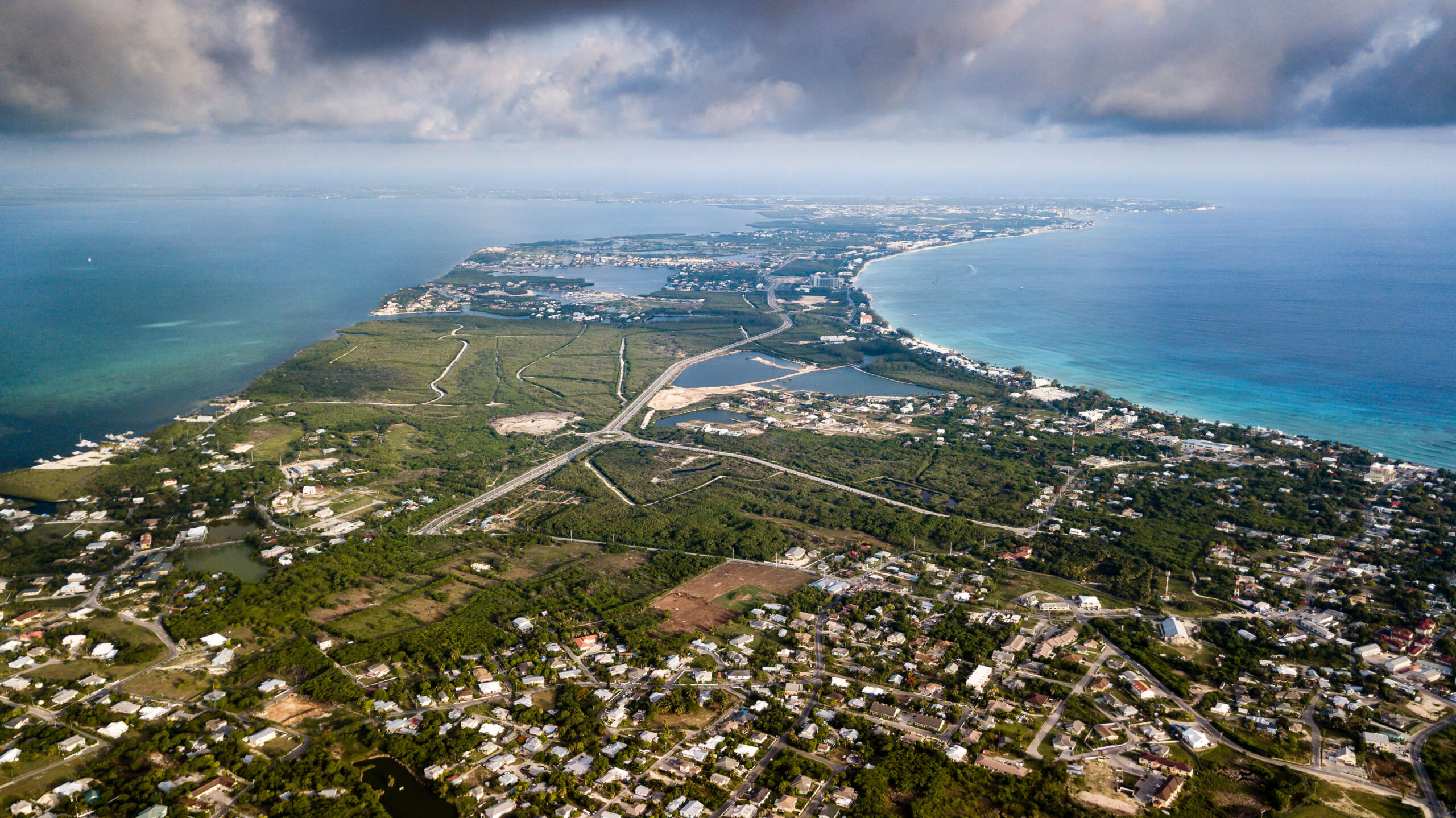
A draft document that may form the basis of a new national development plan – the first in 28 years – has been released by government for public feedback.
The draft Planning Statement, which forms part of the overall ‘Plan Cayman’, goes on the road over the next two months, with a series of public meetings across all three islands.
Since the last development plan was drawn up, Cayman’s population has grown by more than 130% from about 36,600 in 1997 to 84,738 by the end of 2023, according to the latest Economics and Statistics Office’s Labour Force Survey.
In those intervening years, the islands have also seen the addition of major infrastructure and a development boom, with the inevitable resulting impacts on the environment and roads.
Those are among the issues the draft plan aims to address, according to the government.
The document notes that the vision of Plan Cayman is to “maintain and enhance quality of life in the Cayman Islands by ensuring that development promotes the most desirable balance of economic, social and environmental outcomes, while safeguarding the culture, health and general welfare of the people”.
The draft plan, drawn up by the Central Planning Authority, the Development Control Board which oversees in the Sister Islands, and the Ministry and Department of Planning, is a 30-page document that outlines planning zones and ‘overlay’ zones, as well as other considerations, such as the subdivision of land, transportation and infrastructure.
The precise location of these zones will be mapped out at a later dates when area plans will be drawn up and presented to Parliament for approval.
There have been several efforts over the last three decades to update the existing 1997 Development Plan, but none have succeeded. (See timeline below.)
According to a government press release issued this week, the new draft plan comprises three elements:
- Planning statement (currently available for public consultation), which is a “high-level policy defining land use zones and identifying land use priorities for Cayman”;
- Area plans and zoning map, which includes detailed policies for different locations in Cayman and a map assigning land-use zones;
- Development and planning regulations – the legislation to support the planning statement, area plans and zoning map.

Zones
The draft document expands on the types of zones outlined in the 1997 plan, and includes agricultural, residential, commercial and industrial zones.
Under the draft plan, the kinds of residential zones are increased from three to five, with estate plus single-family, low-density, medium-density and high-density residential included. The previous plan only specified low-, medium- and high-density residential zones.
The document noted that the new estate residential zones would address the need for large-lot, single-family residences typically located outside of urban areas, while duplexes and multi-family residences would not be allowed in single-family residential zones.
Within the low-density residential zones outlined in the draft plan, the Central Planning Authority “may permit” detached houses, duplexes and, “in suitable locations”, multi-family residences such as apartment buildings and townhouses.
Industrial zones would include light, heavy and transit industrial, while commercial zones would feature general, neighbourhood and marine commercial.
Overlay zones
‘Overlay zones’ differ from planning zone classifications in that they refer to areas with additional considerations and requirements.
These include a natural resource preservation overlay, which provides a mechanism to ensure that development is “sensitive to natural resources and ecological feature”; an airport approach overlay to ensure “safe and compatible land use within the approaches of airports”; and a heritage preservation overlay “to preserve and protect heritage sites and structures”.
Also included are overlays for land subject to acquisition and for sensitive coastlines.
The document notes that the inclusion of sensitive coastline overlays is to “ensure that proposed growth in identified vulnerable coastal areas is balanced with hazard risk reduction considerations that aim to prevent coastal erosion”.
Cayman has seen a lot of development along its coastlines over the decades between the 1997 plan and now, leading to concerns about coastal erosion and the impact of rising seas due to climate change.
The Central Planning Authority over the years has come under fire from a number of quarters for granting permission to developers to build hotels, condos and seawalls that some consider to be built too close to the sea.

Tourism zones
To cater to one of the main pillars of the Cayman Islands economy – tourism – the new plan expands on the classifications of the tourism zones.
There would be three tourism zones – hotel, neighbourhood and resort residential.
The hotel/tourism zones would be areas of “high-intensity tourist development, including large resorts, hotels, restaurants, nightclubs, entertainment facilities, condominiums and recreation facilities such as golf courses”.
The document notes that the development of hotel/tourism zones “will be carefully regulated to ensure that new buildings are guided by the needs of the industry”.
It also points out that the Central Planning Authority, in considering applications in such zones, would “ensure that waterfront developments are designed to avoid interference with natural coastal processes and reef systems”.
Neighbourhood tourism zones would allow for small-scale hotels and resorts, condominiums and supporting commercial uses and apartments.
Resort residential zones would have the “general appearance of residential development in scale and massing”. The types of developments allowed in these zones would include detached and semi-detached houses, beach resorts, guest houses and apartments, according to the draft plan.
Public meetings
The upcoming public consultation meetings – in June and July – will focus on the updated Planning Statement document, which, the government says, is the first phase of the development plan review process.
Once that step is completed and area plans are drawn up, each of those will be made available for public consultation, according to the government press release.
The dates of the public meetings on the Planning Statement are as follows:
• West Bay: 4 June, 7-9pm, Sir John A Cumber Primary School
• George Town: 6 June, 7-9pm, George Town Constitution Hall
• Savannah: 10 June, 7-9pm, Savannah United Church
• Bodden Town: 13 June, 7-9pm, Bodden Town Church of God
• North Side: 4 July, 7-9pm, Edna Moyle Primary School
• Cayman Brac: 8 July, 7-9pm, Aston Rutty Centre
• Little Cayman: 15 July, 7-9pm, Little Cayman Beach Resort
• East End: 18 July, 7-9pm, William Allen McLaughlin Civic Centre
There will also be virtual public consultations via the Cayman Islands government’s live Facebook and YouTube feeds from noon to 1pm on 18 July.
“We encourage all residents from Grand Cayman, Cayman Brac, and Little Cayman to participate in these critical discussions. Your insights and feedback are crucial as we strive to refine the framework of Plan Cayman to ensure effective support for sustainable development across our islands,” the government stated in its release.
Timeline of Cayman’s Development Plan
1971: The Development and Planning Law is passed, establishing the Central Planning Authority, which is tasked with preparing a development plan for the islands.
1977: Cayman’s first development plan is drawn up.
1991: A review of the 1977 plan begins.
1997: A new development plan is approved.
2001: Central Planning Authority begins a review of the 1997 plan, with volunteer district sub-committees being formed, as well as a Development Plan Review Committee.
2003: Central Planning Authority prepares final amendments in preparation for a development plan 2004. This fails to result in a new plan.
2009: A Planning and Regulations Committee, chaired by the late Burns Conolly, forms to review planning laws and regulations, while the Planning Department carries out a review of the development plan. Again, this does not result in a revised development plan.
2018: The Progressives-led administration begins its ‘Plan Cayman’ exercise to develop a national planning framework for all three islands.
2019: The Central Planning Authority approves a draft of the National Planning Framework.
2022: The Central Planning Authority reviews another draft National Planning Framework, which is then forwarded to the Ministry of Planning.
2023: In February, a finalised draft of the National Planning Framework is published.
2024: A development plan ‘Planning Statement’, dated March 2024, is released for public consultation in May.
For more details on the consultation schedule and how to get involved, visit https://www.plancayman.ky. The closing date for comments on the Planning Statement is 30 July.
Related Videos










Where is the George Town “Constitution Hall?.
Constitution Hall is what used to be known as the George Town Town Hall. It was renamed in 2019.
Is SMB going to be fixed in this master plan? There southern 1/3 does not exist and it is not 3 years and counting.