

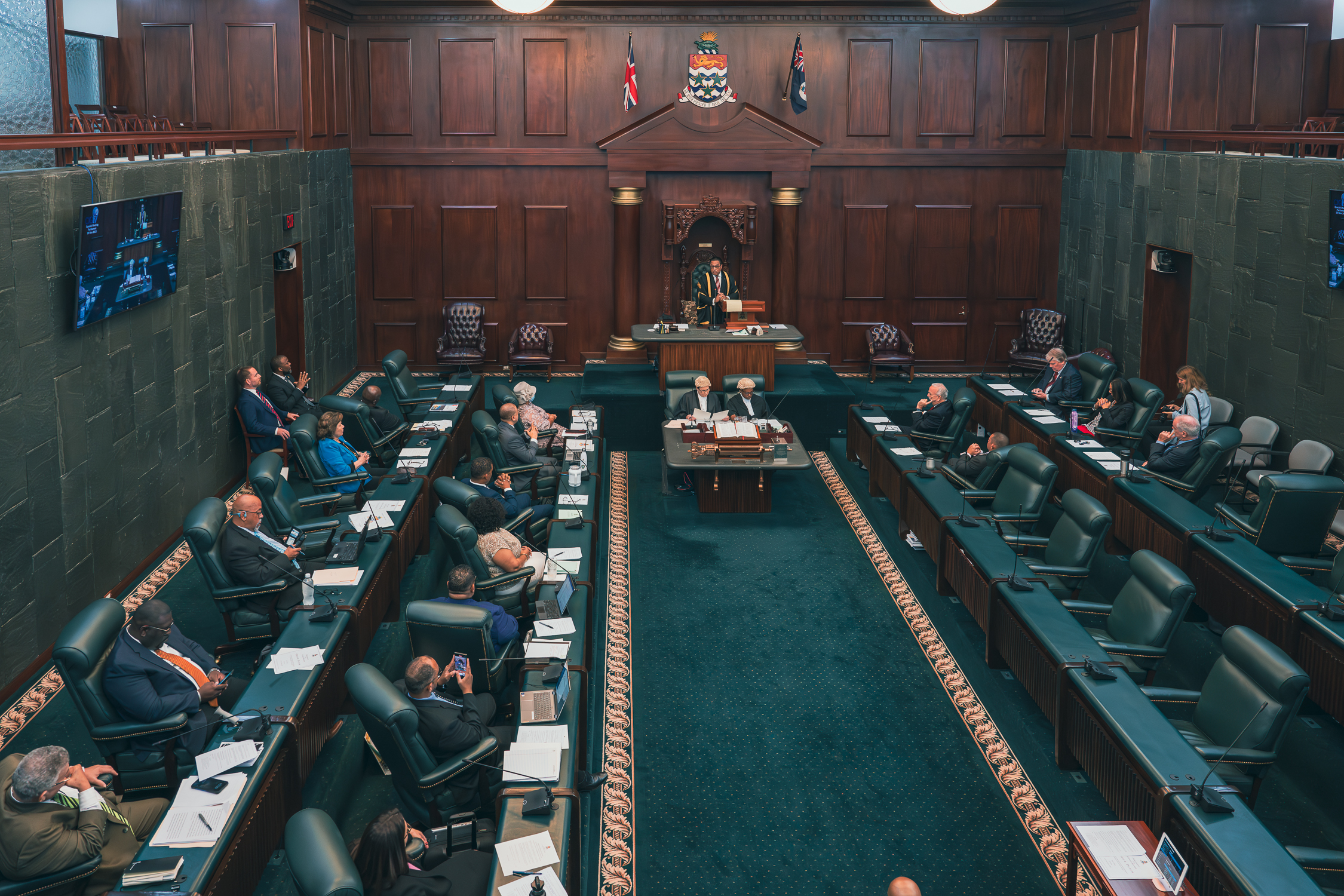
Members of Parliament could soon be restricted in their duties as justices of the peace under legislative changes aiming to protect the separation of powers between the elected government and judiciary.
With the majority of sitting MPs serving as justices of the peace, the proposed changes, which are contained in the Summary Jurisdiction (Amendment) Bill, 2024, seek to restrict lawmakers from carrying out any functions with implications for criminal or civil investigations or proceedings.
Government, in a statement to the Cayman Compass on the changes, said the decision was taken to provide a mechanism for Members of Parliament to become JPs ‘ex officio’, without the need for a lengthy nomination and interview process.
“As part of that initiative, Cabinet also wishes to ensure that appropriate safeguards are in place to protect against any risk of perceived (or actual) conflict of interest when an MP performs the functions of a JP,” it said via an email Thursday.
It added that the purpose of the bill is to increase the number of justices of the peace available to assist the community with matters such as taking affidavits, certifying documents, taking declarations and administering oaths.
“Cabinet wishes to ensure that there are sufficient JPs available to provide services of this nature, free of charge, to the community (notaries public are permitted to charge for their services),” it added.
Clear parameters
The law changes, which have been gazetted, implement parameters for the exercise of certain powers by serving lawmakers who are appointed as justices of the peace, thereby “avoiding any conflict with their role as Members of Parliament and protecting the principle of separation of powers”.
Under the proposed changes, serving MPs who are justices of the peace shall not exercise “any jurisdiction in relation to criminal or civil investigations or proceedings, including sitting on any court or tribunal or presiding at trials; and making, issuing or otherwise authorising summonses, warrants, orders, convictions, [bonds] and other processes of a court.
The changes also seek to prevent sitting MPs who are JPs from executing any powers, functions or duties of a justice of the peace under specific laws – the Elections Act (2022 Revision), the Parliamentary Pensions Act (2016 Revision) or the Police Act (2021 Revision) – and “any other legislation which otherwise require the Member of Parliament to exercise judicial or quasi-judicial functions”.
Government, in its statement, pointed out that since 2015, all JPs, which include sitting MPs, have been required to adhere to a written code of conduct, and to comply with prescribed training requirements.
“One aspect of the training involves the importance of acting impartially, without prejudice or bias. We are not aware of any instance, either before or after these requirements were put in place, where a JP has acted in a manner which could give rise to conflict of interest,” it added.
The proposed law changes, however, do not invalidate or affect the exercise of certain powers, functions or duties of justices of the peace occurring prior to the enactment of the amended legislation.
The amendments also allow for former MPs to retain the JP title and continue to serve as a justice of the peace “unless there are reasons in law that would otherwise render the person unfit to serve”.
The law changes clarify that MPs, once out of office, can exercise all the powers and carry out all the functions and duties of a justice of the peace without the restrictions that were imposed on them while they served in Parliament.
The amendments are expected to head to the next sitting of the House, which begins on 24 June at 10am.
Government, in its statement, added that, in the event that the Bill is passed, “we anticipate that appropriate training will be provided”.
Editor’s note: This article has been updated to include government’s response on the proposed amendments.
Related Videos










In addition to this, there should be a maximum term limit of 8 years for all elected MPs. This will eliminate the career politicians whilst avoiding the negative impact a career politician would bring to the table.