

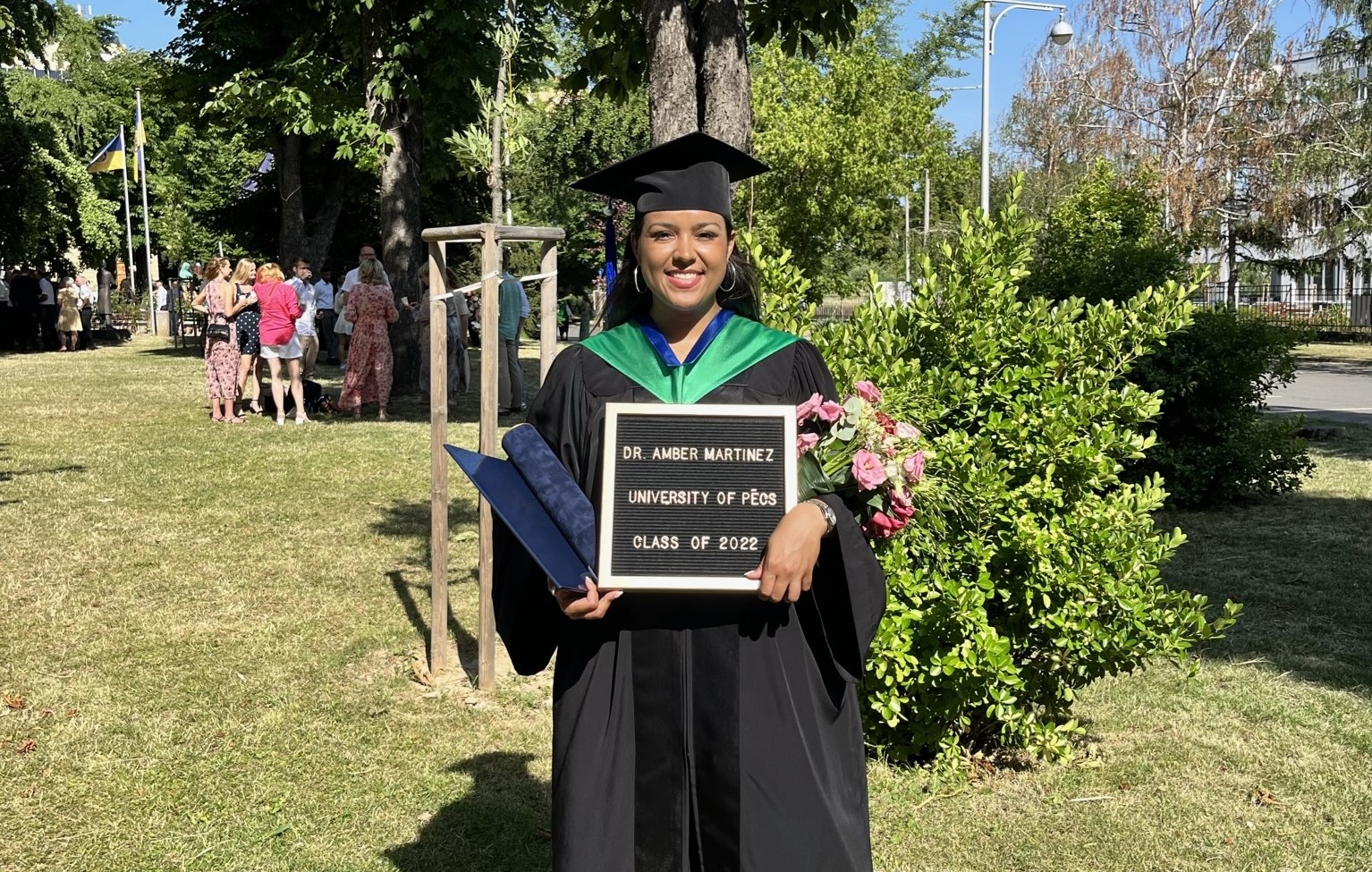
A piece of metal that shot from a defective airbag “like a bullet” was found lodged in the neck of the late Dr. Amber Martinez, who died in a fiery car crash in East End in 2022, a coroner’s court jury heard.
The jury delivered a verdict of death by misadventure on Wednesday after hearing three days of evidence, during which it was revealed that the Honda Fit that Martinez was driving was subject to a worldwide recall of faulty Takata airbags.
Forensic pathologist Dr. Ashwyn Rajagopalan told the jury of three women and four men that it appeared that the shrapnel from the airbag inflator caused the fatal injury that took the life of the 29-year-old Health Services Authority doctor.
Rajagopalan, in his original findings following the autopsy on the body, had stated Martinez died of blunt force trauma, most likely caused by the collision of her 2008 Honda Fit into a tree at the bottom of a steep embankment along the Queen’s Highway on 21 Oct. 2022.
However, he subsequently amended his findings to indicate he now believed the fatal injury to her neck had been caused by the projectile from the airbag inflator, which likely shot through her throat and fractured the front of her C3 vertebrae, causing instantaneous death.
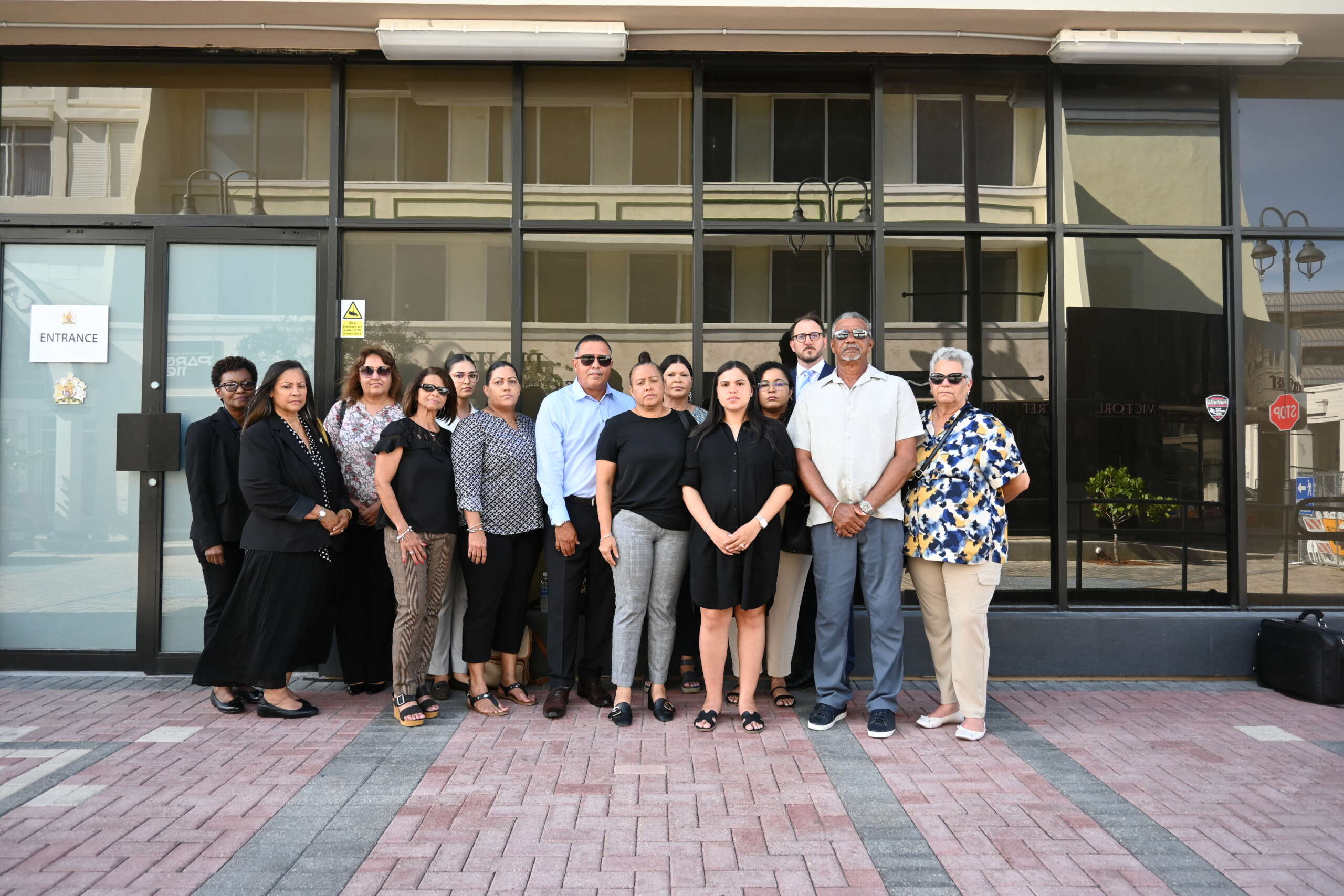
He told the court there was no sign of soot or smoke in her lungs or airways, indicating she was dead before her car was engulfed in flames, a few minutes after her vehicle veered off the road and down a steep slope on the Queen’s Highway around 6am that day.
She died within 200 feet of her home, having just left there to drive to work in a car lent to her earlier by her godfather, Robert Campbell.
Unbeknownst to Campbell, the car was subject to the Takata airbag recall. It had been previously licensed and inspected several times at the Department of Vehicle and Drivers’ Licensing centre on Crewe Road. Campbell had intended to have it inspected and licensed again on the day of the fatal crash, the court heard earlier.
‘Unbelievable coincidence’
The pathologist said he had attributed little significance in his initial report to the piece of metal found in Martinez’s neck, thinking it had been transferred to the body during the blaze or during removal from the vehicle.
That piece of metal, measuring less than one inch and weighing 20 grams, resembled a small shattered metal and plastic cap. When it was recovered from the victim’s neck, it still bore a label with a partial barcode, and a code number was still visible.
This was later identified by an airbag expert, hired by the family, as being a component from the Takata airbag inflator inside the steering wheel.
Rajagopalan told the court it would be an “unbelievable coincidence” if a metal projectile found at the site as the fatal neck injury was not responsible for the doctor’s death.
“It is my view that if the metallic projectile recovered from the neck is essentially a piece of the car that can act like bullet under its own power, so to speak, it would certainly be a better explanation than motor vehicle trauma or flexion extension injury sustained during the crash,” he said.

Hot, humid conditions degrade material
Michael DiCicco, the US expert witness hired by the Martinez family who confirmed that the metal fragment was a part of the airbag, explained in his evidence on Wednesday via Zoom that the explosive material – or propellant – that enables the defective airbags to deploy degrades in humid and hot conditions, causing over-pressurisation.
He said the material typically begins to degrade and “swell up like a marshmallow over a fire” after about seven years because, as it is not adequately hermitically sealed, moisture gets in. This causes the material to change shape from a hockey puck-type shape to a ball shape, and splits apart the booster tube in which it is held.
“The tube just gets accelerated like a bullet,” DiCicco said, with the top of it typically striking the vehicle’s occupant in the head, neck or upper chest.
In his opinion, he said, the airbag had deployed when the car hit a tree on the embankment’s slope; although by his calculations, the car would have been going at a speed that would normally be too slow to trigger the airbag deployment.
Traffic accident reconstructionist Collin Redden, who also gave evidence this week, said the deployment of the airbag could have been triggered as early as when its undercarriage scraped the asphalt road surface as the left front wheel of the car began descending the slope or as late as when it struck a tree more than five feet down the embankment.
No time to react
DiCicco said the inflator can fire faster “than the blink of an eye”, in .03 seconds, meaning the driver would not have any time to react.
The court had heard from Redden that it was likely Martinez had been incapacitated in some way, based on the fact that she had not accelerated, braked or turned her steering wheel in response to the car beginning to veer off the road.
The jury also heard evidence that Martinez had been wearing her seat belt at the time of the crash, there were no signs of alcohol or drugs in her blood stream, she had not been on her phone and she was not speeding.
After the car fire was put out, her body was found to be slumped between the driver’s and passenger’s seat.
DiCicco told the jury that based on the position of the piece of metal found in her neck, she must have been sitting upright when it fired.
“She cannot have been slumped over when the airbag went off,” he said.
DiCicco told the jury that, in the United States, there had been 23 fatalities and more than 400 injuries reported in relation to the faulty Takata airbags.
Describing the ejection of the inflator part during the deployment of the faulty airbags, he said, “It’s an explosive event, so it’s literally like a bullet or grenade going off.”
DiCicco noted that the Takata airbag recall – which affects many makes and models of vehicles, not just Hondas – first began in the United States in 2003/2004, and became official in 2015.
He stated that in the US, priority on replacing the recalled airbags was given to southern states like Florida, where temperatures and humidity are higher than in northern states.
Family’s grief
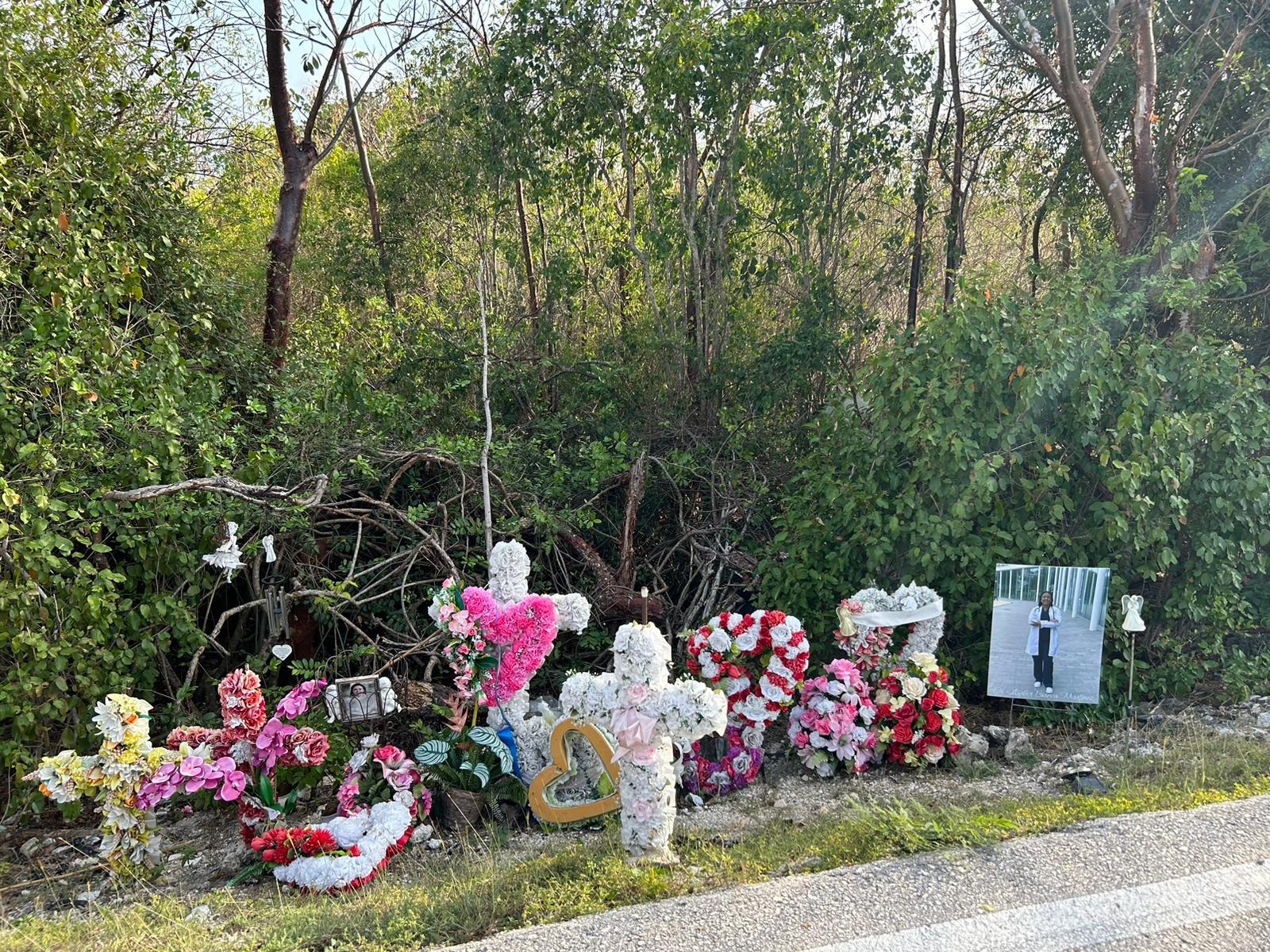
Martinez’s parents and other family members were in court throughout the inquest.
The family’s efforts in hiring the expert and lawyer to determine the origin of the metal fragment was what led to it being identified as an airbag part.
Speaking after the jury had returned their verdict, father Barry Martinez told the Compass the family wondered how many other people had been affected by the potentially deadly airbag inflators, and said they wanted to ensure that everything possible is done to rectify the problem.
He said he hoped changes could be made to ensure locating cars that should not be on the road.
“Some people believe it’s troublesome to themselves because now they have to go through X, Y and Z, and inspections, and stuff like that, but you may be saving a family member’s or your own life,” he said.
“Hopefully, nobody else will have to go through what we went through unnecessarily,” he added.
“Amber wouldn’t have expected anything else from us.”
Local car dealers, including Honda dealership Car City, have been carrying out replacements of the recalled airbags for several years.
Four days before the inquest began, the Department of Vehicle and Drivers’ Licensing published an announcement regarding the airbag recall, asking dealerships to help track down affected vehicles and replace the faulty components.
The DVDL stated that it would no longer license vehicles that are subject to the Takata recall unless the owner has documentation from dealerships proving that the airbag has been replaced or repaired.
‘Bright star’
Coroner Angelyn Hernandez, in her summing up of the case to the jury, described Martinez as a “bright star” who had everything to live for. She had recently graduated from medical school, had started working at the HSA and had been looking forward to being the maid of honour at her sister Chynna’s wedding a week later.
Hernandez told the jury the last words her father Barry had said to Amber were, “Be careful on the road”, as the road was wet.
After the jury delivered its verdict, Hernandez said she had a duty under the Coroner’s Act to send a report “to the necessary bodies so as to avoid any similar deaths on the island”, adding that she had already sent two similar reports regarding Honda Fits to the relevant entities.
Related Videos










It is a very sad situation, it seems to me that the car left the road and hit a tree. We have to ask why? Yes the airbag might not be 1oo%, but it deployed after the car left the road.