

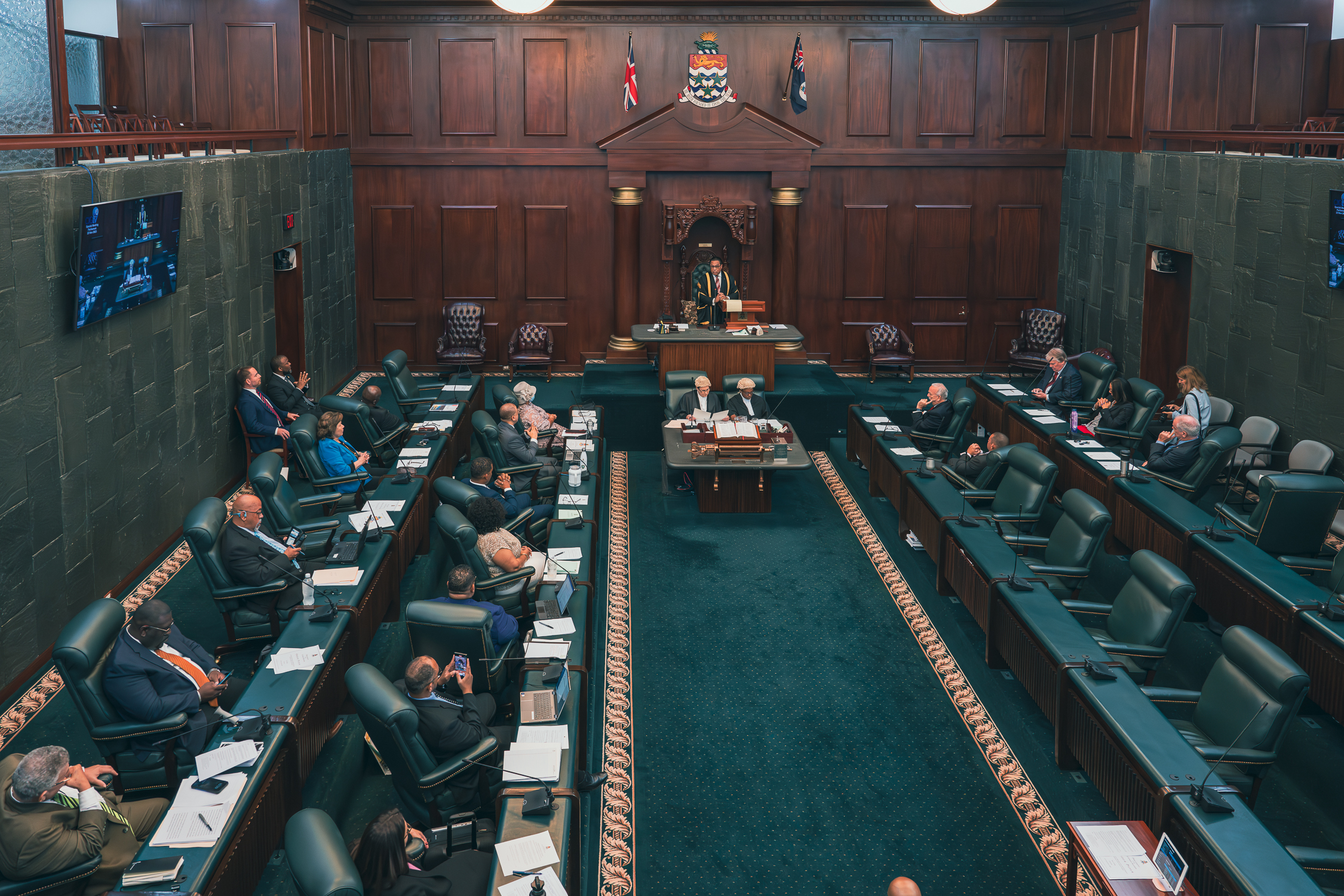
New law changes have been approved to limit the functions Members of Parliament can perform as justices of the peace, to protect the separation of powers between the elected government and judiciary.
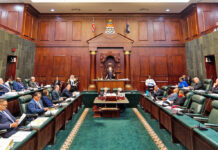
On Tuesday, MPs voted in favour of the Summary Jurisdiction (Amendment) Bill which restricts lawmakers from carrying out any functions with implications for criminal or civil investigations or proceedings.
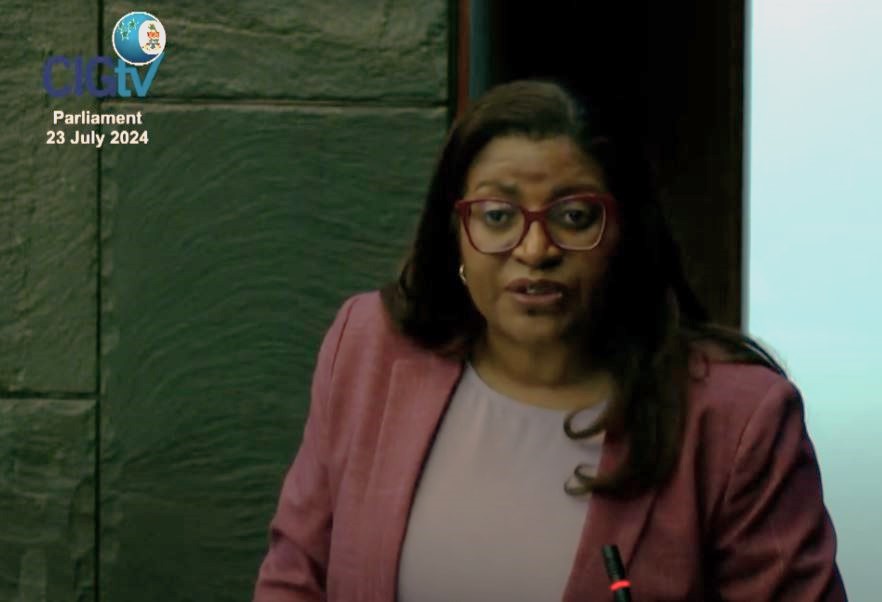
Acting Deputy Governor Gloria McField-Nixon, who piloted the bill in Parliament Tuesday afternoon, said it ensures that the adoption of a “streamlined approach” also respects the principle of separation of powers and offers MPs clear protection from difficult positions.
Though the changes allows for all MPs to be appointed as justices of the peace upon election and remain so even after they demit office, McField-Nixon said their roles and functions ought to be different from that of other individuals serving in that capacity.
Conflicts of interest
She explained that JPs may be required to perform other functions under the law which “may not be appropriate for sitting MPs to undertake”, such as being requested to preside over a criminal or civil case as part of a panel, sitting on a police disciplinary body or permitting cash seized on suspicion of being drug money to be released.
A glaring conflict of interest for MPs was the role that JPs play in having to witness the destruction of election documents as allowed under the Elections Act, McField-Nixon added.
“Some of these functions give rise to potential issues relating to the principles of the separation of powers. This principle requires that the functions of the three branches of government to be clearly divided. Keen consideration has been given to prevent any overlap of these roles and, equally importantly, the perception of such should these result in a real or perceived conflict of interest,” she said.
McField-Nixon said, in most cases, it will be obvious to an MP as it is for other persons who serve as JPs, when their impartiality may be called into question, if they undertake certain types of functions.
“In such conflicts, like other serving JPs, they may and will decline to exercise those functions. However, in some cases, an MP may be unaware of all the facts surrounding the manner in which they are dealing as JPs and their work could later be called into question,” she said.
To avoid those scenarios, some countries have taken a “very restrictive” approach to protect against the risk, by prohibiting elected leaders to act as JPs, McField-Nixon said.
The changes also increase the number of JPs that the public can access for services that will be free of charge.
Opposition Leader Roy McTaggart, who is also a JP, welcomed the law changes and the “safeguards” the legislation brings.
“I think that goes a long way towards enhancing the credibility of the office of a justice of the peace. I, myself have been a JP for more than 20 years. I think this really will go a long way to enhancing the respect that justices of the peace deserve in the role that they undertake,” he added.
The bill was passed without amendments.
Fiscal changes
Acting Premier André Ebanks piloted the Perpetuities (Amendment) Bill, 2024 and he also moved the Supplementary Appropriation (January 2023 to December 2023) Bill, 2024.
The amendments increases Cayman’s competitiveness in the trusts and estate planning sector by removing the mandatory perpetuity period of 150 years for many existing and future trusts.
He said the proposed change “would be advantageous” given the potential attraction of even sounder global trust business for the financial services industry.
“The ministry policy team found that other jurisdictions have implemented the change without negative impact on their international anti-money laundering ratings. However, if we need to adopt additional safeguards in due course, if standards change in order to maintain our favourable ratings, we shall do so,” Ebanks added.
The bill was passed without opposition or amendments.
Ebanks also introduced the Supplementary Appropriation (January 2023 to December 2023) Bill seeking Parliament’s approval for appropriation changes during the government’s financial year that ended on 31 Dec. 2023.
A total of 124 appropriation changes were recorded within that period, all of which were previously approved under the law by Cabinet and the Finance Committee.
The operating expenditure appropriation changes have a net total of $113.3 million while the capital expenditure and investment changes have a net total $9.1 million.
The changes included a $34 million increase in healthcare costs for indigents, seafarers and veterans and their dependents, $14.9 million for local and overseas scholarships, and $10.4 million for major roadworks.
Those transitions have to be reported to, and authorised by, the Finance Committee, which met on Wednesday.
Planning Minister Jay Ebanks also made a brief statement on supplementary funding of $450,000 for the NiCE project which was utilised between 8 and 19 April as well as $250,000 towards Hurricane Beryl preparation and recovery efforts on 8 July.
Related Videos








Before they are all appointed J.P.’s to increase their income, they should be required to finalise their Code of Conduct which is absolutely necessary if we are to have a responsible Parliament.