

A two-and-a-half-year court case involving illegal seawalls could conclude by the end of next month, a court heard on Thursday.
Magistrate Philippa McFarlane told Summary Court she would pass sentence by the end of November after she got updated estimates on what the damage caused by the work would cost and to decide on compensation.
“I am all but saying there will be a fine and there may be compensation,” McFarlane said, adding that, even though the prosecution had not asked for costs, she was obliged to consider the possibility.
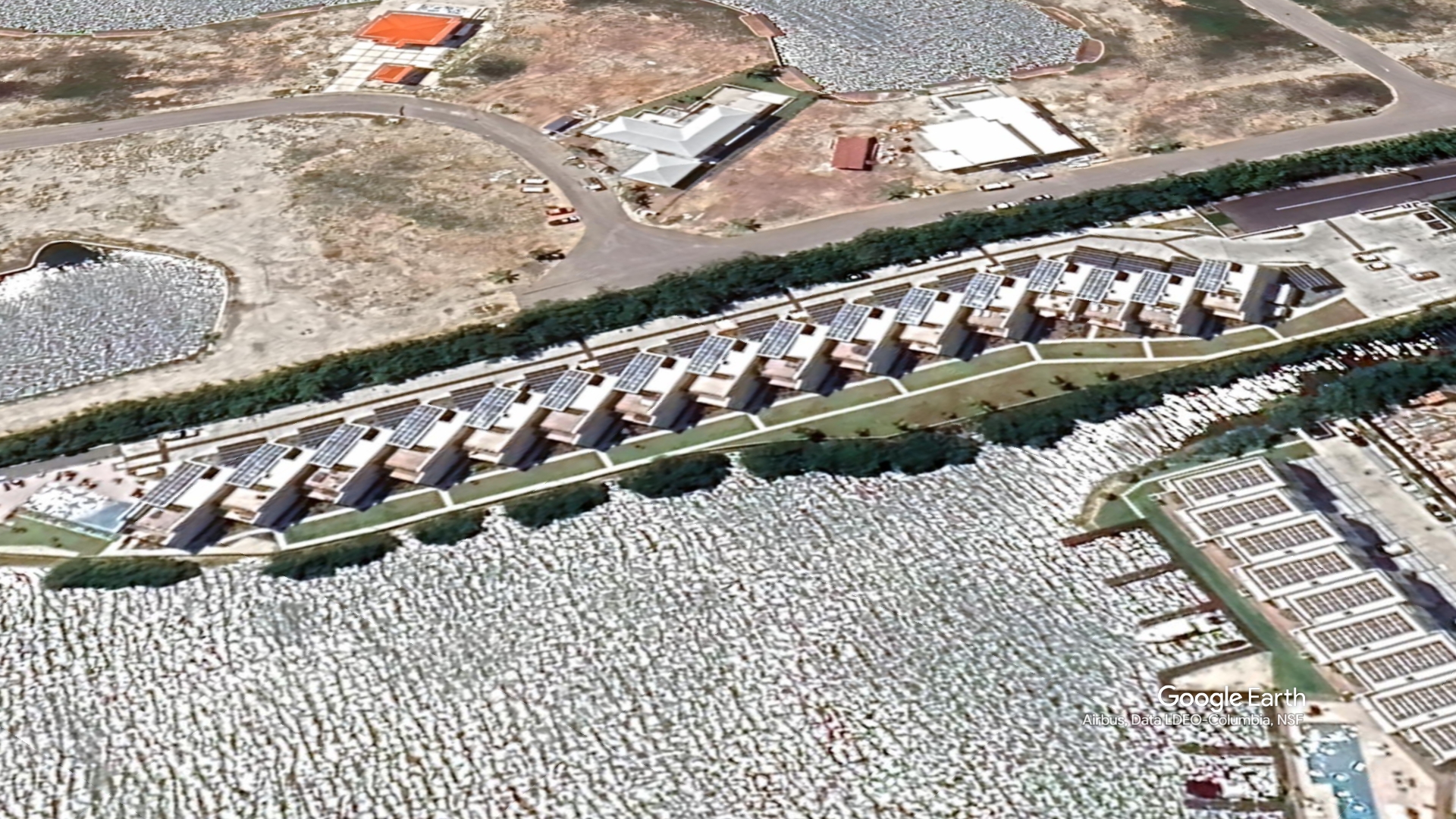
In August last year, Baer Development was found guilty of charges involving damage to plant growth and removal of coral, sand and gravel from Crown-owned seabed off the Allure apartment complex at Tropical Gardens in George Town.
McFarlane also convicted the firm on two charges of failure to comply with a cease-and-desist order in a case that involved 25 separate court hearings.
She said at the time she was sure Baer had acted illegally when it built two seawalls about two metres into the sea in 2020.
The work involved rockfill on Crown-owned seabed at the Allure apartment complex development on Grand Harbour in George Town.
McFarlane said she was “left with no doubt” that Baer had pushed on with the work in the belief that its application for coastal work would be approved.
She added that even after a cease-and-desist order was slapped on the firm in June 2023, the company failed to remove the seawalls and reinstate the area, which left gouge marks on the seabed.
Paul Keeble, who appeared for Baer, said that the area affected was small and that the work had not caused “a major environmental holocaust”.
He insisted, “This is not a case of a developer showing reckless disregard for the environment, tearing up seagrass and destroying mangroves.”
But Sarah Lewis, for the prosecution, said more than 1,700 square feet of marine life was affected by the work and that the damage to vegetation had been estimated at about $13,000 in 2020.
She said that figure would increase to “in the region of $18,000” if inflation were taken into account.
“The Crown would say that the offences were for commercial gain, all in relation to getting the development up and running and profiting from the development,” she said, adding that the charges also showed a pattern of “continued offending” and that Baer was a “high-profile developer”.
Lewis continued, “If a developer is able to essentially ignore orders made and essentially do what they want with land, there is a wider community impact.”
She added that any penalties imposed should be “punitive and deterrent”, noting, “That’s very important in this matter.”
McFarlane told the court, “I’m going to go away now and consider everything that has been said, primarily with a view to sentence.”
Related Videos












We have to protect our environment. If not us, who will? Let this case set a precedent to all developers they are not above the law and let us protect our environment. We would in any other situation i.e. cruelty to animals, abuse to women and men, discrimination, etc..
They should have to take the wall down and pay 50-100,000 so the next builder thinks twice before ruining nature
Tear the seawall down so the homes are destroyed?
A great way to discourage the development of lower priced homes.
Perhaps the reason the developer carried on was that they couldn’t wait any longer for the Planning Department to issue the permits.
Remember that Magistrate McFarlane said she was “left with no doubt” that Baer had pushed on with the work in the belief that its application for coastal work would be approved.