


A new training programme planned by the University College of the Cayman Islands aims to help create 1,000 greenhouses on island in a bid to bolster local food security and sustainability.
The programme, which UCCI plans to launch next year, will involve training farmers and budding entrepreneurs in greenhouse agriculture, so they can set up micro businesses growing fruit and vegetables that can be sold locally, thus decreasing the islands’ reliance on imported produce.
With 1,000 greenhouses supplying fresh, sustainable produce for the local community year round, creators of the programme believe Cayman’s dependence on food imports could drop significantly.
Food security
The urgency of making Cayman more food secure was highlighted by the acting deputy director of the Department of Agriculture, Demoy Nash, who says the “highest level of government” has deemed this a “national security priority”.
Speaking at the launch of UCCI’s new Sustainability Action Plan at the Compass Vault on Tuesday, Nash pointed out that Cayman, like much of the Caribbean, imports more than 90% of its food.
Of those imports, 80% comes from one single source, the United States, which would leave Cayman in a “very vulnerable” position in the event of a catastrophe where the supply chain from the US could no longer be relied upon, he noted.
Data from the Economics and Statistics Office shows that the value of imported food and live animals increased by 8.6% last year compared to 2022, reaching $263.8 million. This included a 10.4% increase in imported vegetables and fruit.
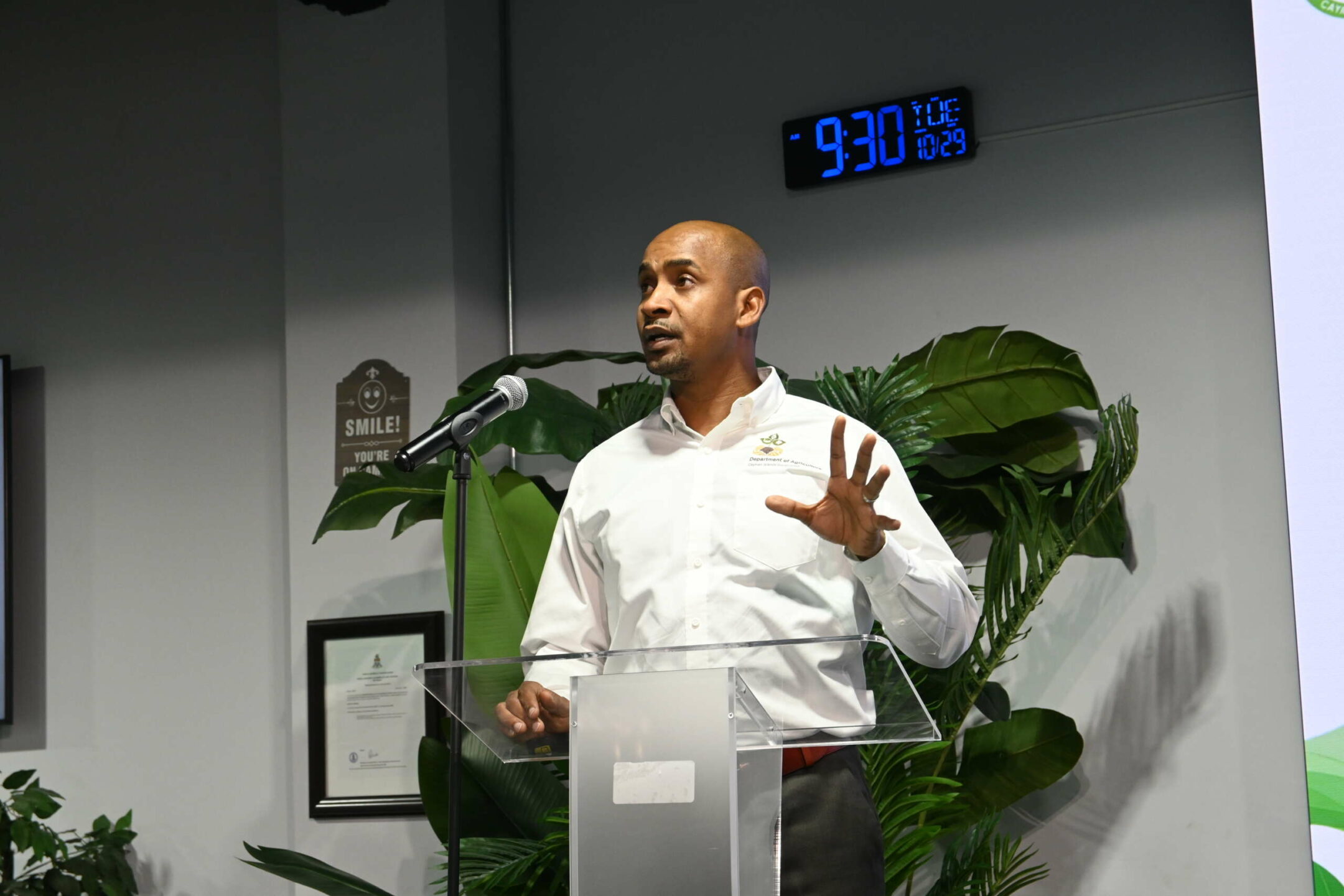
Nash said the way farming is done locally must change, and involve ‘urban farming’, where green growing spaces are created in an urban landscape, and ‘protected agriculture’, where crops are grown in controlled environments, like greenhouses or containers.
“The need for our food security to be treated with such great attention and to become everyone’s business is because we live in the second most disaster-prone area of the world,” he said.
He cited the devastation of local fruit trees in August 2021 during Tropical Storm Grace, “not even a hurricane”, and the impact of flooding on agriculture, as examples of how vulnerable Cayman is to the ravages of nature.
The loss of nutrients in food being imported in refrigerated containers is also an issue, Nash said, noting the results of the STEPS health survey, which have shown that seven in 10 adults in Cayman are overweight and one-third are obese.
“So, the way we do agriculture must change,” Nash said. “Coupled with how urban sprawl is increasing, we have less space available for agriculture – that will be the trend, so we have to resort to more sustainable practices.”
He added that the average age of farmers in Cayman is over 65, so there is a vital need to attract younger people into the agriculture industry.
Designing, building and operating greenhouses
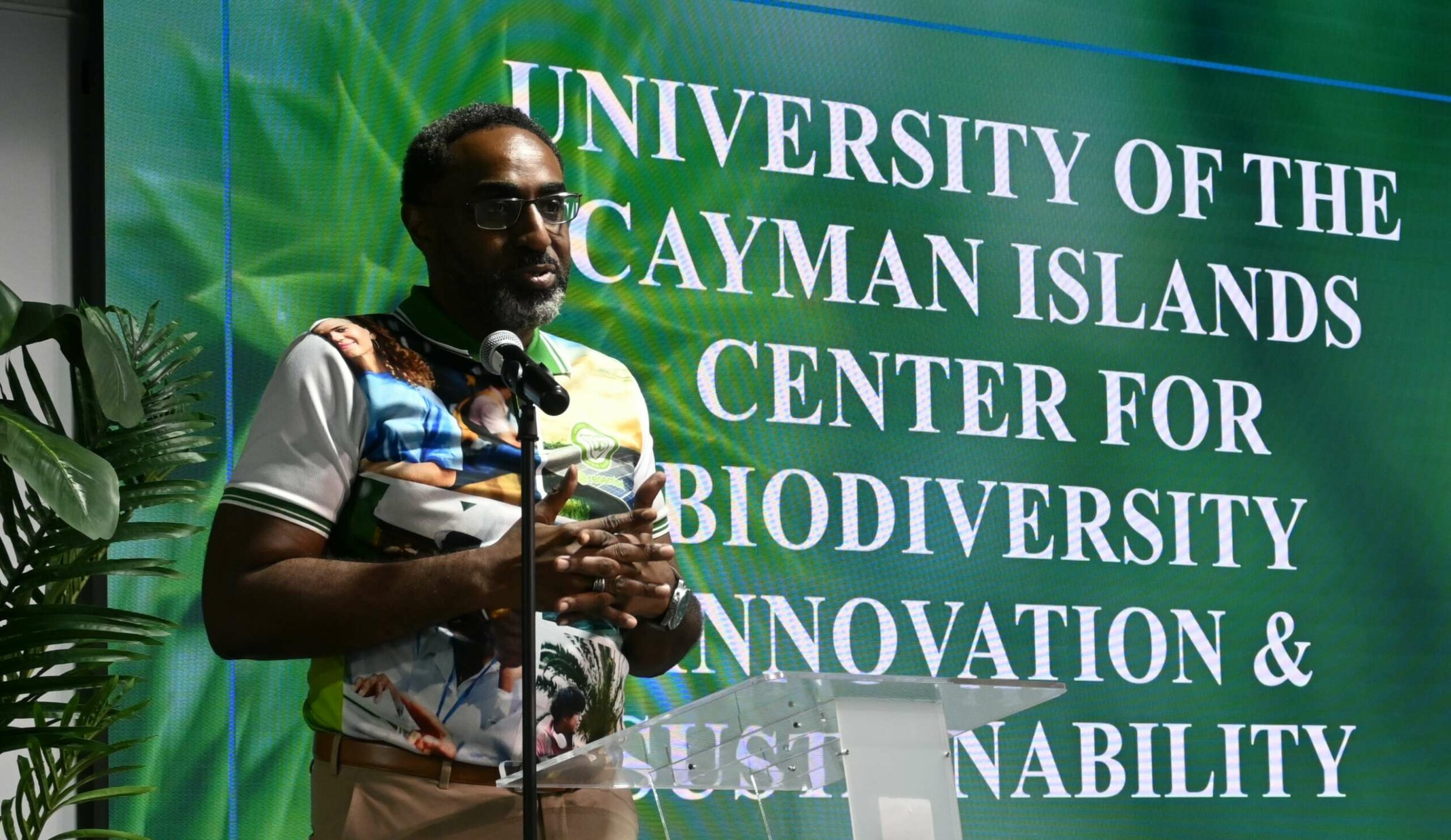
The first cohort of students to take part in the new ‘Greenhouse Micro Business Programme’ is expected to begin classes in August next year, according to UCCI’s STEM and health programme manager Cleveland Julien.
The course aims to equip local farmers, entrepreneurs and aspiring business owners with the skills and knowledge they need to design, build and operate their own greenhouse businesses.
Participants will learn everything from greenhouse construction and environmental controls to crop selection, business management and marketing strategies, UCCI says.
The college says this isn’t just about growing crops, it’s about cultivating a sustainable business that contributes to Cayman’s food security.
It says the initiative is “more than a training programme, it’s a movement”, and it is looking for partners, including local farmers, private businesses, government agencies and international players.
Julien, addressing the audience at the launch, said, “If we can develop the next generation of leaders in this agriculture space, we can have a rich impact on what happens long term,” as he invited businesses to partner with UCCI.
The Dart group has already partnered with the university on its sustainability initiative, he said.
Sustainability Action Plan
The course is part of UCCI’s Sustainability Action Plan, which the college describes as “a roadmap to leverage our campus as a living lab, integrating research, innovation and commitment to actionable steps”.
That roadmap also includes the establishment of the UCCI Center for Biodiversity, Innovation and Sustainability, according to UCCI President Robert Robertson, who says it may involve a physical location or an inter-departmental committee of stakeholders.
UCCI’s path to supporting sustainability in Cayman began in 2023 with a grant from the European Union’s sustainable development fund, called RESEMBID, for €432,000 (CI$405,000) to train Caymanians in tourism, ICT, renewable energy and construction. This was followed by a second grant last year from RESEMBID of almost $1 million, which the college used to turn the campus into a solar-powered ‘living laboratory’ and to create a sustainability plan.
That plan is now complete, Robertson told attendees at the launch, adding that it’s time for the college itself and the local community to help move forward with the sustainability journey the educational facility has embarked on.
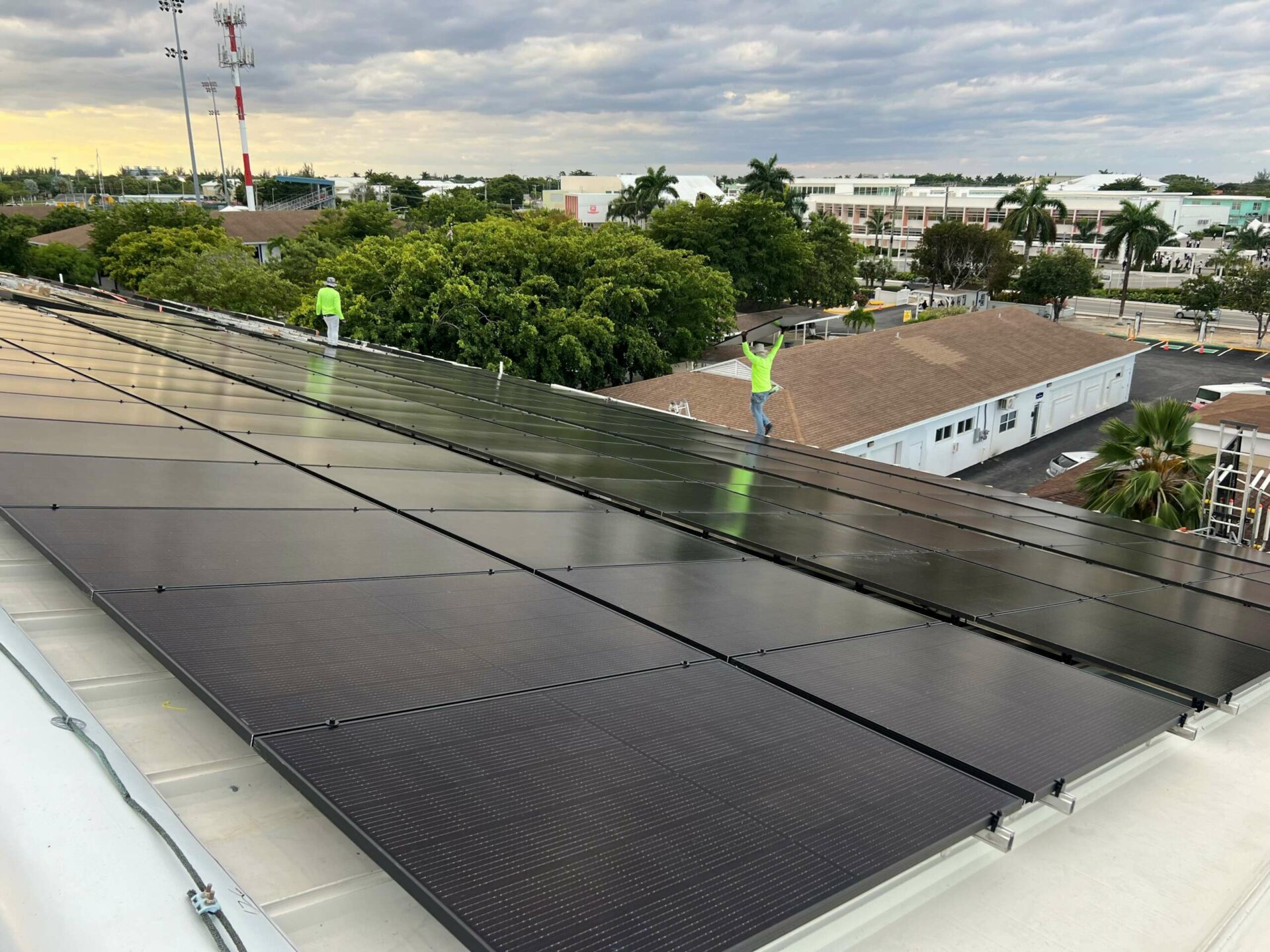
The college campus itself has embraced sustainability, with 100-kilowatt solar panels on the roof of the Sir Vassel Johnson Hall that power one-fifth of the college’s campus, electric vehicle charging stations, LED lighting, energy-efficient hurricane-proof windows, and energy efficiency audits, Robertson said.
He said the university college plans to grow its curriculum by adding programmes such as an environmental technician certificate to enable more local people to become qualified in climate-change related fields.
Robertson said there have also been discussions about creating a ‘micro-grid’, which would involve linking up solar arrays installed at UCCI, the nearby John Gray High School and the Truman Bodden Sports Complex so, in the event of electricity failures, the three buildings could share power.
“Now imagine that all over the island. That way, once the power goes out, nobody’s out of power,” he said.
Referring to the new greenhouse programme, he said, “We really want to start a plan for an agricultural course that respects the fact that there are opportunities to grow food on the island, which would be beneficial from a business point of view, but also from an environmental point of view.”
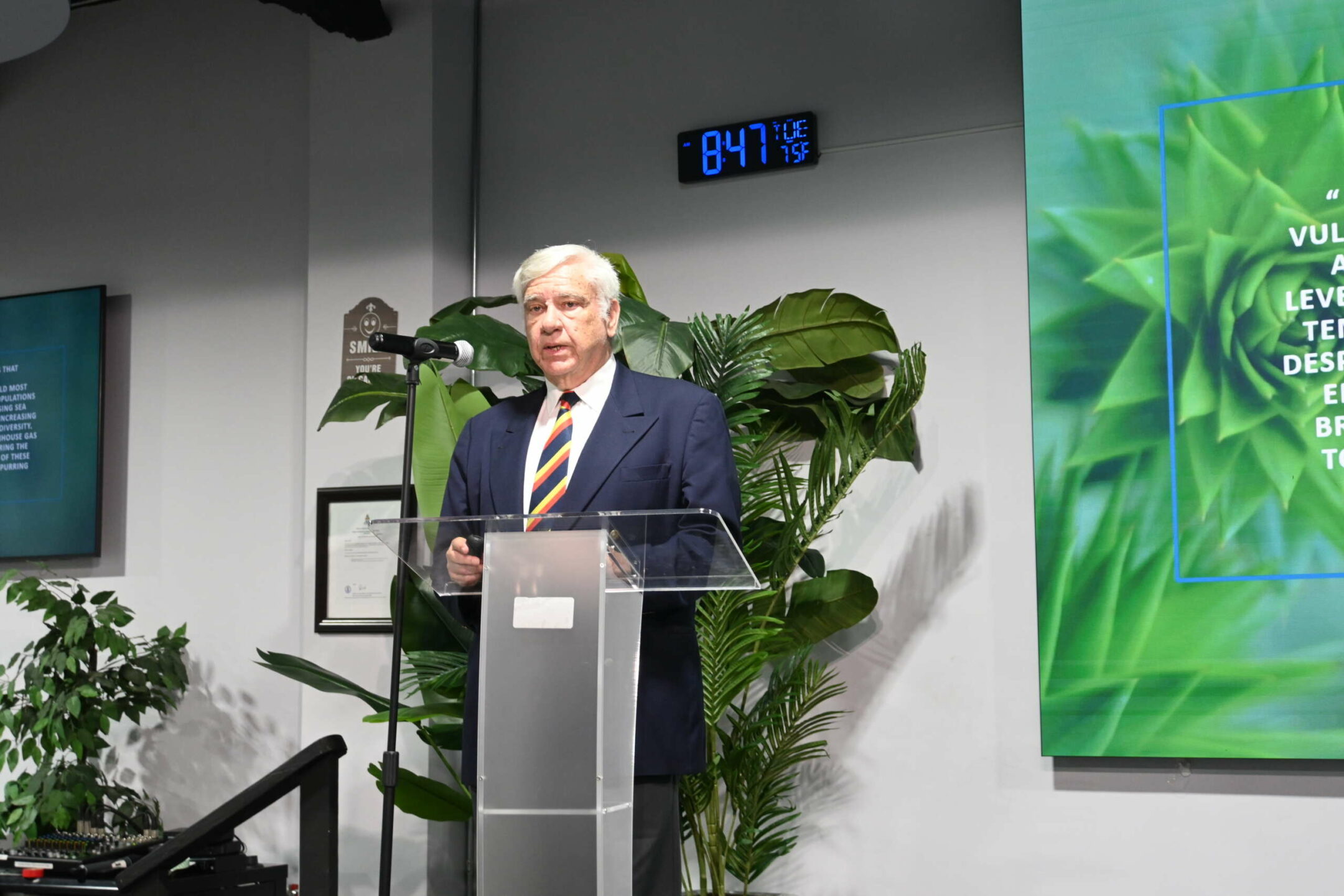
The sustainability plan, now that it has been completed, will go to the UCCI board for approval. Robertson said certain actions were needed to “execute the strategies” in the plan, one of which is to promote partnerships between UCCI and the public and private sector.
UCCI was recently named a ‘Champion of the Caribbean’ by RESEMBID for its contributions to sustainable development and renewable energy in Cayman. The Champions of the Caribbean campaign brings attention to different overseas countries and territories that have demonstrated exceptional leadership and commitment to sustainable practices.
Minister for sustainability and climate resiliency Katherine Ebanks-Wilks also spoke at the event, noting UCCI’s commitment to sustainability, saying, “Never before has the need for data, research and innovation in sustainability been more pressing. Homegrown innovations that seek to provide solutions and insights specifically for the Cayman Islands are vital.”
Related Videos







Growing for locally is a good thing to encourage. But greenhouses are typically used to grow warm weather crops, strawberries, tomatoes, peppers etc. in colder climates like the UK.
I don’t understand why they would help in the Cayman Islands.