The Cayman Islands Department of Agriculture is working to increase the number of coconut varieties grown locally as part of a wider effort to boost local food production and help build a stronger and more resilient coconut industry.
Central to the initiative is the development of a coconut germplasm, a living collection of coconut varieties maintained for research, conservation and to provide planting material for cultivation.
In practical terms, it allows the Department of Agriculture to identify, protect and propagate varieties with desirable traits such as higher yields, better coconut water production, drought tolerance and easier harvesting.
Earlier this year, the Department of Agriculture imported four coconut varieties from Jamaica’s Coconut Industry Board: Maypan, Malayan green dwarf, Malayan yellow dwarf and Malayan red dwarf.
Claudette McKenzie-Bowen, manager of agronomy at the Department of Agriculture, said the varieties were selected to diversify and strengthen Cayman’s coconut stock.
“If you drive around the Cayman Islands, you’ll probably see some of the coconuts that were there prior to this, but not in any organised way,” she said. “The ministry thought it was good to introduce this genetic material so that it can bolster the coconut industry in the country.”
According to Demoy Nash, deputy director of agriculture, the new varieties were chosen to meet the needs of local farmers while improving productivity and resilience.
“The farming community is demanding different varieties,” Nash said. “These varieties were carefully selected because they are high-yielding, easier to harvest and more resistant to drought and other environmental conditions.”
The new introductions are dwarf varieties, which grow significantly shorter than traditional coconut palms. Their reduced height makes harvesting safer, less labour-intensive and more accessible for growers.
The varieties also offer distinct qualities that could appeal to consumers and create opportunities for value-added products. The Maypan variety is known for its high coconut water production, while the Malayan green dwarf is prized for its naturally sweeter flavour. McKenzie-Bowen noted that producers often blend water from different varieties to achieve a desired taste profile.
Building a repository of planting material
The initiative comes as Cayman continues to import coconuts despite the crop’s long history on the Islands and its suitability to local growing conditions. Trade data shows the Cayman Islands imported approximately $78,000 worth of coconuts in 2024, while the Department of Agriculture estimates local production at around 19 tonnes annually, placing the territory 95th globally for coconut production.
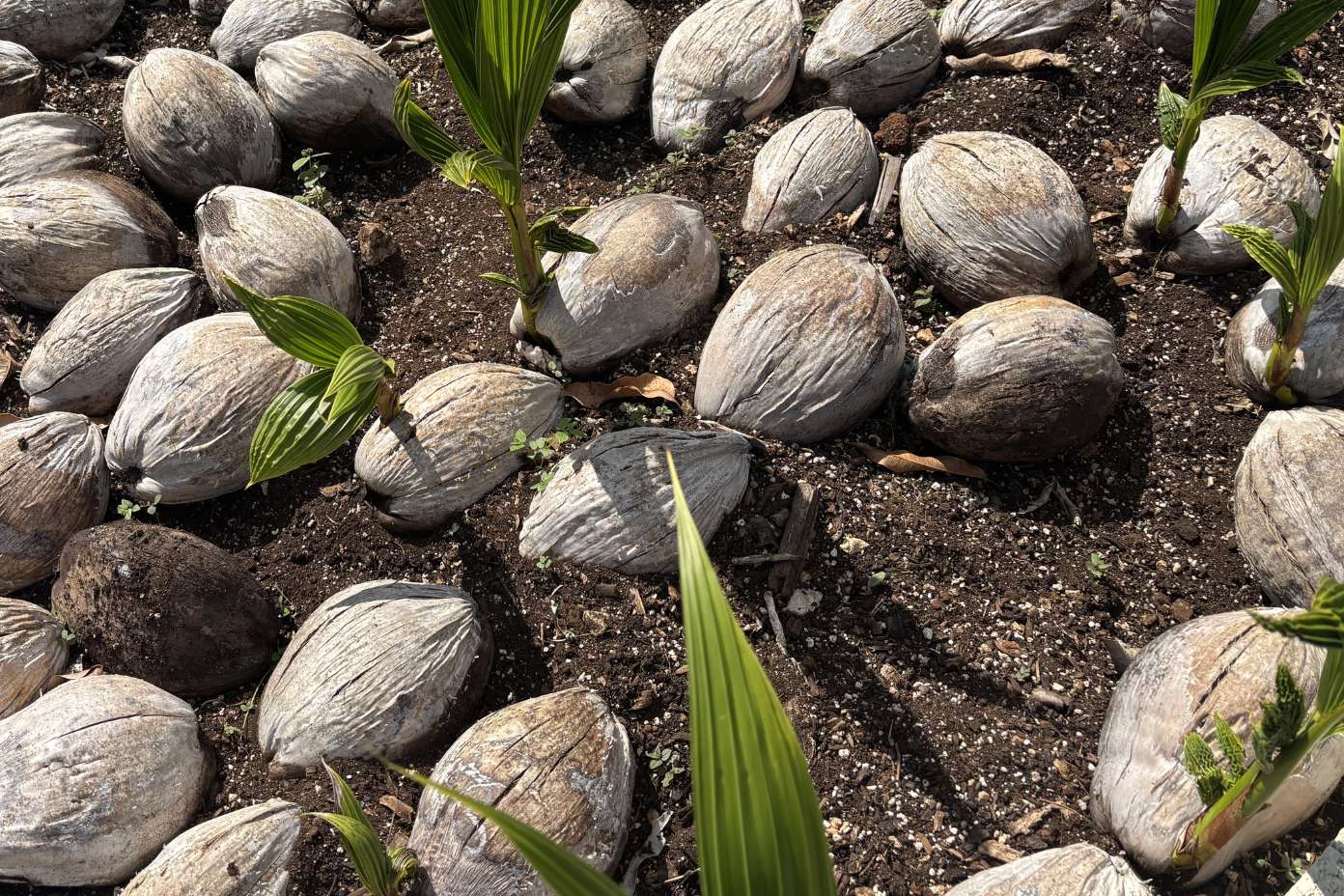
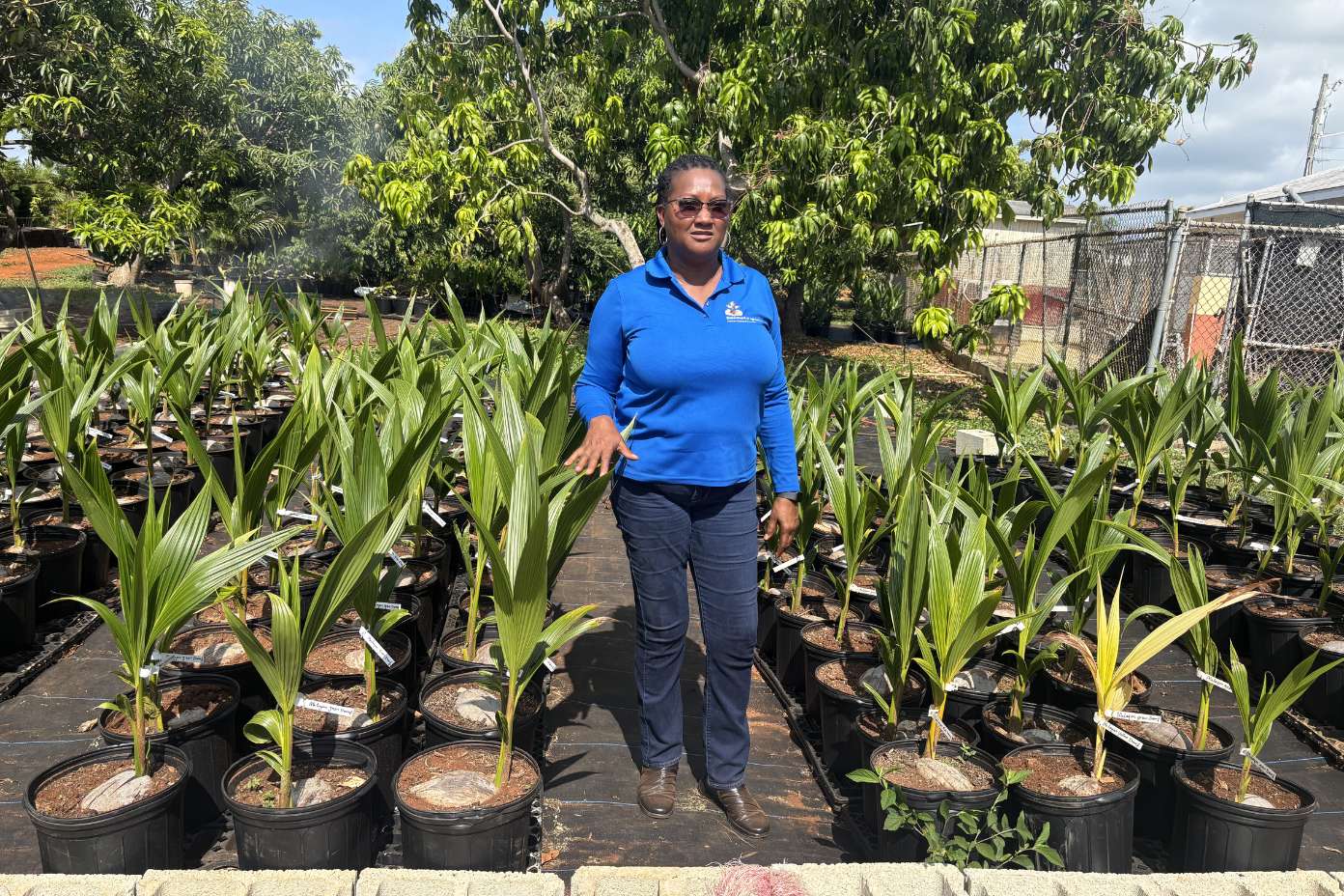
The newly introduced varieties are now being established within the department’s coconut germplasm collection. Seed nuts are first germinated, then transferred to pots before being planted in the field.
“As we speak, we have transplanted out some, and the team is actively working on additional plants,” McKenzie-Bowen said.
Agriculture officials say public interest in coconut cultivation has remained steady, with growers regularly purchasing planting material from the department’s nursery. Demand has increased as consumers become more health-conscious and interest grows in products such as coconut water and coconut oil.
Nash said germplasm collections are a critical component of modern agricultural development.
“Germplasms are very important to any meaningful agricultural production,” he said. “This is where you get to do your research, and it is the repository of your planting material.”
Nash explained that maintaining a germplasm collection allows the department to provide planting material on demand, distribute proven varieties and support farmers with crops that are well-suited to local conditions.
“It is critical to our food security efforts and to bolster local production,” he said.
Officials say the initiative is also helping to reduce reliance on imported planting material.
“This way, we are contributing to our own food security because we will now not have to go back to Jamaica for the planting material each time,” McKenzie-Bowen said.
Related Videos