

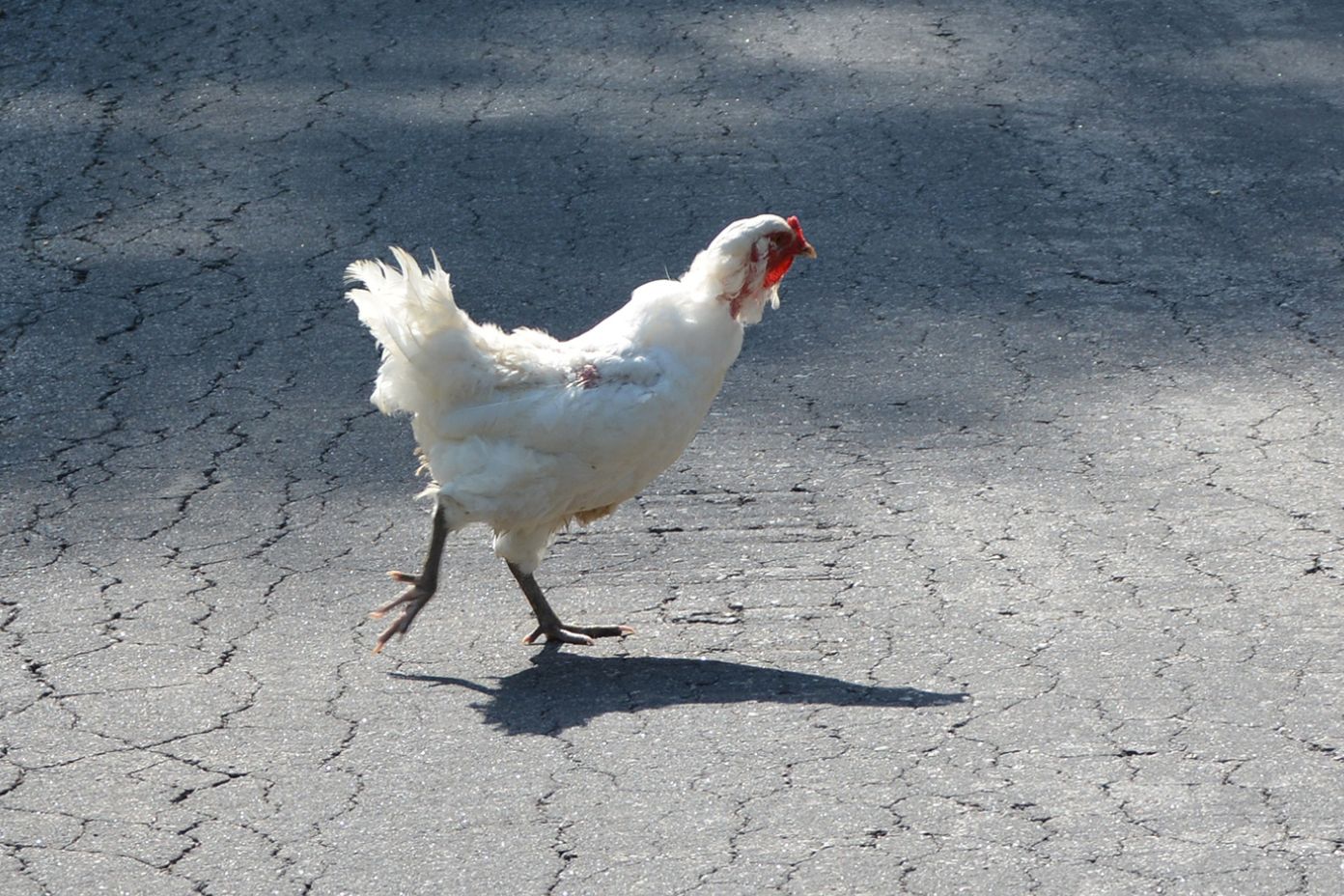
The Cayman Islands government is moving toward the launch of a feral chicken culling programme, following the country’s first-ever outbreak of highly pathogenic avian influenza late last year and growing concern about the role free-roaming birds could play in future disease transmission.
The move comes after the World Organisation for Animal Health declared Cayman free of avian flu, clearing the way for longer-term measures aimed at reducing risk rather than responding to an active outbreak.
The H5N1 virus was first detected on 28 Nov. 2025, after several turkeys were found dead at a farm on Cemetery Road in West Bay. Testing confirmed the presence of the virus in a chicken on the property, with subsequent samples identifying infection in chickens, quail, farmed ducks, a wild whistling duck and a goose at the same site.
A total of 69 birds were culled, all from the same farm. No human cases were reported.
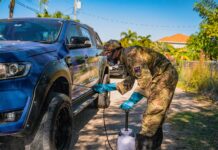
Following the detection, a multi-agency response led by Hazard Management Cayman Islands and the Department of Agriculture was activated. Measures included culling infected and exposed poultry, incinerating carcasses, imposing quarantine restrictions, increasing surveillance and advising farmers and the public to heighten biosecurity practices.
“We’re starting to return to some semblance of normalcy,” Department of Agriculture senior veterinary officer Dr. Tiffany Chisholm told the Compass in an interview on 9 Jan., noting that surveillance testing had continued without detecting further cases.
Department of Agriculture director Wilbur Welcome said the experience had underscored the importance of preparation and collaboration. He described the approach taken at the affected farm, where birds were culled not only when symptoms were present but also when there had been close contact with infected poultry.
“On that farm, we would euthanise any poultry that we suspect or identify as having avian influenza,” Welcome said. “We’ve had some birds that didn’t show symptoms, but because they were in close contact with other birds that tested positive, those were all euthanised.”
Eliminating the risk posed by feral chickens
With Cayman now officially cleared of avian flu, government has turned its attention to feral chickens, which officials say pose an ongoing biosecurity concern.
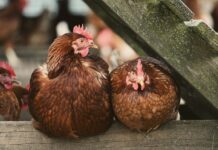
Feral chickens, Welcome explained, are free-roaming birds not owned or claimed by any individual and not confined to a single location. Their numbers and mobility make them a potential vector for disease.
“Feral chickens are a vector for some of these highly transmissible diseases, like avian influenza,” he said. “The more feral chickens we have … the greater possibility we have of avian influenza or other similar diseases being spread throughout our islands. So the intention is to reduce the feral chicken population to a manageable level, which will therefore reduce the risk of spread of any future potential diseases.”
Government approval and funding for a feral chicken culling programme was granted in December, but the initiative has yet to be formally rolled out. Welcome said legal and operational requirements still need to be finalised.
“We haven’t officially launched the feral chicken culling programme,” he said. “It is something that the government will be revisiting in early 2026.”
The proposed programme is expected to follow the model of the green iguana culling initiative, with approved cullers required to meet strict contractual, operational and licensing requirements.
The Department of Agriculture plans early this year, potentially after the Agriculture Show on 18 Feb., to work with partner agencies and existing licensed cullers to update contracts and firearms licences so they can participate in the programme.
“It’s an iterative process,” Welcome said. “It’s not just an announcement and we make payments. … There are two paths that need to be updated: your approved contract with the government and your gun licence with the RCIPS.”
At this stage, no quota or target number of birds has been set, though Welcome said that is likely to come once the programme is fully established.
The intended outcome, he stressed, is population management rather than eradication.
“The intent behind the feral chicken culling programme is not necessarily to cull all feral chickens, but to reduce the population significantly,” he said. “The intention is to reduce the feral chicken population to a manageable level, which will therefore reduce the risk of spread of any future potential diseases.”
Humane euthanasia of chickens at the DoA
In the meantime, the Department of Agriculture continues to accept feral chickens brought in by members of the public for humane euthanasia, at no cost.
“If someone in the community traps a feral chicken and wants it humanely euthanised, we do collect those feral chickens at our animal pound,” Welcome said. “We will cage them, one of our vet services team will humanely euthanise the chicken, and then we share the cadaver with St Matthew’s University for educational purposes.”
The department no longer offers pickup or trapping services, which Welcome said is no longer economically viable, but traps can be purchased from the Department of Agriculture or local hardware stores.
Those bringing in feral chickens range from backyard farmers and large commercial producers to residents frustrated by birds damaging crops or scattering garbage, Welcome said.
The idea of a formal culling programme was first floated by government in March last year after bird flu was detected in poultry in Puerto Rico. Farmers supported the proposal, with the Cayman Islands Agricultural Society noting that feral chickens also affect farm profitability through crop damage.
Welcome emphasised that, like the iguana culling initiative, the chicken programme would operate under strict controls.
“I don’t want people going away thinking that we’re opening up our country to just people walking around shooting chickens any and everywhere,” he said. “That is not the intention. The intention is to responsibly manage our chicken population.”
Related Videos






This is long overdue and I for one as a registered back yard farmer will be contacting Agr Dept in this regard to catching them in traps , where i live in WB is hundreds of them and they are scavengers. Ripping garbage bags apart and scattering garbage all over people’s yards . Pure nuisances .
So sad that government only options is to kill animals. That is why we have so much animal cruelty.
I am 100% behind this initiative as it is long overdue, but I encourage us to find ways to use the feathers. Perhaps create a competition that encourages local artisans to incorporate them into items that can be sold under a local brand — meeting best practices in hygiene and safety, of course.
At last some sanity is returning. The feral chicken epidemic has become intolerable throughout Cayman. Disgusting, unhygienic, noisy and dangerous. What an eyesore they’ve become, waking people in the early hours with their incessant caterwauling. They’re a terrible blight on these beautiful islands. Tourists must think they’ve come to a third world country.
But why, oh why, Mr. Welcome do you say that your “intention is to reduce the feral chicken population to a manageable level”. And “the intended outcome….is population management rather than eradication.” WHY? Total eradication of these pests should be the goal.