The Department of Environment is urging residents not to target native and migratory birds amid heightened concern over avian flu, cautioning that such culling is illegal and could do little to address the real risks.
Speaking with the Compass, Department of Environment Director Gina Ebanks-Petrie said it remains unclear how the virus first reached the Cayman Islands, noting that the current strain is unusual in its ability to move between species. While migratory birds are routinely assumed to be the main carriers, she said the picture is far more complex.
“Migratory birds are often assumed to be a likely source of avian influenza, but this is only one possible pathway,” she said.
Ebanks-Petrie explained that the strain now circulating internationally can move from mammals to birds and back again at a low to moderate rate, with lactating livestock showing slightly higher vulnerability. Because of this, identifying a single primary vector is difficult.
In larger regions like North America, where birds travel long distances along established flyways, migratory species are often cited as the culprit. In Cayman, however, the context is different.
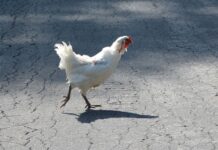
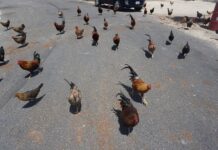
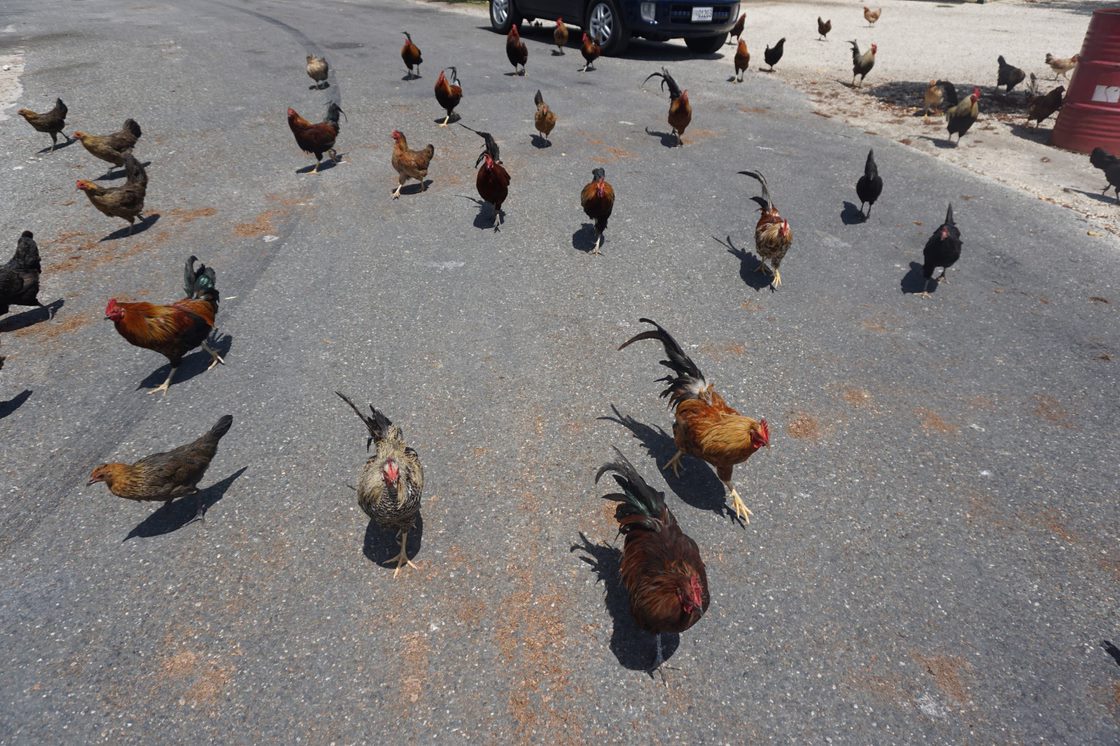
“To date, the Department of Environment has found no evidence of wild bird die-offs during surveys,” Ebanks-Petrie said. “We are continuing with our monitoring efforts. Current control efforts are focused on feral chickens, rats and cats that may have interacted with diseased birds.”
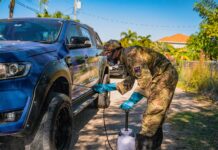
At a meeting with local farmers, which took place on 2 Dec., Department of Agriculture Senior Veterinary Officer Dr. Tiffany Chisholm said that UK-supported laboratory analysis and virus tracing revealed that the H5N1 virus detected on the sole infected farm was most likely carried in by migratory birds or transmitted via chickens that had been exposed to them.
“The reality around the world is that migratory birds have played one of the biggest roles in introducing this virus to most countries,” she said.
The virus was found in turkeys, chickens, quail, farmed ducks, a wild whistling duck and a goose at the West Bay site, and all 69 birds on the property have since been culled.
“Feral chickens were among the eight positive cases,” said Wilbur Welcome, director at the Department of Agriculture, in a Radio Cayman interview on 5 Dec.
The Cayman Islands isn’t alone in dealing with an outbreak of avian flu. Turkey farms in the US, Canada and the UK have been particularly hard hit over the past six weeks.
Concern around potential culling of protected species
The Department of Environment is concerned that fear could lead residents or farmers to shoot whistling ducks or other native birds. Ebanks-Petrie stressed that these species are not likely to be the source of the virus.
“The DoE cannot advise farmers to cull whistling ducks, as our native species of whistling duck is non-migratory and is unlikely to be the original source of the virus,” she said.
Under the National Conservation Act, all wild, native birds are protected year-round and cannot be killed without a specific permit from the National Conservation Council. Only feral chickens may be lawfully culled, and even then, all firearms regulations still apply.
“We reiterate that whistling ducks and all other wild, native birds are protected at all times under the National Conservation Act so it would be an offence to shoot them,” said Ebanks-Petrie.
According to Dr. Ian Kirkham, chair of the National Conservation Council, who worked for 40 years as a behavioural ornithologist, there are 274 different migratory birds that pass through rather than live in Cayman year-round.
In the context of the current outbreak, Ebanks-Petrie said members of the public should follow the guidance of the Department of Agriculture, the chief medical officer and Public Health officials before interacting with any wild chickens or suspected infected animals.
She emphasised that the most effective protection for farms remains strong biosecurity. Farmers are urged to keep their domestic flocks enclosed and fully separated from wildlife, and to ensure feed and water sources are not accessible to wild birds.
“Keeping wild birds and chicken flocks separate is essential to reducing the risk of the current incident spreading or a new one taking hold,” she said.
Related Videos