

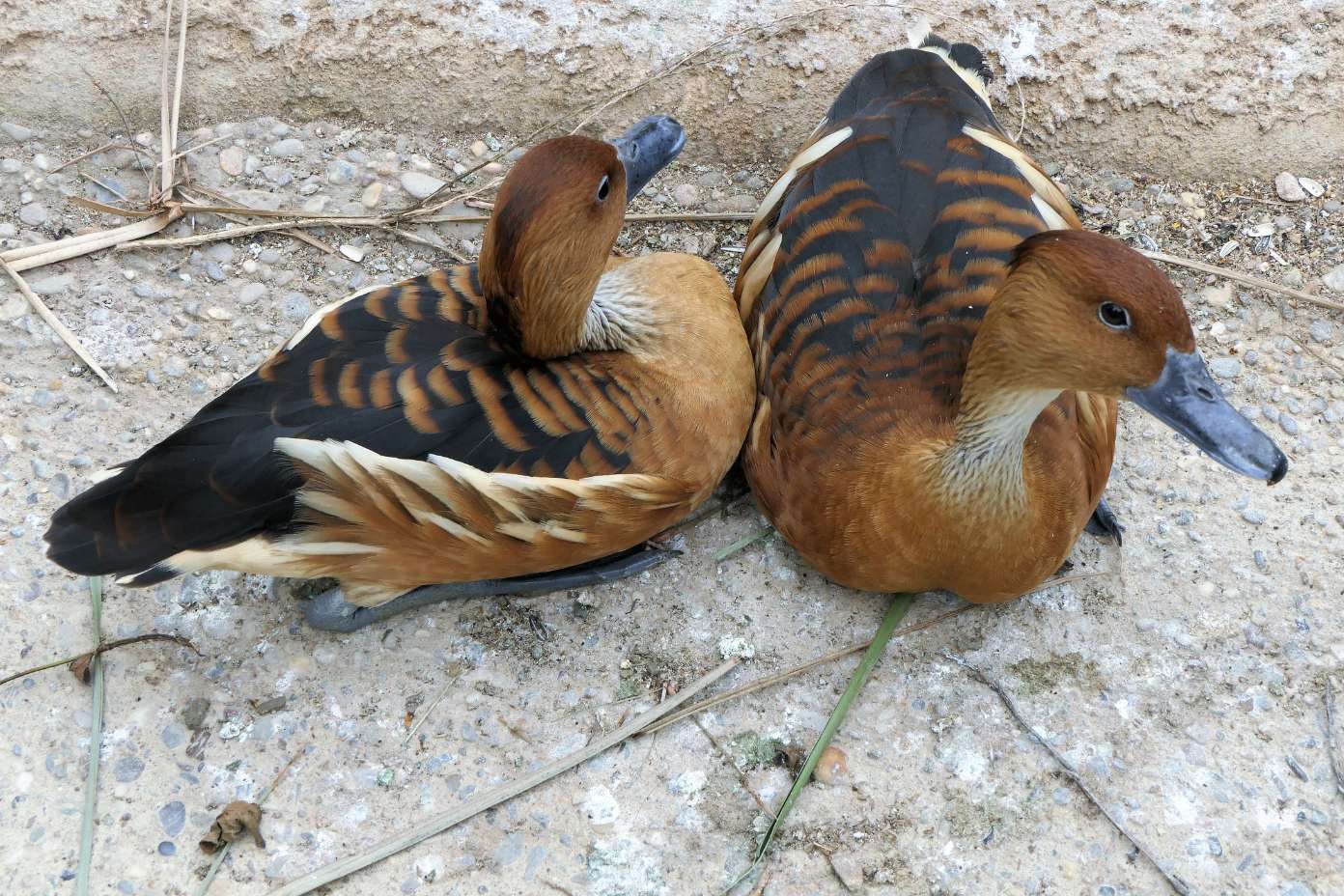
The bird flu outbreak detected in West Bay late last week is believed to have been introduced through migratory birds or chickens that had contact with them, according to Department of Agriculture Senior Veterinary Officer Dr. Tiffany Chisholm.
The first confirmed case was identified on 28 Nov. in a chicken at a farm on Cemetery Road, after several turkeys were found dead, marking what Chisholm described as the effective start of the local outbreak. Subsequent testing detected the virus in chickens, quail, farmed ducks, a wild whistling duck and a goose at the same site.
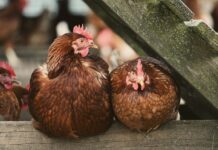
All 69 birds on the property have since been culled, no other farms have tested positive so far, and two additional sites are now under quarantine as testing continues.
Following laboratory analysis and virus tracing conducted with support from the United Kingdom, Chisholm said the strain detected in Cayman matches the type currently circulating in North America known as H5N1.
While officials have not been able to pinpoint the precise entry point, she said preliminary tracing indicates the virus was most likely carried in by migratory birds or transmitted via chickens that had been exposed to them.
“We did source tracking of this virus with assistance from the UK, and we are fairly confident that it was either brought in by the migratory birds, or it was brought onto the farm by the chickens, which were brought in by migratory birds,” Chisholm said at a virtual meeting with farmers that took place on 2 Dec.
“The reality around the world is that migratory birds have played one of the biggest roles in introducing this virus to most countries,” she said.
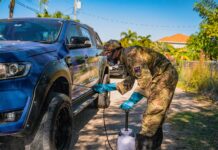
The affected farm remains under quarantine and will continue to be locked down for at least three to four weeks.
The feral chicken problem
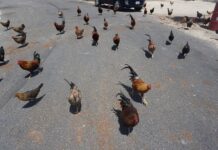
The outbreak has drawn renewed attention to Cayman’s feral chicken population, which some now fear could become a major vulnerability if the virus spreads beyond the original site.
Migratory birds can carry bird flu across borders while appearing healthy, shedding the virus in droppings, saliva and contaminated water. Feral chickens, which roam freely and mix with wildlife, can pick up the virus from these environments or through direct contact, then spread it rapidly among other chickens and farmed birds through shared feeding areas and close contact, creating a direct pathway into local farms.
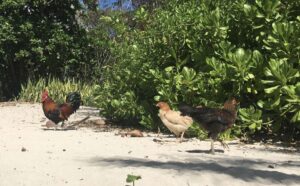
Farmer Olson Anderson warned that transmission into wild chickens could make containment almost impossible.
“If this gets into the wild chickens, we are done,” he said. “There are so many on-island. The problem is that wild birds fly, so we can’t contain where it goes if one of them catch it.”
While Anderson said his coops are “airtight” and keep his chickens safe from exposure to outside birds, not all farmers have the same type of infrastructure on their farms.
Opposition leader Joey Hew said the crisis has exposed what he described as long-standing issues around uncontrolled feral chicken numbers across the islands. Speaking on Radio Cayman on 3 Dec., he called for a broader conversation on management, including vaccination or culling.
“This is a good time to address the issues we have with the feral chickens,” he said. … “If this gets out of hand, it could really crash our entire farming industry that we have here when it comes to poultry and the efforts that have been made with egg production.”
Peak migratory season
Roy McTaggart, MP for George Town East, noted on Radio Cayman that the outbreak comes during peak migratory season.
“It’s the height of migratory season,” he said. “We are right in the path of a lot of these migrating patterns between Central America, South America, North America and the rest of the Caribbean.”
Chisholm stressed that while some species of migratory birds are under suspicion, not all can be legally targeted. Whistling ducks, for example, are a protected species.
“You can’t legally kill them, but you can put in measures to prevent them from coming on [your property],” she said.
“These ducks are attracted by a feeding source, and they’re attracted by a water source, so your waterers and your feeders should be in their proper coops. There shouldn’t be loose water sources around your farm.”
She also advised the farmers to use fine-mesh screening where possible to keep wild birds out of enclosures.
Targeted culling operations
Chisholm stressed that feral chickens are now a central focus for containment due to their susceptibility and close interaction with farms and people.
Government is preparing to roll out targeted culling operations focused on feral birds. According to Chisholm, specialist teams are expected to begin work shortly after legal and access arrangements are finalised.
She said the culling team was drawn from the same group previously approved for the iguana control programme, allowing government to move quickly without having to recruit and vet a new team.
Speaking on Radio Cayman, McTaggart also warned that funding could pose a challenge, noting that the government’s current spending authority expires on 31 Dec. and that no budget allocation exists for an emergency response of this kind.
“I would think there is nothing in the budget to deal with this in this current budget,” he said. “They would have to seek a supplementary budget from cabinet”.
Related Videos







We need to ban and tax the migratory expat birds. They should have a work permit if they want to fly into the Cayman Islands. How can our government tax these birds?
We need to increase their flying license for these birds to the highest in the world. Maybe $600 a year.
Feral chickens have develop an immune system to a lot of local diseases that imported fowl have not developed. Feral chickens might hold a key to disease mutation and flock immunity.
“… is believed to have been introduced through migratory birds or chickens that had contact with them…”
The next questions should be WHY?
Why haven’t migratory birds on Grand Cayman caused an avian flu spread before? Have migratory birds ever caused an avian flu spread on Grand Cayman?”
Wetlands destruction in Grand Cayman may exacerbate the risk and spread of avian bird flu by concentrating wild birds in fewer remaining habitats and increasing their interaction with domestic animals and humans.
Grand Cayman has experienced significant wetland loss due to development.
Scientific studies indicate a strong link between habitat loss and increased risks of disease transmission, including avian influenza.
Key scientific studies and their findings include:
Habitat loss exacerbates pathogen spread: An Agent-based model of avian influenza infection in migratory waterfowl (Yin et al., 2022). This modeling study, published in PLOS Computational Biology, found that extensive habitat loss causes the relocation of waterfowl populations and can lead to larger bird congregations in remaining sites, thereby increasing the risk of AIV outbreaks and transmission within wild populations.
Protection of wetlands as a strategy for reducing the spread of avian influenza (Hojoh et al., 2019). This research, published in Scientific Reports, used a case-control epidemiological approach in China and found that while proximity to unprotected waterfowl habitats and rice paddies generally increased the risk of H5N1 outbreaks, proximity to highly protected wetlands (e.g., Ramsar-designated lakes) had the opposite effect. The protection helps separate wild waterfowl and poultry populations.
Landscape changes elevate the risk of avian influenza virus spillover (Yin et al., 2025 – eLife reviewed preprint). This work suggests that landscape-driven shifts in waterfowl distribution, often a result of human development and habitat loss, elevate spillover risk. Aggregation due to habitat loss increases bird density and facilitates transmission, while increased use of shared habitats (like rice fields used for free-grazing ducks) promotes wild-domestic bird contact.
Ecology of avian influenza viruses in a changing world (Kilpatrick et al., 2010). This review highlights how human activities like expanding irrigation for year-round rice cropping create environments that support dense, free-grazing domestic duck populations, increasing the interface and contact rates between wild and domestic birds, which leads to frequent H5N1 outbreaks in poultry.
A systematic review of influenza virus in water environments across poultry and wild bird interfaces (Medeiros et al., 2024). This review emphasizes that water is a key medium for AIV transfer. High prevalence of the virus is found in the water bodies of wild bird and poultry environments, and virus viability is extended in cold water/ice, creating an environmental reservoir for reinfection when birds return during spring migration.