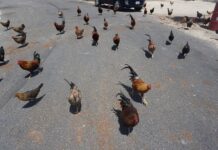
“We’re starting to return to some semblance of normalcy.” That was how Department of Agriculture Senior Veterinary Officer Dr. Tiffany Chisholm described the current status of the H5N1 avian flu outbreak that took place during November and December last year.
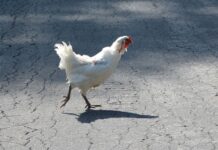
The first confirmed case of avian influenza was detected on 28 Nov., when a chicken at a Cemetery Road farm tested positive after several turkeys on the property were found dead. Subsequent testing at the same site confirmed the presence of the virus in chickens, quail, farmed ducks, a wild whistling duck and a goose.
In discussions with Tobi Brennan during an 8 Jan. CompassTV Daybreak segment, Chisholm advised that active surveillance remains ongoing.
“Everything has remained negative thus far,” she said, confirming that the virus has not spread beyond the West Bay farm where it was first identified.
All 69 birds on the affected property were culled and no other farms have tested positive to date. At the time, government approved an extra $500,000 in emergency funding to combat the spread of the virus.
While no further outbreaks have been identified, Chisholm cautioned that poultry farmers should remain vigilant and report any signs of illness among their birds.
H5N1 spreads primarily through close contact with infected animals or exposure to contaminated feed, water, equipment or surfaces. Birds are considered most at risk. The risk to humans is small.
In addition to the implementation of stringent biosecurity measures on-island, Cayman’s tropical climate may also have played a role in limiting the spread.
According to Food Safety News, avian influenza does not survive well in hot weather. Research conducted in 2016 by Dr Erica Spackman of the United States Department of Agriculture also found that the virus can be deactivated by heat.
Standstill order lifted
The Ministry of Planning, Lands, Agriculture, Housing and Infrastructure announced on 8 Jan. that a standstill order that was put into place on 1 Dec., temporarily suspending live poultry movement, sale and distribution within, into and out of West Bay had expired on 21 Dec.
Minister of Agriculture Jay Ebanks said the measure was a necessary precaution.
“These temporary measures were necessary to protect animal and public health, and I thank everyone for their cooperation and patience during this period,” he said.
The ministry acknowledged that misunderstandings around the restrictions had affected some farmers’ ability to sell eggs during the period.
Seventeen farmers are currently enrolled in the government’s National Egg Strategy, or NEST, which aims to increase domestic egg production and secure 40% of the local market through training, certification and improved equipment.
Director of Agriculture Wilbur Welcome confirmed that there are now no movement restrictions in place and that approved farmers may resume normal trade. He noted that the standstill order had always been intended to be targeted and time-limited.
The ministry reiterated that food safety remains a top priority and that inspection, monitoring and licensing systems for both locally produced and imported food continue to be robust.
“We encourage continued good biosecurity practices and open communication with the Department should any concerns arise,” Welcome said.
Related Videos